
Audialab - Ethical AI tools for Artists, by Artists
Rate this Tool
Average Score
Total Votes
Select your score (1-10):
Detail Information
What
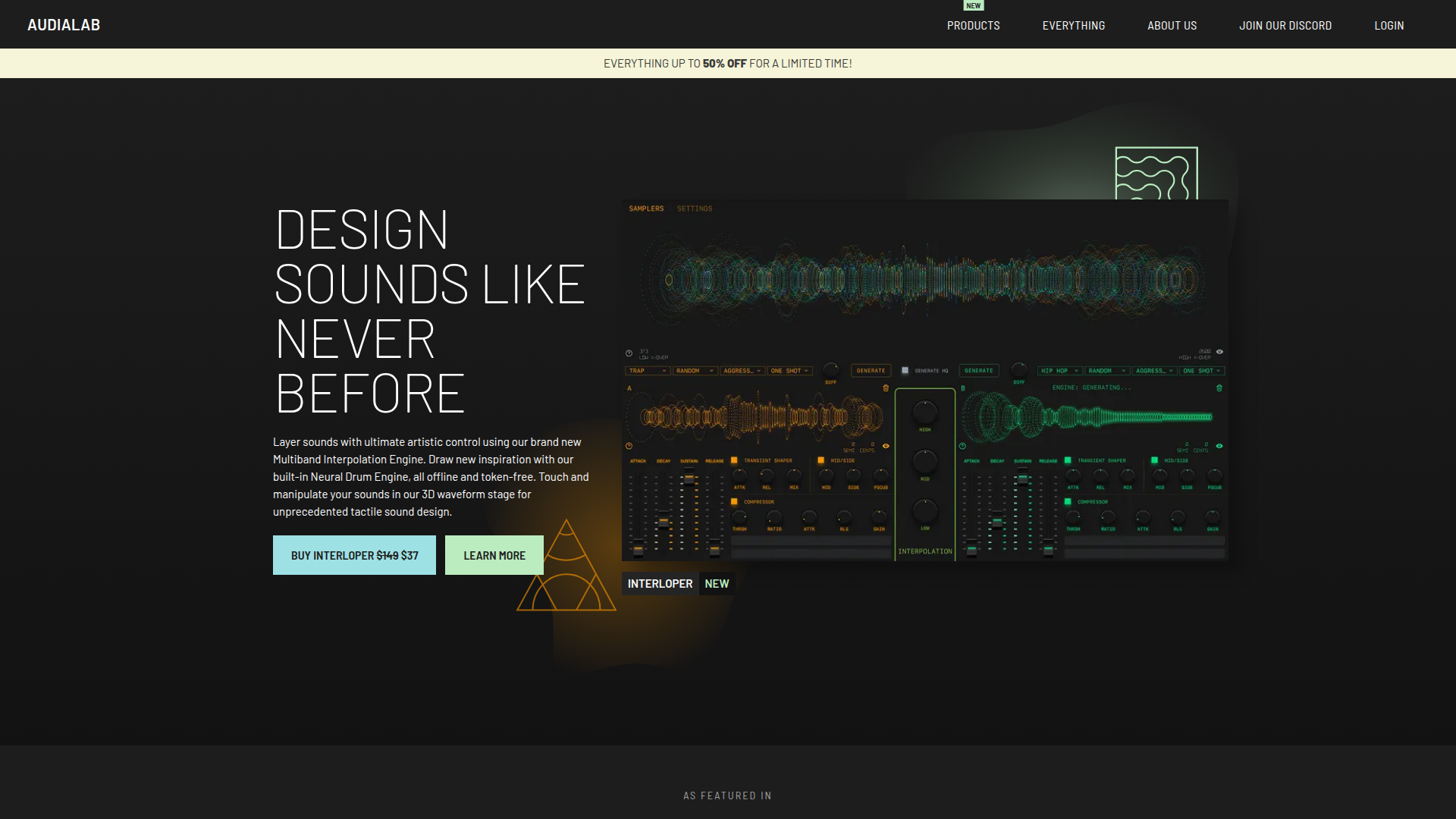
Audialab is a music software company focused on “ethical AI tools for artists, by artists.” Based on the page, its product line is aimed at music producers and sound designers who want to generate, vary, and shape drum samples and other sounds with more creative control.
The core workflow centers on AI-assisted sound design inside standalone products such as Interloper, Emergent Drums 2, Infinite Packs, and Humanize. The positioning appears to be creator-focused audio tooling that emphasizes offline use in at least one product, customization of generated sounds, and practical sample creation for composition and production.
Features
- AI-assisted sound design with Interloper — Interloper uses a multiband interpolation engine to layer sounds, helping users explore new textures with more direct artistic control.
- Built-in neural drum generation — Interloper includes a neural drum engine for creating drum inspiration without tokens, and the page specifically states this works offline.
- 3D waveform interaction — Interloper provides a 3D waveform stage for hands-on manipulation, which likely supports more tactile experimentation during sound shaping.
- Drum variation and generation with Emergent Drums 2 — Users can create variations of existing drum sounds or generate new drums from scratch to expand their sample palette.
- Royalty-free sample creation in Infinite Packs — Infinite Packs is presented as a way to generate royalty-free samples with customization tools and drum sounds.
- Natural-sounding drum variation with Humanize — Humanize creates variations of any drum sample to make programmed beats sound more natural.
Helpful Tips
- Check product scope carefully — The page describes several distinct tools, so teams should match each product to a specific workflow such as drum generation, sample variation, or broader sound design.
- Validate offline requirements per product — Only Interloper is explicitly described as offline and token-free on this page, so it would be prudent not to assume the same deployment model for the rest of the catalog.
- Assess fit for sample-based production — The strongest evidence on the page is around drums, sample generation, and variation, so this lineup may be most relevant for beat makers, electronic producers, and sound designers.
- Review licensing details separately — Infinite Packs mentions royalty-free samples, but the page does not provide deeper licensing terms here, so buyers should confirm usage rights in the EULA or related documentation.
- Expect creative assistance rather than full production workflow replacement — The products appear to support ideation and sound creation inside a production process, rather than replace a DAW or end-to-end music production environment.
OpenClaw Skills
Audialab could likely fit into the OpenClaw ecosystem as the audio-generation layer inside creative production workflows. Likely use cases include skills that brief sound design tasks, organize generated sample outputs, compare drum variations against style references, and route selected assets into broader composition or content pipelines. Because the page does not mention native integrations, this should be treated as workflow orchestration around Audialab tools rather than a confirmed built-in connection.
For music teams, media studios, or creator platforms, OpenClaw agents could likely help standardize how Audialab outputs are requested, reviewed, tagged, and reused. A concrete example would be an agent that turns a producer’s prompt or mood board into a repeatable drum exploration workflow using Emergent Drums 2, Infinite Packs, or Humanize, then logs chosen sounds for later retrieval. In practice, that combination could make AI-assisted sound design more systematic for professionals who need both originality and repeatability in their audio asset creation.
Embed Code
Share this AI tool on your website or blog by copying and pasting the code below. The embedded widget will automatically update with the latest information.
<iframe src="https://www.aimyflow.com/ai/audialab-com/embed" width="100%" height="400" frameborder="0"></iframe>
Explore Similar Tools
Suno
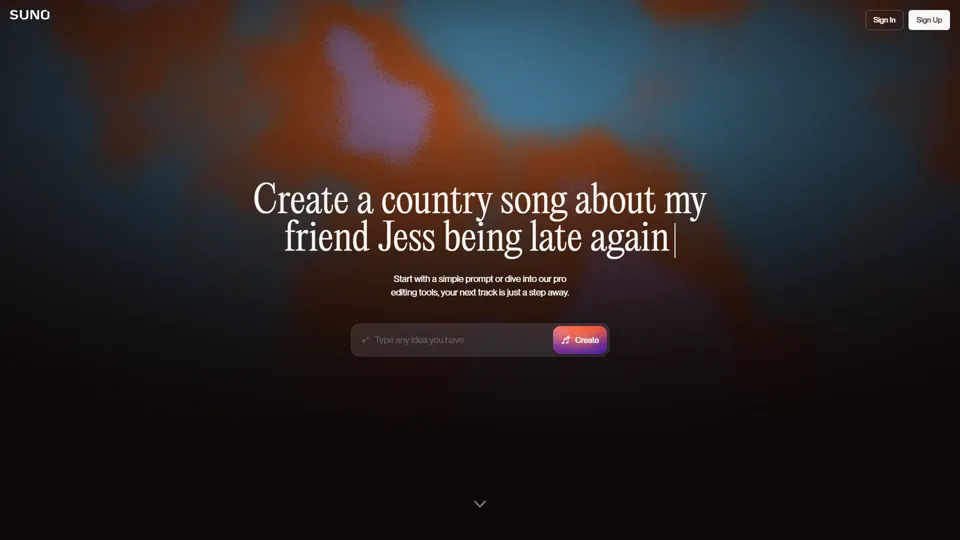
Suno is an AI music creation platform that helps users generate original songs from prompts, mainly for creators, musicians, and marketers who need fast audio production. In the AI era, it lets creative teams move from idea to usable music rapidly, reducing production barriers for non-specialists.
The Audio Intelligence Platform™ | Music AI
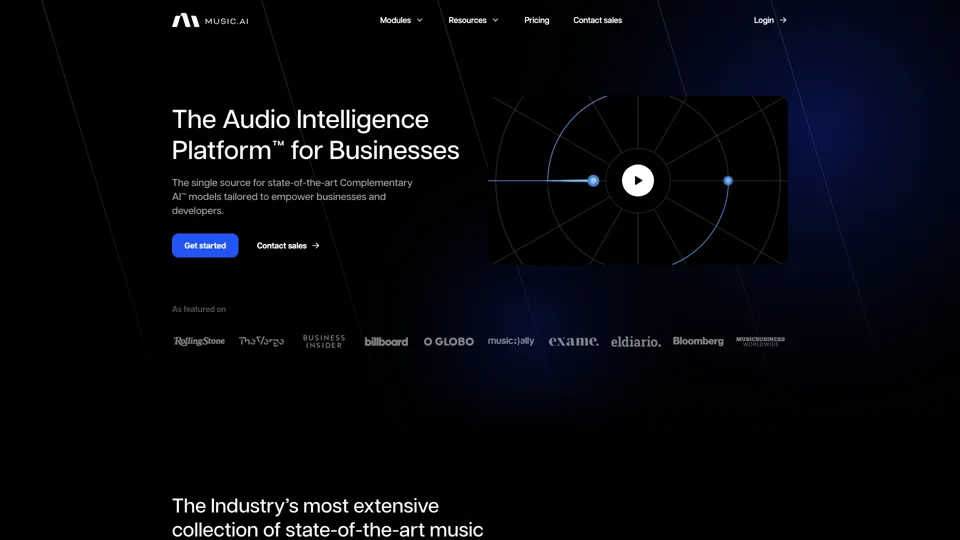
Music AI is an audio intelligence platform that provides AI models for businesses and developers building music and sound applications. In the AI era, it helps product and engineering teams add advanced audio capabilities without developing every model from scratch.
catapult° the music promotional platform for indies
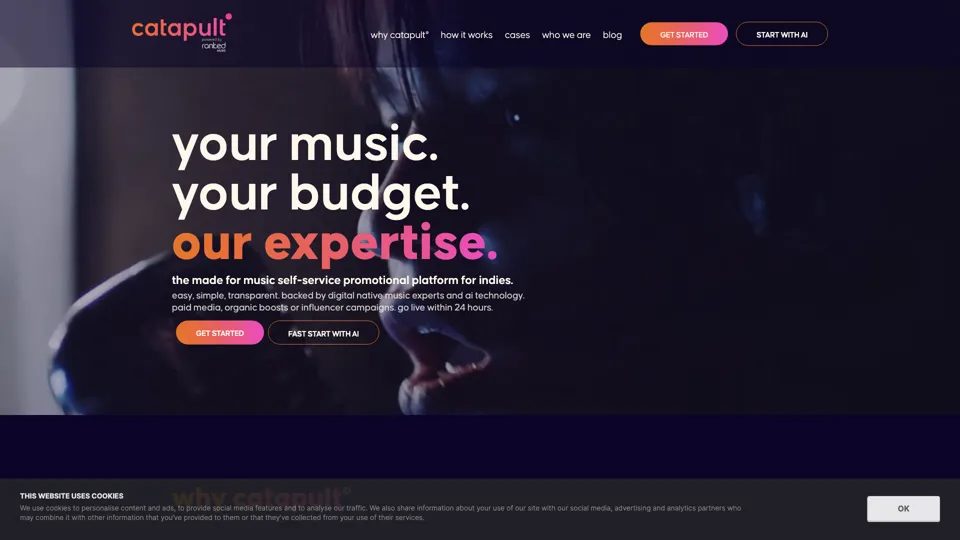
catapult° is a music promotion platform that helps independent artists market releases and track campaign performance in real time. In the AI era, data-assisted promotion helps artists and managers make faster decisions about channels, timing, and audience growth.
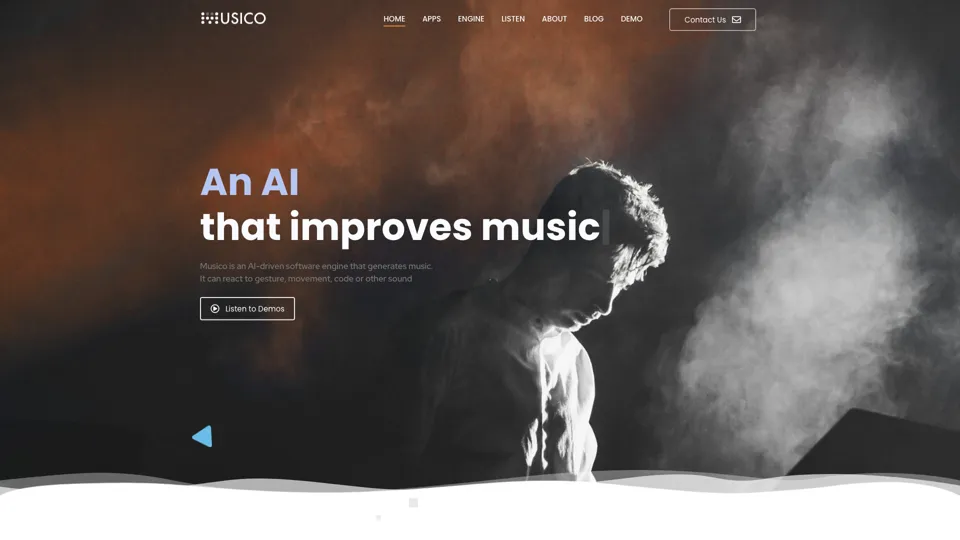
Musico - AI generative music
Musico is an AI generative music engine that helps artists, developers, and interactive creators produce music responsive to gesture, movement, code, or sound. In the AI era, it expands creative control by enabling adaptive audio systems rather than only fixed compositions.
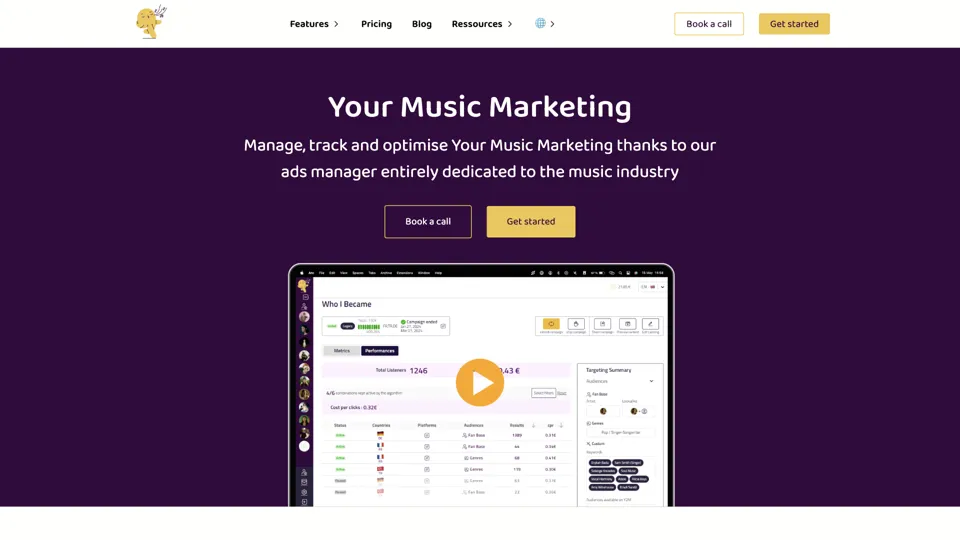
Your Music Marketing | The first ads manager for the music industry
Your Music Marketing is an ad management platform for the music industry that helps artists, labels, and music marketers launch social campaigns and track performance with AI optimization. In the AI era, it gives music promotion teams faster targeting and iteration across paid channels.
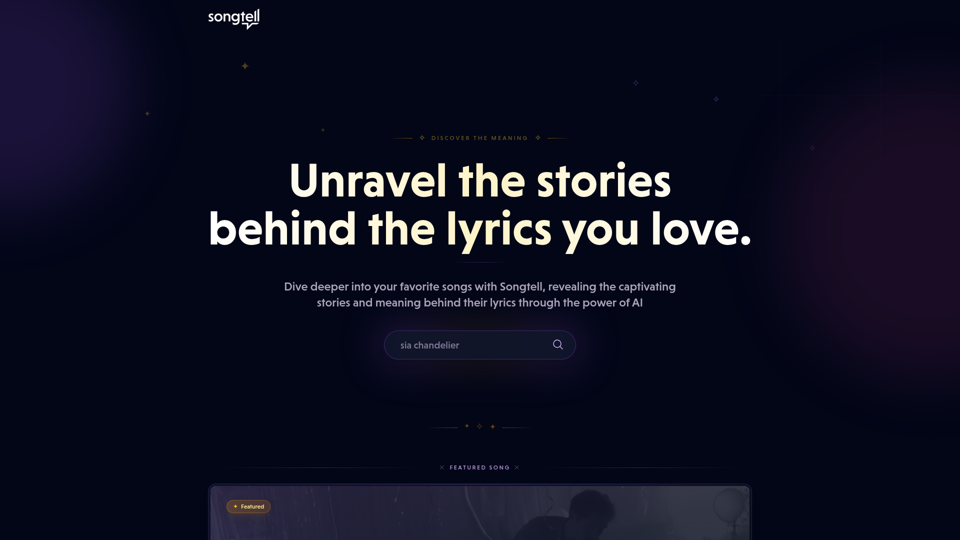
Songtell
Songtell is an AI-powered website that helps music listeners discover the meaning and stories behind song lyrics, mainly for fans who want to understand their favorite songs more deeply. For music writers, editors, and community curators, it can speed up lyric interpretation and support clearer, more scalable song commentary across large catalogs.