
Access 400+ AI Models with a Single AI API | AIMLAPI.com
Rate this Tool
Average Score
Total Votes
Select your score (1-10):
Detail Information
What
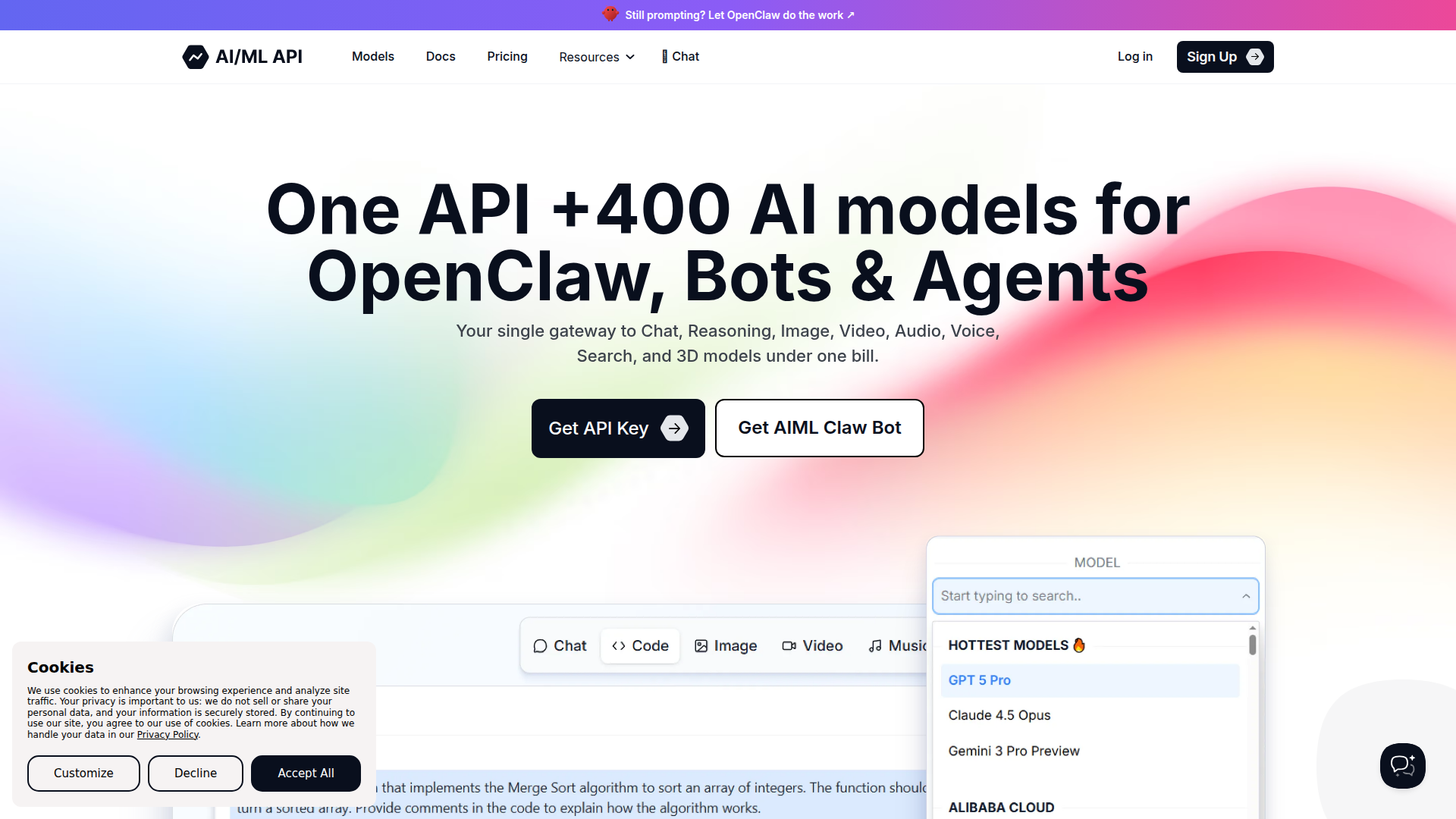
AIMLAPI.com is a unified API platform that provides access to 400+ AI models through one endpoint and one billing layer. It is aimed at developers, product teams, and businesses building bots, agents, and applications that need chat, reasoning, image, video, audio, voice, search, OCR, embeddings, moderation, language, music, or 3D generation capabilities.
The core workflow is straightforward: create an account, buy credits, generate an API key, and call supported models through a common API structure. Based on the site content, the product is positioned as an aggregation and delivery layer for multi-model AI access, with sandbox testing, scalable infrastructure, and options ranging from free experimentation to enterprise deployments.
Features
- Single API for 400+ models — Consolidates access to many model categories under one interface, which can reduce vendor fragmentation when building AI products.
- Broad multimodal model coverage — Supports chat, code, image, voice, video, music, embeddings, OCR, safety and moderation, language, and 3D generation use cases from one platform.
- OpenAI-compatible integration pattern — The example shows a familiar OpenAI client setup with a custom base URL, which can simplify migration from existing applications.
- API Playground for testing — Provides a sandbox environment to evaluate models before integration, helping teams compare outputs and fit-for-purpose options.
- Credit-based usage model — Lets users apply credits across supported models, which may simplify budget handling across different providers and workloads.
- Scalability and deployment options — The site highlights serverless infrastructure, low-latency access, and enterprise options such as dedicated servers and custom/private models.
Helpful Tips
- Validate model fit by workload, not headline quality — Since the platform spans many model types and providers, teams should test a small set of models against their actual prompts, latency needs, and output constraints in the playground.
- Review API compatibility assumptions carefully — The site indicates simple endpoint replacement for existing setups, but implementation teams should still confirm parameter support, response formats, and edge-case behavior per model.
- Plan governance around model sprawl — A large catalog is useful, but production teams should define approved models, fallback logic, and cost controls before broad internal adoption.
- Separate prototype and production operating models — The free plan is clearly for experimentation, while production use likely benefits from pay-as-you-go or enterprise support depending on scale and operational requirements.
- Check enterprise claims during evaluation — The site references dedicated infrastructure, regulated-use positioning, and extended storage options, but buyers should verify exact deployment, retention, and support terms for their environment.
OpenClaw Skills
AIMLAPI appears closely aligned with OpenClaw’s agent-oriented workflow. The page explicitly frames the API as suitable for “OpenClaw, Bots & Agents,” while OpenClaw is described as a locally run autonomous assistant that works across files, code, and services with human oversight. In practice, this makes AIMLAPI a likely model-access layer for OpenClaw-driven tasks that need different modalities, such as document understanding, code generation, OCR, image creation, search, or voice interactions.
Within the OpenClaw ecosystem, likely skills and agents could include multi-step research agents, software engineering assistants, media-generation workflows, document processing pipelines, and business operations copilots that route each task to the most suitable model. If implemented this way, the combination could give teams a more flexible agent stack: OpenClaw handling orchestration, supervision, and local execution, and AIMLAPI supplying interchangeable model capabilities behind a single API.
Embed Code
Share this AI tool on your website or blog by copying and pasting the code below. The embedded widget will automatically update with the latest information.
<iframe src="https://aimyflow.com/ai/aimlapi-com/embed" width="100%" height="400" frameborder="0"></iframe>
Explore Similar Tools
Free AI Photo Editor: Edit & Generate Image Online | Pokecut
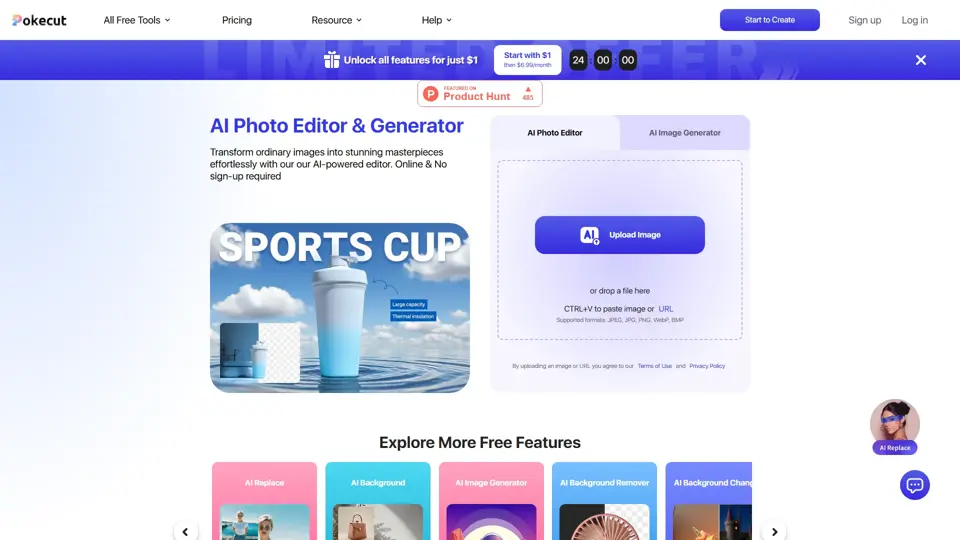
Pokecut is an AI photo editor that helps users remove backgrounds, enhance images, and generate visuals online, mainly for ecommerce sellers, marketers, and creators who need quick design-ready assets. It speeds up routine image production so visual teams can create polished content with less manual editing.
AI Photo Studio: Elevate Your E-Commerce with Our Magic Studio | iFoto
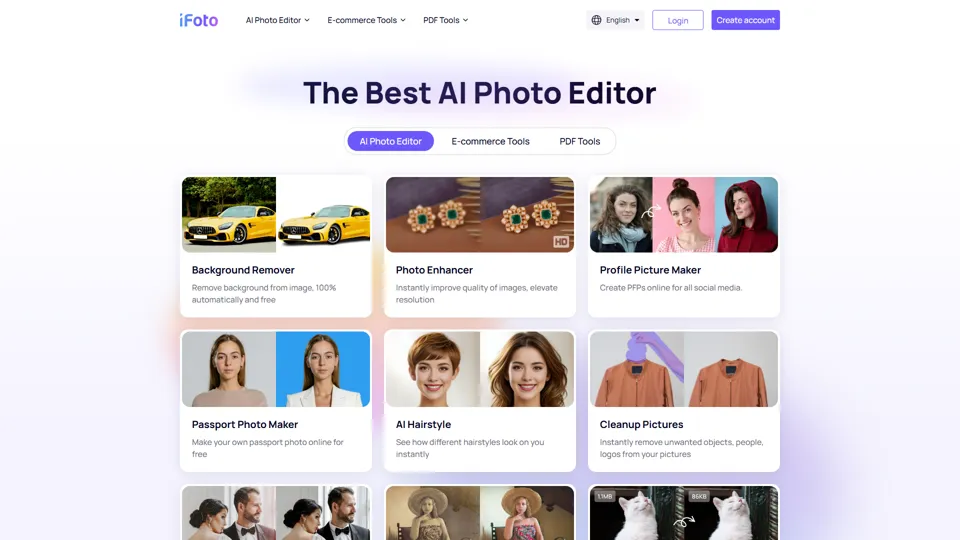
iFoto is an AI photo editing studio that helps users enhance images, change backgrounds, and create polished visuals online, mainly for eCommerce sellers, marketers, and content creators. It speeds up creative production for merchandising and marketing teams without requiring advanced design skills.
Best AI Video Generator | AI STUDIO
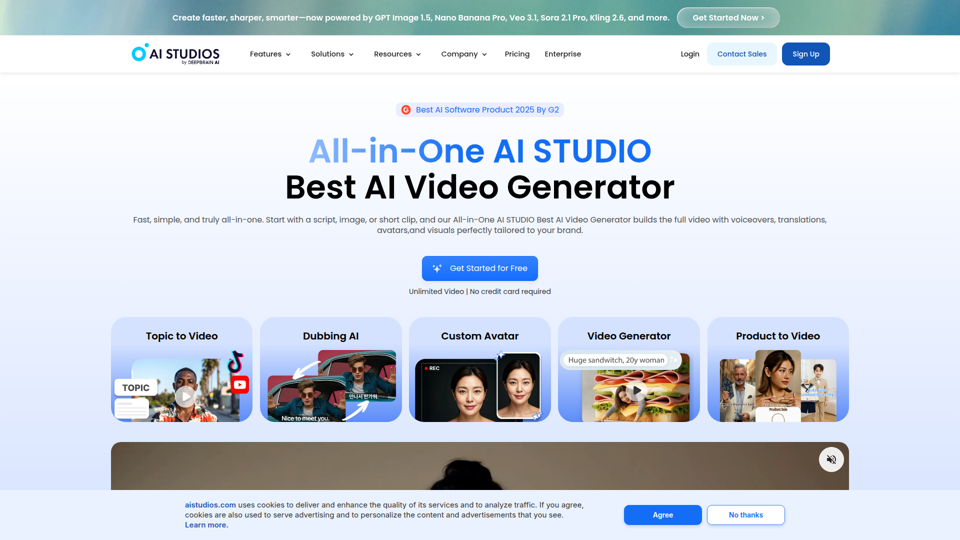
AI Studios is an AI video generator that helps users create, edit, dub, translate, and publish videos from text, documents, URLs, images, or product pages, mainly for training teams, marketers, and content creators. For learning, marketing, and video production roles, it can speed multilingual video workflows with AI avatars, voice cloning, and reusable templates in one workspace.
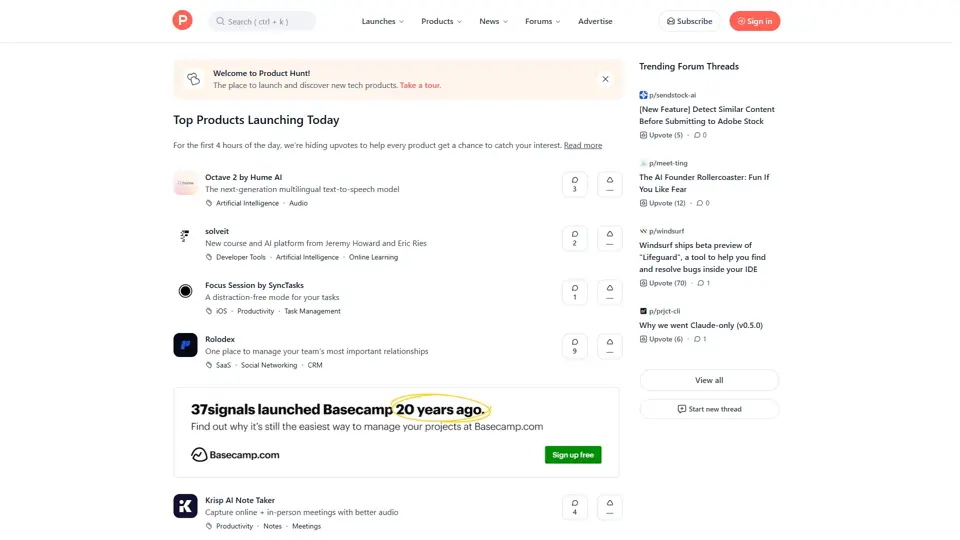
Product Hunt – The best new products in tech.
Product Hunt is a product discovery platform that helps users find, share, and discuss new technology products, mainly for founders, makers, investors, and early adopters. In the AI era, it gives product teams a fast feedback loop and a visible launch channel for new tools.
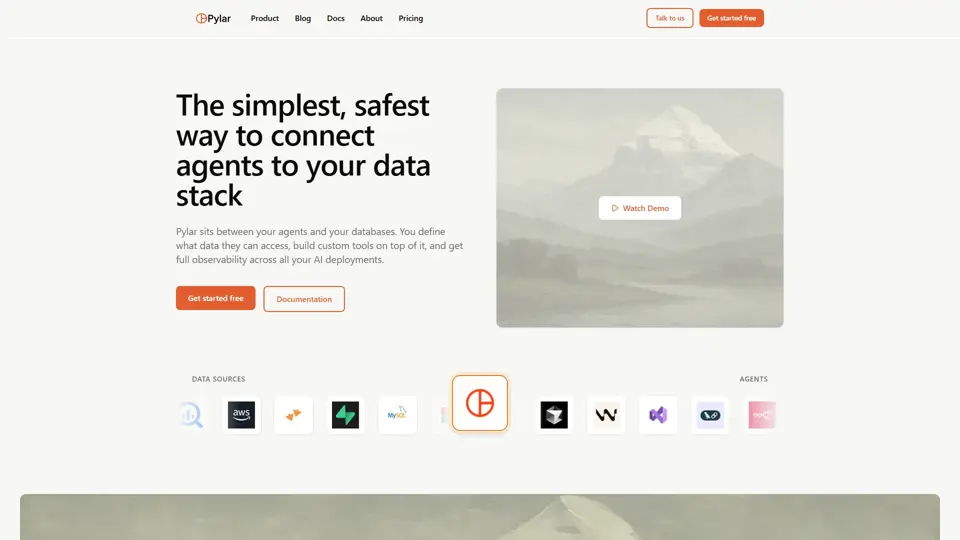
Governed Data Access for AI Agents | Secure MCP Tools
Pylar is a governed data access platform that helps users give AI agents secure access to structured data through controlled SQL views and MCP tools, mainly for data and engineering teams. It lets developers operationalize AI safely by balancing agent capability with governance and access control.
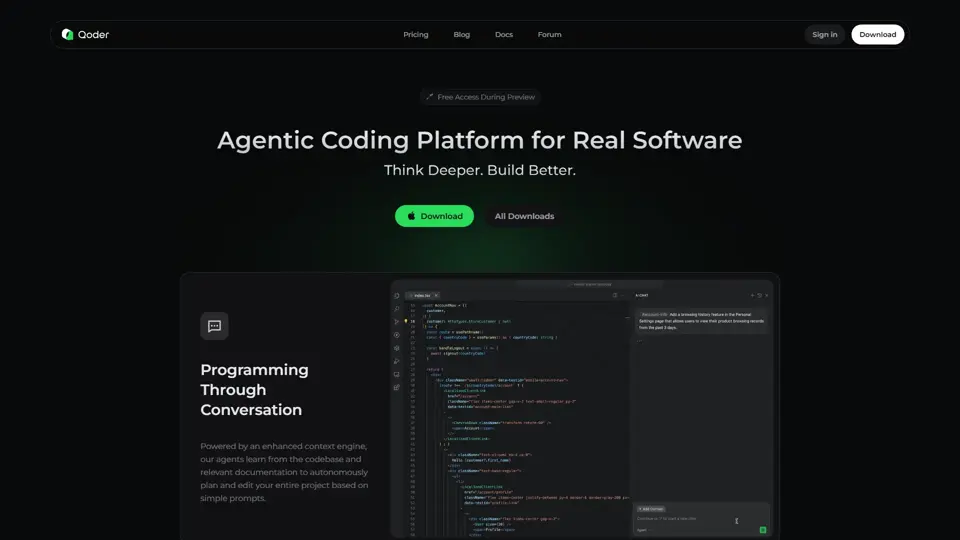
Qoder - The Agentic Coding Platform
Qoder is an agentic coding platform that helps developers understand codebases and execute software tasks with AI agents, mainly for professional software engineers and development teams. It improves engineering throughput by combining strong code context with advanced models for more reliable task completion.
Bright Data for AI – Connect Your AI to the Web
Bright Data for AI is a web data platform that helps AI teams search, crawl, extract, and collect structured real-time and training data from the web through APIs, remote browsers, datasets, and automation tools. For AI engineers, data scientists, and agent builders, it can reduce the effort of building web access and data acquisition pipelines so they can focus more on model behavior and application logic.

Seedance 2.0
Seedance 2.0 is ByteDance's AI video generation model designed to create high-quality videos from prompts and multimodal inputs, mainly for creators, developers, and media teams. In the AI era, it helps visual content roles turn ideas into production-ready motion assets with far less manual editing effort.