
Automated research interviews & transcripts | Askiva
Rate this Tool
Average Score
Total Votes
Select your score (1-10):
Detail Information
What
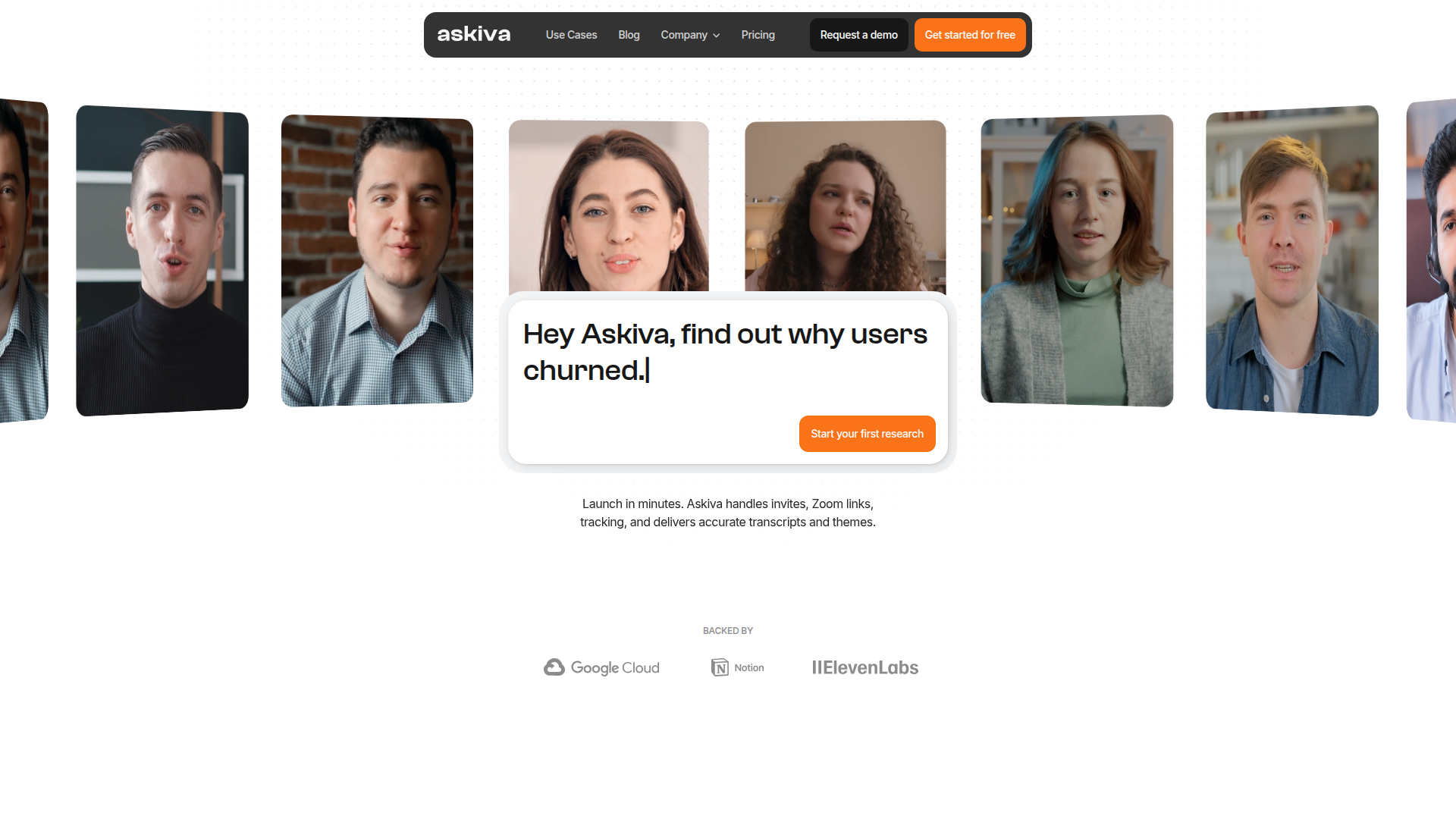
Askiva is an AI-powered user research and interview automation platform for teams and universities that need to run research interviews with less manual coordination. It combines participant outreach, scheduling, Zoom-based interviewing, transcription, and theme-based summaries in one workflow.
The product appears positioned as automated interview software for product research and related decision-making. Based on the page, its main use case is helping researchers move from a study topic to usable transcripts, quotes, and summaries quickly, while reducing the administrative work around invites, rescheduling, note-taking, and documentation.
Features
- Automated participant outreach and scheduling: Askiva sends invite emails, proposes time slots in each participant’s local time zone, and manages confirmations, reschedules, and cancellations to reduce coordination work.
- AI interviewer for Zoom sessions: The system creates or joins Zoom meetings, follows a prepared script, asks follow-up questions, and keeps timestamps and speaker tracking organized for later review.
- Multilingual interview support: It can run studies in multiple languages, localize outreach and scripts, and adapt phrasing, tone, and conversation settings to fit different audiences.
- Transcript and summary generation: Askiva produces conversation transcripts and organizes outputs into themes, key quotes, sentiment, and summaries for analysis and sharing.
- Configurable study setup: Users can define research topics, generate question sets with AI, upload participant pools via XLSX, set completion targets, and adjust options such as availability windows and calendar settings.
- Export and data control: Transcripts, summaries, and quotes can be exported as PDF, and the site states that users can download or delete their research data from their account.
Helpful Tips
- Validate the interview script before launch: Since the workflow is heavily automated, using the test interview option can help catch weak prompts, unclear follow-ups, or study design issues early.
- Use automation for repeatable research operations: This type of product is most valuable when teams run recurring interviews and want consistency in outreach, scheduling, and documentation.
- Review transcript quality for high-stakes decisions: Although the site describes transcripts as high quality, teams should still spot-check outputs when research findings will influence roadmap, policy, or academic conclusions.
- Plan participant data handling carefully: Askiva states that users own their data and can delete it, but teams should still define internal policies for participant consent, retention, and export practices.
- Assess where human moderation is still needed: Automated interviews can improve speed and coverage, but sensitive topics or exploratory studies may still benefit from researcher-led sessions.
OpenClaw Skills
Askiva could likely fit well into the OpenClaw ecosystem as a research operations and insight capture layer. A likely OpenClaw workflow would use Askiva to run interviews and generate transcripts, then hand those outputs to OpenClaw skills for theme clustering, churn analysis, product feedback triage, persona refinement, competitor comparison, or executive briefing generation. The source page mentions exports and a dashboard, but does not confirm a native OpenClaw integration, so this should be treated as a likely orchestration pattern rather than a stated capability.
For product teams, UX researchers, and academic research groups, that combination could shift work from interview administration toward synthesis and action. For example, an OpenClaw agent could monitor completed Askiva studies, convert transcript themes into structured product opportunities, draft follow-up research plans, and route findings into role-specific summaries for product managers, designers, and leadership. In a university setting, a similar workflow could support multilingual study operations and standardized evidence packaging across multiple projects, likely improving research throughput without fully replacing human interpretation.
Embed Code
Share this AI tool on your website or blog by copying and pasting the code below. The embedded widget will automatically update with the latest information.
<iframe src="https://www.aimyflow.com/ai/askiva-io/embed" width="100%" height="400" frameborder="0"></iframe>