BounceBunny - Your NBA-Level Athletic Performance Coach
Rate this Tool
Average Score
Total Votes
Select your score (1-10):
Detail Information
What
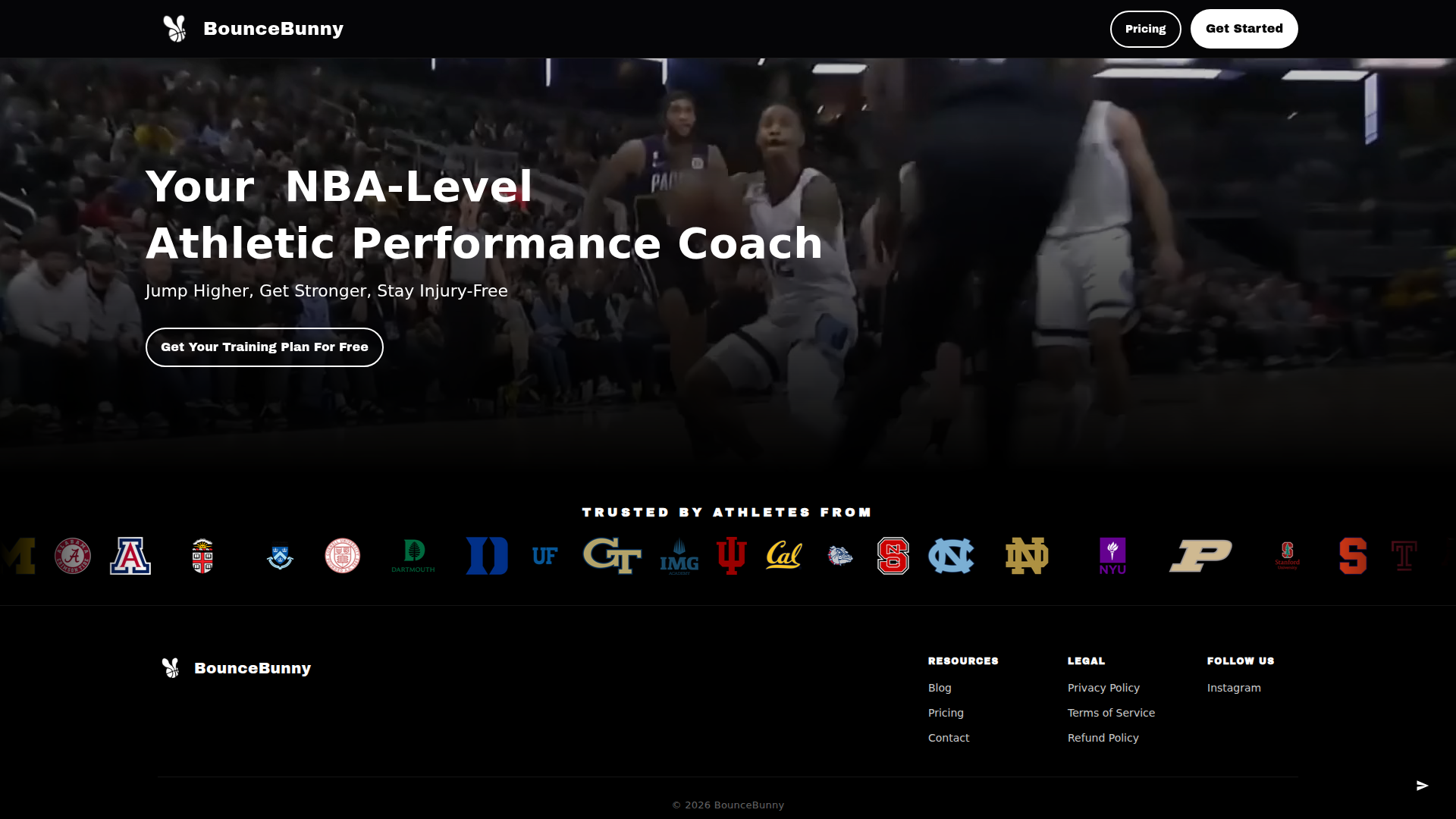
BounceBunny is an athletic performance coaching product positioned around basketball-style explosive performance goals. Based on the page content, it focuses on helping athletes jump higher, get stronger, and reduce injury risk through a training plan.
The product appears aimed at athletes who want structured performance improvement, likely with emphasis on vertical jump and overall athletic development. The visible workflow is simple: users start by getting a training plan, though the page does not provide enough detail to confirm how personalized, digital, or coach-led that plan is.
Features
- Athletic performance coaching: The product is presented as a coach for improving core athletic outcomes such as jumping ability, strength, and durability.
- Training plan access: Users are offered a free training plan, suggesting an onboarding path centered on structured programming rather than unstructured content alone.
- Vertical performance emphasis: The “Jump Higher” positioning indicates a likely focus on explosiveness and lower-body athletic development.
- Strength development focus: “Get Stronger” signals that physical preparation and force production are central parts of the offering.
- Injury-reduction positioning: “Stay Injury-Free” suggests the program includes some preventive training logic, although the page does not specify methods or protocols.
- Athlete-oriented brand positioning: The “NBA-level” framing places the product in a high-performance training category, even though the page does not verify specific professional affiliations or coaching methodology.
Helpful Tips
- Validate programming depth: Before adopting a product in this category, check whether the training plan is personalized by sport, age, training history, and injury background.
- Look for progression structure: For jump and strength goals, clear week-to-week load, volume, and recovery progression matters more than motivational branding.
- Clarify injury-prevention scope: “Stay injury-free” is a broad claim, so teams and athletes should confirm whether the product includes mobility, landing mechanics, recovery guidance, or return-to-play considerations.
- Assess coaching format: It is useful to understand whether the product is a static plan, app-based program, or ongoing coaching service, since implementation quality depends heavily on delivery model.
- Match the program to the athlete profile: Basketball players, volleyball athletes, and general field-sport users may all seek explosiveness, but exercise selection and workload tolerance should differ.
OpenClaw Skills
Within the OpenClaw ecosystem, BounceBunny could likely support skills built around athletic program orchestration and athlete guidance. A likely use case would be an agent that converts BounceBunny training plans into daily check-ins, readiness prompts, recovery reminders, and progress summaries for athletes or coaches. Since the page does not mention integrations or APIs, this should be treated as a workflow-layer opportunity rather than a confirmed native connection.
OpenClaw could also help performance staff build role-specific agents around this type of product, such as a vertical jump progression tracker, a strength-session explainer, or an injury-risk habit coach for youth and amateur athletes. In practice, that combination could make performance coaching more structured and easier to operationalize across teams, academies, or independent trainers by turning a general training plan into repeatable, monitored athlete workflows.
Embed Code
Share this AI tool on your website or blog by copying and pasting the code below. The embedded widget will automatically update with the latest information.
<iframe src="https://www.aimyflow.com/ai/bouncebunny-app/embed" width="100%" height="400" frameborder="0"></iframe>