
CraveGuide - Your Personal Eating Behavior Coach
Rate this Tool
Average Score
Total Votes
Select your score (1-10):
Detail Information
What
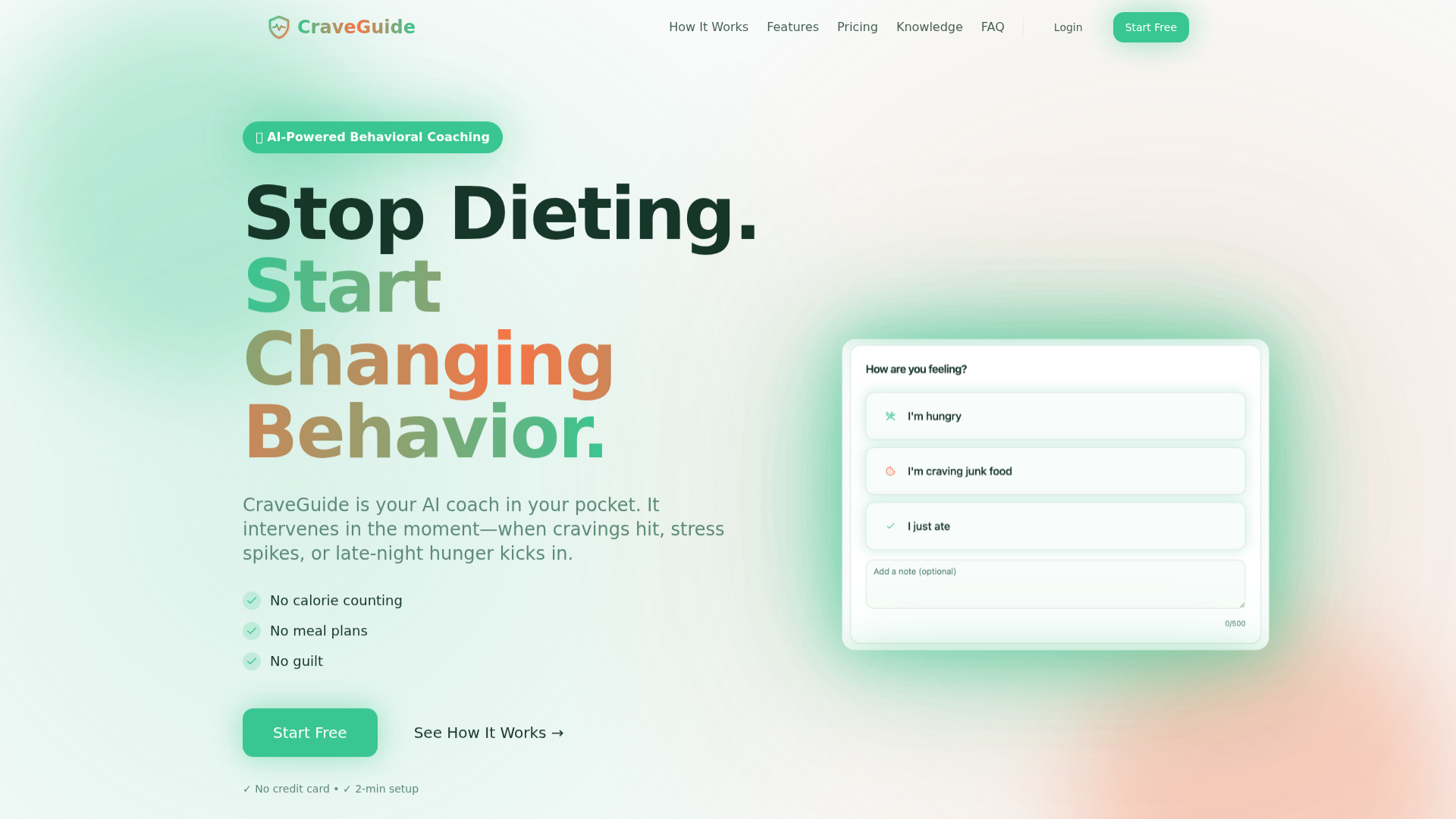
CraveGuide is an AI-powered behavioral coaching app focused on eating habits and weight-loss-related behavior change. It is positioned as an alternative to traditional dieting tools by emphasizing in-the-moment intervention rather than calorie counting, meal plans, or restrictive food rules.
The product appears designed for people who struggle with cravings, emotional eating, stress-related eating, late-night hunger, and other recurring eating triggers. Its core workflow is simple: users log moments like hunger, cravings, or eating with a tap, and the system responds with short AI nudges while also identifying patterns such as trigger times and “danger windows.”
Features
- One-tap event logging: Users can quickly log “hungry,” “craving junk,” or “just ate,” reducing friction compared with detailed food tracking.
- Real-time AI nudges: The app generates short, practical responses based on recent events, time of day, and identified triggers to support decisions in the moment.
- Pattern recognition: CraveGuide highlights recurring triggers, behavior loops, and high-risk periods so users can build awareness of their eating habits.
- Configurable danger windows: Users set 2–3 daily high-risk time blocks during onboarding, allowing the app to monitor periods when cravings are more likely.
- Proactive scheduled nudges: The system sends check-ins during danger windows before cravings escalate, with throttling capped at one message per 60 minutes.
- Activity summary and timeline: A dashboard and recent activity feed help users review logged events and AI nudges to spot emerging patterns over time.
Helpful Tips
- Assess fit by behavioral focus: This product is better suited to users who want habit support and craving interruption than those seeking detailed nutrition analysis or meal planning.
- Success likely depends on consistent lightweight logging: Because the coaching relies on recent events and pattern detection, regular use of the one-tap inputs is likely important for personalization.
- Set danger windows carefully: Initial high-risk time blocks should reflect actual recurring problem periods, since proactive nudges depend on this setup.
- Use it as a support tool, not medical guidance: The site explicitly states that CraveGuide is not medical advice, so weight-loss or eating-related health concerns should still involve a healthcare professional.
- Validate outcomes conservatively: The page describes intended benefits such as fewer cravings and better decisions, but it does not provide detailed evidence, study results, or quantified performance data.
OpenClaw Skills
Within the OpenClaw ecosystem, CraveGuide could likely support skills focused on behavior logging, trigger analysis, and just-in-time coaching workflows. A plausible OpenClaw agent could summarize a user’s weekly craving patterns, classify common triggers like stress or boredom, and generate structured reflections or habit-adjustment suggestions based on the event stream. This is a likely use case, not a confirmed native integration.
More broadly, combining CraveGuide-style behavioral data with OpenClaw agents could reshape digital wellness support for coaches, health educators, and habit-change programs. For example, an OpenClaw workflow could route repeated late-night craving patterns into a weekly risk report, create personalized intervention playbooks for different danger windows, or help practitioners monitor adherence trends without relying on calorie logs. If implemented carefully, that combination could make eating-behavior support more immediate, pattern-based, and operationally scalable.
Embed Code
Share this AI tool on your website or blog by copying and pasting the code below. The embedded widget will automatically update with the latest information.
<iframe src="https://www.aimyflow.com/ai/crave-guide-ai/embed" width="100%" height="400" frameborder="0"></iframe>
Explore Similar Tools
fuelOS App - App Store
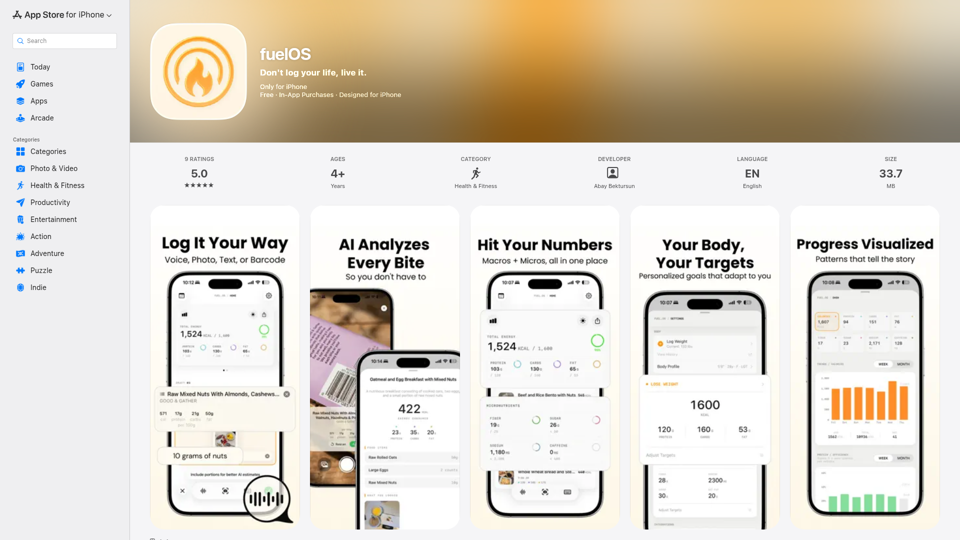
fuelOS is an iPhone nutrition tracking app that uses AI to help people log meals by photo, voice, or barcode, set health goals, and monitor progress, mainly for individuals managing their diet and wellness habits. For nutrition coaches, wellness practitioners, and health-focused professionals, AI-assisted logging and meal recommendations can reduce manual tracking friction and make nutrition data easier to review in daily practice.
esotericAI - AI-Powered Tarot Readings
esotericAI is an AI-powered tarot and astrology platform that helps people get personalized tarot readings, journal their spiritual journey, and explore natal chart and transit-based insights, mainly for users interested in self-discovery and spiritual guidance. In an AI-driven wellness and coaching landscape, it can help tarot readers, spiritual coaches, and content creators deliver faster interpretations and more structured reflection experiences.
Body Fat Estimator – Estimate Body Fat % from a Photo
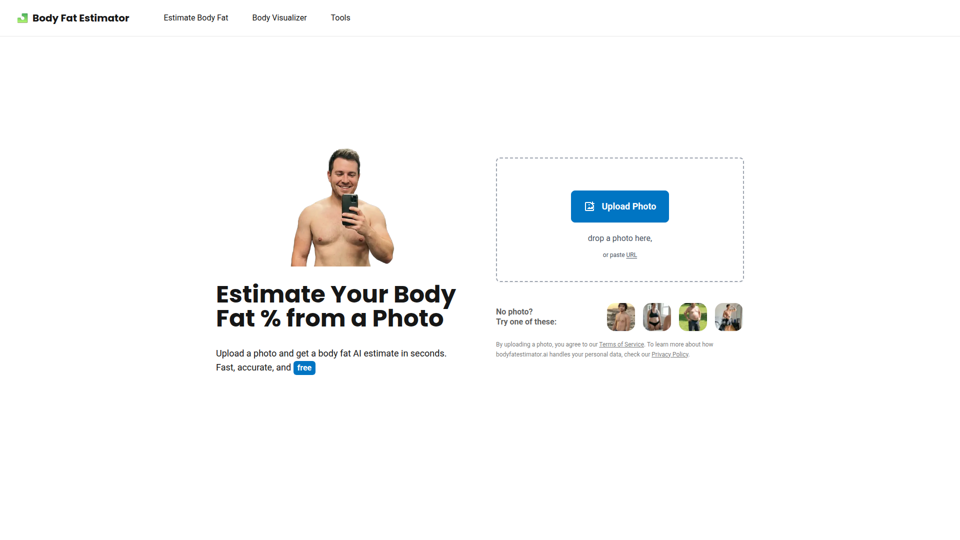
BodyFatEstimator.ai is a photo-based AI tool that estimates body fat percentage from full-body images to help people track body composition changes over time, mainly for fitness-focused individuals and athletes. For coaches and personal trainers, it offers a practical way to monitor visual progress between infrequent clinical scans when consistent photo conditions are used.
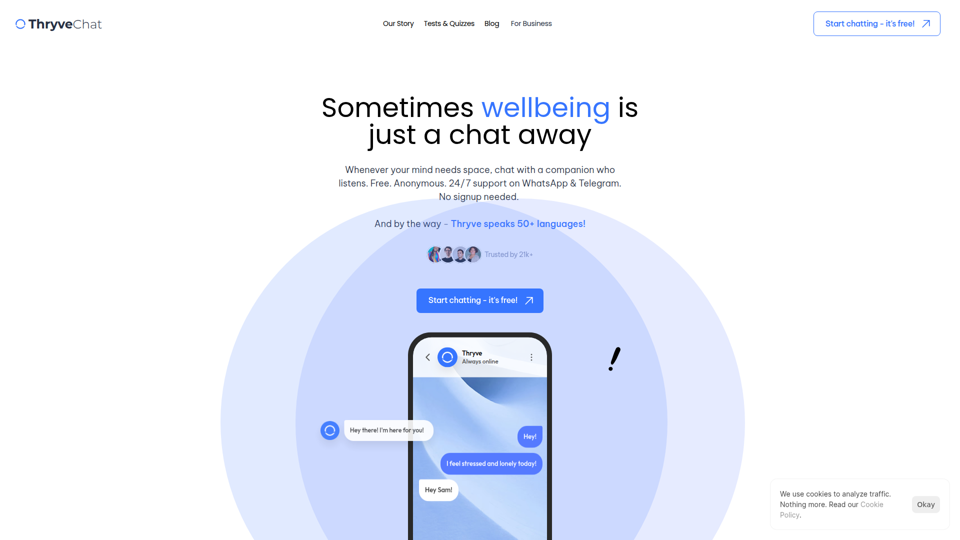
Thryve: Free 24/7 AI wellbeing support
Thryve is a free, anonymous AI wellbeing support chatbot that helps people chat about stress, mindfulness, nutrition, fitness, and daily resilience, mainly for individuals seeking accessible 24/7 support on WhatsApp or Telegram. For wellbeing, HR, and people-support roles, it shows how AI chat tools can extend always-on, multilingual self-guided support between human-led care and workplace wellbeing programs.
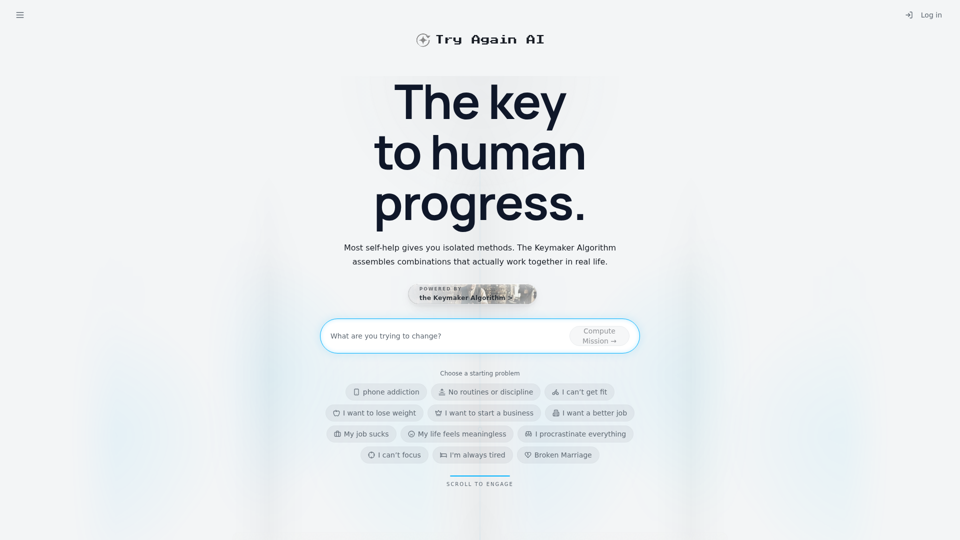
Try Again AI - The Keymaker for self-help.
Try Again AI is a self-help tool that uses its Keymaker Algorithm to assemble combinations of methods for real-life problems like procrastination, focus, routines, fitness, work, and relationships, mainly for individuals seeking structured personal improvement. In an AI-assisted coaching era, it can help coaches, counselors, and self-improvement professionals surface more coherent behavior-change approaches instead of relying on isolated tactics.

Diary Tarot | Tarot Reading Online & Moon Phase Reading
Diary Tarot is an online tarot reading and moon phase journaling tool that helps users draw cards, get AI-assisted interpretations, and track recurring themes over time, mainly for people seeking guided self-reflection through tarot. For tarot readers, coaches, and reflective practitioners, its AI-supported pattern tracking can make it easier to review past spreads, notice repeated symbols, and document evolving decisions or emotional themes.
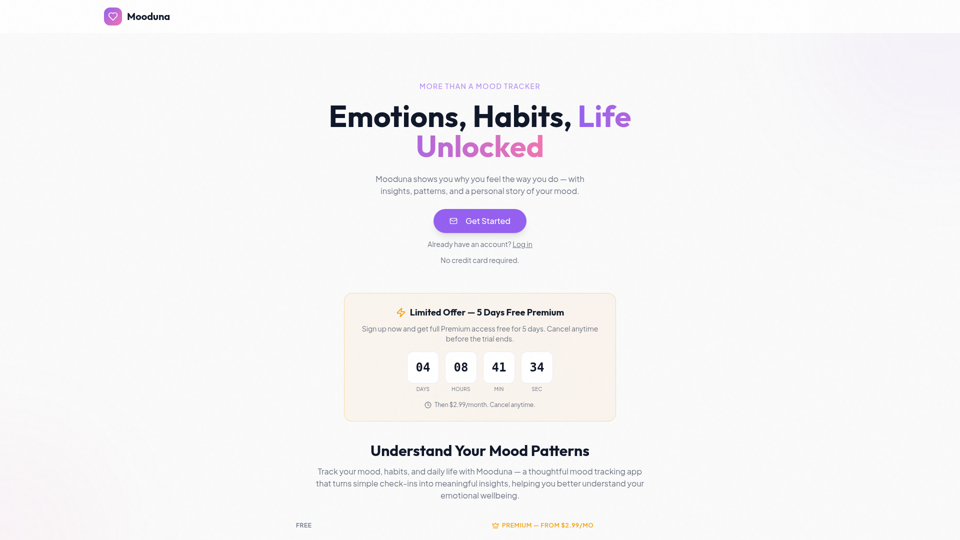
Mood Tracker & Habit Insights - AI - Mooduna
Mooduna is a mood tracking and wellbeing app that helps people log moods, habits, and journal reflections to understand emotional patterns, mainly for individuals building self-awareness around mental wellbeing. For therapists, coaches, and wellbeing professionals, its AI-supported reflections and habit insights can make client check-ins more structured and help surface patterns between daily routines and mood.

CoupleWork | AI-Powered Relationship Growth & Connection App
CoupleWork is an AI-powered relationship support app that helps couples and individuals improve communication, resolve conflict, rebuild trust, and build healthier habits through personalized assessments, guided voice sessions, and evidence-based exercises. For relationship coaches, therapists, and mental health practitioners, tools like this can extend skill-building between sessions and give clients more consistent, private support in daily life.