
Designbase - Design Runtime
Rate this Tool
Average Score
Total Votes
Select your score (1-10):
Detail Information
What
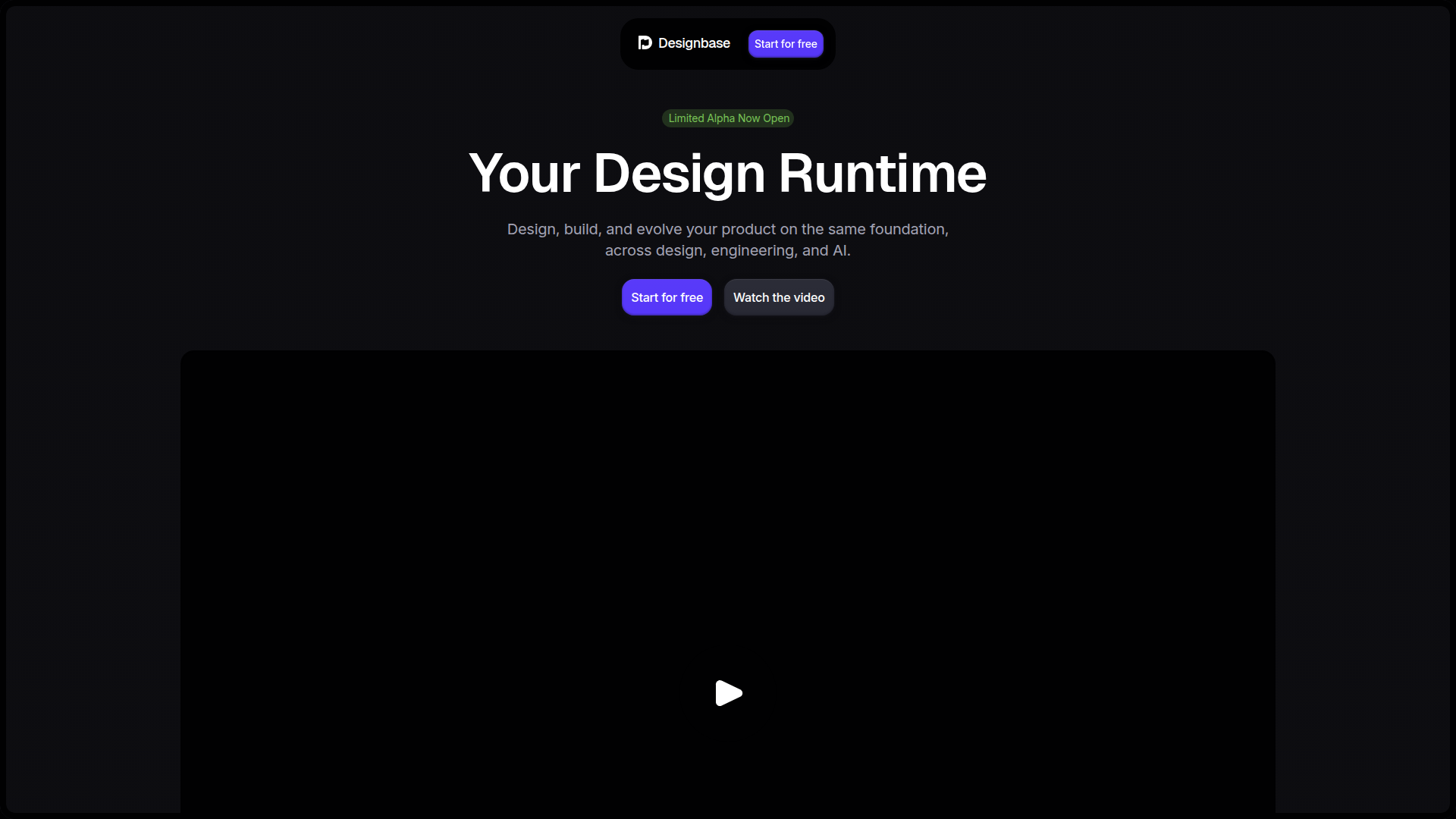
Designbase is a product development platform positioned as a “design runtime” that aims to unify design, engineering, and AI on the same underlying system. It is intended for teams building digital products that want to define their design system, product constraints, patterns, and context once, then use that shared foundation across visual editing, development workflows, and AI-assisted work.
The core workflow appears to center on creating or importing a design system, editing directly on a canvas, defining states and events visually, using real data in designs, and enabling both team members and agents to work from the same context. Based on the page, Designbase is likely positioned for product, design, and engineering teams that want to reduce handoff and rebuild work while keeping AI outputs aligned with their existing system and rules.
Features
- Shared runtime for design, development, and AI — The platform uses one common system so teams can manage product logic, constraints, and context in a single place rather than splitting them across disconnected tools.
- Visual editing with behavioral controls — Users can edit directly on the canvas and define state and events visually, which helps connect interface design with product behavior earlier in the workflow.
- Real data in designs — The product supports using real data in design work, which can improve realism during iteration and reduce the gap between mockups and shipped experiences.
- Pattern and decision management — Teams can create patterns, distribute them, and document guidelines and decisions so design, development, and AI operate from a shared source of context.
- AI agents constrained by system rules — Built-in or custom agents can work within defined components, patterns, and constraints, which is intended to make suggestions more consistent with the product’s established design system.
- Design system generation or component import — Users can generate a design system quickly or bring their own components, giving teams a way to establish ownership of their system from the start.
Helpful Tips
- Evaluate the strength of your existing design system first — A platform like this is most useful when teams are ready to formalize patterns, constraints, and component rules rather than treating design artifacts as one-off files.
- Start with one product area or workflow — Piloting on a bounded feature set can make it easier to test how well shared context, visual behavior modeling, and agent assistance work in practice.
- Define governance for patterns and decisions early — The value of a shared runtime depends on clear ownership of components, naming, rules, and documentation quality.
- Assess agent usage carefully — The site describes custom and built-in agents, but buyers should validate how those agents are configured, reviewed, and adopted inside real product workflows.
- Confirm framework and tool fit during evaluation — The page says it works with favorite frameworks and existing tools, but the exact scope of compatibility is not detailed and should be verified.
OpenClaw Skills
Designbase could likely serve as a strong context layer for OpenClaw workflows focused on product design operations, UI system governance, and AI-assisted delivery. An OpenClaw skill could ingest Designbase patterns, component definitions, documented decisions, and design constraints to support tasks such as feature scoping, design QA, implementation guidance, and change impact analysis. While the page does not confirm a native OpenClaw integration, the product’s emphasis on reusable context and agent-ready system knowledge makes this a plausible workflow fit.
In practice, teams in product design, frontend engineering, or product operations could likely build OpenClaw agents that review proposed UI changes against approved patterns, generate implementation checklists from design context, or summarize system decisions for new contributors. That combination could help turn design systems from static documentation into an operational layer that informs planning, design review, and build execution with more consistency across humans and AI.
Embed Code
Share this AI tool on your website or blog by copying and pasting the code below. The embedded widget will automatically update with the latest information.
<iframe src="https://www.aimyflow.com/ai/designbase-com/embed" width="100%" height="400" frameborder="0"></iframe>