
Glass Health | Ambient Scribing & Clinical Decision Support
Rate this Tool
Average Score
Total Votes
Select your score (1-10):
Detail Information
What
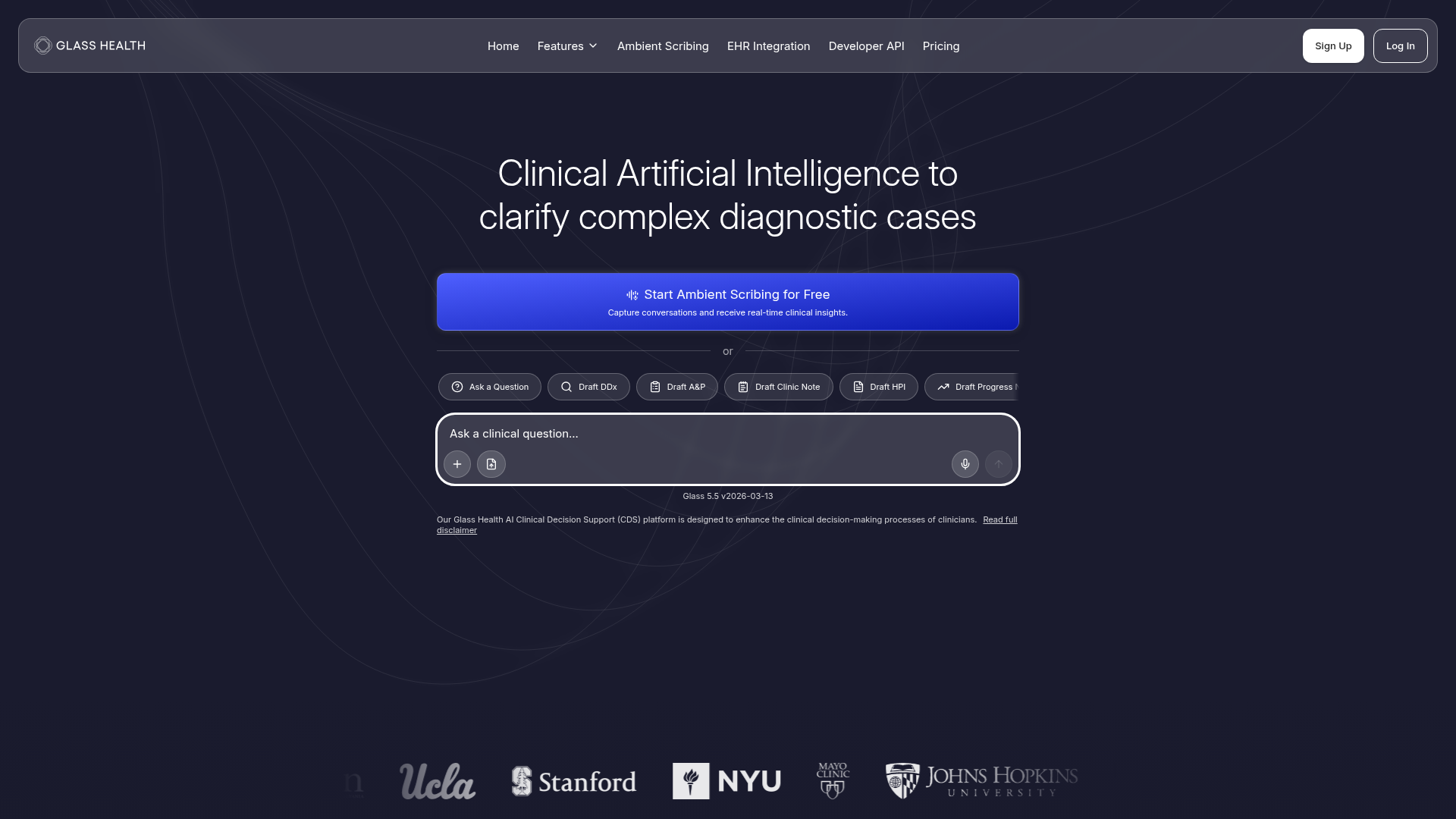
Glass Health is a clinical AI platform focused on two connected jobs: ambient scribing during patient encounters and clinical decision support at the point of care. It is aimed at clinicians and health systems that need help capturing visit conversations, generating structured documentation, and getting evidence-based guidance for diagnosis and treatment planning.
The product appears positioned as an end-to-end clinical workflow assistant rather than a single-purpose note tool. Based on the page, Glass listens during encounters, surfaces real-time insights such as suggested history questions and next steps, answers clinical reference questions with citations, and drafts multiple clinical and patient-facing documents for clinician review and editing.
Features
- Ambient scribing during encounters — Glass listens to patient visits and produces transcripts plus real-time clinical insights, helping clinicians capture documentation while the encounter is happening.
- Real-time diagnostic support — The system suggests history questions, highlights potential next steps, and helps build differential diagnoses during the visit instead of only after it.
- Evidence-based clinical reference — Clinicians can ask medical questions and receive cited answers drawn from medical literature and guidelines, which is useful for quick verification at the point of care.
- Treatment planning assistance — Glass helps create evidence-based assessment and plan outputs for complex cases, supporting structured clinical reasoning.
- Automated clinical documentation — It drafts H&Ps, progress notes, clinic notes, discharge summaries, handoff notes, task lists, patient handouts, and other common documents, reducing manual note assembly.
- Workflow coverage across care settings — The page indicates support for provider-facing and patient-facing outputs, suggesting use across ambulatory, inpatient, and discharge-related workflows, though specialty depth is not fully described.
Helpful Tips
- Evaluate Glass first on high-friction workflows such as complex consults, follow-ups with heavy documentation burden, or cases where differential diagnosis support is most valuable.
- Keep a clear clinician review step for all generated notes, plans, and patient-facing materials, since the page presents Glass as an assistant rather than an autonomous clinical actor.
- Test the quality of cited clinical reference answers against your organization’s preferred guidelines and documentation standards before broad deployment.
- If ambient scribing is a priority, validate how well the product fits actual encounter environments, including specialty-specific vocabulary, speaking styles, and handoff needs.
- The site mentions EHR integration and a developer API in navigation, but this page does not provide implementation detail, so buyers should confirm scope, data flow, and operational requirements directly.
OpenClaw Skills
Glass Health could likely pair well with OpenClaw as a clinical workflow orchestration layer around encounter support, documentation, and evidence retrieval. Likely OpenClaw skills could include intake summarization, chart-context packaging before a visit, post-visit routing of drafted notes for clinician review, and structured extraction of tasks, discharge items, or patient education content from Glass-generated outputs.
A broader OpenClaw + Glass setup could also support role-specific agents for physicians, advanced practice clinicians, care coordinators, and utilization teams. For example, a likely workflow could take ambient encounter output from Glass, have OpenClaw classify follow-up actions, prepare prior authorization packets, generate patient instruction variants, and route unresolved diagnostic questions into specialist review queues. If implemented carefully, this combination could shift clinical teams toward more standardized, evidence-linked, and lower-friction documentation and decision-support operations, though the source page does not confirm any native OpenClaw integration.
Embed Code
Share this AI tool on your website or blog by copying and pasting the code below. The embedded widget will automatically update with the latest information.
<iframe src="https://www.aimyflow.com/ai/glass-health/embed" width="100%" height="400" frameborder="0"></iframe>
Explore Similar Tools
ClinFolio — Clinical Portfolio Platform for Doctors
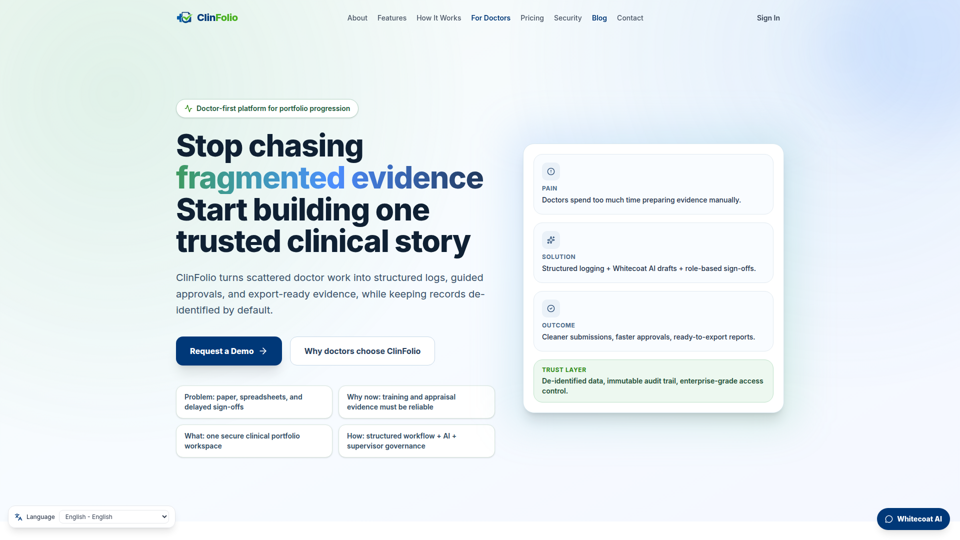
ClinFolio is a secure clinical portfolio platform that helps doctors log procedures and other clinical activities, get supervisor sign-offs, track CPD, and export evidence-ready reports with de-identified records by default. For doctors, trainees, and supervising clinicians, its AI-assisted drafting and audit-ready workflows can reduce documentation time and improve the quality and consistency of appraisal and training submissions.
AI Medical Scribe for Doctors | Real-Time Charting AI - DoraScribe
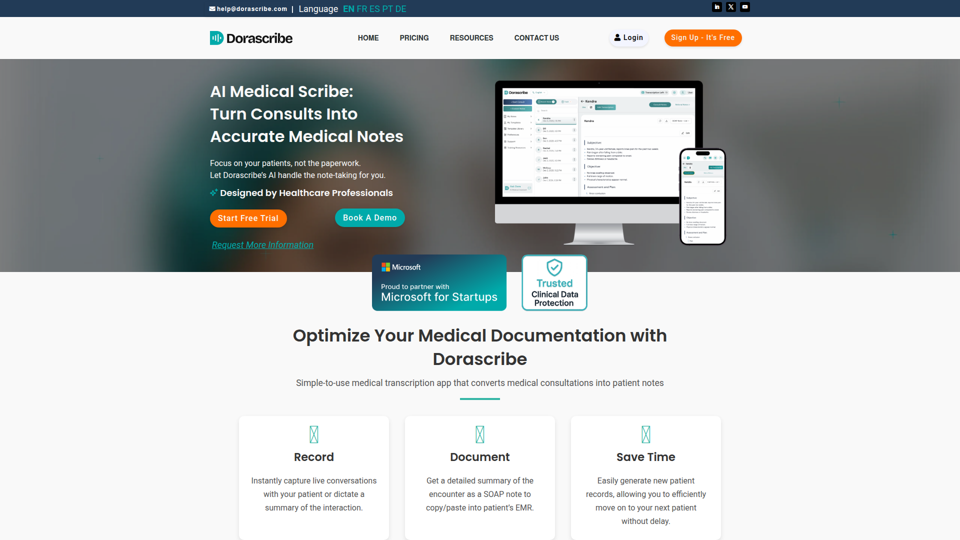
DoraScribe is an AI medical scribe and transcription tool that turns patient consultations into SOAP notes and other charting documents for doctors and other clinicians, with mobile access and HIPAA-compliant handling. For physicians and clinical teams, it can reduce documentation burden and support more accurate, consistent records while keeping attention on patient care.
AI Medical Scribe | #1 Trusted by 90k+ Doctors | Sunoh.ai
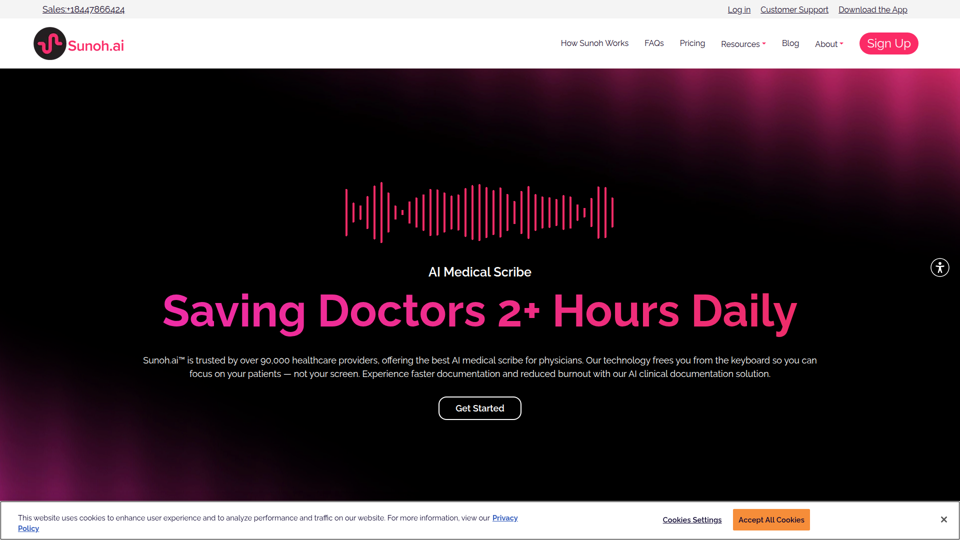
Sunoh.ai is an AI medical scribe that listens to patient-provider conversations, generates clinical note drafts and order details, and integrates with EHRs for physicians and other healthcare providers. For clinicians and practice operations teams, this can reduce documentation time and after-hours charting while improving note completeness and consistency across workflows.
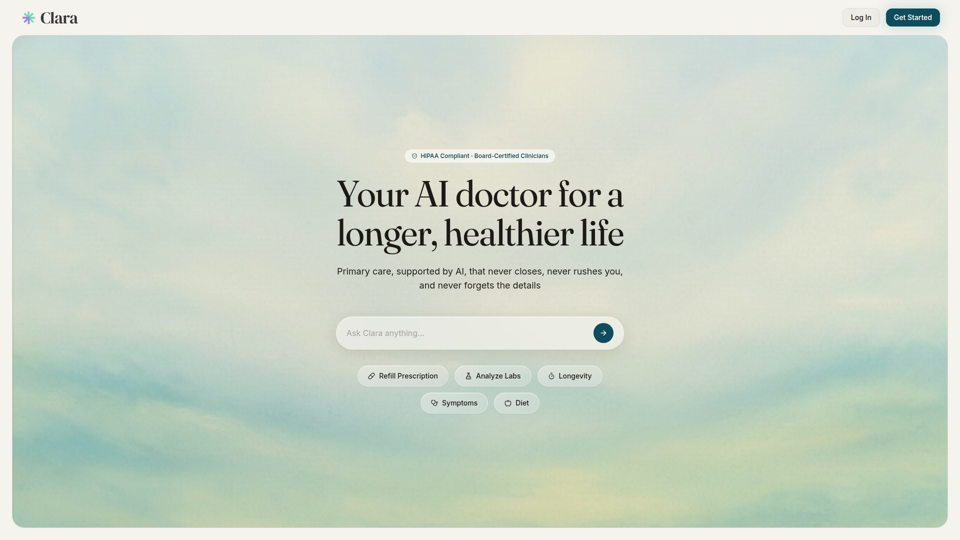
Clara — Your AI Doctor for a Longer, Healthier Life
Clara is an AI-supported primary care tool that helps patients review symptoms, analyze labs, manage prescriptions, and import medical history, with clinician verification for care-related actions. For clinicians and care teams, it can streamline chart review and surface longitudinal patterns in patient data, helping them make faster, more informed decisions.
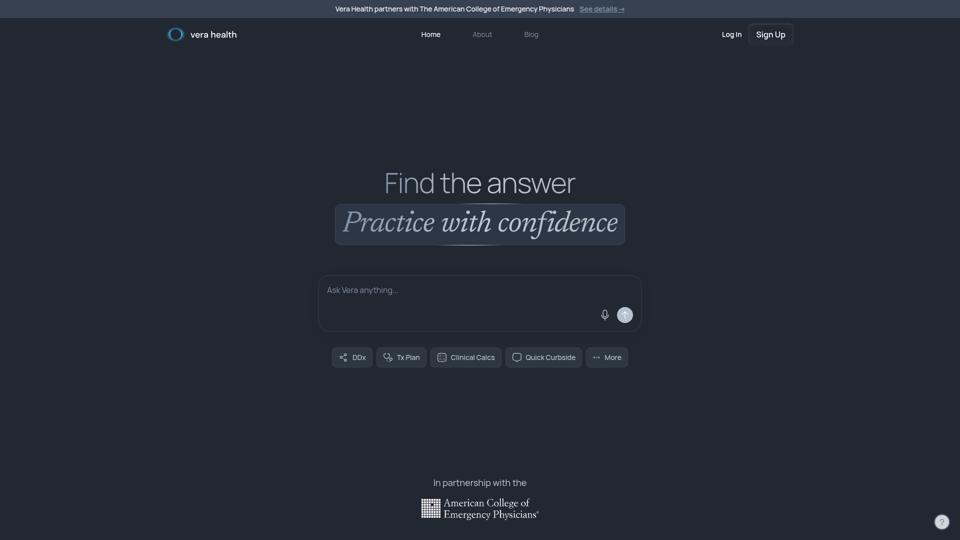
Vera Health - Evidence-Based Clinical Answers
Vera Health is an AI clinical decision-support search engine that helps licensed clinicians and trainees find concise, evidence-based answers, differential diagnoses, treatment plans, and clinical calculations from peer-reviewed medical literature and guidelines. For physicians, PAs, pharmacists, and other bedside clinicians, it can speed up question resolution while keeping recommendations auditable through linked sources and evidence grading.