
Mimir — Where product thinking happens
Rate this Tool
Average Score
Total Votes
Select your score (1-10):
Detail Information
What
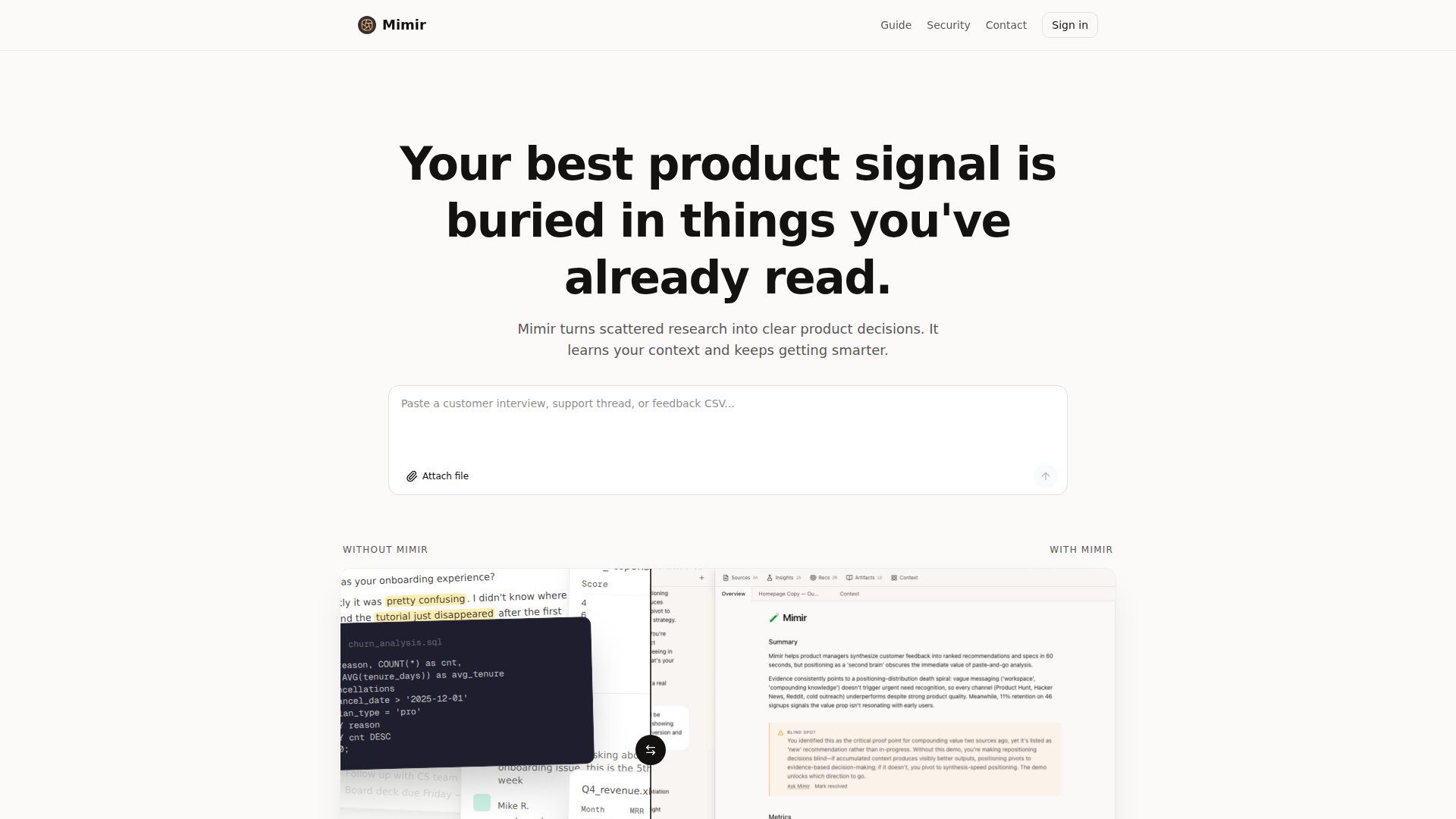
Mimir is a product research and decision-support workspace that turns scattered inputs into structured product insight. It is designed for product teams working across interviews, support tickets, analytics, surveys, spreadsheets, notes, SQL outputs, Slack threads, and similar sources that are typically spread across multiple tools.
The core workflow is to paste, upload, or connect source material, let Mimir build a running model of the product, users, and market, and then use that model to surface themes, answer questions, prioritize work, and generate decision artifacts. Based on the page content, it appears positioned as a product intelligence layer for research synthesis and roadmap decision-making rather than a standalone analytics or ticketing system.
Features
- Multi-source ingestion: Accepts transcripts, CSVs, PDFs, screenshots, Slack content, URLs, and text so teams can analyze product signals across qualitative and quantitative inputs in one place.
- Living product context model: Builds an evolving model of product, user, and market context that becomes sharper as more sources are added, helping teams move beyond isolated findings.
- Theme detection with source traceability: Surfaces recurring issues ranked by severity and frequency, with original quotes inline so teams can verify the evidence behind each theme.
- Grounded question answering: Lets users ask questions such as churn or onboarding issues and returns answers tied to cited source material rather than uncited summaries.
- Prioritized recommendation and backlog support: Produces ranked recommendations by likely impact and effort, which can help product teams defend prioritization in roadmap discussions.
- Document generation from research: Creates PRDs, briefs, and emails based on source-backed findings, which can reduce manual synthesis and drafting work.
Helpful Tips
- Evaluate how well the product handles your real research mix, especially if your team relies on messy notes, support logs, analytics exports, and partial transcripts rather than clean datasets.
- Verify the quality of source traceability during a trial; for products like this, confidence depends heavily on whether recommendations can be audited back to original evidence.
- Start with one focused workflow, such as onboarding friction or churn analysis, before expanding usage to broader product planning and documentation.
- Involve both product and research or support stakeholders early, since the value of a synthesis layer usually increases when multiple evidence streams are consistently fed into it.
- Stay cautious about predictive or recommendation outputs until you confirm they align with your team’s judgment and historical outcomes; the page suggests this capability, but detailed methodology is not provided.
OpenClaw Skills
Mimir could likely work well inside the OpenClaw ecosystem as a research-synthesis and product-decision skill. A likely workflow would have OpenClaw agents collect raw inputs from interviews, support channels, analytics exports, and planning notes, then pass those materials into a Mimir-centered analysis step that identifies themes, drafts PRDs, and prepares roadmap evidence packs. The source-grounded nature shown on the page makes it a plausible foundation for agents that need to justify recommendations rather than just summarize information.
More broadly, this combination could support product ops, UX research, customer insight, and growth teams with specialized OpenClaw skills such as churn-root-cause analysis, onboarding-friction review, voice-of-customer digest creation, or board-deck evidence assembly. If native integration is not available, this should be treated as a likely orchestration use case rather than a confirmed connection. In practice, that setup could shift teams from manual synthesis and fragmented decision-making toward a more continuous operating model where evidence is gathered, interpreted, and converted into action-ready artifacts with less overhead.
Embed Code
Share this AI tool on your website or blog by copying and pasting the code below. The embedded widget will automatically update with the latest information.
<iframe src="https://www.aimyflow.com/ai/mimir-build/embed" width="100%" height="400" frameborder="0"></iframe>
Explore Similar Tools
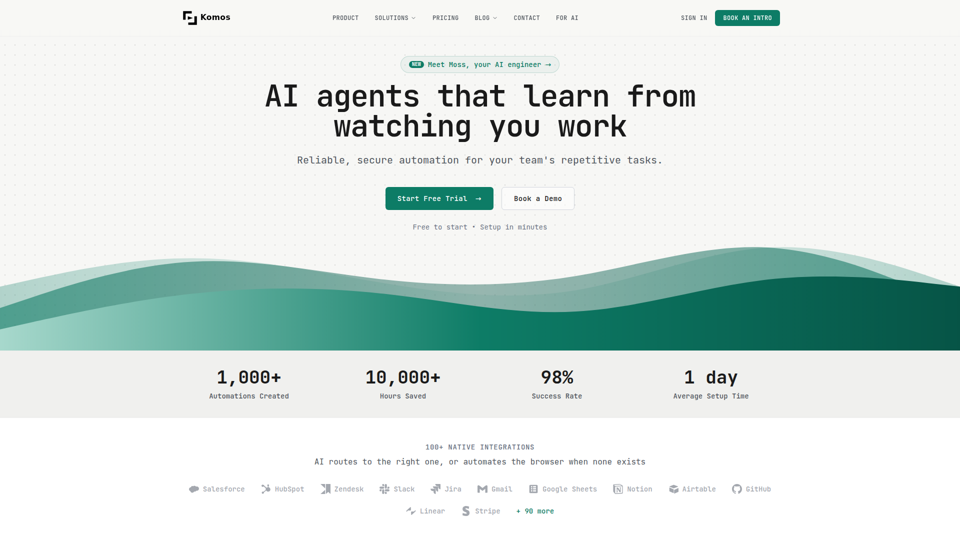
Komos – AI That Runs Your Repetitive Work
Komos is an AI automation platform that learns repetitive browser and SaaS tasks by watching users work, then builds editable workflows and APIs for teams in operations-heavy functions such as legal, finance, healthcare, HR, and supply chain. In AI-enabled operations, it can help specialists reduce manual portal work, document handling, and compliance steps while keeping workflows visible, auditable, and under team control.
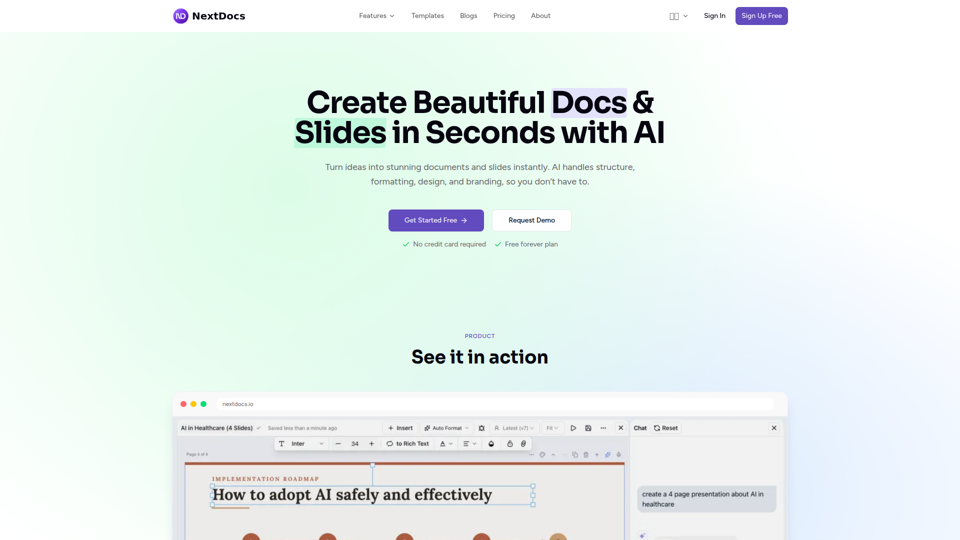
Create Beautiful Docs & Slides in Seconds with AI
NextDocs is an AI document and presentation creation tool that helps professionals and teams turn prompts into branded docs, slides, social posts, proposals, reports, and contracts with built-in editing, research, and export options. For roles like project managers, marketers, founders, and sales teams, it can reduce manual formatting and versioning work so more time goes to reviewing content and making decisions.
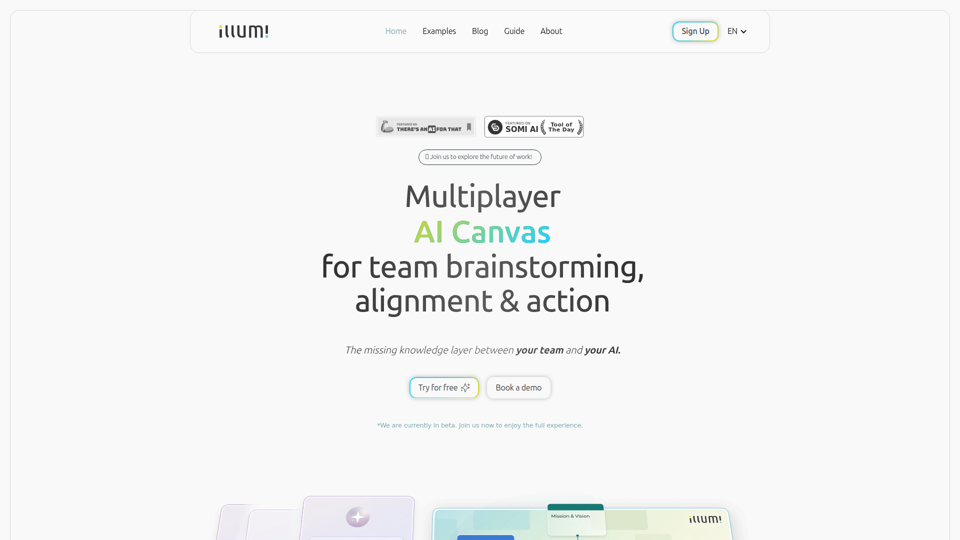
illumi - AI Canvas for Leading Team Work
illumi is a multiplayer AI canvas and whiteboard that helps teams gather context, brainstorm, align decisions, and co-create outputs with multiple AI models in one shared workspace, mainly for teams doing collaborative planning and knowledge work. For team leads, strategists, and cross-functional contributors, it can improve AI-driven work by preserving shared context so generated drafts and decisions reflect the full discussion instead of fragmented prompts.
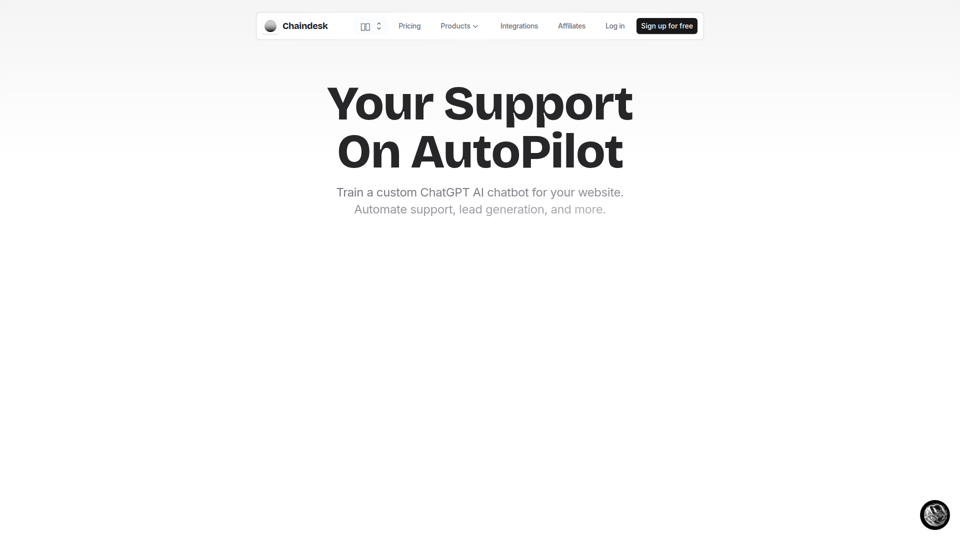
Chaindesk - Build a ChatGPT AI Chatbot for your website
Chaindesk is a no-code platform for building custom AI chatbots trained on company data to automate website support, lead generation, and team workflows, mainly for customer support and operations teams. In AI-enabled support environments, it can help service and success professionals reduce repetitive tickets while keeping answers aligned with their knowledge base and escalating conversations to humans when needed.
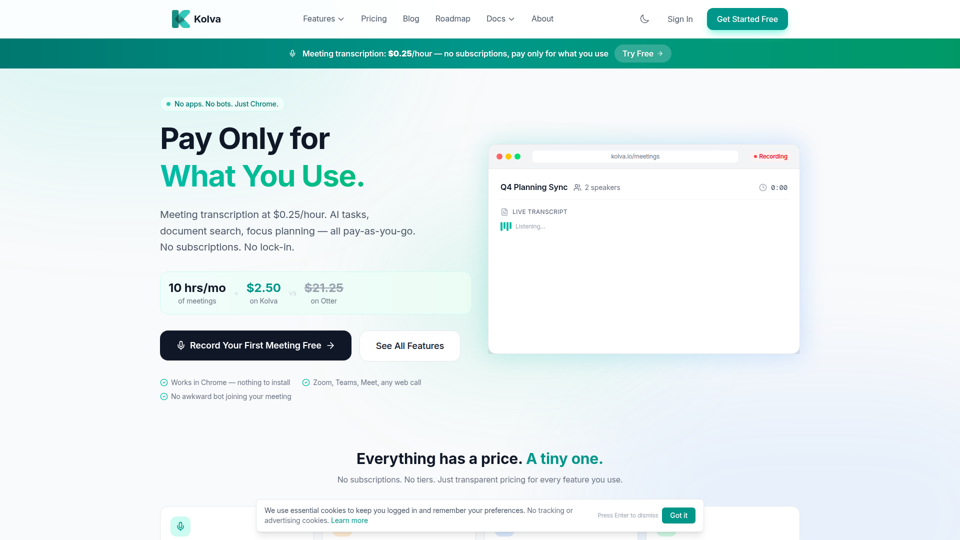
Kolva - Pay Only for What You Use | Meetings, Tasks & Docs
Kolva is a Chrome-based productivity tool that provides meeting transcription and summaries, AI-powered task management, document search, and focus planning on a pay-as-you-go model, mainly for professionals and teams who want lightweight support for meetings, tasks, and docs without subscriptions. For managers, operations staff, and knowledge workers, it can turn web meetings and scattered documents into searchable notes, action items, and next steps with lower overhead than always-on software.
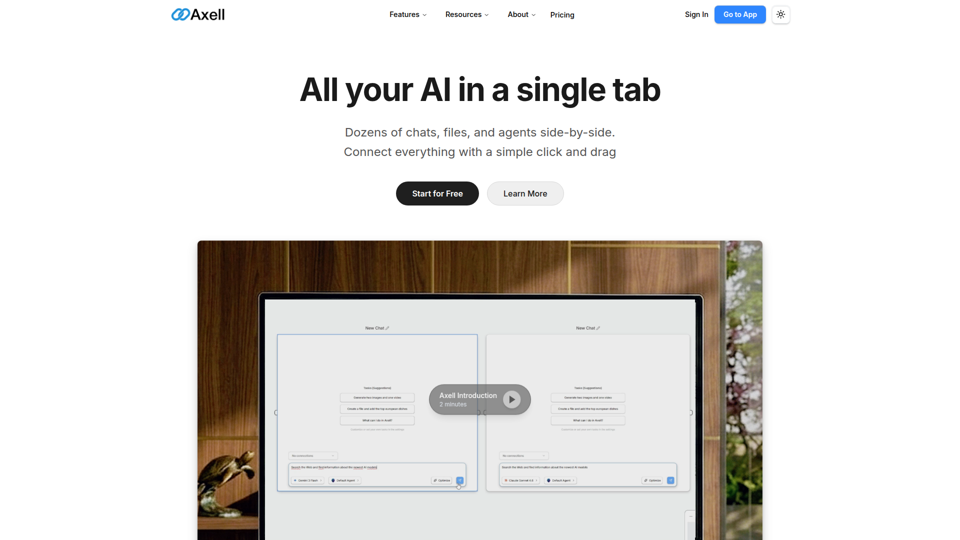
Axell - The Unified AI Workspace
Axell is a unified AI workspace that lets users run multiple chats, files, and custom agents side by side, mainly for teams and professionals who need to compare models, manage context, and collaborate in one place. For knowledge workers, researchers, and operations teams, it can reduce context switching by keeping conversations, documents, and agent workflows connected in a shared live workspace.
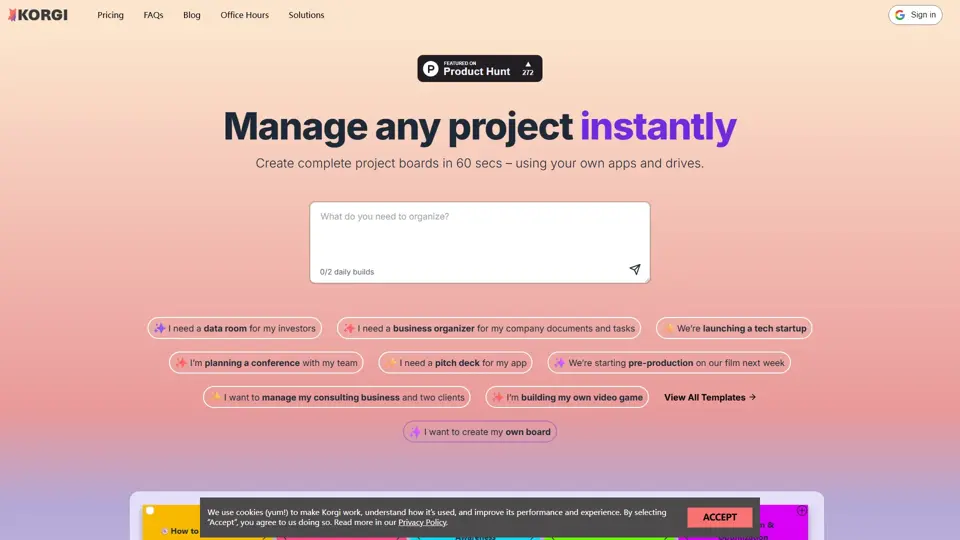
Korgi | Home
Korgi is an all-in-one project board platform with built-in app connections and AI, designed to help teams organize work and collaborate in one place. It gives project and operations teams a simpler way to coordinate tasks without juggling as many separate tools.
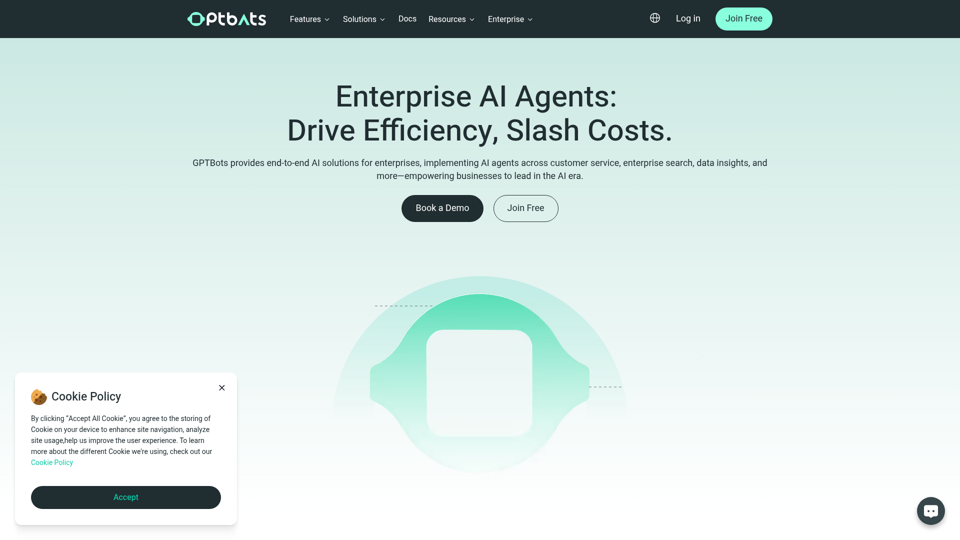
Enterprise AI Agents: Cut Costs & Boost ROI | GPTBots.ai
GPTBots.ai is a no-code enterprise AI agent platform that helps businesses build, deploy, and scale AI agents and workflows for customer support, sales development, enterprise search, and data insights, mainly for enterprise teams. In AI-enabled operations, it can help support, sales, IT, and knowledge management teams automate repetitive work and turn internal data into faster, more consistent decisions.