
Average Score
Total Votes
Select your score (1-10):
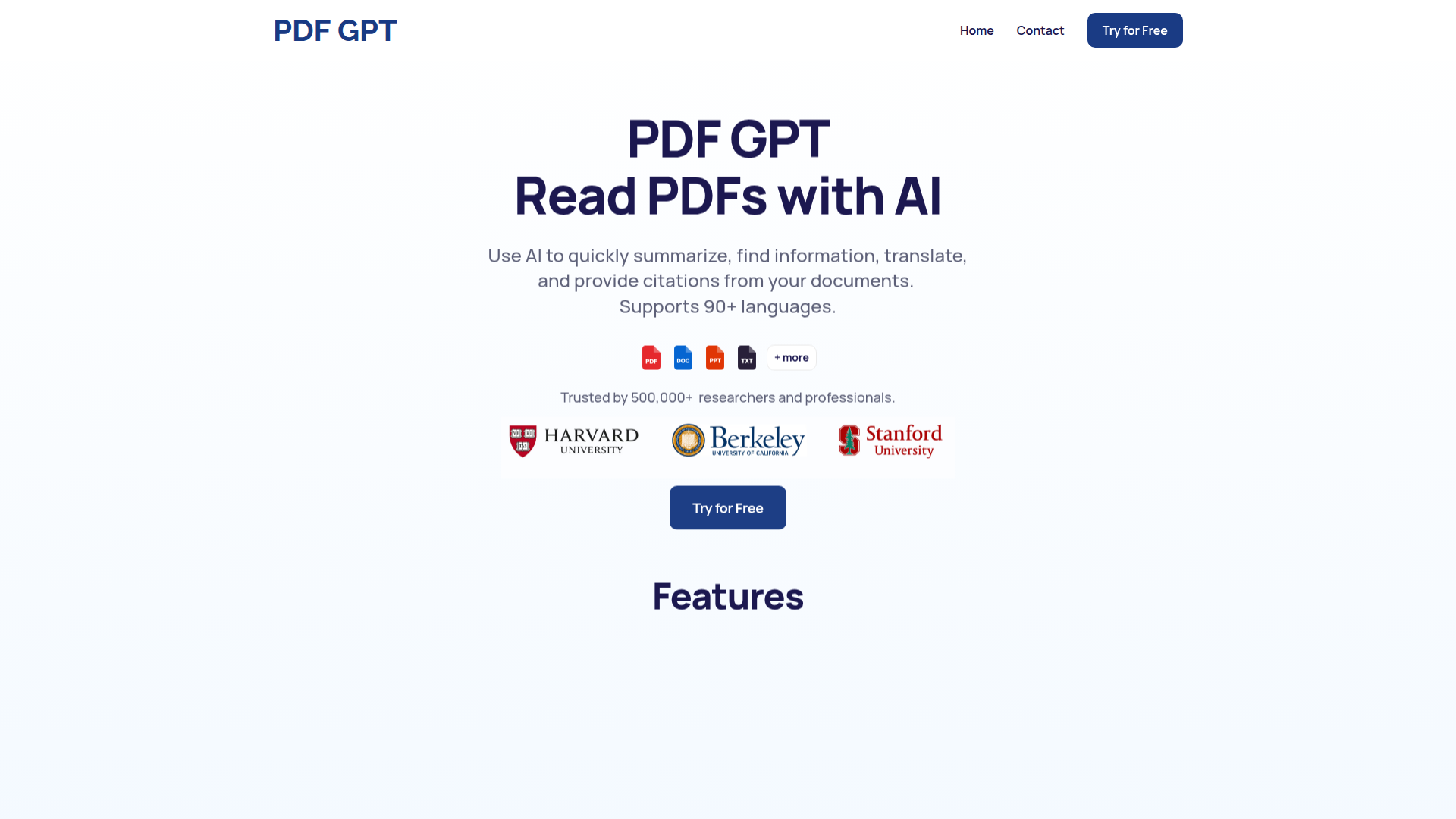
PDF GPT is an AI document assistant for reading and querying PDFs. It is designed to help researchers, professionals, and other document-heavy users summarize content, find specific information, translate text, and receive answers with page-level citations.
The core workflow is simple: upload one or more PDFs, ask questions in natural language, and receive answers grounded in the uploaded documents. Based on the page content, the product appears positioned as a lightweight AI layer for document understanding and knowledge retrieval rather than a full document management system.
Within an OpenClaw ecosystem, PDF GPT could likely serve as a document-grounding layer for knowledge work agents. Likely use cases include an agent that ingests tagged PDF collections, answers policy or research questions with citations, drafts summaries for different audiences, or prepares structured notes from uploaded reports. The source page does not describe a native OpenClaw integration, so this is best treated as a workflow concept rather than a confirmed capability.
This combination could be especially useful in research, consulting, legal-adjacent review, education, and other professions that rely on large volumes of reference material. OpenClaw skills could orchestrate recurring workflows such as literature review preparation, contract clause extraction, multilingual briefing generation, or evidence-backed Q&A across document sets, turning a single-document chat tool into part of a broader, agent-driven document analysis process.
Share this AI tool on your website or blog by copying and pasting the code below. The embedded widget will automatically update with the latest information.
<iframe src="https://www.aimyflow.com/ai/pdfgpt-chat/embed" width="100%" height="400" frameborder="0"></iframe>
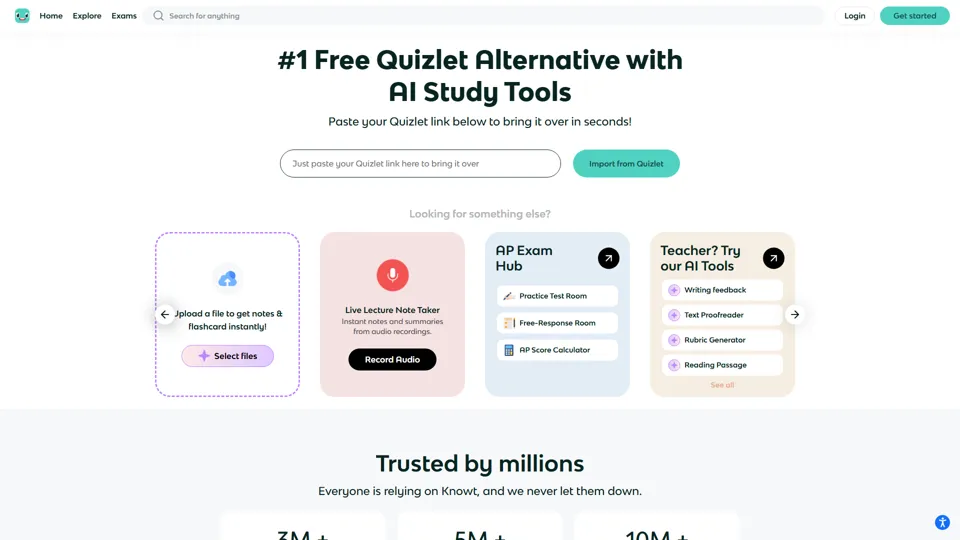
Knowt is a study platform and Quizlet alternative that helps students and teachers create, import, and practice flashcards with multiple study modes. It supports modern learning workflows by making study content easier to reuse, review, and scale across classes.
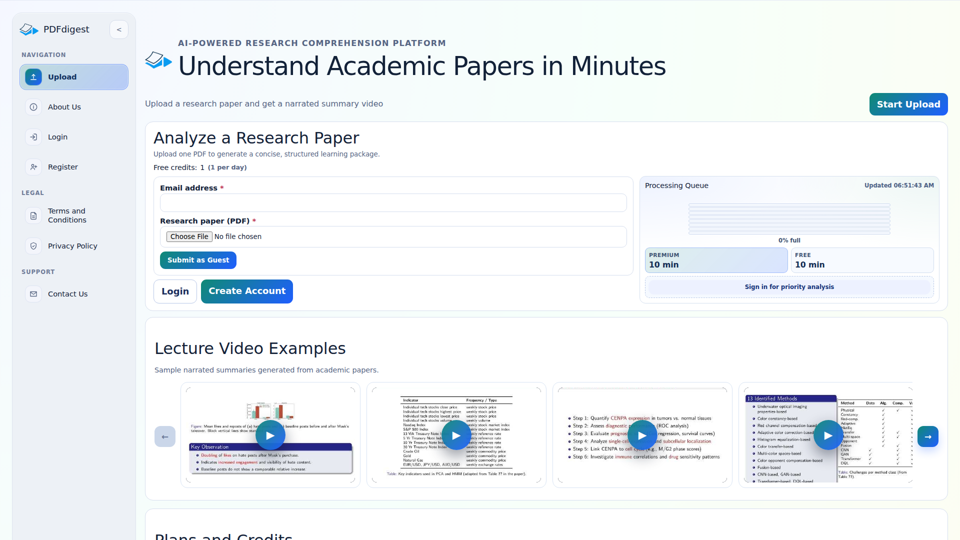
PDFdigest is an AI-powered research comprehension platform that helps users upload academic PDFs and get concise structured explanations and narrated summary videos, mainly for students, researchers, and academics. In AI-enabled research workflows, it can help these professionals review complex papers faster and turn dense findings into more accessible learning materials.
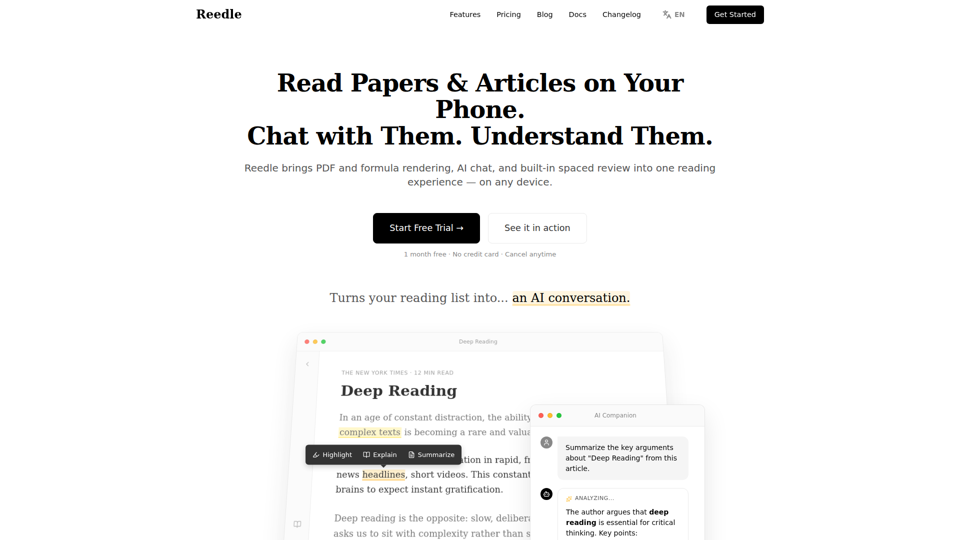
Reedle is an AI reading app for saving, reading, and understanding articles, PDFs, and videos with chat, summaries, translations, and FSRS flashcard review, mainly for researchers, students, and serious readers. For knowledge workers and academics, it can make dense material more useful by turning reading backlogs into searchable, reviewable knowledge across devices.
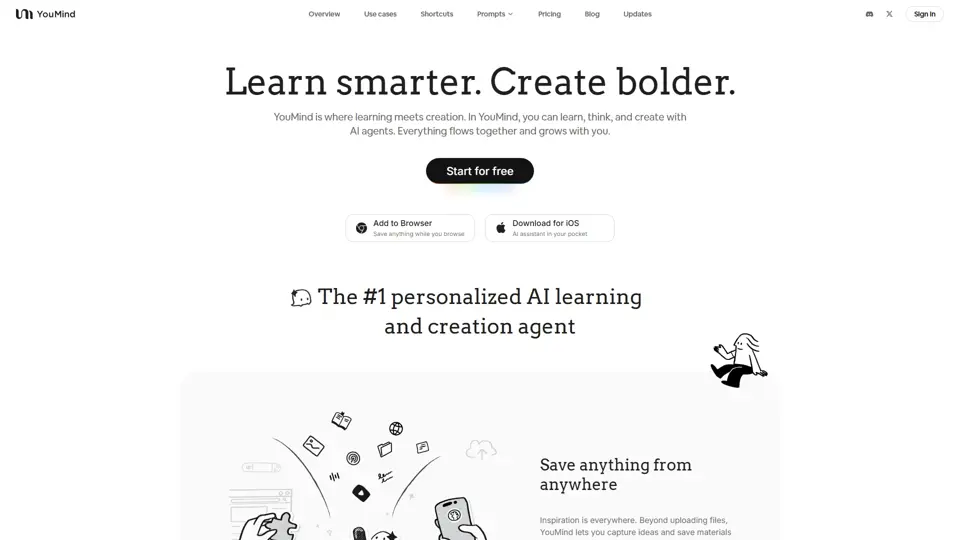
YouMind is an AI creation agent that helps users turn diverse source materials into new creative outputs, making it useful for creators, researchers, and knowledge-driven professionals. In the AI era, it accelerates synthesis work so creative roles can move from gathering inputs to producing drafts more quickly.
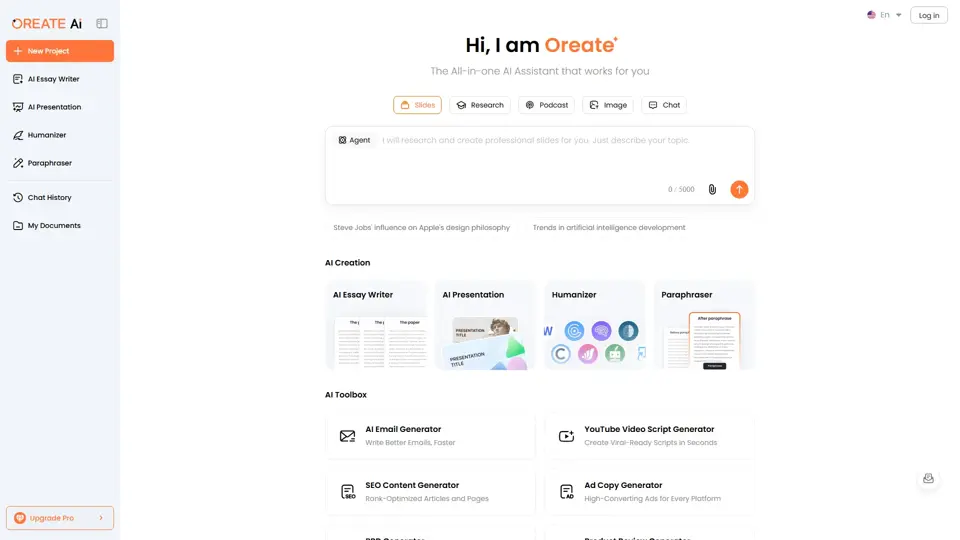
Oreate AI is an AI paraphrasing and rewriting tool that helps users quickly revise documents with online editing features, mainly for writers, students, and content professionals. It helps content-heavy roles produce cleaner rewrites at scale while reducing the time spent on repetitive wording changes.
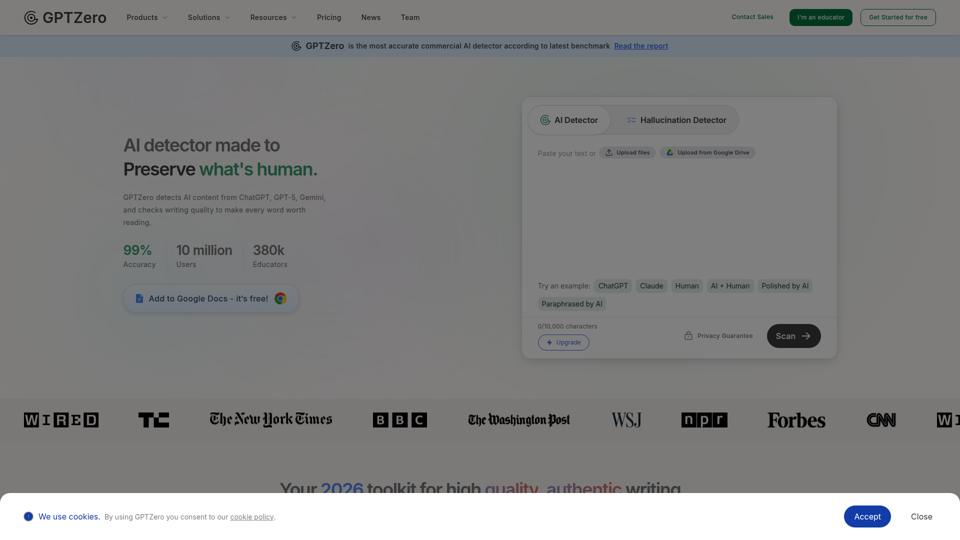
GPTZero is an AI content detection and writing analysis tool that helps users scan text for likely AI-generated content, plagiarism, hallucinated citations, and writing issues, mainly for educators, students, writers, and recruiters. In AI-heavy workflows, it helps teachers, editors, and hiring teams verify authorship and review document quality with more context before making decisions.
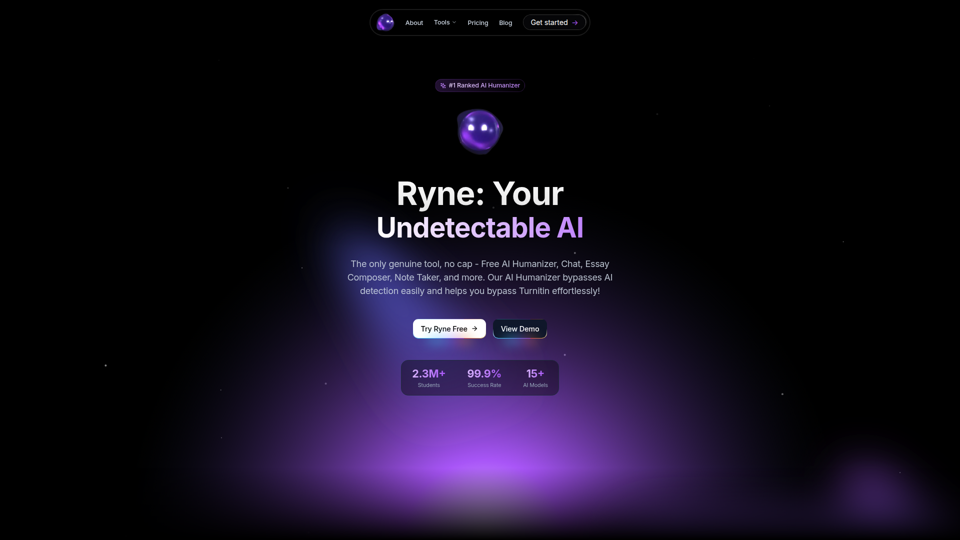
Ryne AI is an academic AI platform for students that humanizes AI-generated text, checks papers with AI-detection and plagiarism reports, and also offers chat, essay composition, and lecture-note tools. For students and academic writers, it can speed drafting and review workflows by pairing generation with detector-style checks before submission.
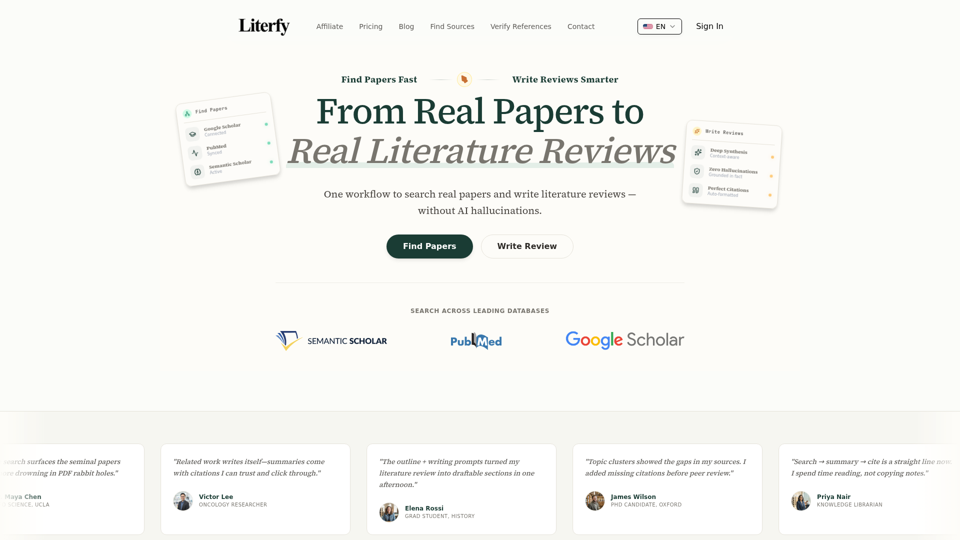
Literfy.ai is an AI literature review generator that helps researchers, graduate students, and academic analysts search papers across major databases, organize sources, and draft citation-linked literature reviews from real papers. In AI-assisted research workflows, it can help scholars and librarians reduce manual searching, outlining, and citation formatting while keeping review writing grounded in verifiable sources.