
Pluto | The Market for Compute
Rate this Tool
Average Score
Total Votes
Select your score (1-10):
Detail Information
What
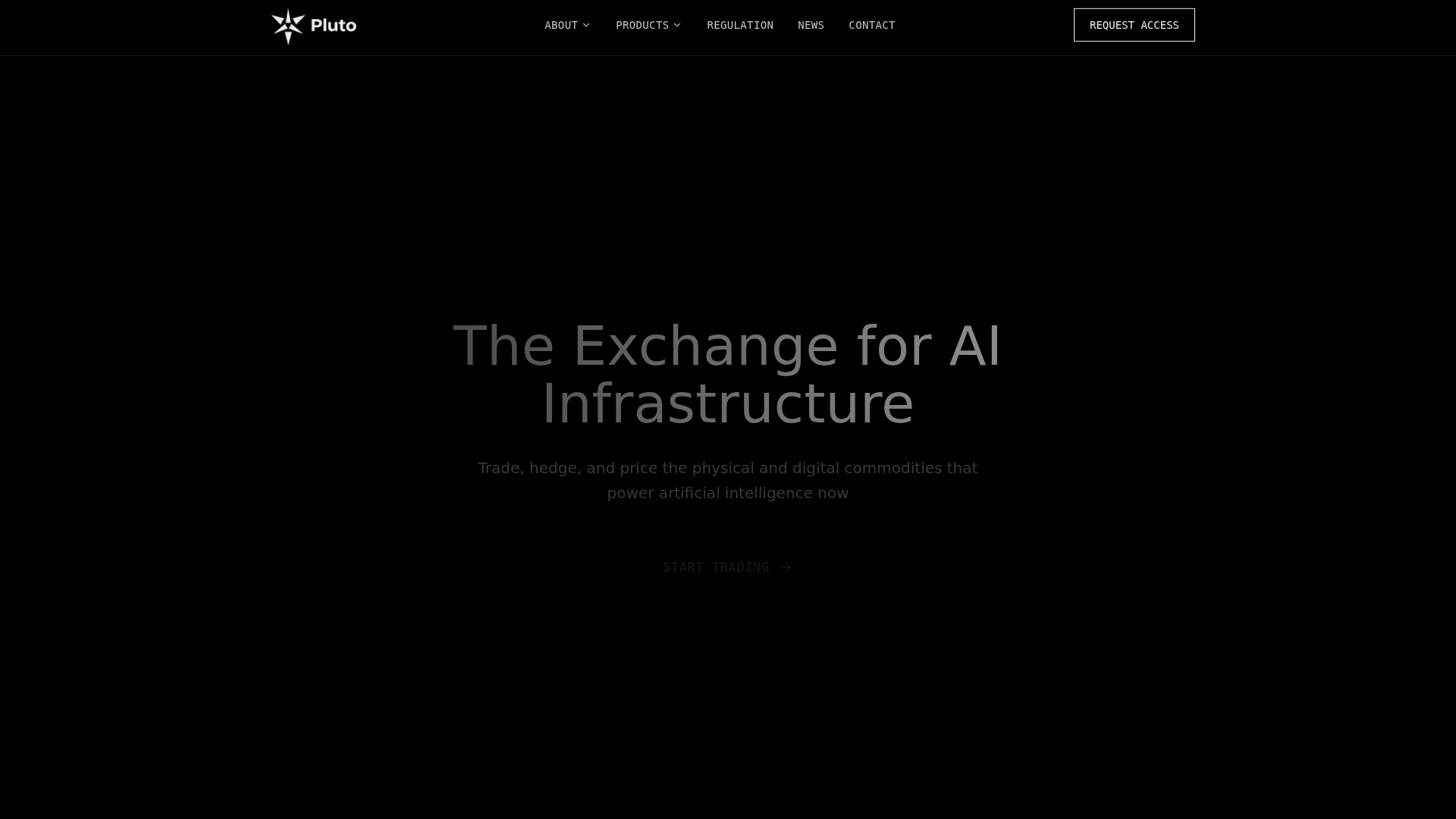
Pluto presents itself as an exchange for AI infrastructure, focused on the physical and digital commodities used to power artificial intelligence. The page positions the product as a marketplace for compute derivatives, with an emphasis on trading, hedging, and pricing compute-related assets.
Based on the available content, Pluto appears aimed at participants that need structured exposure to AI infrastructure markets, likely including operators, buyers, sellers, and financial participants in compute supply chains. The stated workflow centers on using an exchange model to manage market access and risk around the hardware and commodities behind AI systems.
Features
- Compute derivatives marketplace — Pluto is described as a marketplace for compute derivatives, suggesting a structured venue for price discovery and risk transfer tied to AI infrastructure.
- Trading for AI infrastructure exposure — The platform supports trading activity around the commodities that power AI, which may help market participants take or adjust positions in compute-related assets.
- Hedging capabilities — Pluto explicitly highlights hedging, indicating a focus on helping participants manage volatility or supply-side risk connected to compute hardware.
- Pricing of physical and digital commodities — The page states that users can price both physical and digital commodities for AI infrastructure, pointing to a market-oriented mechanism for valuing compute inputs.
- Exchange-based positioning — By framing itself as “the exchange for AI infrastructure,” Pluto signals a financial market structure rather than a general procurement or cloud management tool.
Helpful Tips
- Verify market structure details early — Before evaluating a platform like this, confirm what instruments are actually listed, how contracts are defined, and which underlying commodities are supported.
- Assess fit by risk profile — This kind of product is most relevant where compute costs, hardware availability, or infrastructure exposure create material financial risk worth hedging.
- Review regulatory and access requirements — Since the site references regulation and access requests, buyers should expect onboarding, eligibility, and legal review to be part of adoption.
- Separate exchange functions from infrastructure operations — Pluto appears positioned as a market and hedging venue, so teams should not assume it includes procurement, deployment, or workload orchestration unless documented elsewhere.
- Look for liquidity and settlement specifics — For any compute-linked market product, practical value depends heavily on contract liquidity, settlement design, and the reliability of the pricing methodology.
OpenClaw Skills
Within the OpenClaw ecosystem, Pluto could likely support skills focused on infrastructure market intelligence, risk monitoring, and compute procurement planning. Likely use cases include agents that watch compute market signals, summarize exposure changes for finance and infrastructure teams, or model how derivative positions might relate to GPU procurement, capacity planning, or AI operating costs.
A broader OpenClaw workflow could combine Pluto market data with internal usage forecasts, vendor contracts, and model training schedules to help organizations make more informed infrastructure decisions. If Pluto exposes suitable data or workflows, this could enable agents for treasury-grade compute hedging analysis, scenario planning for AI labs, or operational guidance for teams managing large-scale model training economics; these are likely use cases rather than confirmed native integrations based on the provided page.
Embed Code
Share this AI tool on your website or blog by copying and pasting the code below. The embedded widget will automatically update with the latest information.
<iframe src="https://www.aimyflow.com/ai/pluto-trade/embed" width="100%" height="400" frameborder="0"></iframe>