
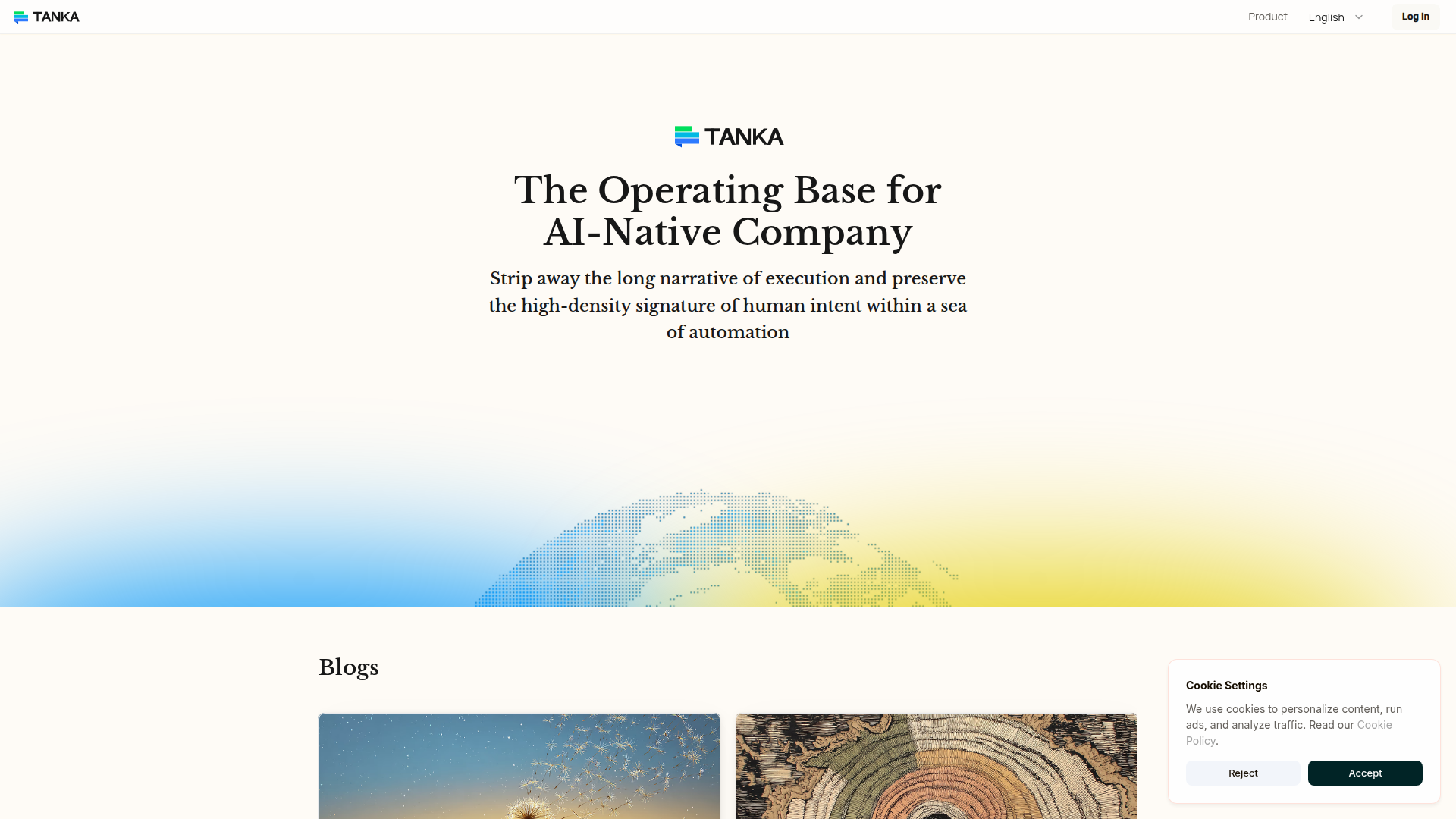
Tanka | The Operating Base for AI-Native Companies
Rate this Tool
Average Score
Total Votes
Select your score (1-10):
Detail Information
What
Tanka presents itself as “the operating base for AI-native companies.” Based on the page content, it is positioned as a system for preserving and computing human intent inside organizations as more work becomes automated.
The product appears aimed at companies adopting AI deeply into operations, especially teams that want to move beyond manual coordination and traditional execution-heavy workflows. Its stated focus is on roles, memory, and data flow as foundational building blocks for an AI-native operating model, though the page provides more conceptual positioning than detailed product mechanics.
Features
- Intent-centered operating model: Tanka is described as preserving the “high-density signature of human intent,” suggesting a workflow where decisions and priorities are captured more directly than in narrative-heavy execution systems.
- Role-based organizational logic: The site emphasizes “role” as a first-principle coordinate for digital twins to understand human intent, which implies structured AI behavior around organizational responsibilities rather than only job titles.
- AI-native company foundation: Tanka is positioned as an operating base for AI-native companies, indicating a platform-level approach rather than a single-purpose point solution.
- Memory as intelligent data: The EverMind concept frames memory as contextually retrievable intelligence, not simple storage, which suggests a focus on surfacing the right information at the right time.
- Business reality capture through data piping: The site references “data piping” for capturing business reality, implying mechanisms to collect operational signals needed for AI-driven workflows and decision support.
- Execution abstraction: Messaging such as “liberate your intent from execution” and “stop managing, start computing” indicates an ambition to reduce manual coordination overhead, though the exact user-facing functions are not detailed on this page.
Helpful Tips
- Validate the operating model first: For products positioned as AI-native operating systems, assess whether they fit your organization’s decision structure, role design, and information flows before focusing on feature checklists.
- Ask for concrete workflow examples: This page is highly conceptual, so buyers should request demonstrations of how intent, roles, memory, and automation actually work in day-to-day operations.
- Clarify data architecture early: Since the site stresses memory and data piping, implementation success will likely depend on what business data is captured, how it is structured, and how context is retrieved.
- Define human and AI boundaries: A role-centric approach can be powerful, but adoption is easier when teams clearly document which responsibilities stay human-led and which can be delegated to AI agents or digital twins.
- Pilot with a narrow operational domain: For a product of this type, an initial rollout in one function or workflow is usually the best way to test whether the system improves coordination and decision quality.
OpenClaw Skills
Tanka’s positioning maps well to OpenClaw as a coordination and intelligence layer around organizational intent. A likely OpenClaw use case would be building skills that translate role definitions, internal memory, and operational signals into specialized agents for planning, execution routing, and context retrieval. Since the page does not confirm native integrations, this should be treated as a likely workflow design rather than a documented product capability.
In practice, OpenClaw could support agent skills such as role-aware task decomposition, organizational memory lookup, decision logging, and business reality monitoring based on Tanka’s underlying concepts. Combined, this could be especially useful for AI-native operations teams, founders, and knowledge-heavy organizations trying to replace fragmented management processes with structured, machine-readable intent.
Embed Code
Share this AI tool on your website or blog by copying and pasting the code below. The embedded widget will automatically update with the latest information.
<iframe src="https://www.aimyflow.com/ai/tanka-ai/embed" width="100%" height="400" frameborder="0"></iframe>
Explore Similar Tools
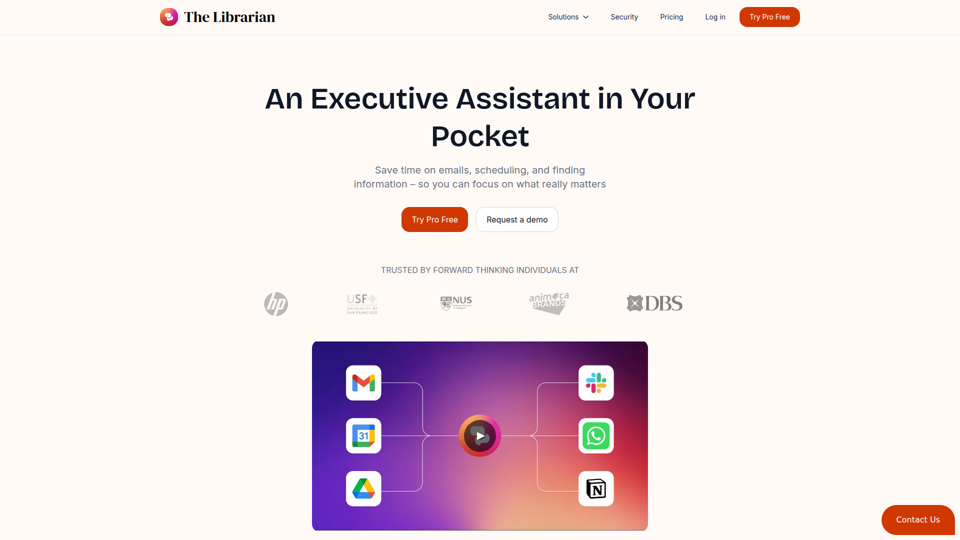
The Librarian - Supercharge your day with your own AI personal assistant
The Librarian is an AI personal assistant for busy Google Workspace professionals, helping them draft and summarize emails, manage calendars, and find documents across tools like Gmail, Google Calendar, and Drive. For executives, founders, and other time-constrained knowledge workers, it can reduce routine coordination and information retrieval work so they can focus more on decisions and priorities.

Recall - Summarize Anything, Forget Nothing.
Recall is an AI-powered knowledge base and browser extension that helps professionals and lifelong learners save, summarize, organize, search, and review online content and personal notes in one system. For knowledge workers, researchers, and content-heavy roles, it can reduce information overload by turning scattered articles, videos, PDFs, and notes into a searchable memory system with AI summaries, chat, and spaced repetition.
AI that actually knows you
Kin is a privacy-focused personal AI assistant and reflective coaching app that remembers context across conversations to help users think clearly, navigate decisions, and organize their lives, especially leaders, founders, parents, athletes, and neurodivergent people. In AI-enabled knowledge work, its persistent memory and guided reflection can help decision-makers and other high-responsibility professionals spot patterns, reduce mental overload, and make more informed choices over time.
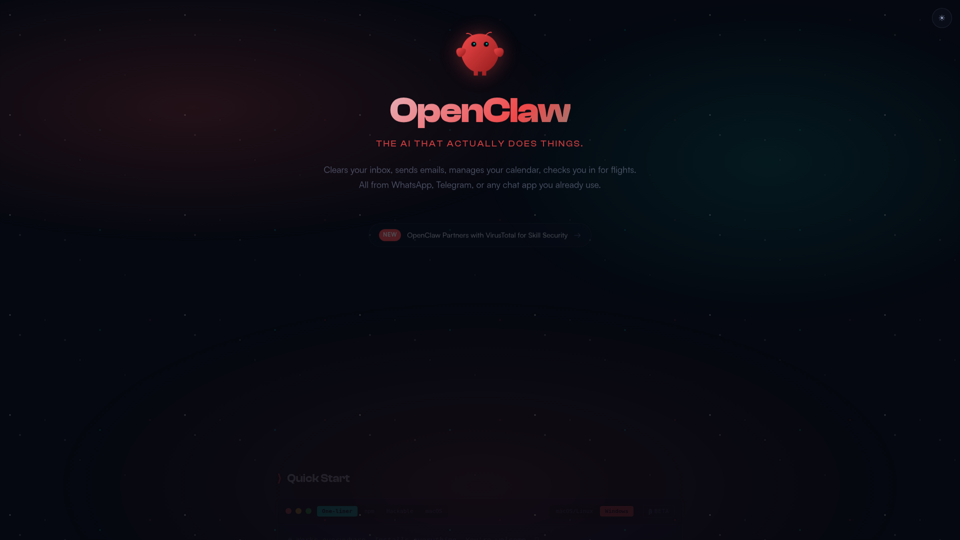
OpenClaw — Personal AI Assistant
OpenClaw is a personal AI assistant that helps users handle inbox, email, calendar, flight check-ins, and other computer-based tasks through chat apps like WhatsApp and Telegram, mainly for individuals who want to manage digital work from one conversational interface. For knowledge workers and operators, it can reduce app-switching by turning chat into an action layer for routine coordination and follow-up tasks.
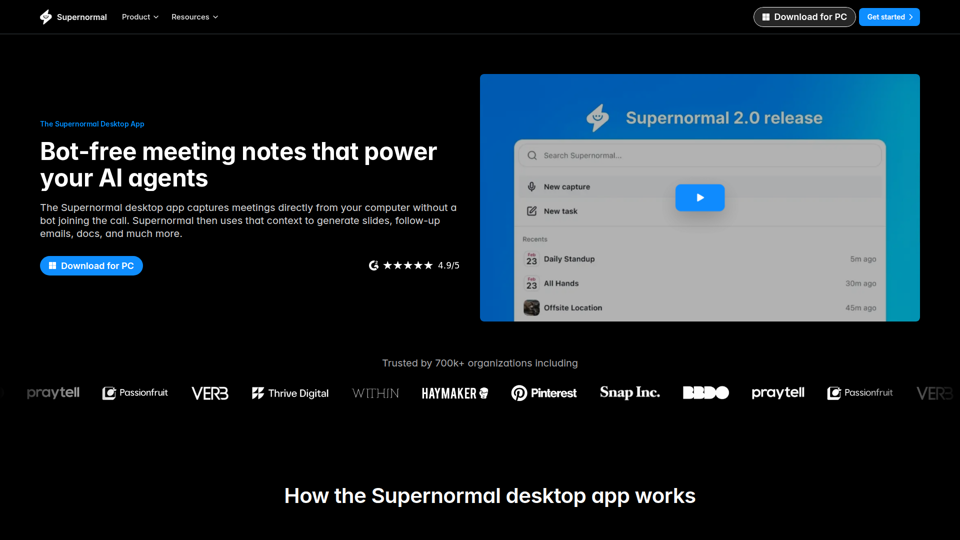
Supernormal Desktop App: AI assistant that turns meetings into work
Supernormal Desktop App is an AI meeting assistant that captures computer audio without a bot, transcribes conversations, and turns meeting context into summaries, follow-up emails, documents, slides, and other drafts for professionals who spend much of their time in meetings. For managers, client-facing teams, and operations roles, it can reduce post-meeting admin by converting discussion points into ready-to-use work outputs faster.
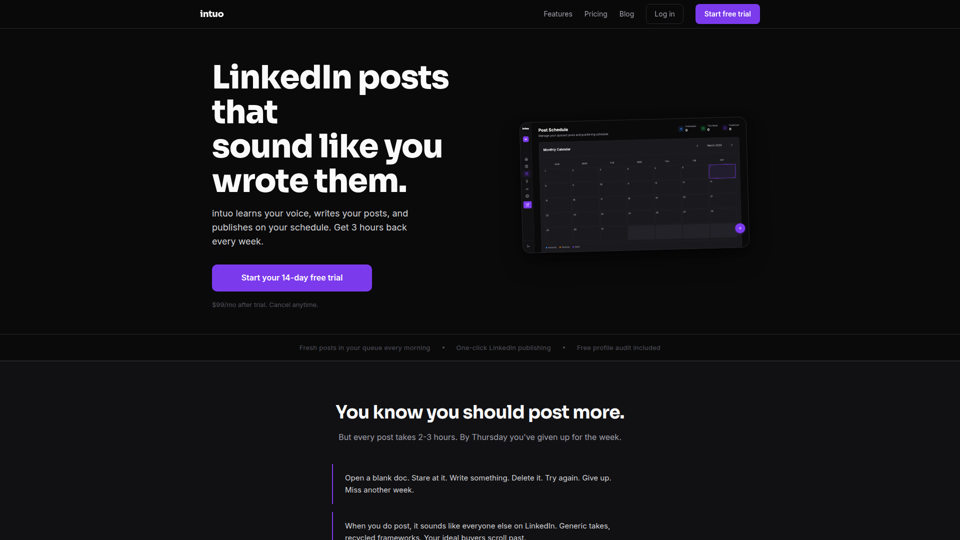
LinkedIn posts that sound like you — intuo
Intuo is an AI LinkedIn publishing tool that learns a user’s voice, drafts posts, queues weekly content, and publishes on schedule, mainly for founders and other professionals who want to post consistently without writing everything from scratch. For roles focused on thought leadership or lead generation, it can reduce drafting time while helping maintain a more consistent LinkedIn presence.
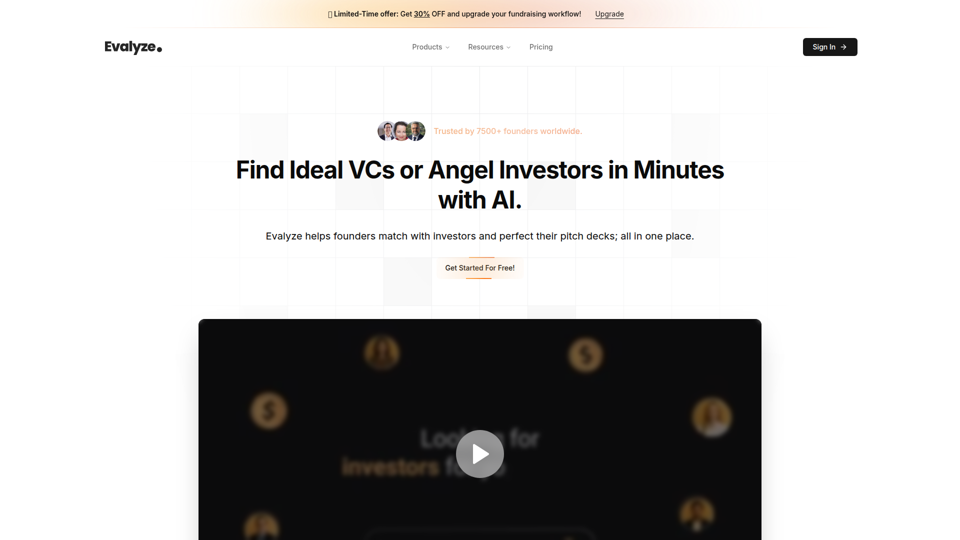
Evalyze: AI Investor Matching + Pitch Deck Analysis
Evalyze is an AI fundraising platform that helps startup founders find investors matched to their stage and sector, analyze pitch decks, and assess investor readiness. For founders, accelerator teams, and startup mentors, it can streamline fundraising prep by prioritizing fit and surfacing deck weaknesses before investor outreach.
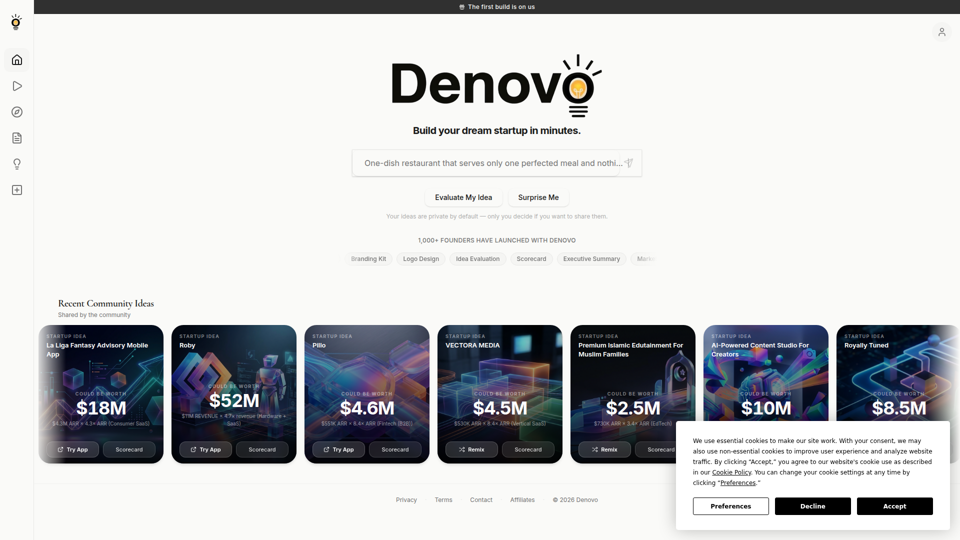
Denovo | Turn Your Idea Into a Real Business in 8 Minutes
Denovo is an AI startup-building platform that helps founders and side-hustlers turn ideas into a business plan, pitch deck, branding, website, and launch assets without coding. For startup operators and solo founders, it can compress early-stage planning and go-to-market work into a faster, more structured workflow.