
AI Voice Generator - Celebrity TTS & Voice cloning
Rate this Tool
Average Score
Total Votes
Select your score (1-10):
Detail Information
What
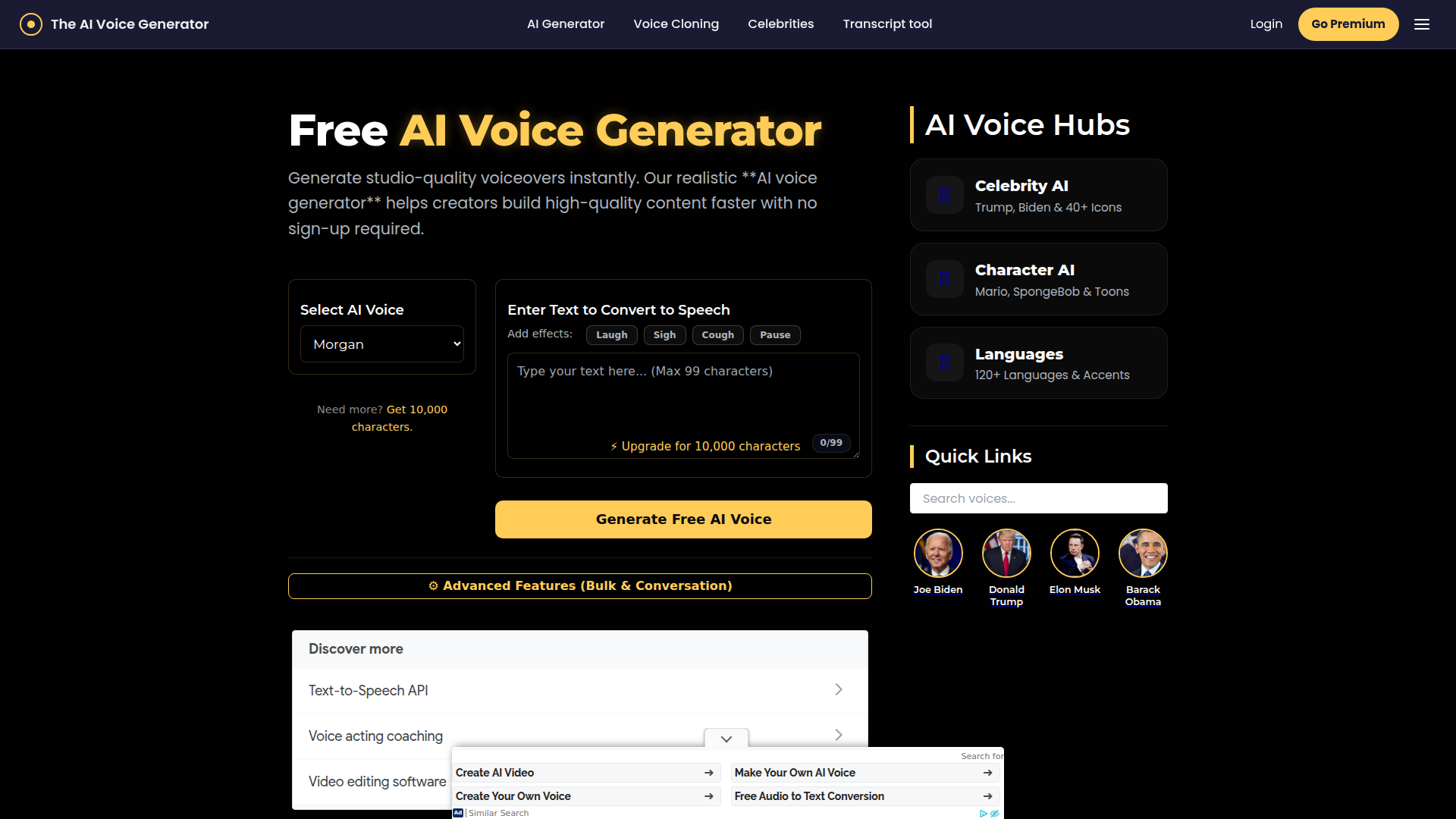
The AI Voice Generator is a browser-based text-to-speech and voice cloning tool for creating short AI voiceovers. It appears to serve creators, social media users, and other content producers who need fast spoken audio from text, with a free no-sign-up entry point for basic generation.
The core workflow is simple: choose a voice, enter text, optionally add effects such as laugh, sigh, cough, or pause, then generate audio. The page also shows additional modes for multiple clips and two-character conversations, plus related tools such as voice cloning, subtitle generation, sound effects, and a video transcript downloader. Based on the page, it is positioned as an accessible self-serve AI voice toolkit rather than a deeply documented enterprise platform.
Features
- Text-to-speech generation: Converts typed text into spoken audio using a selectable AI voice, which helps users produce voiceovers quickly without recording manually.
- Large voice library: Offers a mix of standard, style-based, celebrity, and character voice options, giving users flexibility for different content formats and tones.
- Voice effects in text input: Supports simple expressive cues like laugh, sigh, cough, and pause, which can make generated speech sound more dynamic.
- Bulk and multi-clip generation modes: Includes a multiple-clips workflow for entering separate lines as distinct audio clips, which is useful for batch content creation.
- Conversation mode: Lets users assign different voices to Character A and Character B, enabling basic dialogue-style audio generation.
- Related audio and media tools: The navigation references voice cloning, AI sound effects, SRT/subtitle generation, and a video transcript downloader, suggesting a broader content-production toolset.
Helpful Tips
- Test output quality on your real use case: Voice style lists are broad, so validate pronunciation, tone consistency, and pacing against the exact type of content you plan to publish.
- Check free-tier limits early: The page shows a 99-character free generation limit and mentions higher limits on upgrade, so short-form testing is likely best before broader adoption.
- Use punctuation intentionally: The on-page tips suggest commas for pauses and short sentences for better results, which is typical for improving TTS naturalness.
- Review rights and risk for recognizable voices: The page prominently features celebrity and character voices, so teams should assess legal, brand, and platform policy implications before commercial use.
- Confirm voice cloning scope before operational rollout: Voice cloning is listed, but the page does not explain workflow, consent controls, or quality constraints, so implementation due diligence is important.
OpenClaw Skills
Within the OpenClaw ecosystem, this product could likely support content automation workflows built around script-to-audio generation. Likely use cases include an agent that turns blog summaries into voice snippets, a social publishing workflow that creates multi-voice short-form clips, or a media repurposing skill that pairs transcript extraction with spoken narration drafts. These are reasonable workflow extensions based on the visible tool set, not confirmed native integrations.
OpenClaw could also orchestrate higher-level creative and operational agents around the product. Examples include a brand-safety review agent for checking risky celebrity voice usage, a dialogue assembly agent for conversation-mode scripts, or a localization workflow that routes copy into different language voice outputs if the 120+ language support fits the target market. For creator teams, publishers, and marketing operations, that combination could shift work from manual voice editing toward semi-automated content production pipelines, especially for short-form media and rapid iteration.
Embed Code
Share this AI tool on your website or blog by copying and pasting the code below. The embedded widget will automatically update with the latest information.
<iframe src="https://www.aimyflow.com/ai/theaivoicegenerator-com/embed" width="100%" height="400" frameborder="0"></iframe>