
Toothy AI - AI-Powered Dental Insurance Verification & Billing
Rate this Tool
Average Score
Total Votes
Select your score (1-10):
Detail Information
What
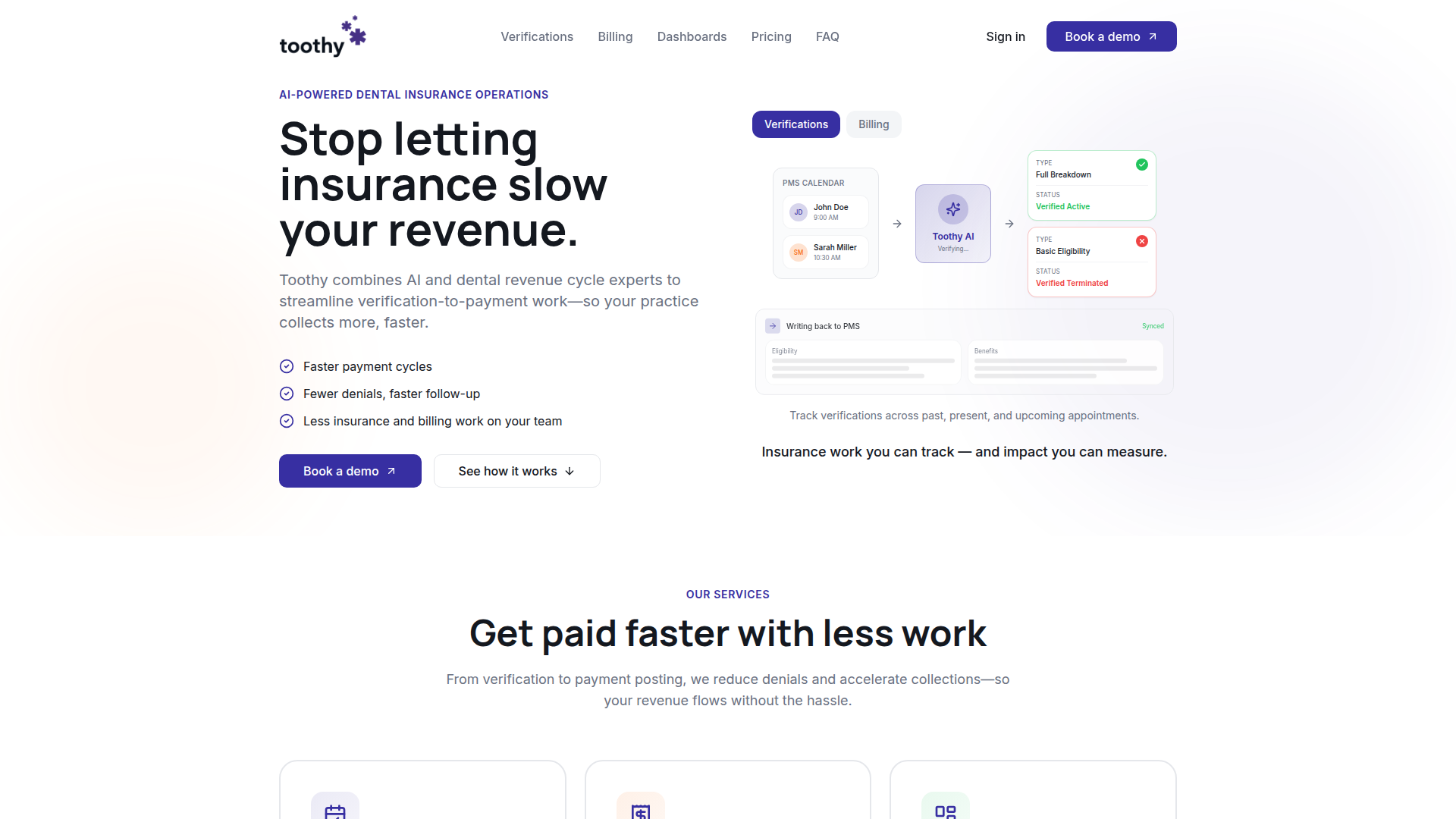
Toothy AI is a dental insurance operations platform focused on insurance verification, billing, and revenue cycle support for dental practices. Based on the page, it combines AI with human revenue cycle specialists to handle work from eligibility checks through claims follow-up and payment posting.
The product appears positioned as a dental-specific revenue operations service layer rather than a standalone software tool only. Its core workflow is verifying insurance across upcoming appointments, writing results back to the practice management system, supporting claim submission and accounts receivable follow-up, and giving practices dashboards and reports to track collections, aging, and operational progress.
Features
- Automated insurance verifications: Verifies primary and secondary coverage for the practice schedule, reportedly up to two weeks ahead, which can reduce front-desk manual work.
- PMS writeback: Writes verification details directly into the practice management system, helping staff keep patient insurance information synchronized in existing workflows.
- Structured benefits breakdowns: Produces consistent verification outputs and can include phone-based benefits breakdown handling when needed, which is useful for more complex plans.
- End-to-end billing support: Covers clean claim submission, payment posting, and AR follow-up to reduce denials and shorten collection cycles.
- Dashboards and daily reporting: Provides real-time visibility into verifications, billing, collections, and aging, plus daily inbox reports for operational monitoring.
- HIPAA-first workflow controls: The page cites access controls, audit trails, structured documentation, and exception tracking to support PHI-sensitive dental operations.
Helpful Tips
- Validate scope during evaluation: Confirm which parts are automated versus handled by human specialists, especially for edge cases such as multi-policy coordination, missing payer data, or claim exceptions.
- Review PMS workflow fit: Since PMS writeback is central to the product’s value, check exactly what data is written back, how staff should review it, and whether current scheduling and billing processes need adjustment.
- Use baseline metrics before rollout: Track current denial rates, aging, collection ratios, and staff hours so any improvement from verification and billing support can be measured realistically.
- Clarify pricing drivers early: The page states pricing depends on provider count, payer mix, appointment volume, and insurance volume, so multi-location or specialty-heavy practices should model expected usage carefully.
- Assess change management needs: Products in this category work best when teams know when to trust automated outputs, when to escalate, and how to use dashboard reporting in daily insurance and billing reviews.
OpenClaw Skills
Within the OpenClaw ecosystem, Toothy AI could likely support skills and agents focused on dental revenue operations orchestration. Likely use cases include an insurance verification monitor that reads daily status changes, an AR prioritization agent that flags aging claims for follow-up, or a collections reporting workflow that summarizes verification completion, payment posting progress, and claim bottlenecks for office managers.
For dental groups, DSOs, and practice administrators, this combination could shift insurance operations from reactive clerical work to managed exception handling. If OpenClaw agents were layered around Toothy’s dashboards and workflow outputs, teams could likely build automations for daily huddles, denied-claim triage, staffing forecasts, and payer trend analysis. The source page does not confirm a native OpenClaw integration, so these should be treated as probable workflow designs rather than confirmed product capabilities.
Embed Code
Share this AI tool on your website or blog by copying and pasting the code below. The embedded widget will automatically update with the latest information.
<iframe src="https://www.aimyflow.com/ai/toothy-ai/embed" width="100%" height="400" frameborder="0"></iframe>