
W.AI - Global AI Supercomputer

Rate this Tool
Average Score
Total Votes
Select your score (1-10):
Detail Information
What
W.AI presents itself as a decentralized AI supercomputer that connects GPUs and devices worldwide into a shared compute network. Its stated purpose is to create a global compute substrate for AI workloads, with participants contributing idle GPU power through an app and receiving W COIN in return.
The product appears to serve two sides of a network: compute providers that want to monetize unused GPU capacity, and AI infrastructure users that need distributed compute resources. Based on the page content, W.AI is positioned as open, decentralized AI infrastructure rather than a traditional centralized cloud GPU service.
Features
- Decentralized GPU compute network: Aggregates GPU power from devices worldwide to form a distributed AI compute layer, expanding available capacity beyond a single data center model.
- Idle compute contribution via app: Lets operators download an app and share unused device compute, creating a lightweight path to participate in the network.
- Reward mechanism with W COIN: Compensates contributors in the network’s native asset for GPU compute supplied to AI tasks, aligning participation with usage.
- Broad hardware eligibility: States that any device with a GPU can contribute, while indicating that higher VRAM can qualify for more tasks and potentially more rewards.
- Security model claims: Describes zero-knowledge operations, decentralized architecture, and sandboxed execution as safeguards intended to protect participant privacy and keep personal files inaccessible.
- Network visibility dashboard: Shows live-style infrastructure views such as workers, users, total VRAM, top GPUs, and top regions, which can help participants monitor network activity if populated.
Helpful Tips
- Validate workload fit before committing hardware: For decentralized compute platforms, task availability, GPU compatibility, and VRAM requirements matter more than headline network vision.
- Review the security model in technical documentation: Claims like sandboxing and zero-knowledge protections are important, but buyers and contributors should verify implementation details before relying on them.
- Assess token exposure separately from infrastructure value: Since rewards are paid in W COIN, participants should distinguish operational utility from token economics and volatility.
- Check observability and network maturity: If live network statistics are incomplete or not populated, treat adoption scale and throughput as not yet fully evidenced by the source page.
- Model device utilization carefully: Sharing idle GPU power can be attractive, but practical participation depends on energy cost, hardware wear, and the consistency of available tasks.
OpenClaw Skills
W.AI could likely pair with OpenClaw as a backend compute layer for agents that need bursty or distributed GPU access. Likely use cases include routing AI jobs to available workers, monitoring node availability, summarizing network health, and creating operator-facing agents that explain expected task fit based on GPU type and VRAM. The page does not confirm a native OpenClaw integration, so this should be treated as a plausible workflow design rather than a supported feature.
In a broader ecosystem sense, OpenClaw skills could sit on top of W.AI to orchestrate decentralized AI operations for research teams, model developers, or distributed infrastructure operators. Likely examples include an agent that matches inference or training jobs to suitable worker classes, a compliance-aware internal assistant that screens what workloads should or should not be sent to decentralized infrastructure, or a treasury and operations copilot that tracks W COIN earnings against hardware contribution. Combined, that could shift GPU participation from a passive background process into a more managed, policy-driven operating model for decentralized AI infrastructure.
Embed Code
Share this AI tool on your website or blog by copying and pasting the code below. The embedded widget will automatically update with the latest information.
<iframe src="https://aimyflow.com/ai/wombo-ai/embed" width="100%" height="400" frameborder="0"></iframe>
Explore Similar Tools
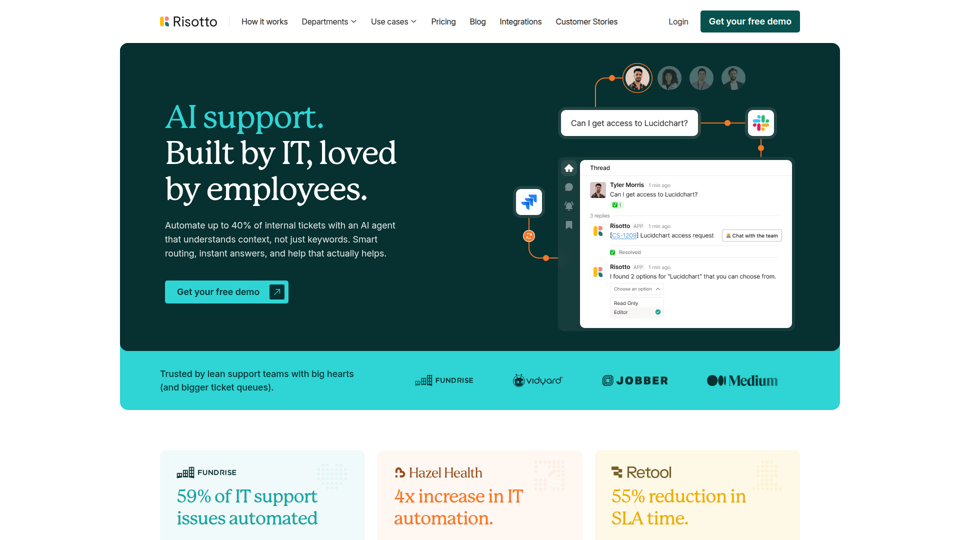
Risotto | IT help desk with AI ticketing automation
Risotto is an AI help desk and ticketing automation platform that helps IT teams automate internal support, access requests, and cross-department workflows in tools like Slack. For IT managers, help desk teams, and systems administrators, it can reduce repetitive tier-1 work by using context-aware automation, self-updating knowledge, and automated routing to speed resolution and approvals.
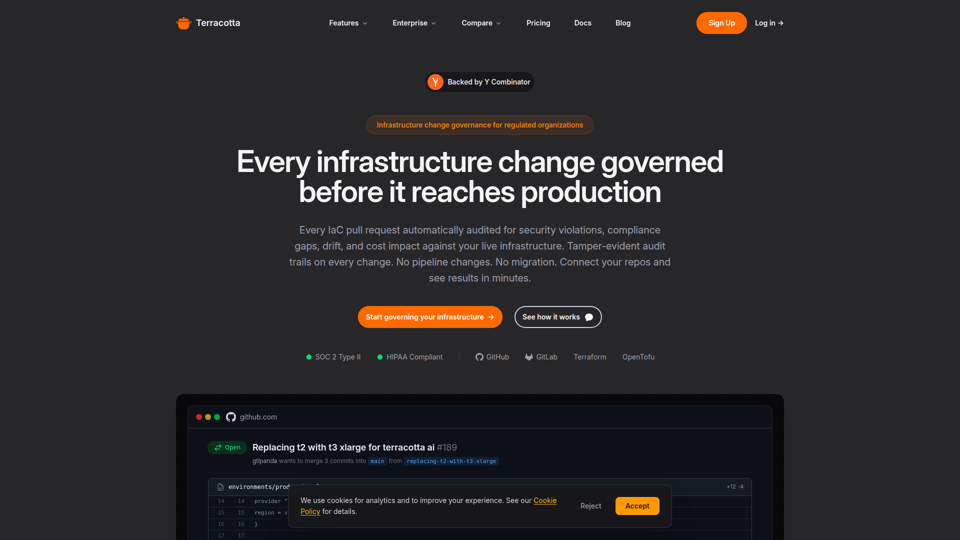
Terracotta AI | Infrastructure Change Governance
Terracotta AI is an infrastructure change governance tool that audits Terraform, Kubernetes, and Terragrunt pull requests for security, compliance, drift, and cost before merge, mainly for regulated organizations and platform engineering teams. For platform, security, and compliance teams, it adds AI-assisted PR review and audit trails that can reduce manual infrastructure review work and improve pre-production change control.
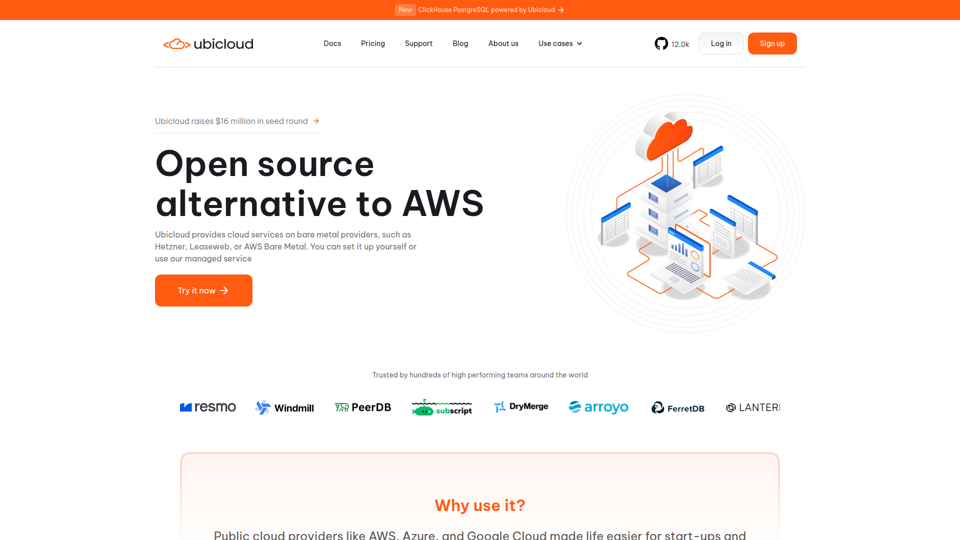
Ubicloud - Open source alternative to AWS
Ubicloud is an open source cloud platform and AWS alternative that helps teams run elastic compute, block storage, networking, managed PostgreSQL, and GitHub Actions runners on bare metal providers, mainly for engineering and infrastructure teams that want self-hosted or managed cloud services. For DevOps, platform, and database engineers, it can support more portable, automated infrastructure and CI workflows while reducing dependence on closed public cloud platforms.
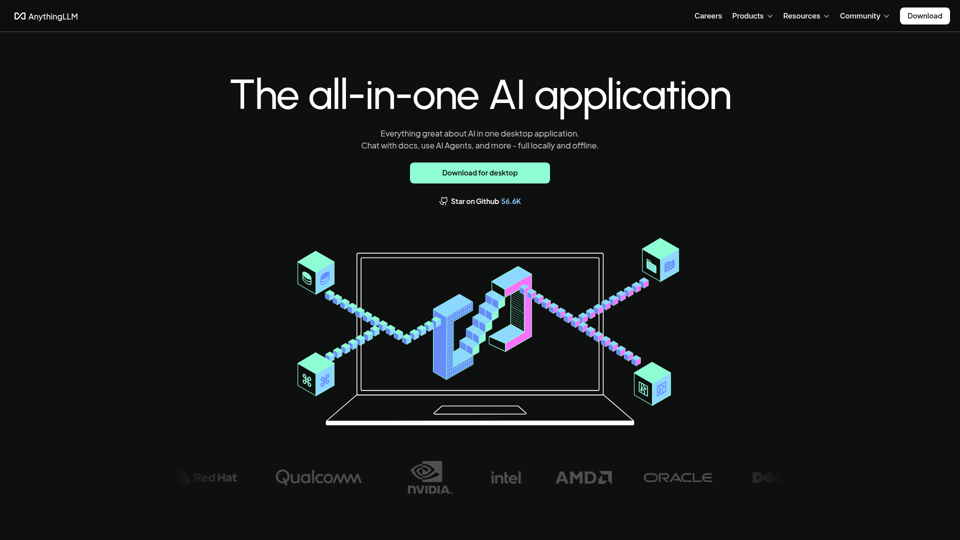
AnythingLLM | The all-in-one AI application for everyone
AnythingLLM is an all-in-one AI application that lets users chat with documents, run AI agents, and use local or cloud LLMs with privacy-focused, low-setup workflows, mainly for individuals and teams that want desktop, self-hosted, or cloud AI tools. For knowledge workers, developers, and IT teams, its local-first design and built-in API can make document-based analysis, internal automation, and controlled AI deployment easier in everyday work.
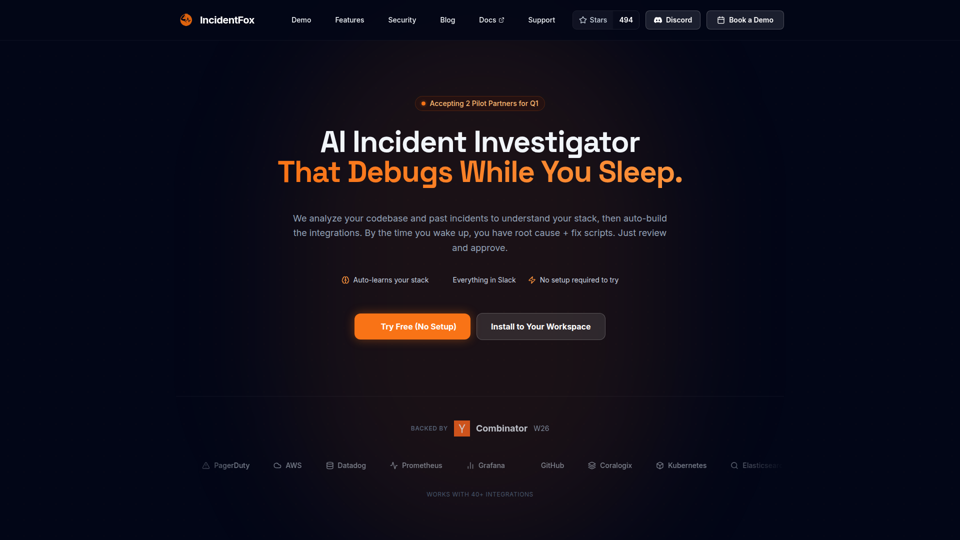
IncidentFox - The AI SRE for Teams
IncidentFox is an AI SRE tool that investigates production incidents in Slack, analyzes codebases and past incidents, and proposes or executes approved fixes for engineering, SRE, and platform teams. For on-call and reliability work, it can reduce manual triage by correlating alerts, logs, metrics, and deployment history into root-cause findings and auditable remediation steps.
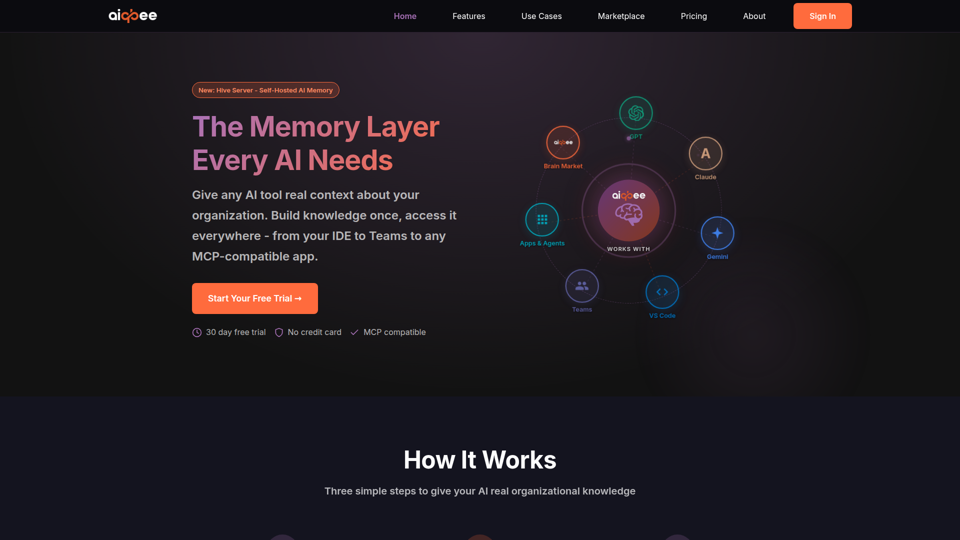
Aiqbee - Universal AI Memory Platform | Enterprise Knowledge for Any LLM
Aiqbee is an enterprise AI memory platform that gives any LLM or AI tool persistent organizational context by centralizing company knowledge, connecting it to tools like Teams and IDEs, and adding governance controls, mainly for businesses managing AI use across teams. For IT, operations, support, and development functions, it can reduce repeated prompting and improve consistency by making shared knowledge available across approved AI workflows.
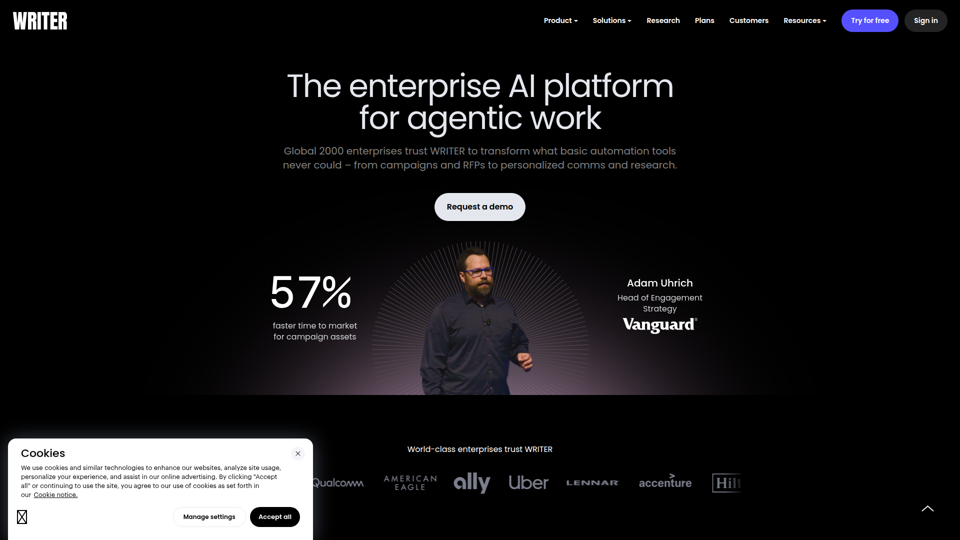
WRITER - The enterprise AI platform for agentic work
WRITER is an enterprise AI platform for agentic work that helps Global 2000 companies build, activate, and supervise AI agents for tasks like campaigns, RFPs, personalized communications, and research, with a focus on IT governance and security. For marketing, sales, support, and IT teams, it can improve productivity by combining shared knowledge, workflow automation, and oversight in one system.
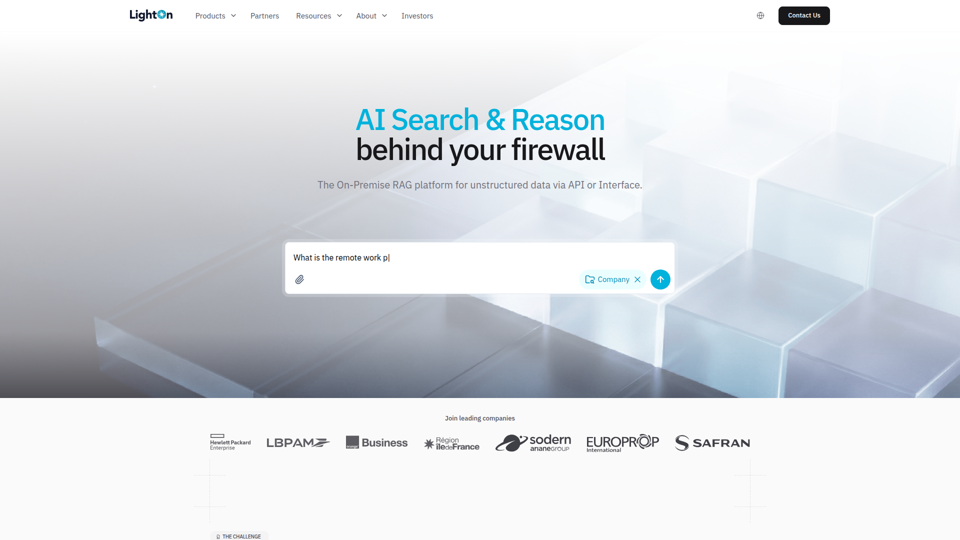
AI Search & Reason Behind Your Firewall
LightOn is an on-premise AI search and reasoning platform that helps enterprises query, extract, and reason over unstructured internal data through a ready-to-use interface or multimodal RAG API, mainly for security-conscious business teams and developers. In AI-driven knowledge work, it can help IT, compliance, legal, support, and R&D teams find cited answers and automate document-heavy workflows without moving sensitive data outside their environment.