How AI fits this role
Admin Leads: How AI Is Reshaping Administrative Leadership Roles
Role Overview
Admin Leads — variously titled Administrative Team Lead, Office Operations Lead, or Administrative Supervisor — sit at the intersection of people management and operational execution. They are responsible for coordinating administrative staff, managing workflows across departments, overseeing scheduling and correspondence, and ensuring that the operational backbone of an organization runs without friction.
In practice, this role exists across a wide range of industries, but it is most densely concentrated in professional services firms (legal, accounting, consulting), healthcare systems, financial institutions, and large enterprise back-office environments. In these settings, the Admin Lead is not simply a senior assistant — they are a process owner. They triage incoming requests, allocate work across a team of coordinators or assistants, manage vendor relationships, handle escalations, and often serve as the primary liaison between executive leadership and operational staff.
The role carries real accountability: missed deadlines, scheduling conflicts, compliance gaps in document handling, and communication breakdowns all land on the Admin Lead's desk. This is a role defined by judgment under ambiguity, not just task execution.
How AI Is Transforming This Role
The transformation of the Admin Lead role is not about replacement — it is about compression and elevation. AI tools are absorbing the high-volume, low-judgment tasks that previously consumed 40–60% of an administrative team's bandwidth. What remains is a smaller, more complex set of responsibilities that require contextual awareness, stakeholder management, and organizational knowledge that AI cannot replicate.
The most immediate pressure point is team size justification. As AI handles scheduling automation, document drafting, inbox triage, and data entry, organizations are questioning whether they need the same headcount in administrative functions. Admin Leads are being asked to do more with fewer direct reports — and to demonstrate the value of human oversight in workflows that are increasingly AI-assisted.
At the same time, the Admin Lead's role is expanding in scope. They are now expected to configure and manage AI tools, audit AI-generated outputs for accuracy, train junior staff on new systems, and make judgment calls about when AI outputs are trustworthy versus when human review is non-negotiable. This is a meaningful shift: the Admin Lead is becoming a workflow architect rather than a workflow executor.
Tasks AI Can Automate
- Calendar and scheduling coordination: AI scheduling assistants (e.g., Microsoft Copilot integrated with Outlook, Reclaim.ai) can autonomously negotiate meeting times, resolve conflicts, and send confirmations without human intervention.
- Email triage and drafting: LLM-based tools can categorize incoming correspondence by urgency and topic, draft routine responses, and flag items requiring human attention — reducing inbox management time by a measurable margin.
- Document formatting and template population: Contracts, reports, meeting minutes, and onboarding packets that follow standard templates can be generated or populated automatically from structured inputs.
- Travel and expense coordination: AI-integrated platforms (Concur, TripActions/Navan) now handle itinerary building, policy compliance checks, and expense categorization with minimal human input.
- Data entry and CRM updates: Routine logging of contacts, meeting outcomes, and follow-up tasks into CRM or project management systems is increasingly handled by AI agents connected to communication tools.
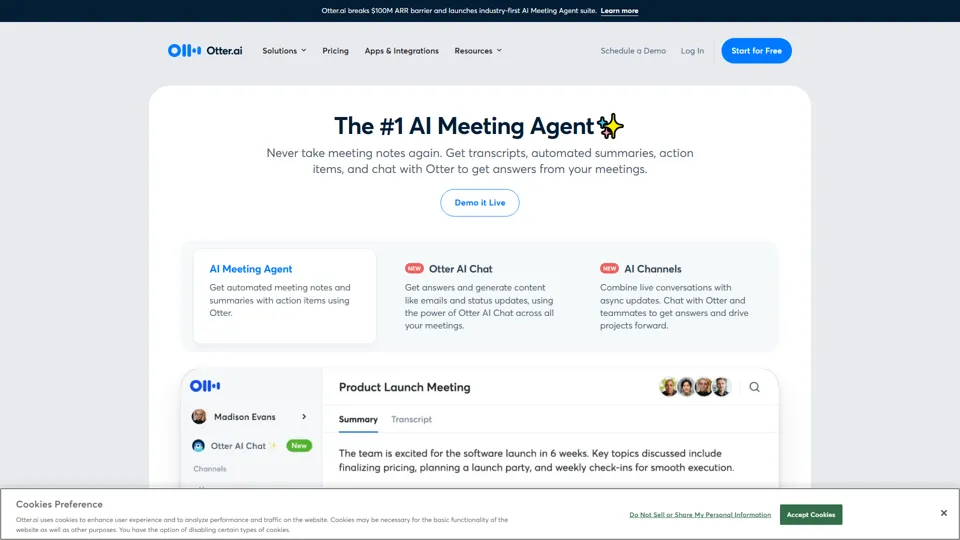
- Meeting summarization: Tools like Otter.ai, Fireflies, and Microsoft Copilot in Teams generate transcripts, action item lists, and decision logs automatically post-meeting.
Skills Becoming More Valuable
Process design and workflow architecture Admin Leads who can map, document, and optimize administrative workflows — and configure AI tools to execute them — are becoming significantly more valuable. This is not IT work; it is operational design work that requires deep knowledge of how the business actually runs.
AI output auditing and quality control Knowing when to trust an AI-generated draft, summary, or schedule — and when to override it — is a judgment skill that requires domain knowledge and professional experience. Admin Leads who develop reliable instincts here become critical checkpoints in automated workflows.
Stakeholder communication and escalation management As routine communication is increasingly handled by AI, the interactions that reach the Admin Lead are disproportionately complex, sensitive, or politically charged. The ability to navigate these with discretion and clarity is more important than ever.
Cross-functional coordination Admin Leads who understand the operational needs of multiple departments — legal, finance, HR, executive — and can translate between them are harder to replace than those who specialize in a single function.
Change management and staff training Rolling out new AI tools to an administrative team, managing resistance, and building adoption without disrupting ongoing operations is a leadership skill that is in short supply.
Skills Becoming Less Important
- Manual calendar management: The cognitive load of tracking availability across multiple executives and time zones is being absorbed by AI scheduling tools.
- Typing speed and formatting proficiency: Proficiency in producing polished documents quickly matters less when AI can generate a first draft in seconds.
- Memorizing procedural steps: Standard operating procedures that were once held in the Admin Lead's head are now codified in workflow automation tools and accessible to anyone on the team.
- Routine vendor follow-up: Automated reminders, contract renewal alerts, and vendor communication sequences reduce the need for manual tracking.
- Basic research and information retrieval: Pulling together background information for meetings, summarizing reports, or compiling contact lists — tasks that once required hours — are now handled in minutes by AI assistants.
Current AI Adoption in This Industry
Adoption is uneven but accelerating. In large enterprise environments and professional services firms, AI-assisted scheduling and document automation are already standard in 2024–2025. Microsoft 365 Copilot has become the de facto entry point for AI in administrative workflows at organizations already running on the Microsoft stack, and its penetration in enterprise back-office environments is significant.
Healthcare and legal sectors are adopting more cautiously due to compliance requirements around data handling, but even here, AI-assisted document drafting, appointment coordination, and intake processing are moving from pilot to production. The constraint is not technology readiness — it is data governance and liability clarity.
Smaller organizations and mid-market companies are in an earlier stage, often using point solutions (Calendly, Notion AI, ChatGPT for drafting) rather than integrated platforms. The Admin Lead in these environments is often the person evaluating, selecting, and implementing these tools without formal IT support.
Future Workflow Evolution
The administrative function in 2026–2028 will look structurally different from today. The most likely trajectory:
Smaller teams, broader scope per person. Organizations will reduce administrative headcount while expecting remaining staff to manage more complex, AI-augmented workflows. The Admin Lead will oversee a leaner team but will be responsible for a wider operational surface.
AI agents handling tier-one requests autonomously. Routine requests — room bookings, travel approvals, document requests, expense submissions — will be handled end-to-end by AI agents without human involvement. The Admin Lead's queue will consist almost entirely of exceptions, escalations, and novel situations.
The Admin Lead as system owner. In larger organizations, Admin Leads will increasingly hold responsibility for configuring and maintaining the AI tools their teams use — setting rules, updating templates, managing integrations, and auditing outputs. This is a new accountability that did not exist in the role five years ago.
Tighter integration with executive decision-making. As AI handles operational logistics, Admin Leads with strong organizational knowledge will be pulled closer to strategic planning support — preparing briefing materials, managing information flows, and coordinating cross-functional initiatives rather than managing calendars.
Common AI Use Cases
- Automated meeting prep packets: AI pulls relevant documents, prior meeting notes, and attendee backgrounds into a briefing document before each scheduled meeting.
- Inbox zero workflows: AI categorizes, prioritizes, and drafts responses to routine emails, leaving only high-judgment items for human review.
- Onboarding coordination: New hire onboarding checklists, system access requests, and orientation scheduling are managed through AI-driven workflow tools.
- Contract and document lifecycle tracking: AI monitors document status, flags upcoming renewals or deadlines, and routes approvals automatically.
- Real-time transcription and action item extraction: Post-meeting, AI generates a structured summary with assigned action items and deadlines, distributed automatically to attendees.
- Policy compliance checking: AI reviews expense reports, travel bookings, and vendor invoices against company policy before they reach the Admin Lead for final approval.
Recommended AI Stack
| Tool | Use Case |
|---|---|
| Microsoft 365 Copilot | Email drafting, meeting summaries, document generation within existing M365 workflows |
| Reclaim.ai or Motion | Intelligent calendar management and scheduling automation |
| Otter.ai or Fireflies.ai | Meeting transcription and action item extraction |
| Navan (TripActions) | AI-assisted travel booking and expense management |
| Notion AI or Confluence AI | Internal documentation, SOPs, and knowledge base management |
| Zapier or Make (Integromat) | Workflow automation connecting disparate tools without engineering support |
| ChatGPT or Claude (via API or interface) | Ad hoc drafting, research synthesis, and communication support |
The right stack depends heavily on existing infrastructure. Organizations on Microsoft 365 should prioritize Copilot integration before adding point solutions. Those on Google Workspace have a parallel path through Gemini for Workspace.
Risks & Challenges
Over-reliance on AI outputs without adequate review AI scheduling tools make errors — double bookings, timezone mismatches, incorrect attendee lists. AI-drafted communications can miss tone, context, or organizational nuance. Admin Leads who reduce oversight too aggressively will face operational failures that damage their credibility.
Data privacy and confidentiality exposure Administrative roles handle sensitive information: executive schedules, compensation discussions, legal correspondence, personnel matters. Feeding this content into AI tools — particularly consumer-grade tools — creates real data governance risk. Organizations need clear policies, and Admin Leads need to enforce them.
Skill gap in AI tool management Many current Admin Leads were hired and developed for a pre-AI operational environment. The expectation that they will now configure workflow automation tools, audit AI outputs, and train their teams on new systems represents a significant skill gap that organizations are not consistently addressing through training investment.
Role ambiguity and scope creep As AI absorbs routine tasks, the boundaries of the Admin Lead role become less defined. Without clear role redesign, Admin Leads risk being pulled in too many directions — part IT support, part executive assistant, part operations manager — without the authority or compensation that reflects expanded scope.
Vendor lock-in and integration fragility Administrative workflows built around a single AI platform become brittle when that platform changes pricing, deprecates features, or experiences downtime. Admin Leads who build processes on top of AI tools need contingency plans.
Future Outlook: 3–5 Years
By 2028, the Admin Lead role will exist in most large organizations, but it will be a materially different job. The volume of routine coordination work will have declined significantly, absorbed by AI agents and automation platforms. What remains will be higher-stakes: managing exceptions, maintaining institutional knowledge, supporting executive decision-making, and ensuring that automated systems are operating correctly and ethically.
The Admin Leads who thrive will be those who have made the transition from task executor to operational intelligence hub — people who understand how the organization works, who the key stakeholders are, what the unwritten rules are, and how to navigate complexity that no AI system can fully model. These are deeply human capabilities, and they will be more valuable, not less, as AI handles the mechanical layer of administrative work.
Headcount in administrative functions will likely decline 15–25% in large enterprises over this period, driven by AI automation and organizational restructuring. But the remaining roles will carry more responsibility and, in well-managed organizations, more strategic visibility.
Final Insight
The Admin Lead role is not being automated away — it is being redefined. The professionals who will struggle are those who continue to define their value through task execution: managing calendars, formatting documents, coordinating logistics. AI is becoming genuinely competent at these tasks, and the organizations that have deployed it are already seeing reduced need for human involvement in routine coordination.
The professionals who will advance are those who reframe their value around judgment, context, and organizational intelligence. They know things AI does not: the executive who needs a 10-minute buffer before difficult conversations, the vendor relationship that is more fragile than the contract suggests, the cross-departmental tension that will derail a project if not managed carefully. This knowledge — accumulated through years of proximity to how an organization actually operates — is the Admin Lead's most durable competitive advantage, and it is not something that can be automated.
The strategic move for Admin Leads right now is not to resist AI tools, but to become the person in the organization who understands them best, deploys them most effectively, and maintains the human judgment layer that keeps automated workflows from producing expensive mistakes.