How AI fits this role
Certified Nursing Assistant (CNA) in Healthcare
Role Overview
A Certified Nursing Assistant works on the front lines of patient care, primarily in long-term care facilities, skilled nursing facilities (SNFs), hospitals, and home health settings. CNAs handle the most direct, hands-on patient contact of any clinical role — bathing, dressing, feeding, repositioning, vital sign monitoring, and documenting activities of daily living (ADLs). They are the eyes and ears of the nursing floor, often the first to notice a patient's condition change before it escalates.
In the U.S. alone, there are approximately 1.5 million CNAs, with the highest concentration in nursing homes and residential care facilities. The role operates under the supervision of licensed practical nurses (LPNs) and registered nurses (RNs), but in practice, CNAs spend more direct time with patients than any other clinical staff member — often managing 8 to 12 residents per shift in long-term care.
The operational reality is demanding: high patient-to-staff ratios, physical strain, documentation burden, and chronic understaffing. These pressures are exactly where AI and automation are beginning to make targeted inroads — not by replacing CNAs, but by restructuring what they spend their time on.
How AI Is Transforming This Role
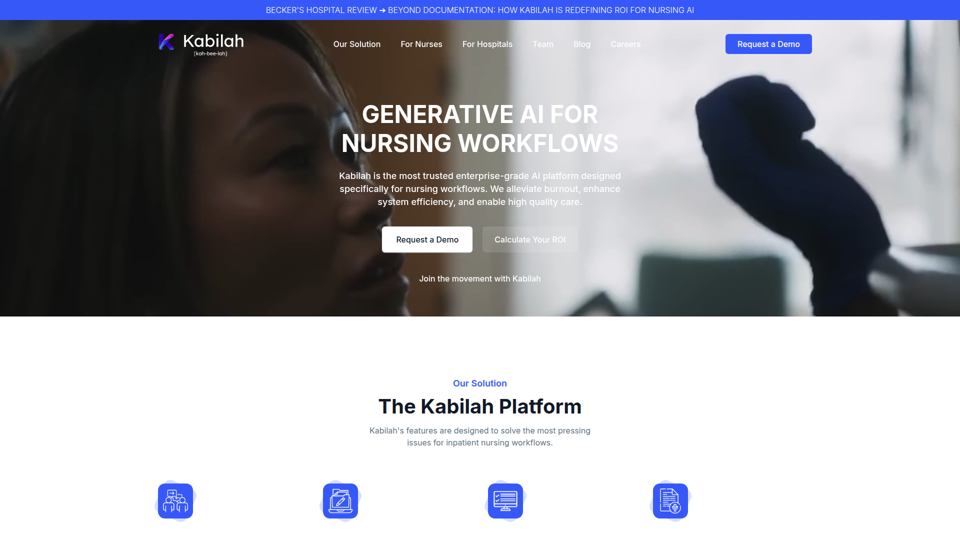
AI is entering the CNA's workflow primarily through three vectors: ambient monitoring, documentation automation, and predictive alerting. None of these eliminate the role, but they are meaningfully changing what a CNA is expected to notice, record, and respond to.
Ambient monitoring systems like those from SafelyYou, CarePredict, and Sensara use ceiling-mounted sensors, wearables, and motion analytics to track resident movement, sleep patterns, gait changes, and fall risk in real time. Previously, a CNA would document behavioral observations from memory at the end of a shift. Now, the system flags anomalies — a resident who has been in bed 30% longer than their baseline, or whose nighttime restlessness has increased over three days — and the CNA is expected to respond to and contextualize those alerts rather than generate the observation from scratch.
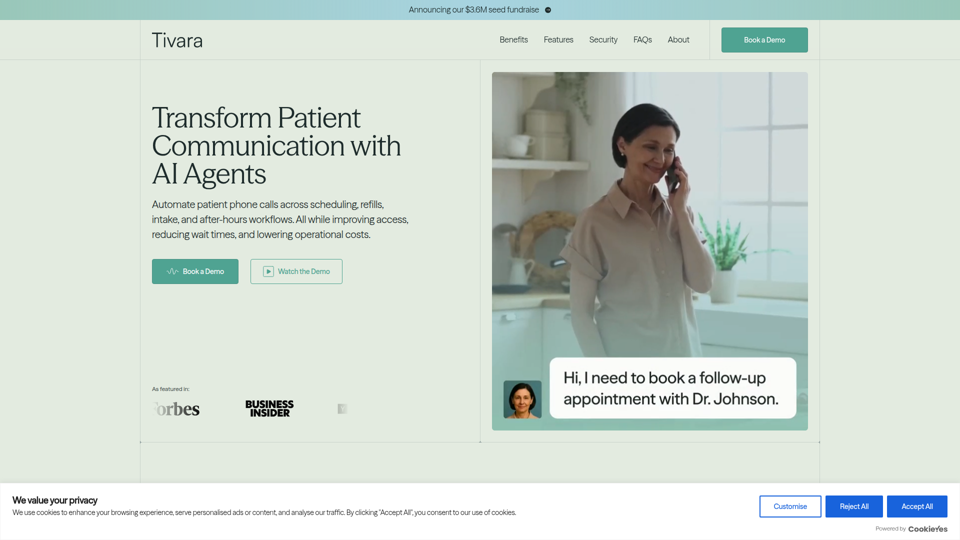
Voice-to-text and AI-assisted documentation tools integrated into EHR platforms (PointClickCare, MatrixCare) are reducing the time CNAs spend on ADL charting. Instead of manually entering whether a resident ate 75% of their meal or required two-person assist for transfers, CNAs can speak observations into a mobile device and have them auto-populated into structured fields. This is not trivial: documentation can consume 20–30% of a CNA's shift time in SNF environments.
Predictive deterioration models — embedded in platforms like PointClickCare's Nursing Facility Analytics or Netsmart's myUnity — surface residents at elevated risk for hospitalization, pressure injuries, or falls. CNAs are increasingly being trained to act on these risk scores, adjusting repositioning schedules or hydration prompts based on algorithmic recommendations rather than purely protocol-driven schedules.
The net effect is a shift from reactive, observation-based work toward alert-driven, data-informed caregiving. CNAs are being asked to interact with technology more than ever before, even as the core of their job remains irreducibly physical and relational.
Tasks AI Can Automate
- ADL documentation: Structured charting of meals, mobility assists, hygiene, and continence can be auto-populated via voice input or sensor data, reducing manual entry.
- Vital sign logging: Devices like Withings or Masimo wearables transmit readings directly to the EHR, eliminating manual transcription of blood pressure, SpO2, and pulse.
- Fall detection and incident flagging: Sensor-based systems detect falls in real time and auto-generate incident reports with timestamp, location, and resident ID.
- Shift handoff summaries: AI tools can compile a resident's status summary from the shift's documented events, reducing the cognitive load of verbal handoffs.
- Repositioning reminders: Automated alerts replace paper-based turning schedules for pressure injury prevention, triggered by time elapsed and resident risk score.
- Behavioral pattern tracking: Longitudinal mood and behavior changes (agitation, withdrawal, appetite decline) are tracked algorithmically across shifts, surfacing trends a single CNA might not connect across days.
Skills Becoming More Valuable
Alert triage and clinical judgment: As monitoring systems generate more data, CNAs need to distinguish meaningful signals from noise — knowing when a flagged gait change warrants escalation versus when it reflects a resident's normal variation.
Technology fluency: Comfort with tablet-based EHR interfaces, wearable device management, and voice documentation tools is becoming a baseline expectation in well-resourced facilities, not a differentiator.
Therapeutic communication: With documentation burden reduced, CNAs have more opportunity — and more expectation — to engage residents in meaningful interaction. Facilities focused on person-centered care models are measuring engagement quality, not just task completion.
Behavioral observation and escalation: The ability to synthesize AI-generated alerts with direct observation and communicate findings clearly to nursing staff is increasingly central to the CNA's value. This is a judgment skill, not a procedural one.
Dementia and behavioral health competency: As SNF populations skew older and more cognitively complex, CNAs who can de-escalate behavioral episodes, recognize delirium onset, and adapt communication to cognitive impairment are in higher demand.
Skills Becoming Less Important
- Manual vital sign transcription: With direct EHR integration from monitoring devices, manual logging is being phased out in facilities with updated infrastructure.
- Paper-based ADL charting: Facilities still using paper are a shrinking minority; the skill of navigating paper MAR and ADL sheets is becoming obsolete.
- Memorizing static care protocols: Fixed repositioning schedules, standardized hydration reminders, and routine task checklists are increasingly managed by the system, reducing the need for CNAs to hold these in working memory.
- Verbal-only shift reporting: Structured digital handoffs are replacing or supplementing verbal reports, reducing the premium on informal communication norms that varied by unit culture.
Current AI Adoption in This Industry
AI adoption in long-term care and SNF settings is uneven and heavily stratified by facility size and ownership structure. Large regional chains — Ensign Group, Genesis HealthCare, Brookdale Senior Living — have piloted or deployed ambient monitoring and predictive analytics at scale. Independent and rural facilities lag significantly, often constrained by thin margins, aging infrastructure, and limited IT support.
PointClickCare, the dominant EHR in the SNF market with over 27,000 facilities on its platform, has embedded AI-driven risk stratification and analytics into its core product. This means AI-adjacent tools are reaching CNAs not through deliberate technology strategy but through EHR upgrades — often without structured training.
CarePredict's AI platform, deployed in assisted living and memory care settings, uses wrist-worn sensors to track ADL patterns and flag deviations. Facilities using it report reductions in hospitalization rates and falls, though implementation quality varies widely.
The home health segment is earlier in adoption. Companies like Honor and HireQuest are experimenting with AI-assisted scheduling and care plan matching, but the CNA's in-home workflow remains largely unaugmented by real-time AI tools.
The honest picture: most CNAs in the U.S. today work in facilities where AI is either absent or present only in the background of their EHR. The transformation is real but concentrated, and the gap between leading and lagging facilities is widening.
Future Workflow Evolution
Within the next three to five years, the CNA's shift structure in technology-forward facilities will look meaningfully different from today's.
At the start of a shift, a CNA will review an AI-generated resident status dashboard — not a paper assignment sheet — that surfaces which residents had disrupted sleep, which are flagged for fall risk based on overnight movement data, and which have upcoming care milestones. This replaces the informal verbal handoff as the primary orientation tool.
During the shift, ambient sensors and wearables will handle continuous monitoring, freeing the CNA from periodic check-ins driven by the clock and replacing them with alert-driven responses. A resident who has been stationary for an unusual period triggers a check; one who is moving normally does not. This is more efficient but also demands that CNAs respond to alerts quickly and document their response, creating a new accountability loop.
Documentation will shift from end-of-shift batch entry to real-time voice capture, with AI structuring the input into the EHR. CNAs will spend less time at the nursing station and more time at bedside — which is the intent, though it also means less informal peer communication and more individual accountability for data quality.
Facilities will increasingly use AI-generated care plan recommendations that CNAs are expected to execute and provide feedback on. The CNA becomes a data point in a feedback loop, not just a task executor.
Common AI Use Cases
- Fall prevention: Sensor fusion systems (camera, floor pressure, wearable accelerometer) predict fall risk and alert CNAs before an event occurs, rather than documenting after.
- Pressure injury prevention: AI-adjusted repositioning schedules based on individual skin integrity risk scores, replacing fixed two-hour turn protocols.
- Elopement detection: Motion and door sensor systems in memory care units alert CNAs when a resident approaches an exit, reducing reliance on constant visual supervision.
- Hydration and nutrition tracking: Smart cups and plate weight sensors in some facilities automatically log intake, flagging residents below threshold without manual observation.
- Behavioral pattern analysis: Longitudinal AI tracking of agitation, sleep disruption, and appetite changes to identify early signs of UTI, pain, or depression — conditions that present atypically in elderly populations.
- Staffing and assignment optimization: AI-driven scheduling tools match CNA assignments to resident acuity and CNA competency, reducing mismatches that lead to adverse events.
Recommended AI Stack
These tools are relevant to facilities employing CNAs and reflect current commercial availability:
- PointClickCare — EHR with embedded analytics, risk stratification, and ADL documentation; the de facto standard in SNF settings.
- CarePredict — Wearable-based ADL and behavioral pattern monitoring for assisted living and memory care.
- SafelyYou — AI-powered fall detection and prevention using room cameras; generates incident documentation automatically.
- Sensara — Passive motion sensor system for behavioral monitoring and anomaly detection in residential care.
- Vocera (now Stryker) — Voice communication and alert routing platform that connects CNA alerts to nursing staff in real time.
- Theator / Augmedix — Ambient documentation tools being piloted in acute care settings; early-stage relevance for CNA documentation workflows.
- OnShift / Smartlinx — AI-assisted scheduling and workforce management platforms that optimize CNA-to-resident ratios dynamically.
Risks & Challenges
Alert fatigue: As monitoring systems multiply, CNAs in high-tech facilities are already reporting desensitization to alerts. When every system flags something, the signal-to-noise ratio degrades and genuine deterioration can be missed. This is not a hypothetical — it is a documented problem in hospital nursing that is now migrating to long-term care.
Training gaps: AI tools are being deployed faster than training programs are being updated. CNAs are expected to interact with predictive dashboards and sensor systems without formal instruction in how to interpret or act on the outputs. This creates liability exposure for facilities and confusion for staff.
Equity and access: The facilities most likely to benefit from AI augmentation — those with high acuity, thin margins, and chronic understaffing — are often the least able to afford or implement it. The technology is concentrating in well-resourced settings, widening the quality gap between facility types.
Data quality dependency: AI systems are only as good as the data CNAs input. If voice documentation is inconsistent, if wearables are not charged, or if CNAs override alerts without logging rationale, the predictive models degrade. The CNA becomes a critical node in a data pipeline they may not fully understand.
Surveillance and trust: Ambient monitoring systems that track resident behavior also, implicitly, track CNA behavior. CNAs in facilities using camera-based fall detection are aware they are being observed. This creates legitimate concerns about workplace surveillance, union grievances in organized facilities, and staff retention impacts.
Scope creep without compensation: As CNAs are asked to manage more technology, interpret more data, and respond to more alerts, the cognitive and operational demands of the role increase without corresponding changes to pay, title, or career pathway. This is a retention risk in an already high-turnover role.
Future Outlook (3–5 Years)
The CNA role will not be automated away. The physical, relational, and contextual demands of direct patient care — particularly with elderly, cognitively impaired, or medically complex populations — remain beyond the reach of current or near-term robotics and AI. What will change is the operational context in which CNAs work.
By 2027–2028, CNAs in technology-forward facilities will function more like care coordinators with a physical care mandate — executing hands-on tasks while also managing a stream of AI-generated alerts, contributing to data systems, and serving as the human validation layer for algorithmic recommendations. The role will require more cognitive engagement, not less.
Facilities that invest in structured AI training for CNAs — not just tool deployment — will see measurable differences in alert response quality, documentation accuracy, and resident outcomes. Those that treat AI as a background infrastructure upgrade without workforce development will see the tools underperform and staff disengage.
Regulatory pressure will increase. CMS is already moving toward more granular staffing and outcome reporting requirements for SNFs. AI-generated documentation and monitoring data will become part of compliance infrastructure, raising the stakes for data quality and CNA technology competency.
The pipeline problem will intensify before it improves. CNA shortages are structural, driven by compensation, physical demands, and limited career mobility. AI can reduce documentation burden and improve working conditions at the margin, but it cannot solve a workforce crisis rooted in how the role is valued and compensated.
Final Insight
The CNA role sits at an unusual intersection: it is among the most human-dependent jobs in healthcare, and simultaneously one of the most data-rich environments AI is now entering. The transformation underway is not about replacement — it is about augmentation that raises the floor of what CNAs are expected to manage cognitively while the ceiling of physical care remains entirely human.
The facilities that will navigate this well are those that treat CNAs as intelligent agents in a care system, not task executors to be monitored. That means investing in training, designing alert systems that reduce noise rather than add to it, and building career pathways that reflect the expanding skill demands of the role.
For CNAs themselves, the practical implication is clear: technology fluency is no longer optional in well-resourced settings, and the ability to synthesize AI-generated information with direct observation is becoming the core differentiator between a CNA who advances and one who stagnates. The hands-on skills remain essential. The judgment layer on top of them is what AI is now demanding.