How AI fits this role
Math & Science Roles in the Age of AI: What's Changing and What Still Requires Human Judgment
Role Overview
Math and science roles span a wide operational territory — from research scientists and data analysts to actuaries, biostatisticians, physicists, chemists, and quantitative modelers. What unifies them is a dependence on rigorous quantitative reasoning, hypothesis-driven inquiry, and the translation of complex numerical or empirical data into decisions that carry real-world consequences.
In practice, these roles exist across industries with very different pressures: pharmaceutical R&D teams running clinical trials, financial institutions building risk models, government agencies forecasting economic indicators, energy companies modeling grid behavior, and academic institutions generating foundational research. The highest-volume commercial context — and the one experiencing the most acute AI-driven disruption — is applied quantitative analysis in life sciences, financial services, and industrial R&D.
The core professional identity of math and science roles has historically rested on three pillars: the ability to design rigorous experiments or models, the capacity to interpret results with appropriate skepticism, and the judgment to communicate uncertainty honestly to non-technical stakeholders. AI is now capable of performing significant portions of the first pillar and is beginning to encroach on the second. The third remains almost entirely human.
How AI Is Transforming This Role
The transformation is not uniform. It is happening fastest in roles where the work is primarily pattern recognition over large structured datasets — quantitative analysts, biostatisticians processing trial data, and actuarial analysts running standard mortality or risk tables. It is happening more slowly in roles that require physical experimentation, novel hypothesis generation, or cross-disciplinary synthesis.
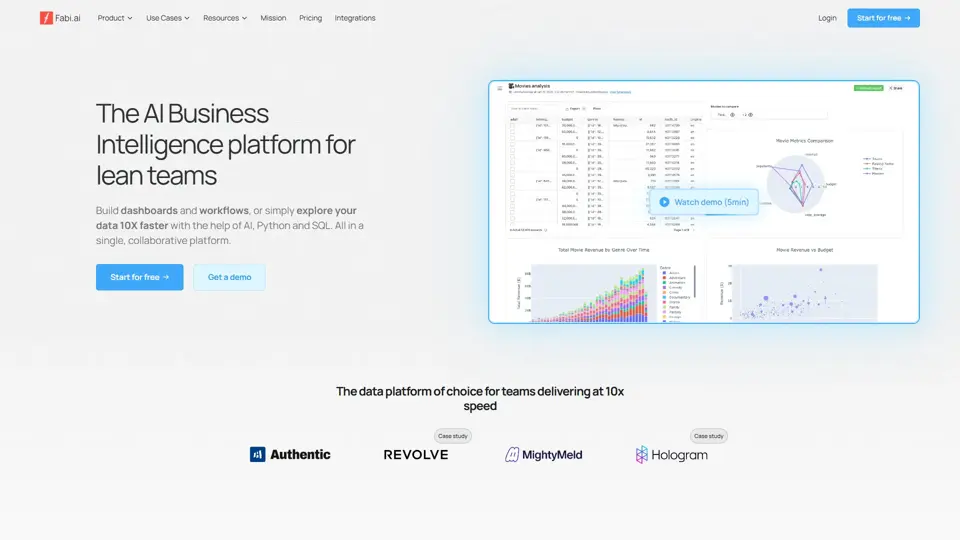
The shift from computation to interpretation. For decades, a significant portion of a quantitative scientist's working week was consumed by data wrangling, model fitting, and running iterative calculations. Tools like Python, R, and MATLAB automated much of this, but the workflow still required manual scripting, debugging, and result validation. Large language models integrated into scientific workflows — GitHub Copilot for code generation, Claude or GPT-4 for statistical interpretation assistance, and domain-specific tools like Wolfram Alpha's API — are compressing this further. A biostatistician who previously spent two days cleaning a clinical dataset and fitting a mixed-effects model can now do it in a few hours with AI-assisted code generation and automated QC flagging.
The pressure on junior roles is acute. Entry-level positions that historically served as training grounds — running regressions, building standard financial models, conducting literature reviews, writing up methods sections — are being absorbed into AI-assisted workflows managed by more senior staff. This is creating a structural tension: organizations are reducing headcount at the analyst level while simultaneously struggling to develop the next generation of senior scientists who have the foundational experience those junior roles provided.
Experimental design is being augmented, not replaced. In drug discovery, AI platforms like Insilico Medicine, Recursion Pharmaceuticals' OS platform, and Schrödinger's computational chemistry suite are generating candidate molecules and predicting binding affinities at a scale no human team could match. But the scientists directing these platforms — deciding which targets matter, which assay results to trust, which biological hypotheses are worth pursuing — are doing work that requires deep domain knowledge and scientific judgment that current AI cannot replicate.
Tasks AI Can Automate
- Routine statistical analysis: Running standard regression models, ANOVA, survival analysis, and hypothesis tests on clean datasets
- Literature synthesis: Scanning and summarizing large bodies of published research to identify consensus findings, contradictions, and gaps (tools like Elicit, Semantic Scholar, and Consensus are already embedded in research workflows)
- Data cleaning and preprocessing: Identifying outliers, handling missing values, normalizing datasets, and flagging data quality issues
- Code generation for analysis pipelines: Writing Python, R, or Julia scripts for standard analytical tasks, including visualization
- Report drafting: Generating first-draft methods sections, results summaries, and technical documentation from structured outputs
- Simulation setup: Configuring and running Monte Carlo simulations, finite element analyses, or agent-based models within established frameworks
- Formula derivation assistance: Checking algebraic steps, suggesting mathematical approaches, and verifying proofs for well-defined problem classes
- Regulatory submission formatting: Structuring statistical analysis plans and clinical study reports to meet FDA, EMA, or ICH guidelines
Skills Becoming More Valuable
Scientific judgment under uncertainty. The ability to decide when a model's output should not be trusted — because the training data was biased, the assumptions don't hold, or the result is statistically significant but scientifically meaningless — is becoming the defining skill of senior math and science professionals. AI produces confident-sounding outputs regardless of their validity.
Cross-domain synthesis. Problems at the frontier of science and industry increasingly require connecting insights across disciplines: a computational biologist who understands both machine learning and cell biology, or a quantitative risk analyst who can bridge climate science and financial modeling. AI tools are domain-specific; humans who can work across domains are not.
Experimental design and causal reasoning. Designing experiments that can actually answer the question being asked — controlling for confounders, choosing appropriate sample sizes, anticipating measurement error — requires a level of causal reasoning that current AI handles poorly. This is especially true in fields where randomized controlled trials are the gold standard.
Communicating uncertainty to non-technical decision-makers. Translating probabilistic outputs, confidence intervals, and model limitations into language that executives, regulators, or policymakers can act on is a skill that requires both technical depth and interpersonal judgment.
Prompt engineering and AI output validation. Knowing how to direct AI tools effectively, recognize hallucinations in scientific contexts, and validate AI-generated code or analysis is now a core professional competency rather than a niche skill.
Novel hypothesis generation. Identifying research questions that are both scientifically tractable and commercially or socially meaningful remains a deeply human activity, requiring intuition built from years of domain immersion.
Skills Becoming Less Important
- Manual data wrangling and ETL scripting for standard data formats — AI-assisted tools handle this faster and with fewer errors
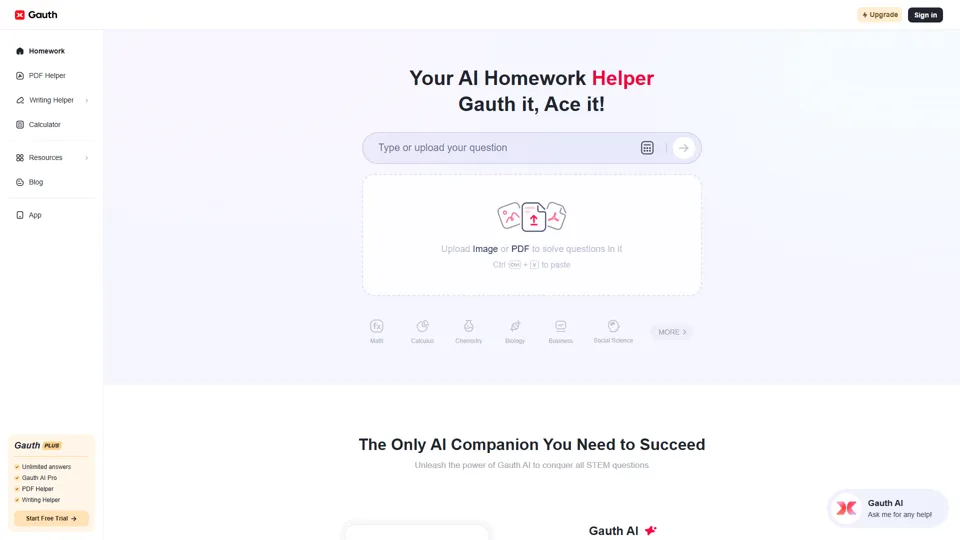
- Rote statistical computation — knowing how to run a t-test or fit a linear model by hand is less valuable than knowing when and why to use it
- Boilerplate scientific writing — first drafts of methods sections, literature reviews, and standard results summaries are increasingly AI-generated
- Memorization of formulas and standard algorithms — with AI-assisted coding environments, recall of syntax and standard implementations matters less than understanding what to implement
- Manual literature review — systematic reviews that once took months are being compressed into days with AI-assisted search and synthesis tools
- Routine model validation on standard problem types — automated ML pipelines now handle cross-validation, hyperparameter tuning, and performance benchmarking for well-defined tasks
Current AI Adoption in This Industry
Adoption is uneven and highly context-dependent, but several patterns are clear across the highest-volume sectors.
Life sciences and pharma are the furthest along in deploying AI at the core of scientific workflows. Companies like Pfizer, Novartis, and AstraZeneca have embedded AI into target identification, compound screening, and clinical trial design. The FDA has issued guidance on AI/ML-based software as a medical device, signaling regulatory normalization. Biostatisticians at CROs (contract research organizations) are using AI-assisted tools for statistical analysis plan generation and data monitoring.
Financial services have the longest history of quantitative AI deployment — algorithmic trading, credit scoring, and actuarial modeling have used ML for over a decade. The current wave is about generative AI entering the workflow layer: quants using Copilot to accelerate model development, risk analysts using LLMs to synthesize regulatory documents, and actuaries using AI to draft client-facing reports from model outputs.
Academic and government research lag significantly, constrained by procurement cycles, data governance concerns, and cultural resistance. However, AI-assisted literature review and grant writing are becoming normalized even in conservative research environments.
Industrial R&D (materials science, chemical engineering, energy) is seeing rapid adoption of AI-driven simulation and optimization, particularly where physical experimentation is expensive. BASF, Dow, and Shell have active AI programs for materials discovery and process optimization.
Future Workflow Evolution
The workflow of a math or science professional in 2027 will look structurally different from today's, even if the job title remains the same.
The most significant shift will be the emergence of AI-in-the-loop scientific workflows where the human role is primarily one of direction, validation, and judgment rather than execution. A quantitative analyst will spend less time building models and more time interrogating them — asking why a model behaves a certain way, whether its assumptions are defensible, and what the second-order consequences of acting on its outputs might be.
Agentic AI systems — where multiple AI models collaborate autonomously on multi-step scientific tasks — are already in early deployment in drug discovery. Within three to five years, these systems will be capable of running complete experimental cycles in silico: generating hypotheses, designing virtual experiments, running simulations, interpreting results, and proposing next steps. The human scientist's role in this loop will be to set the research agenda, evaluate the quality of the AI's reasoning, and make the final call on which directions to pursue in the physical world.
The lab notebook is becoming a living AI document. Electronic lab notebooks integrated with AI assistants will automatically capture experimental parameters, flag deviations from protocol, suggest relevant prior experiments, and generate draft reports. This will accelerate research cycles but also raise new questions about reproducibility, intellectual property, and scientific credit.
Common AI Use Cases
- Drug discovery: Using generative AI to design novel molecular structures with predicted binding affinity and ADMET properties (Schrödinger, Insilico Medicine, Exscientia)
- Clinical trial optimization: AI-assisted patient stratification, adaptive trial design, and real-time safety signal detection
- Quantitative risk modeling: LLM-assisted scenario generation and stress testing in financial risk management
- Actuarial analysis: AI-accelerated mortality table updates, claims pattern analysis, and regulatory filing preparation
- Scientific literature mining: Automated extraction of experimental results, effect sizes, and methodological details from published papers (Elicit, Semantic Scholar)
- Materials discovery: AI-driven prediction of material properties and synthesis routes (DeepMind's GNoME, Microsoft's MatterGen)
- Statistical consulting: AI-assisted selection of appropriate statistical methods and automated assumption checking
- Physics simulation: Neural network surrogates replacing computationally expensive finite element or computational fluid dynamics simulations
Recommended AI Stack
The right stack depends heavily on the specific sub-role and industry, but the following tools represent the current professional standard across math and science contexts.
For quantitative analysis and modeling:
- GitHub Copilot or Cursor for AI-assisted code generation in Python, R, or Julia
- Jupyter AI (JupyterLab extension) for in-notebook AI assistance
- Wolfram Alpha API for symbolic computation and formula verification
For literature review and research synthesis:
- Elicit for structured literature search and data extraction
- Semantic Scholar for citation network analysis and paper discovery
- Consensus for evidence synthesis across published studies
For scientific writing and documentation:
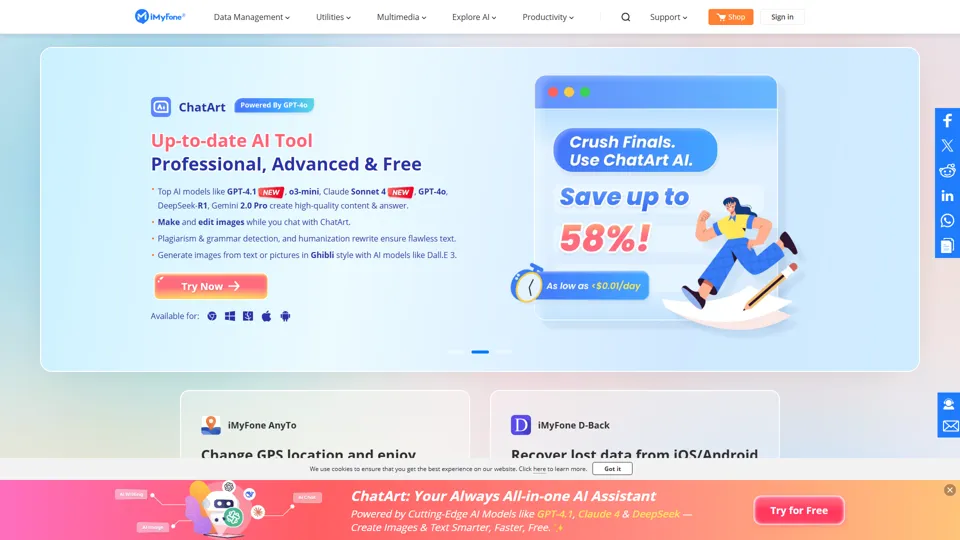
- Claude (Anthropic) for technical writing assistance, methods drafting, and report generation — particularly strong on nuanced scientific language
- Grammarly Business for regulatory and compliance document polish
For domain-specific scientific AI:
- Schrödinger's Maestro platform for computational chemistry and drug discovery
- NVIDIA BioNeMo for protein structure prediction and molecular generation
- Ansys SimAI for AI-accelerated engineering simulation
For data processing and pipeline automation:
- DataRobot or H2O.ai for automated ML pipeline construction and model validation
- Databricks with MLflow for experiment tracking and model lifecycle management
Risks & Challenges
Hallucination in scientific contexts carries real consequences. An LLM that confidently generates a plausible-sounding but incorrect statistical interpretation, a fabricated literature citation, or a flawed derivation step can introduce errors that propagate through an entire research program before being caught. The cost of AI errors in drug development, financial risk modeling, or structural engineering is not abstract.
The junior talent pipeline problem. If AI absorbs the entry-level analytical work that has historically trained the next generation of senior scientists, the profession faces a structural skills gap within a decade. Organizations that over-automate at the junior level may find themselves without the experienced talent needed to direct and validate AI systems in the future.
Reproducibility and auditability. When AI tools are embedded in scientific workflows, questions arise about whether results are reproducible, who is responsible for errors, and how regulators should evaluate AI-assisted research. The FDA, EMA, and financial regulators are still developing frameworks for AI-generated scientific outputs.
Over-reliance on AI-generated hypotheses. There is a real risk that AI-driven research programs converge on the same hypotheses — because they are trained on the same literature — reducing the diversity of scientific inquiry and creating blind spots at the frontier.
Data privacy and IP in AI-assisted research. Uploading proprietary experimental data or unpublished research to commercial AI platforms raises legitimate concerns about intellectual property, competitive intelligence, and regulatory compliance.
Future Outlook: 3–5 Years
By 2028, the math and science professional landscape will have bifurcated more sharply than it has today. On one side: roles that are primarily AI-directed — where the human sets parameters, validates outputs, and makes final decisions, but the analytical and computational work is largely automated. On the other: roles that require physical presence, novel experimental design, or cross-disciplinary synthesis that AI cannot yet replicate.
The actuarial analyst running standard mortality models, the biostatistician processing Phase II trial data against a pre-specified statistical analysis plan, and the junior quant building standard factor models will all see their roles significantly compressed or restructured. The experimental chemist designing a novel synthesis route, the epidemiologist designing a natural experiment to answer a causal question, and the physicist developing a new theoretical framework will remain largely irreplaceable — though they will work faster and with better tools.
The most durable professional identity in math and science will belong to those who can do what AI cannot: exercise scientific skepticism about AI outputs, design experiments that answer questions AI cannot formulate, and take responsibility for the consequences of quantitative decisions in the real world.
Compensation will increasingly reflect this bifurcation. Roles that can be substantially AI-assisted will face downward wage pressure. Roles requiring deep judgment, novel inquiry, and cross-domain synthesis will command a premium.
Final Insight
The fundamental value of math and science professionals has never been their ability to compute — it has been their ability to ask the right question, design a rigorous way to answer it, and interpret the result with appropriate humility. AI is becoming very good at the middle step. The first and last steps remain stubbornly human.
The professionals who will thrive are not those who resist AI tools, nor those who defer entirely to them. They are the ones who develop a calibrated, critical relationship with AI outputs — using them to move faster and explore more, while maintaining the scientific judgment to know when the machine is wrong. In a field defined by the pursuit of truth, that judgment is not a soft skill. It is the job.