How AI fits this role
Writers and Authors in the Age of AI: What's Changing and What Still Requires a Human
Role Overview
Writers and authors occupy one of the most contested professional spaces in the current AI transition. The role spans a wide operational range — from journalists and content strategists producing high-volume digital copy, to novelists and essayists crafting long-form narrative, to technical writers documenting software systems, to ghostwriters producing books, speeches, and thought leadership for executives.
The highest-volume commercial context for this role is content marketing and digital publishing: blog posts, white papers, landing pages, email sequences, and editorial content produced for brands, media companies, agencies, and SaaS businesses. This is also where AI disruption is most acute and most measurable.
Writers in this environment are not primarily artists. They are knowledge workers who translate research, brand positioning, subject matter expertise, and audience insight into structured, persuasive, or informative text — on deadline, at scale, and within editorial and SEO constraints. That operational reality is exactly what makes the role both vulnerable to AI substitution and irreplaceable in specific dimensions.
How AI Is Transforming This Role
The transformation is not theoretical. Since late 2022, content teams at mid-size and enterprise companies have restructured around AI-assisted workflows in ways that have materially changed headcount, output expectations, and the definition of what a writer's job actually is.
The most significant shift is the decoupling of volume from labor. A single writer using AI tools can now produce first drafts at a rate that previously required a team. This has not eliminated writing jobs outright, but it has compressed the market for writers who primarily offer speed and volume. Agencies that once employed five junior writers to produce 40 blog posts per month now employ two senior writers to produce the same output — with AI handling first-draft generation and the humans handling strategy, editing, fact-checking, and brand voice calibration.
A second shift is the rise of the writer-as-editor model. In many content operations, the human writer's primary function has moved upstream (brief creation, research synthesis, angle development) and downstream (structural editing, accuracy review, tone refinement) — with AI occupying the middle. This is not a demotion; it is a role redefinition that rewards different skills than traditional writing did.
A third shift is the pressure on originality and differentiation. As AI-generated content floods search results and inboxes, the commercial value of genuinely distinctive voice, original reporting, and expert-driven insight has increased — even as the market for generic informational content has collapsed. Writers who can produce content that cannot be replicated by a prompt are more valuable than they were three years ago. Writers who cannot are under significant pressure.
Tasks AI Can Automate
These are tasks where AI tools now perform at or near professional standard in most commercial writing contexts:
- First-draft generation from a detailed brief, outline, or set of bullet points — particularly for structured formats like listicles, how-to guides, product descriptions, and FAQ pages
- Headline and subject line variants — generating 10–20 options for A/B testing in seconds
- Content repurposing — converting a long-form article into a LinkedIn post, email newsletter, Twitter thread, or executive summary
- SEO optimization passes — integrating target keywords, adjusting heading structure, and improving meta descriptions against a defined keyword strategy
- Boilerplate and templated copy — terms and conditions summaries, job descriptions, press release structures, product spec sheets
- Research summarization — condensing a 40-page industry report or a set of source URLs into a structured brief or background section
- Tone and style adaptation — rewriting a piece from formal to conversational, or adjusting reading level for a different audience
- Translation and localization drafts — producing workable first drafts in multiple languages for human review
What these tasks share: they are pattern-driven, format-constrained, and do not require original insight, source verification, or nuanced judgment about what is actually true or strategically important.
Skills Becoming More Valuable
Editorial judgment at the brief stage. The ability to identify what angle is genuinely interesting, what the audience actually needs to know, and what the competitive content landscape looks like — before a word is written — is now the highest-leverage skill in content production. AI cannot determine what is worth saying.
Subject matter depth. Writers with genuine expertise in a domain — cybersecurity, clinical research, financial regulation, industrial manufacturing — can produce content that AI cannot fabricate convincingly. Expert-driven content is increasingly the only content that earns trust and backlinks in competitive verticals.
Source development and original reporting. Interviewing practitioners, synthesizing primary research, and surfacing insights that do not exist anywhere on the internet are capabilities that remain entirely human. In journalism and thought leadership, this is the core value proposition.
Voice and narrative construction. Long-form narrative — whether a reported feature, a business book, or a brand story — requires structural intelligence, emotional pacing, and a distinctive authorial perspective that current AI tools cannot sustain across 3,000+ words without significant degradation.
Prompt engineering and AI workflow design. Writers who understand how to construct effective prompts, chain AI tasks, and build repeatable content workflows are significantly more productive than those who do not. This is now a baseline professional skill in most content roles.
Editing for accuracy and brand coherence. AI hallucinates facts, misattributes quotes, and drifts from brand voice. The ability to catch these errors quickly — and to know what to check — is a critical quality control function that requires human judgment.
Skills Becoming Less Important
- Raw typing speed and first-draft fluency — the ability to produce clean prose quickly from scratch is no longer a differentiator when AI can generate a serviceable draft in 30 seconds
- Mechanical SEO optimization — keyword insertion, meta tag writing, and basic on-page SEO are now largely automated within content workflows
- Format memorization — knowing the structural conventions of a press release, a case study, or an executive bio is no longer a skill gap; AI handles format reliably
- Volume production as a standalone value proposition — offering to write 20 articles per month is not a competitive advantage when AI can produce 200
- Basic research aggregation — summarizing what is publicly known about a topic from secondary sources is a task AI performs faster and more comprehensively than most humans
Current AI Adoption in This Industry
Adoption is uneven but accelerating. As of 2024–2025, the patterns look like this:
Content marketing and agency work has the highest adoption rate. Most mid-size content agencies have integrated AI into their production workflows, primarily using it for first-draft generation, content repurposing, and SEO optimization. Headcount has been reduced or held flat while output has increased.
Digital publishing and media is more cautious, driven by editorial credibility concerns and audience trust. Major outlets have published AI use policies, and most prohibit fully AI-generated articles under a byline. However, AI is widely used for research assistance, headline testing, and back-end content operations.
Technical writing has seen significant AI integration for documentation generation, particularly in software companies where AI tools can generate API documentation, release notes, and help center articles from code and product data. Human technical writers are increasingly focused on information architecture and accuracy review.
Book publishing and long-form narrative has the lowest AI integration in the actual writing process, though AI is used for research, outlining, and developmental editing support. The commercial pressure here is different — readers buy books for voice and perspective, not information density.
Freelance writing has been the most disrupted segment. Rates for commodity content have dropped sharply as clients use AI to reduce their dependence on freelancers for volume work. Freelancers who have survived and grown are those who have repositioned around expertise, strategy, or editorial services.
Future Workflow Evolution
The content production workflow of 2026–2027 will look structurally different from 2021. The emerging model in high-functioning content operations:
- Strategy and brief development (human) — audience research, competitive analysis, angle selection, keyword strategy, editorial calendar
- Source and expert input (human) — interviews, primary research, proprietary data, SME review
- AI draft generation (AI) — structured first draft from brief, outline, and source material
- Editorial review and rewrite (human) — accuracy check, voice calibration, structural editing, fact verification
- SEO and distribution optimization (AI-assisted) — meta data, internal linking suggestions, repurposing variants
- Performance analysis and iteration (human + AI) — content performance review, update prioritization, gap analysis
The writer's role in this workflow is concentrated at steps 1, 2, and 4 — the parts that require judgment, expertise, and accountability. The volume of content a single writer can oversee increases substantially; the nature of the work shifts toward editorial direction and quality control.
Common AI Use Cases
Long-form content production: A writer creates a detailed brief with target audience, key arguments, supporting data, and SEO targets. They feed this to an AI tool to generate a 1,500-word draft, then spend 45–60 minutes editing for accuracy, voice, and depth — adding original examples, fixing factual errors, and sharpening the argument.
Content repurposing at scale: A 3,000-word pillar article is fed into an AI workflow that generates a LinkedIn post, an email newsletter section, a Twitter/X thread, and a short-form video script — all reviewed and lightly edited by the writer before publication.
Competitive content gap analysis: AI tools scan competitor content, identify topics and angles not yet covered, and surface keyword opportunities — giving the writer a prioritized editorial roadmap rather than requiring manual research.
Interview-to-article pipeline: A writer conducts a 30-minute expert interview, runs the transcript through an AI tool to extract key quotes and themes, and uses the structured output as the foundation for a bylined article — compressing the post-interview production time significantly.
Personalization at scale: In email marketing and content personalization, AI generates audience-segment-specific variants of a core piece — different examples, different pain points, different CTAs — based on a master version written by the human writer.
Recommended AI Stack
These tools reflect current professional usage patterns in content and writing roles, not aspirational or experimental technology:
Draft generation and editing
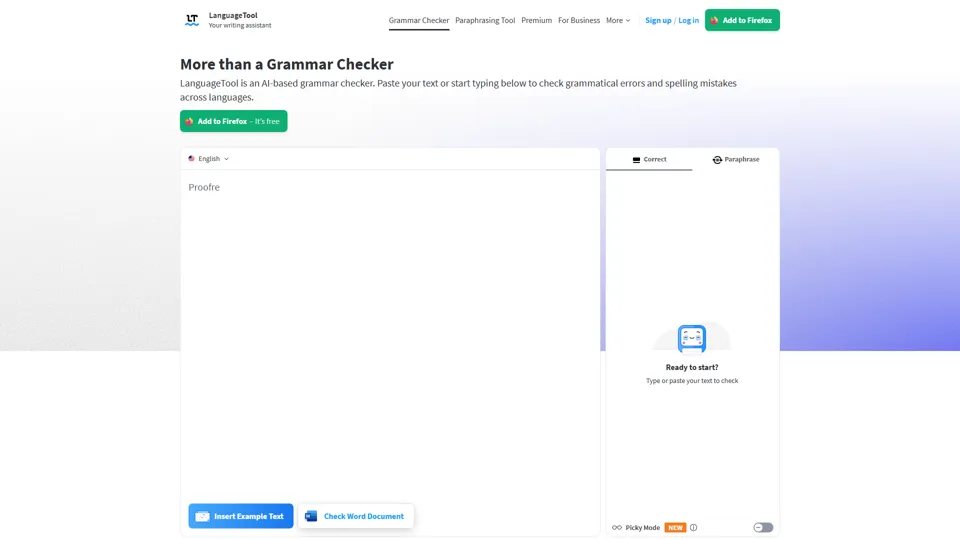
- ChatGPT (GPT-4o) or Claude — for long-form drafting, structural editing, and research synthesis
- Gemini — particularly useful for research-heavy tasks with real-time web access
Content-specific writing tools
- Jasper — enterprise content workflows with brand voice training and team collaboration
- Copy.ai — campaign and marketing copy with workflow automation features
- Writesonic — SEO-focused content generation with SERP analysis integration
SEO and content strategy
- Surfer SEO — content optimization against live SERP data
- Clearscope — content grading and keyword integration for editorial teams
- MarketMuse — content strategy, gap analysis, and topic authority modeling
Research and synthesis
- Perplexity AI — source-cited research synthesis for fact-checking and background research
- Elicit — academic and research paper synthesis for evidence-based content
Workflow and repurposing
- Zapier AI / Make — automating content repurposing pipelines across channels
- Descript — transcript-to-content workflows for interview and podcast-based writing
Risks and Challenges
Accuracy and hallucination. AI tools confidently generate false statistics, misattributed quotes, and plausible-sounding but incorrect claims. In any content that will be published under a byline or brand name, every factual claim generated by AI requires verification. Writers who skip this step create legal and reputational exposure for themselves and their clients.
Voice homogenization. Heavy reliance on AI drafts produces content that sounds like everything else. As more content operations use the same tools with similar prompts, the differentiation that makes content valuable — distinctive voice, original framing, unexpected angle — erodes. This is a strategic risk for brands, not just an aesthetic concern.
Intellectual property uncertainty. The legal status of AI-generated content — particularly regarding copyright ownership and training data liability — remains unresolved in most jurisdictions. Writers and publishers operating in regulated industries or producing content with significant commercial value should be aware of evolving case law.
Client and employer expectations. The productivity gains AI enables have created unrealistic output expectations in some organizations. Writers are being asked to produce more content with the same or fewer resources, without adequate time for the editorial judgment and accuracy review that makes AI-assisted content actually good. This is a workflow management and negotiation challenge, not just a technical one.
Skill atrophy. Writers who outsource first-draft thinking to AI risk losing the ability to construct arguments, develop structure, and find original angles independently. The craft of writing is also the craft of thinking; delegating it entirely has long-term professional consequences.
Discoverability and search volatility. Google's ongoing algorithm updates targeting low-quality, AI-generated content mean that content operations built primarily on AI volume production face significant organic search risk. The writers and teams producing genuinely useful, expert-driven content are better positioned for long-term search performance.
Future Outlook: 3–5 Years
The writing profession will not disappear, but it will bifurcate more sharply than it already has.
At one end: a smaller number of highly skilled writers commanding premium rates for work that requires genuine expertise, original reporting, distinctive voice, and strategic editorial judgment. These writers will use AI extensively as a production tool but will be valued for what they bring that AI cannot — credibility, sourcing, perspective, and accountability.
At the other end: a commoditized tier of AI-generated content, lightly edited or unedited, produced at near-zero marginal cost. This content will exist in enormous volume and will perform poorly on trust, engagement, and long-term search metrics — but it will be produced anyway because the short-term economics favor it.
The middle tier — competent generalist writers producing solid but undifferentiated content — faces the most structural pressure. This is where the largest volume of writing jobs has historically existed, and it is where AI substitution is most direct.
Three developments will shape the next five years:
Multimodal content production will expand the writer's toolkit and scope. Writers who can direct AI to produce integrated text, image, and video content — and who understand how narrative works across formats — will have broader commercial relevance.
AI detection and authenticity signaling will become a commercial factor. As audiences and platforms develop more sophisticated ways to identify AI-generated content, the provenance and process behind content will matter more. Writers with verifiable expertise and original sourcing will have a credibility advantage.
Agentic AI writing systems — tools that can autonomously research, draft, optimize, and publish content with minimal human input — will handle an increasing share of routine content production. The human writer's role in these systems will be supervisory and strategic, not executional.
Final Insight
The writers who are thriving in this transition share a common characteristic: they have stopped competing with AI on the dimensions where AI wins — speed, volume, format adherence — and have doubled down on the dimensions where humans still hold a decisive advantage.
Original thinking. Source relationships. Domain expertise. Editorial judgment. Narrative intelligence. Accountability for what is true.
These are not soft skills or consolation prizes. They are the specific capabilities that determine whether content actually works — whether it earns trust, changes minds, ranks durably, and builds the kind of authority that compounds over time.
AI has raised the floor of content quality and collapsed the economics of volume production. It has not raised the ceiling of what great writing can do. That ceiling is still set by humans, and the distance between the floor and the ceiling is where the profession's future lives.