
Average Score
Total Votes
Select your score (1-10):
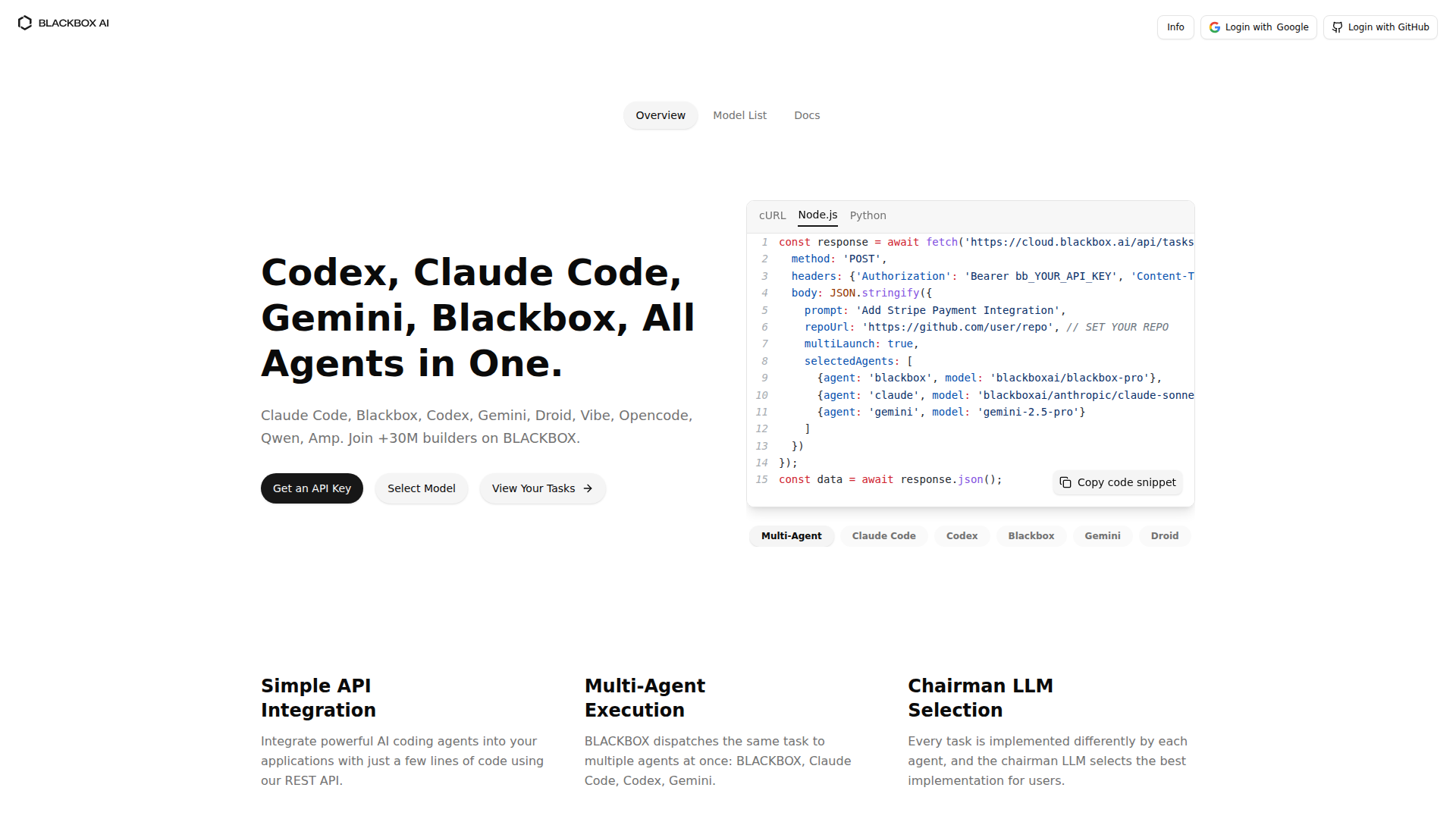
BLACKBOX AI Agent is a developer-focused platform and API for running coding tasks across multiple AI agents from one interface. The page presents it as a way to submit a prompt, optionally point to a GitHub repository, choose multiple coding agents and models, and receive alternative implementations for the same task.
It appears designed for software builders and teams that want to compare outputs from models such as BLACKBOX, Claude Code, Codex, and Gemini without managing each tool separately. Its positioning is likely an orchestration layer for AI coding workflows, with added evaluation via a “Chairman LLM” that reviews implementations and recommends the best result.
Within the OpenClaw ecosystem, this product could likely serve as a coding-task execution layer for software engineering agents. An OpenClaw skill could take a product request, convert it into a structured development prompt, send it to BLACKBOX AI Agent with selected models, then collect the returned implementations and route them into review, testing, or prioritization workflows. The page does not state a native OpenClaw integration, so this is a likely use case rather than a confirmed capability.
More advanced OpenClaw workflows could include an engineering manager agent that chooses when to use 2 versus 5 models, a QA agent that inspects the separate commits from each implementation, and a documentation agent that summarizes tradeoffs between outputs selected by the Chairman LLM. In practice, this combination could help software teams move from single-model coding assistance to coordinated, auditable multi-agent development pipelines, especially for feature delivery, refactoring analysis, and repository-aware code generation.
Share this AI tool on your website or blog by copying and pasting the code below. The embedded widget will automatically update with the latest information.
<iframe src="https://aimyflow.com/ai/agent-blackbox-ai-api/embed" width="100%" height="400" frameborder="0"></iframe>
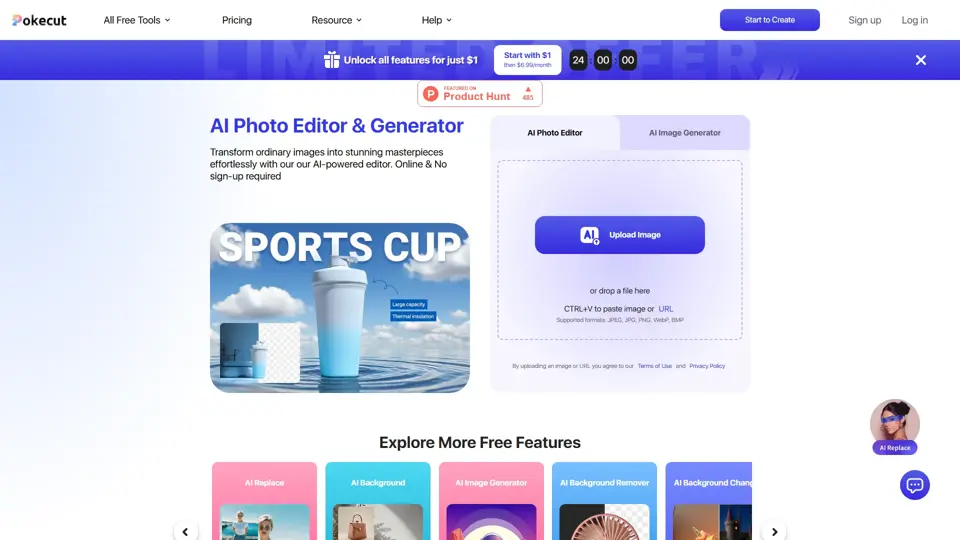
Pokecut is an AI photo editor that helps users remove backgrounds, enhance images, and generate visuals online, mainly for ecommerce sellers, marketers, and creators who need quick design-ready assets. It speeds up routine image production so visual teams can create polished content with less manual editing.
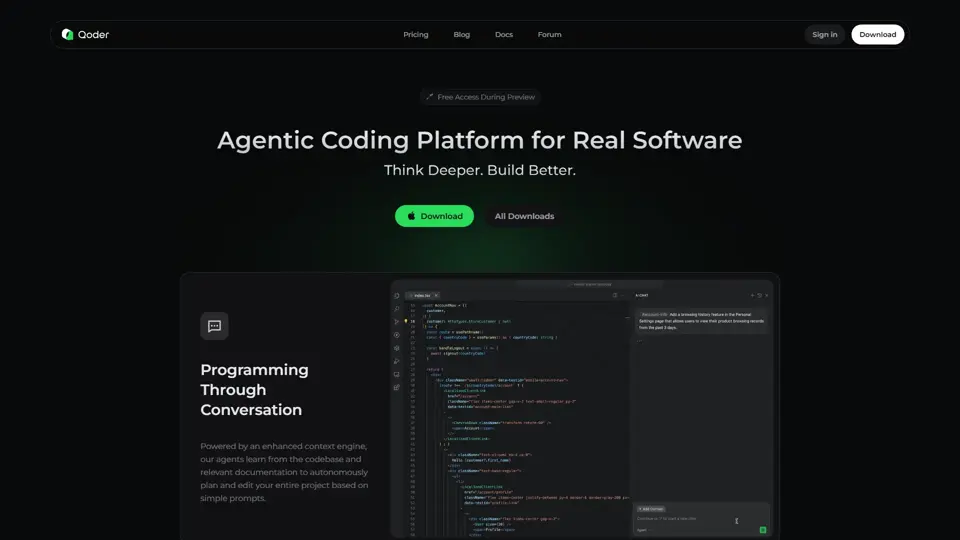
Qoder is an agentic coding platform that helps developers understand codebases and execute software tasks with AI agents, mainly for professional software engineers and development teams. It improves engineering throughput by combining strong code context with advanced models for more reliable task completion.

Seedance 2.0 is ByteDance's AI video generation model designed to create high-quality videos from prompts and multimodal inputs, mainly for creators, developers, and media teams. In the AI era, it helps visual content roles turn ideas into production-ready motion assets with far less manual editing effort.
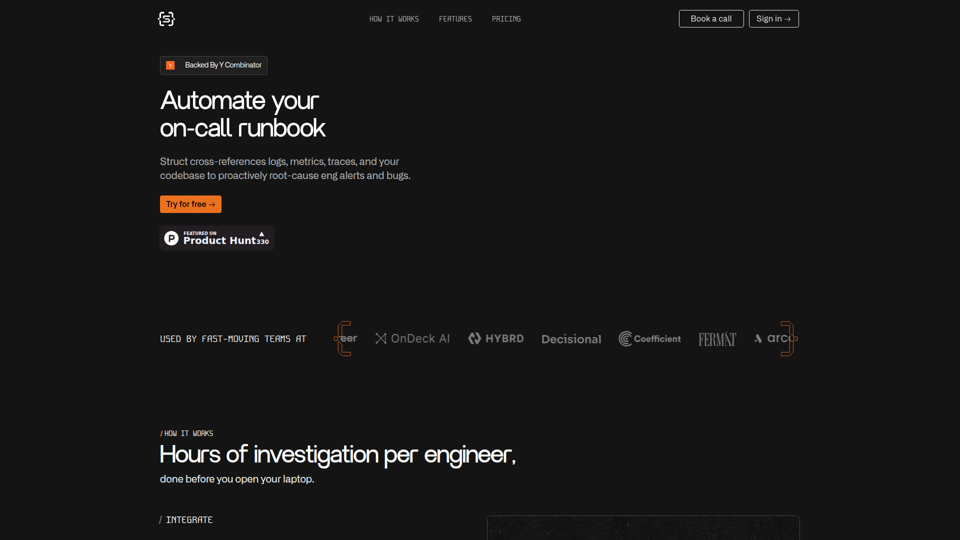
Struct is an AI on-call agent that investigates engineering alerts and bugs by analyzing logs, metrics, traces, and codebases, mainly for software engineers and SRE teams. In the AI era, it helps incident responders shorten triage time by delivering root-cause findings and suggested fixes directly in workflows.
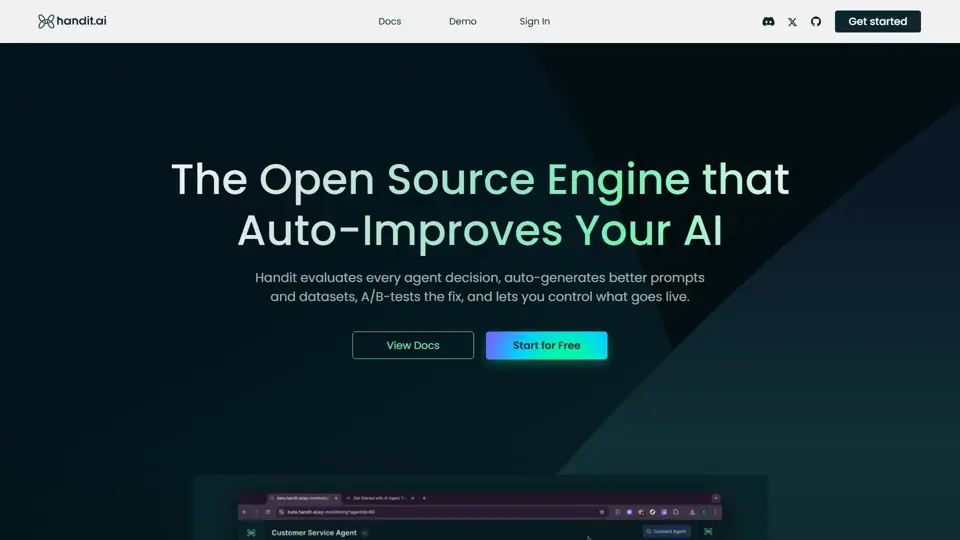
Handit.ai is an open-source optimization engine that evaluates AI agent decisions, generates improved prompts and datasets, and A/B tests changes for teams building and operating AI agents. It helps AI engineers and product teams improve agent quality faster while keeping tighter control over production behavior.
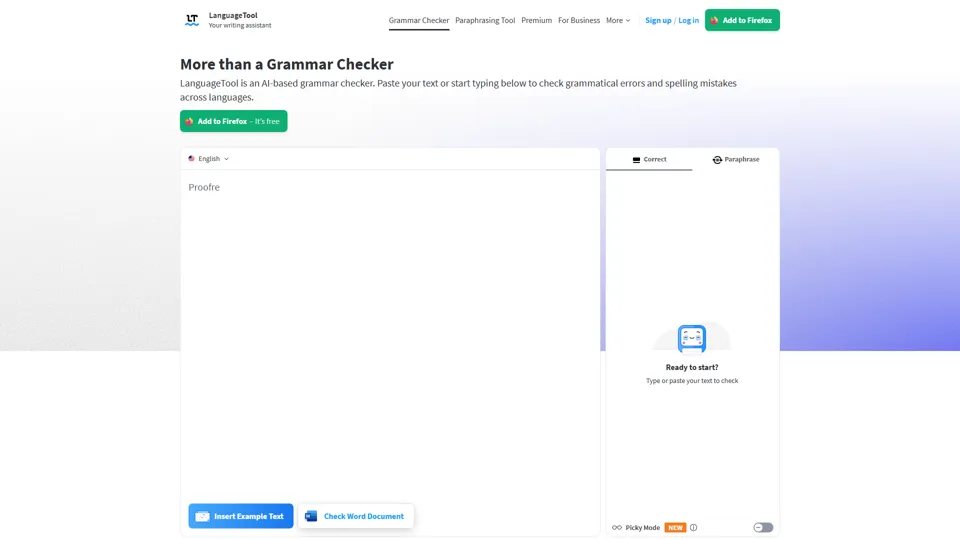
LanguageTool is an AI-powered grammar and writing assistant that helps users check grammar, spelling, punctuation, and style across more than 30 languages, mainly for students, professionals, and multilingual teams. It helps writing-heavy roles communicate more clearly and edit faster at scale.
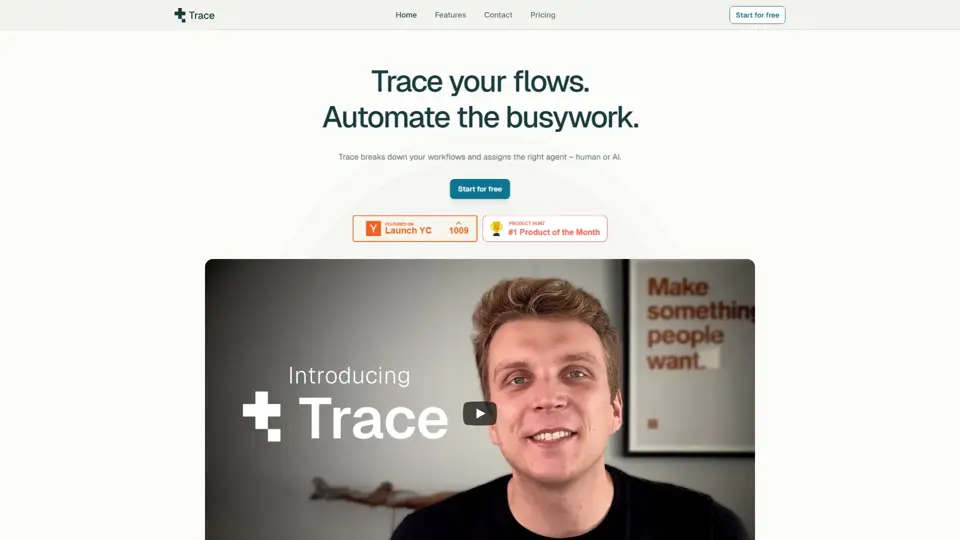
Trace is a software tool designed to support digital workflows, likely focused on helping teams organize, monitor, or analyze work more effectively. In the AI era, tools that centralize operational visibility help technical and business roles make faster decisions with less manual follow-up.
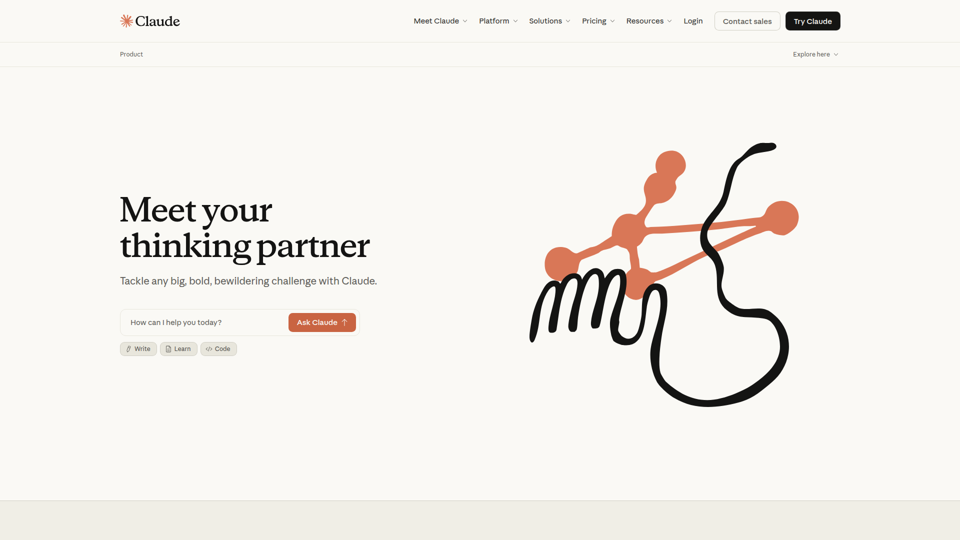
Claude by Anthropic is an AI assistant for problem solvers that helps users tackle complex work such as writing, coding, data analysis, research, and organizing tasks, mainly for professionals, developers, and teams handling difficult projects. In AI-enabled workflows, it can help knowledge workers and software teams move faster from analysis to execution while keeping people in control of approvals and file access.