
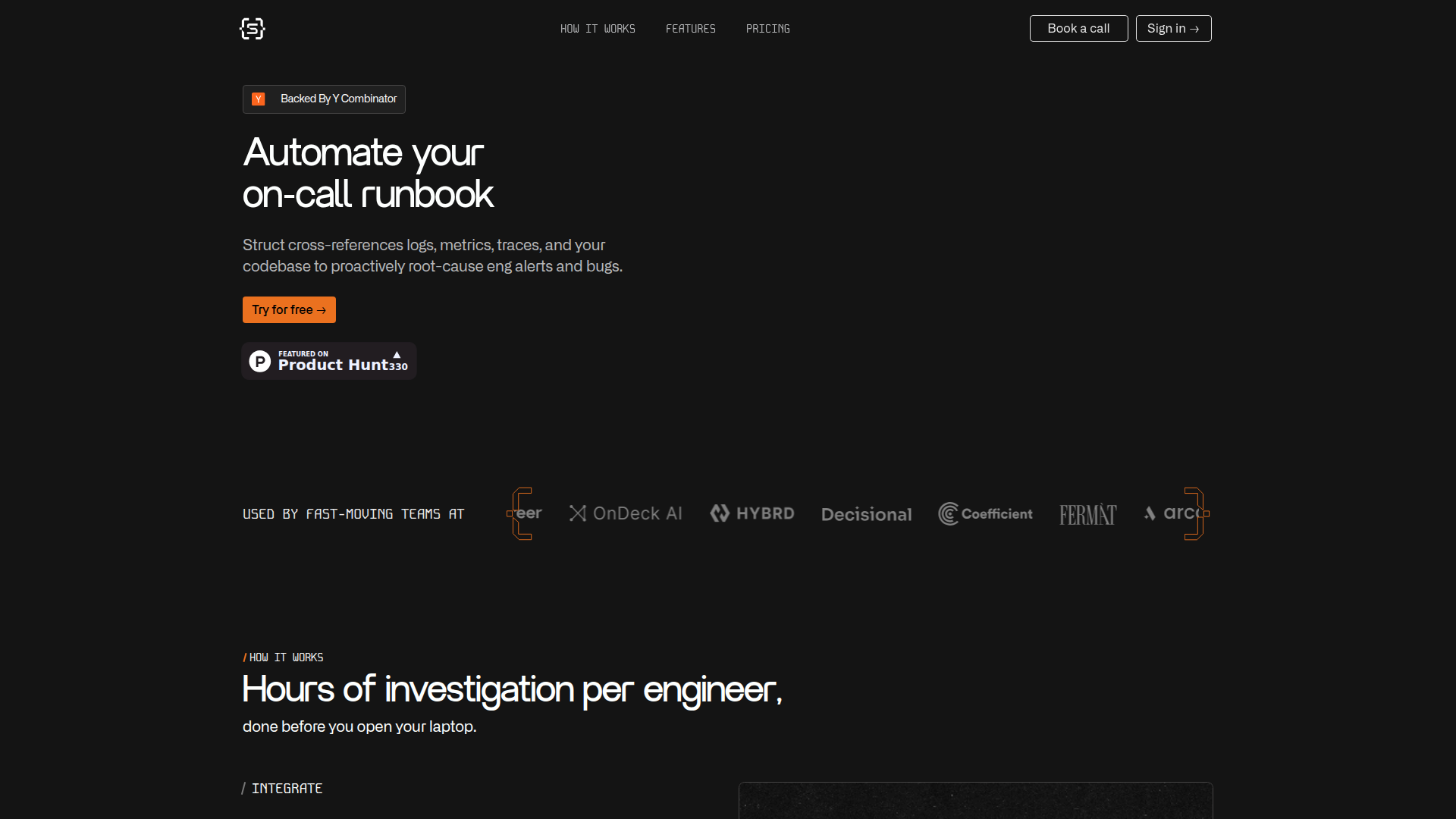
Struct | Automate your on-call runbook
Rate this Tool
Average Score
Total Votes
Select your score (1-10):
Detail Information
What
Struct is an AI on-call agent that automates investigation steps in an engineering on-call runbook. It cross-references logs, metrics, traces, and your codebase to proactively help root-cause engineering alerts and bugs, and it can respond with a root cause, impact analysis, and a suggested fix.
It is positioned for fast-moving software teams that rely on observability, alerting, and work-tracking tools. The workflow emphasized is: connect key data sources, let Struct auto-investigate new alerts as they occur, then review evidence and act from Slack or deeper investigation views (timelines, commit history, log queries) using AI investigation reports.
Features
- Broad stack context ingestion: Pulls context from across observability/alerting, cloud logs, and work tools (examples listed include Sentry, Datadog, Slack, Linear, Asana, GitHub) to reduce time spent switching systems during incidents.
- Automatic alert investigation: Automatically investigates engineering alerts as they occur and replies with a root cause, impact analysis, and suggested fix to speed initial triage.
- On-demand investigations via Slack mentions: Supports triggering an investigation by @mentioning Struct, enabling quick checks without leaving team chat.
- Evidence review and deeper exploration: Lets engineers review collected evidence and test hypotheses in Slack or via incident timelines, commit histories, and log queries backed by AI investigation reports.
- PR creation and handoff support: Provides one-click creation of PRs (with a claim that they “always build cleanly”) and the ability to hand off tasks to a coding agent with full context included.
- Security and data handling claims: States data is logically isolated, not used for training, encrypted, and that the product is SOC2 Type II and HIPAA compliant (with more details referenced at trust.struct.ai).
Helpful Tips
- Validate source coverage early: Before rollout, confirm your primary alerting/observability tools and log sources are supported in practice for your stack (the site lists examples and “all leading” platforms, but you should verify your exact setup).
- Define what “good” looks like for investigations: Establish internal expectations for what a useful auto-investigation should include (suspected cause, impacted services/users, relevant links, and a concrete next step) so outputs are consistently actionable.
- Start with high-signal alert classes: Begin with recurring, well-instrumented alerts where logs/metrics/traces and deploy/commit context are reliable; expand to noisier categories after tuning.
- Plan for human review and escalation paths: Treat AI-generated root cause and fixes as suggestions; ensure on-call owners have a clear process for confirming, escalating, and documenting outcomes.
- Align security review to your requirements: If compliance is a factor, map Struct’s stated SOC2/HIPAA posture and data-training claims to your vendor assessment checklist and required controls.
OpenClaw Skills
Struct could be a strong upstream signal source for OpenClaw-style operational workflows because its core output is structured incident context (root cause hypotheses, impact analysis, suggested fixes, and evidence links) produced from cross-referenced telemetry and code/work data. A likely use case (not a confirmed native integration) is an OpenClaw incident-coordinator skill that listens for Struct investigation summaries in Slack, normalizes them into a standard incident record, and automatically updates ticketing/runbooks with the evidence Struct collected.
Additional likely OpenClaw agents could include: (1) a “fix orchestration” skill that takes Struct’s suggested fix and routes it to the right owner or coding agent while enforcing internal guardrails (branching strategy, required approvals, rollback notes), and (2) a “post-incident synthesis” skill that combines Struct’s timeline/commit history with your internal templates to draft incident reports and create follow-up tasks. If implemented, this combination could reduce manual triage and improve consistency in how engineering teams move from alert → diagnosis → remediation → documentation, while keeping human ownership for verification and decision-making.
Embed Code
Share this AI tool on your website or blog by copying and pasting the code below. The embedded widget will automatically update with the latest information.
<iframe src="https://aimyflow.com/ai/struct-ai/embed" width="100%" height="400" frameborder="0"></iframe>
Explore Similar Tools
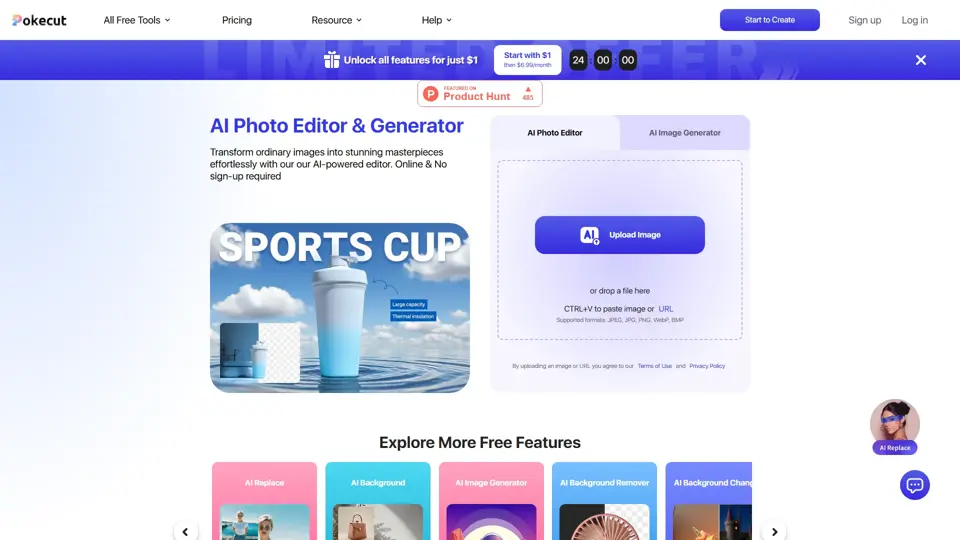
Free AI Photo Editor: Edit & Generate Image Online | Pokecut
Pokecut is an AI photo editor that helps users remove backgrounds, enhance images, and generate visuals online, mainly for ecommerce sellers, marketers, and creators who need quick design-ready assets. It speeds up routine image production so visual teams can create polished content with less manual editing.
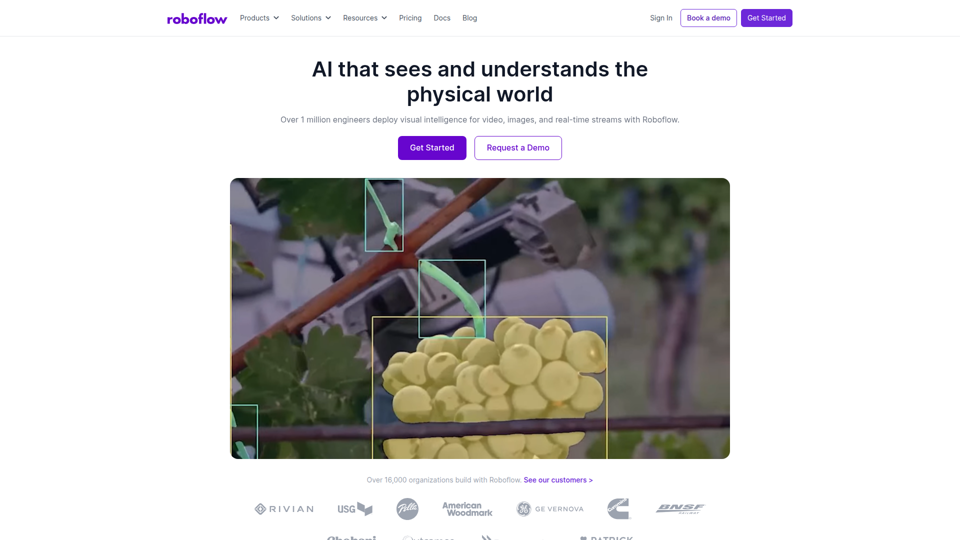
Roboflow: Computer vision tools for developers and enterprises
Roboflow is a computer vision platform that helps developers, machine learning engineers, and enterprises annotate data, train models, build workflows, and deploy vision AI for images, video, and real-time streams. In AI-driven operations, it can help computer vision and ML teams move faster from prototype to production by combining data labeling, model training, and deployment in one workflow.

Seedance 2.0
Seedance 2.0 is ByteDance's AI video generation model designed to create high-quality videos from prompts and multimodal inputs, mainly for creators, developers, and media teams. In the AI era, it helps visual content roles turn ideas into production-ready motion assets with far less manual editing effort.
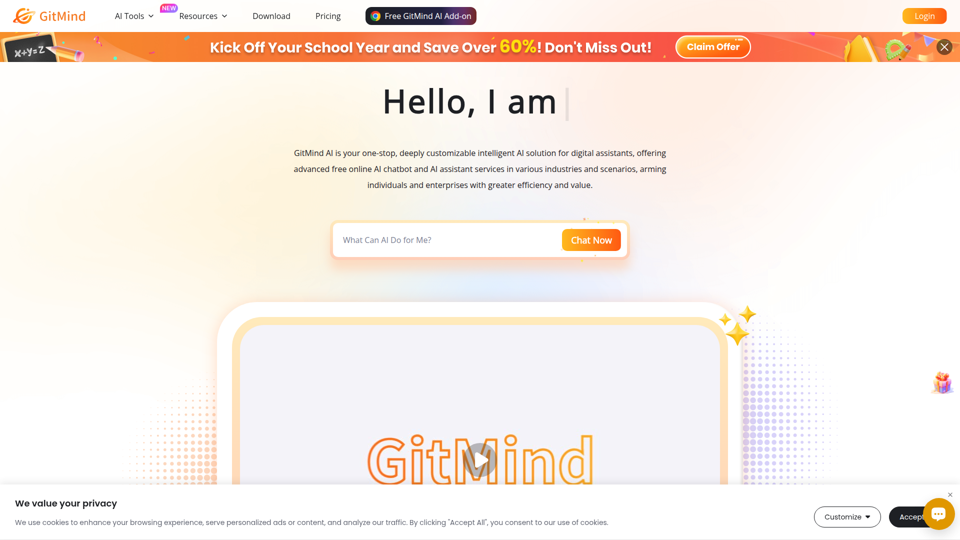
GitMind Chat - Your Best AI Assistant
GitMind Chat is an AI assistant and chatbot platform that helps individuals and enterprises handle conversations, analysis, writing, coding, translation, customer service, and custom AI agent creation through prebuilt or configurable assistants. For roles such as marketers, analysts, support teams, educators, and developers, it can streamline repetitive knowledge work by combining chat, file and link inputs, image analysis, and contextual responses in one workflow.
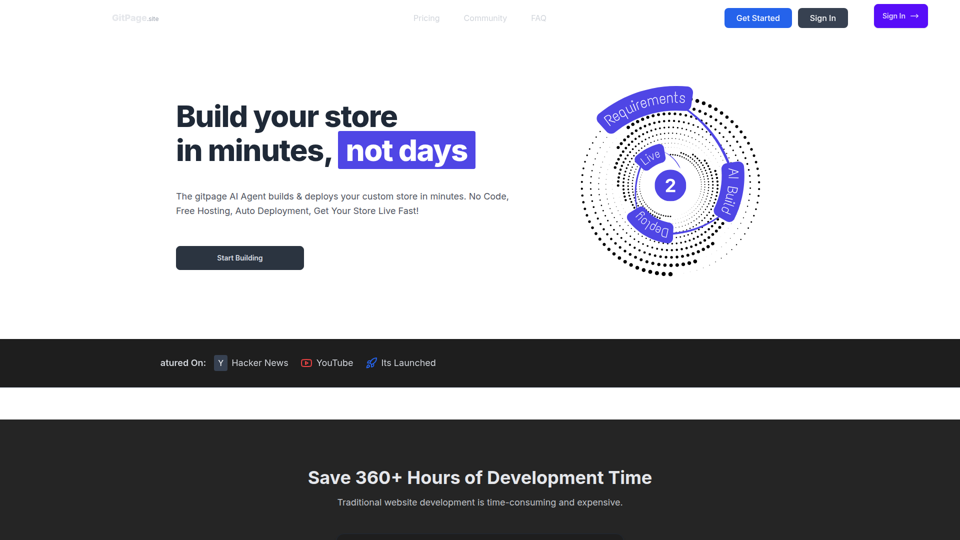
GitPage AI Website Builder | GitPage
GitPage is an AI website builder that generates and deploys websites, online stores, and landing pages from a form, mainly for freelancers, agencies, startups, and businesses that want no-code site creation with code ownership. For web professionals and client-service teams, it can reduce manual setup and content drafting by automating page generation, blog content, and deployment to GitHub or GitLab Pages.
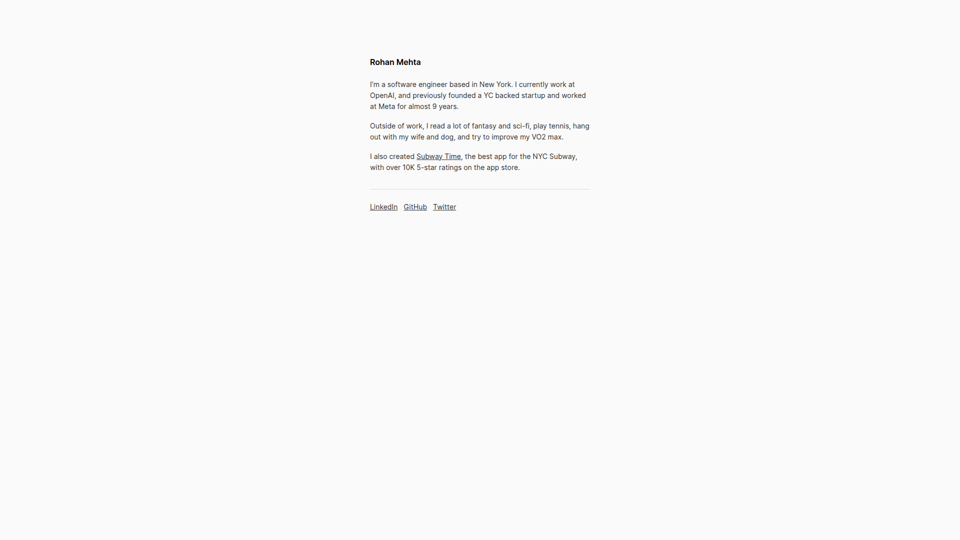
Rohan Mehta
Rohan Mehta is a personal website for a New York–based software engineer at OpenAI, outlining his background at Meta and as a YC-backed startup founder, and highlighting his creator role behind the Subway Time NYC transit app. For software engineers and technical hiring teams, this kind of concise profile helps AI-era talent evaluation by quickly surfacing relevant build, scale, and product experience.
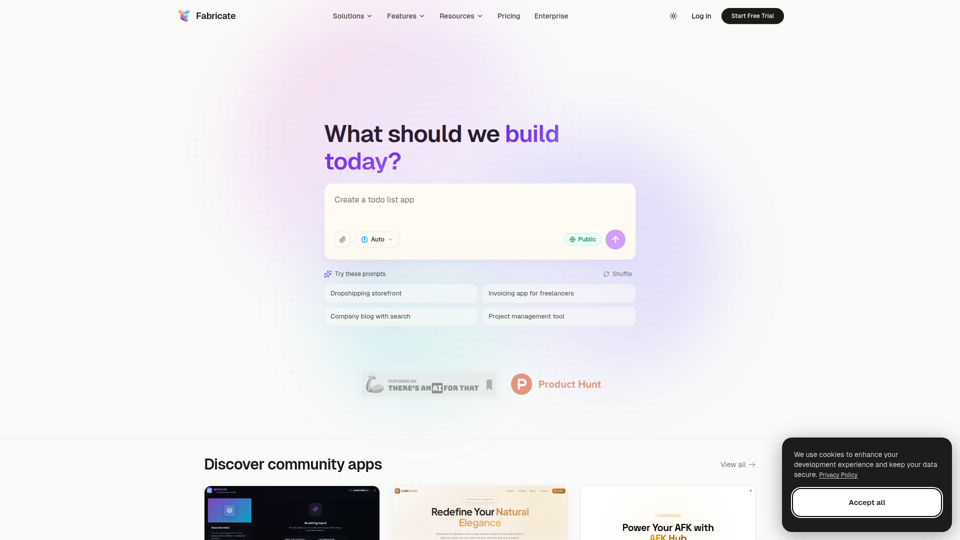
Fabricate - AI Full-Stack App Builder | Build Anything, Ship Faster
Fabricate is an AI full-stack app builder that helps users describe an app idea and generate production-ready web applications, mainly for founders, developers, designers, freelancers, agencies, and enterprises. In AI-assisted product development, it can help these teams move faster from concept to deployable React, TypeScript, and backend code with less manual setup.
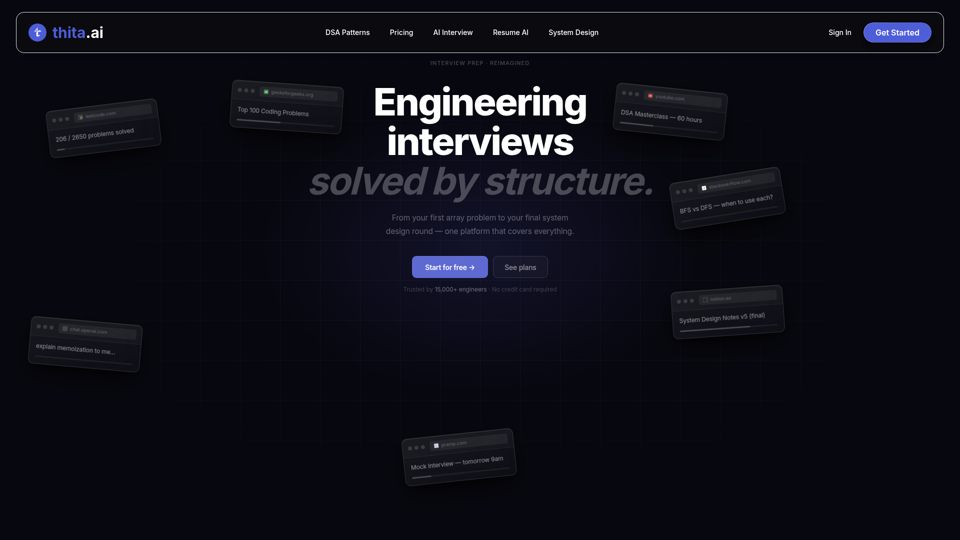
AI Interview Prep | DSA Patterns, AI Coaching | Thita.ai
Thita.ai is an AI interview preparation platform that helps engineers practice DSA patterns, mock interviews, system design, resume analysis, and structured learning tracks for technical roles. For software engineers and related technical candidates, AI-based coaching and adaptive feedback can make interview prep more consistent, targeted, and easier to fit into busy schedules.