
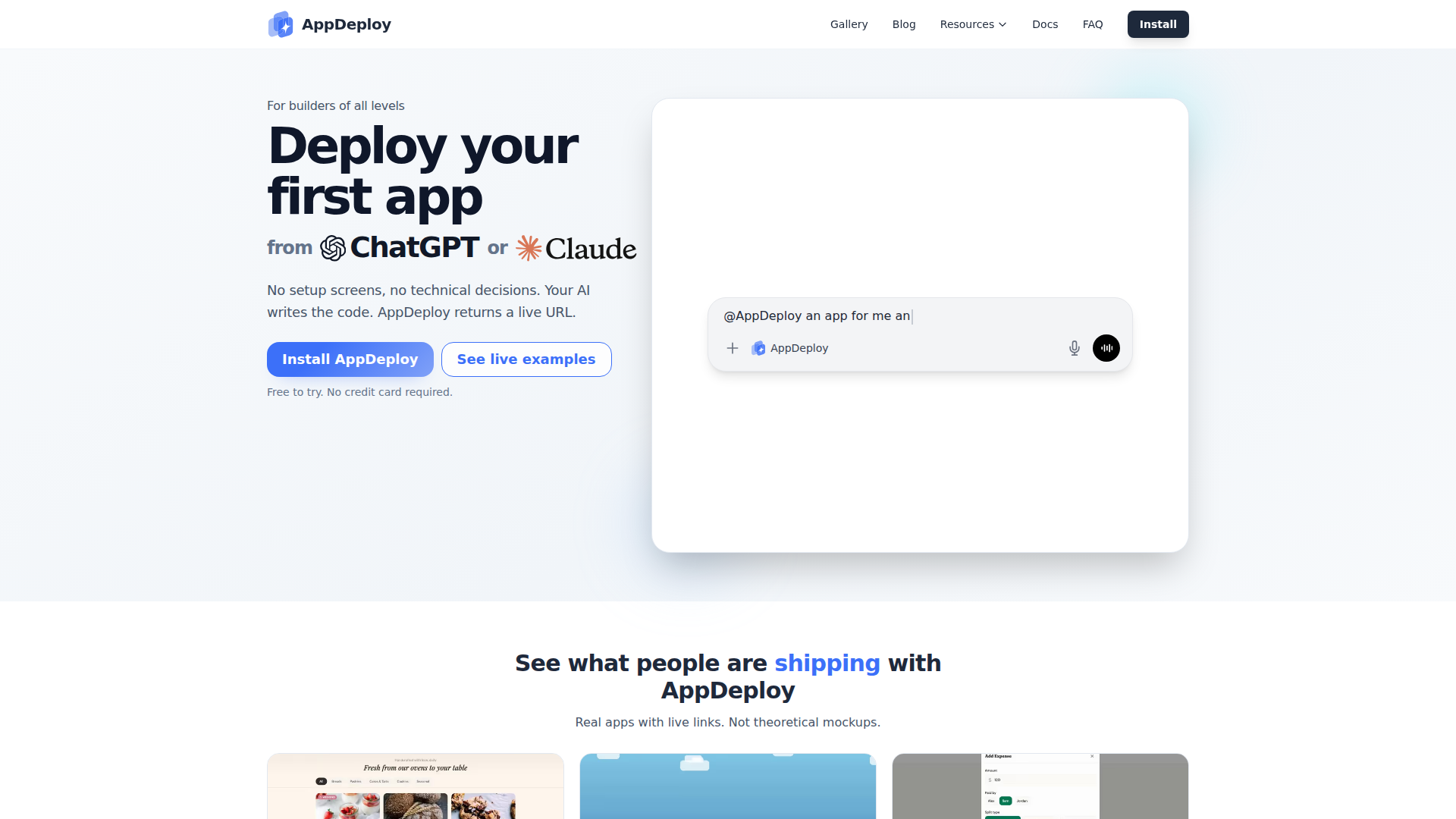
AppDeploy | Deploy apps from ChatGPT and Claude
Rate this Tool
Average Score
Total Votes
Select your score (1-10):
Detail Information
What
AppDeploy is a chat-native deployment product that turns code written inside ChatGPT, Claude, and other supported coding agents into a live app URL. It is designed to remove the setup work that typically slows down AI-assisted app building, so users can describe an app in chat, let the AI generate code, and have AppDeploy handle deployment.
The product appears aimed at builders across skill levels, including non-technical users who can specify what they want in plain language as well as developers using tools like Cursor, Codex, CLI agents, and MCP-compatible environments. Its positioning is likely as a deployment layer for AI-generated applications, focused on reducing hosting, infrastructure, and release-management friction rather than acting as a full standalone IDE.
Features
- Chat-native deployment workflow: Users install AppDeploy once into a supported AI tool, then deploy directly from the same conversation where the code is written.
- Automatic live hosting: AppDeploy hosts the app on cloud infrastructure and returns a live URL, removing the need to choose and configure a hosting provider manually.
- Built-in backend essentials: The platform states it can automatically set up database and file storage, authentication, background tasks, notifications, and real-time sync when an app requires them.
- Secrets and infrastructure handling: Secure secrets management and managed cloud hosting are included as part of deployment, reducing infrastructure decisions during app launch.
- QA and deployment safety tools: AppDeploy includes autonomous end-to-end QA, visual bug reports sent back into chat, instant rollbacks, and redeployment support for iteration.
- Multi-environment support: The product supports ChatGPT and Claude, and the page also lists Cursor, Codex, CLI coding agents, Antigravity, and other MCP-compatible tools.
Helpful Tips
- Validate app complexity early: If evaluating AppDeploy, confirm how well it supports the specific backend, storage, and auth patterns your application needs, since the page describes broad automation but does not detail implementation limits.
- Use it where deployment is the bottleneck: This type of product is most useful when AI can generate workable code quickly but hosting, environment setup, and release steps would otherwise slow delivery.
- Review QA outputs as part of the workflow: Automated QA and visual bug reporting can speed iteration, but teams should still define human review checkpoints before broader production use.
- Check platform requirements before rollout: Some supported platforms may require paid plans for connectors, so it is worth confirming toolchain dependencies before standardizing on the workflow.
- Test versioning and rollback behavior: For business-critical apps, assess how deployment logs, rollback flows, and redeploy behavior fit your release and incident response process.
OpenClaw Skills
AppDeploy could fit well into the OpenClaw ecosystem as a deployment endpoint inside broader agentic software-delivery workflows. A likely use case would be an OpenClaw skill that converts a product brief into prompts for ChatGPT or Claude, monitors generated code, triggers AppDeploy for launch, then captures the returned live URL for review, QA, and stakeholder sharing. Because the site emphasizes chat-based deployment, this pairing would be especially relevant for rapid prototyping, internal tools, and lightweight customer-facing apps.
A more advanced likely use case would be OpenClaw agents that sit around AppDeploy rather than inside it: a requirements agent to structure app requests, a release agent to coordinate deployments across supported coding environments, and a QA triage agent to interpret visual bug reports and debug logs coming back into chat. If implemented well, that combination could shift product, operations, and consulting teams from manually coordinating app handoffs to managing a faster brief-to-live-app pipeline, although the page does not state any native OpenClaw integration.
Embed Code
Share this AI tool on your website or blog by copying and pasting the code below. The embedded widget will automatically update with the latest information.
<iframe src="https://www.aimyflow.com/ai/appdeploy-ai/embed" width="100%" height="400" frameborder="0"></iframe>
Explore Similar Tools

Free AI Photo Editor: Edit & Generate Image Online | Pokecut
Pokecut is an AI photo editor that helps users remove backgrounds, enhance images, and generate visuals online, mainly for ecommerce sellers, marketers, and creators who need quick design-ready assets. It speeds up routine image production so visual teams can create polished content with less manual editing.
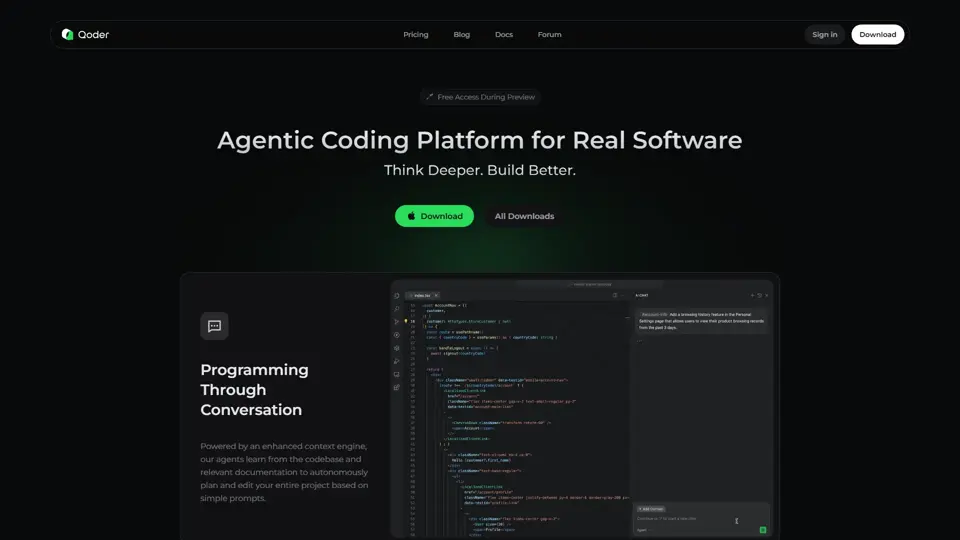
Qoder - The Agentic Coding Platform
Qoder is an agentic coding platform that helps developers understand codebases and execute software tasks with AI agents, mainly for professional software engineers and development teams. It improves engineering throughput by combining strong code context with advanced models for more reliable task completion.

Seedance 2.0
Seedance 2.0 is ByteDance's AI video generation model designed to create high-quality videos from prompts and multimodal inputs, mainly for creators, developers, and media teams. In the AI era, it helps visual content roles turn ideas into production-ready motion assets with far less manual editing effort.
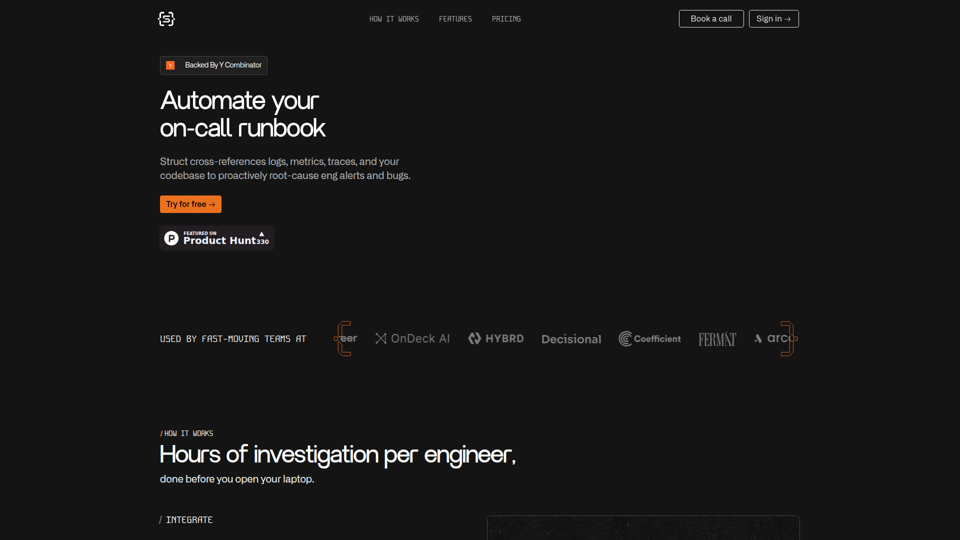
Struct | Automate your on-call runbook
Struct is an AI on-call agent that investigates engineering alerts and bugs by analyzing logs, metrics, traces, and codebases, mainly for software engineers and SRE teams. In the AI era, it helps incident responders shorten triage time by delivering root-cause findings and suggested fixes directly in workflows.
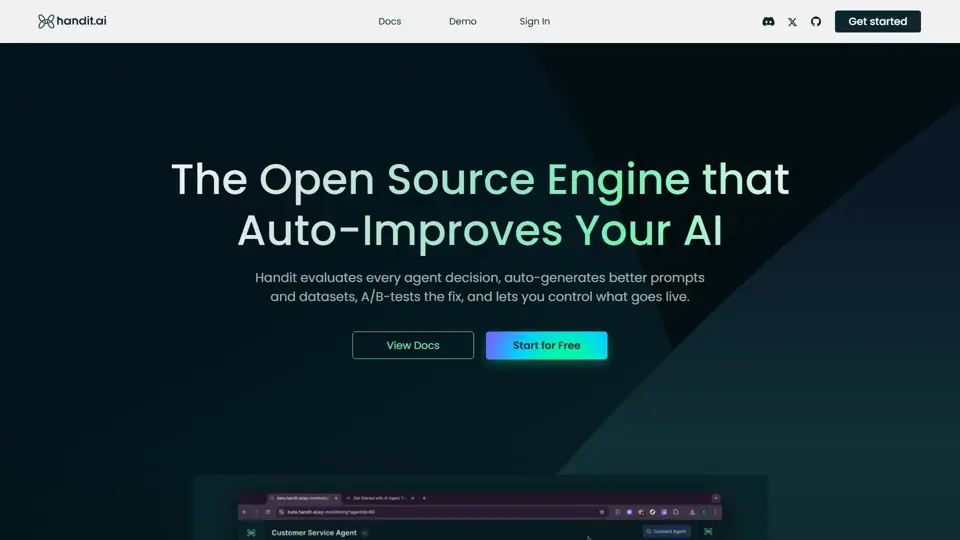
Handit.ai — The Open Source Engine that Auto-Improves Your AI Agents
Handit.ai is an open-source optimization engine that evaluates AI agent decisions, generates improved prompts and datasets, and A/B tests changes for teams building and operating AI agents. It helps AI engineers and product teams improve agent quality faster while keeping tighter control over production behavior.
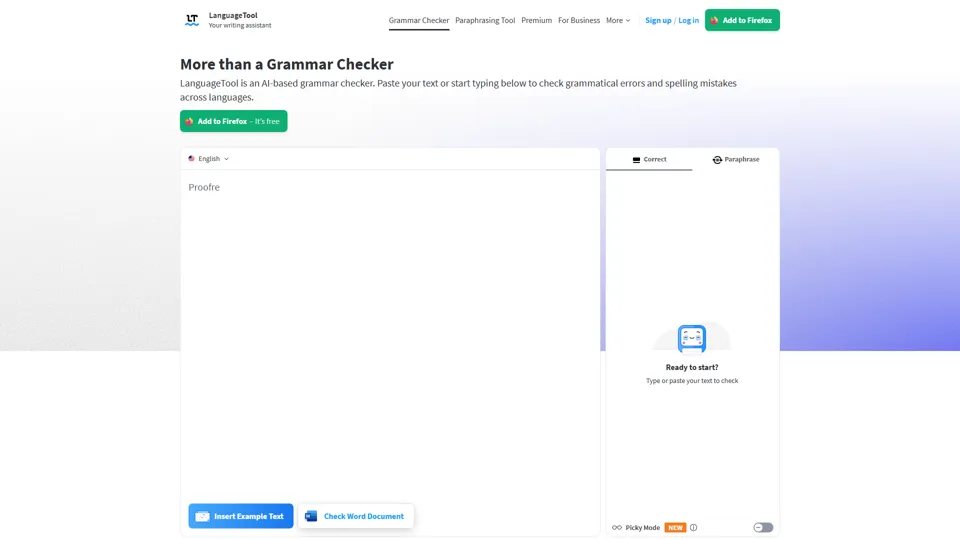
Free AI Grammar Checker - LanguageTool
LanguageTool is an AI-powered grammar and writing assistant that helps users check grammar, spelling, punctuation, and style across more than 30 languages, mainly for students, professionals, and multilingual teams. It helps writing-heavy roles communicate more clearly and edit faster at scale.

Trace
Trace is a software tool designed to support digital workflows, likely focused on helping teams organize, monitor, or analyze work more effectively. In the AI era, tools that centralize operational visibility help technical and business roles make faster decisions with less manual follow-up.

The AI for Problem Solvers | Claude by Anthropic
Claude by Anthropic is an AI assistant for problem solvers that helps users tackle complex work such as writing, coding, data analysis, research, and organizing tasks, mainly for professionals, developers, and teams handling difficult projects. In AI-enabled workflows, it can help knowledge workers and software teams move faster from analysis to execution while keeping people in control of approvals and file access.