
Self sufficient agentic AI software engineer | Cosine AI
Rate this Tool
Average Score
Total Votes
Select your score (1-10):
Detail Information
What
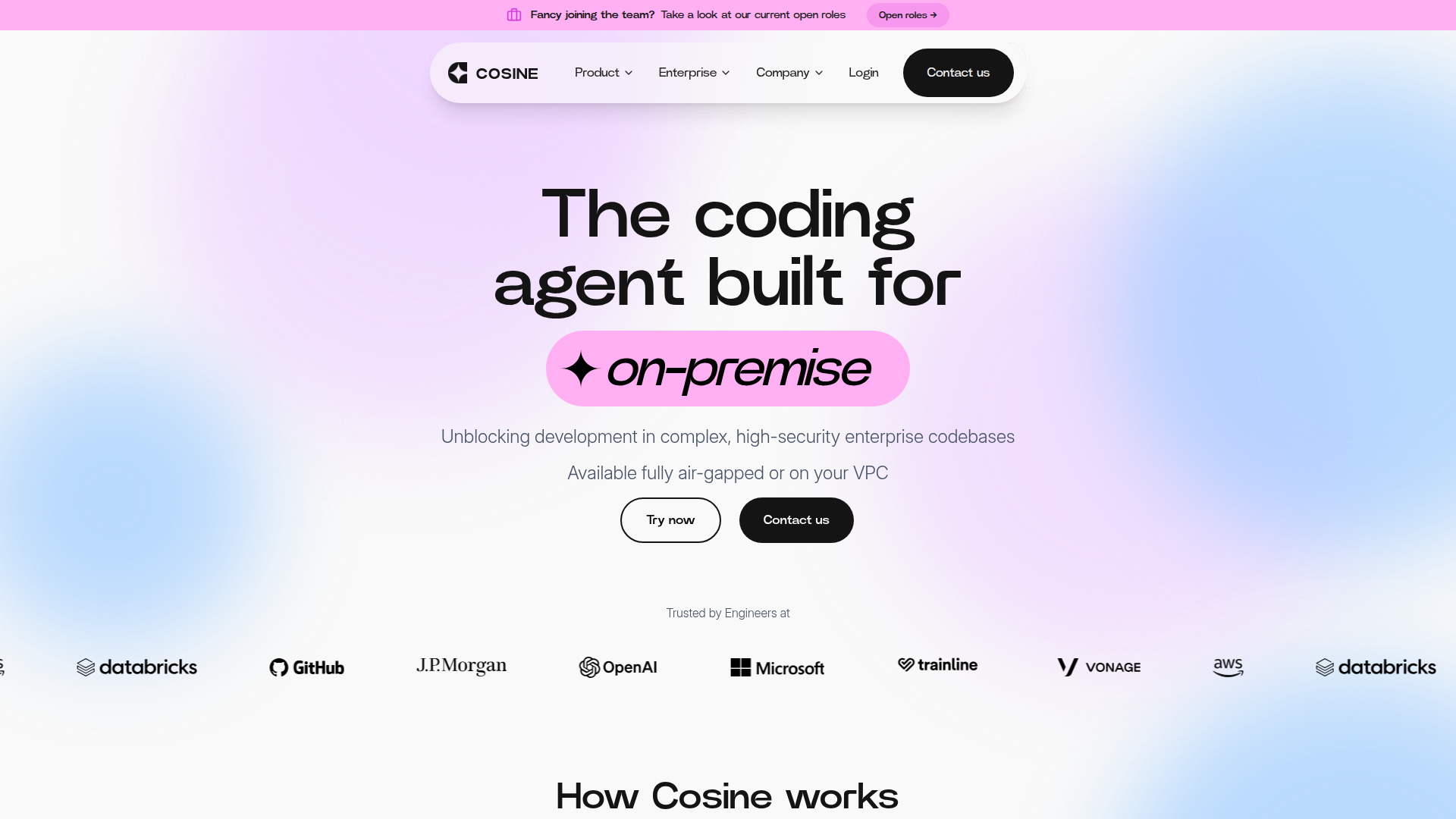
Cosine AI is an agentic software engineering product designed for enterprise development teams working in complex, high-security codebases. Its positioning is strongly oriented toward on-premise use, with deployment options for fully air-gapped environments or within a customer’s VPC, which makes it especially relevant for organizations with strict security, privacy, or regulatory constraints.
The core workflow is to connect Cosine to existing engineering tools, launch multiple coding tasks in parallel, and have the system draft pull requests for human review and merge. Based on the page, it is intended to help with feature development, bug fixing, refactoring, legacy code understanding, modernization, documentation, and developer workflow support while keeping engineers in control of final approval.
Features
- On-premise and private deployment options: Cosine can be deployed fully air-gapped or inside a customer VPC, helping enterprises keep code and workflows within controlled infrastructure.
- Parallel task execution: It supports launching multiple bug fixes, features, or refactors at the same time, which can reduce queueing and speed up engineering throughput.
- PR-based delivery workflow: Cosine drafts pull requests for review, allowing teams to use existing code review and approval practices rather than replacing them.
- Tool-connected task intake: The product can plug into tools such as GitHub, Jira, and Slack, and the page also references task assignment from systems like Linear, Trello, Asana, and GitHub.
- Broad software engineering task coverage: Listed use cases include bug scanning and fixing, test writing, large-scale refactors, documentation generation, CI/CD maintenance, framework and library migrations, and research into legacy or third-party repositories.
- Enterprise governance and security controls: The page states support for audit logs, fine-grained access controls, role-based governance, encryption, customer-controlled retention, and identity provider compatibility.
Helpful Tips
- Validate the deployment model early: For security-sensitive teams, the practical difference between fully air-gapped deployment and VPC deployment will affect model access, operational overhead, and internal approval requirements.
- Start with bounded engineering tasks: Products like this are often easiest to evaluate on contained workflows such as bug fixes, test generation, dependency updates, or narrowly scoped refactors before using them on larger modernization programs.
- Inspect review and merge discipline: Since Cosine centers on PR generation with human approval, the quality of your existing code review process will directly shape adoption success and risk management.
- Check legacy-language and fine-tuning needs carefully: The page mentions optional fine-tuning for internal codebases and languages such as COBOL or Fortran, but teams should confirm the exact scope, operational model, and effort required for their environment.
- Treat productivity claims as context, not guarantees: The site presents benchmark and customer impact figures, but buyers should run their own evaluation on representative repositories, security constraints, and engineering tasks.
OpenClaw Skills
Within the OpenClaw ecosystem, Cosine could likely serve as the execution engine inside secure software delivery workflows. A practical OpenClaw setup might use agents to triage Jira tickets, classify incoming defects, gather repository context, generate implementation plans, and then hand approved work to Cosine for code changes and PR creation. This is a likely orchestration pattern rather than a confirmed native OpenClaw integration.
OpenClaw skills built around Cosine could include backlog-to-PR automation, legacy code research agents, modernization coordinators, CI/CD maintenance agents, and security remediation workflows for regulated engineering teams. In industries where software changes move slowly because of governance and infrastructure constraints, that combination could shift engineers from manual ticket handling and repetitive maintenance toward review, architecture, and risk-based approval work.
Embed Code
Share this AI tool on your website or blog by copying and pasting the code below. The embedded widget will automatically update with the latest information.
<iframe src="https://www.aimyflow.com/ai/cosine-sh/embed" width="100%" height="400" frameborder="0"></iframe>
Explore Similar Tools

Free AI Photo Editor: Edit & Generate Image Online | Pokecut
Pokecut is an AI photo editor that helps users remove backgrounds, enhance images, and generate visuals online, mainly for ecommerce sellers, marketers, and creators who need quick design-ready assets. It speeds up routine image production so visual teams can create polished content with less manual editing.
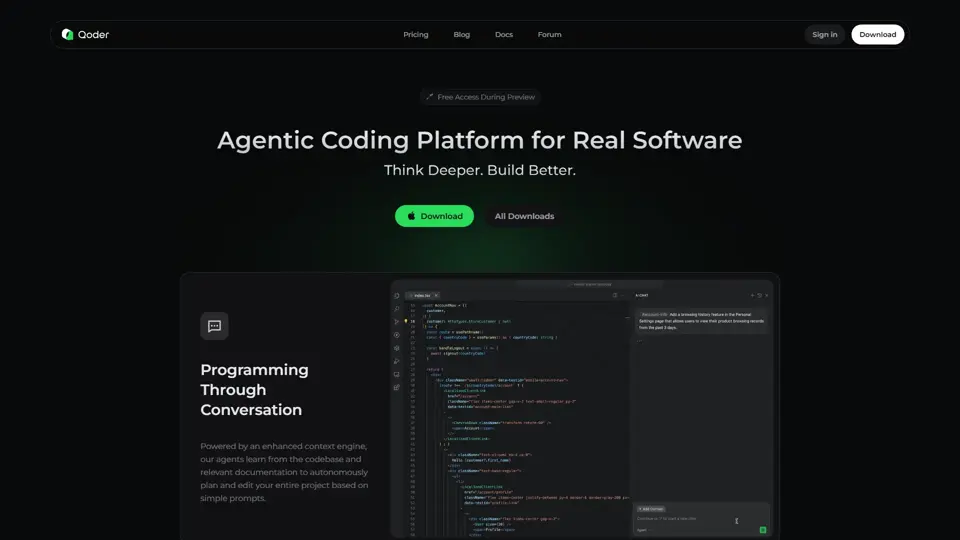
Qoder - The Agentic Coding Platform
Qoder is an agentic coding platform that helps developers understand codebases and execute software tasks with AI agents, mainly for professional software engineers and development teams. It improves engineering throughput by combining strong code context with advanced models for more reliable task completion.

Seedance 2.0
Seedance 2.0 is ByteDance's AI video generation model designed to create high-quality videos from prompts and multimodal inputs, mainly for creators, developers, and media teams. In the AI era, it helps visual content roles turn ideas into production-ready motion assets with far less manual editing effort.
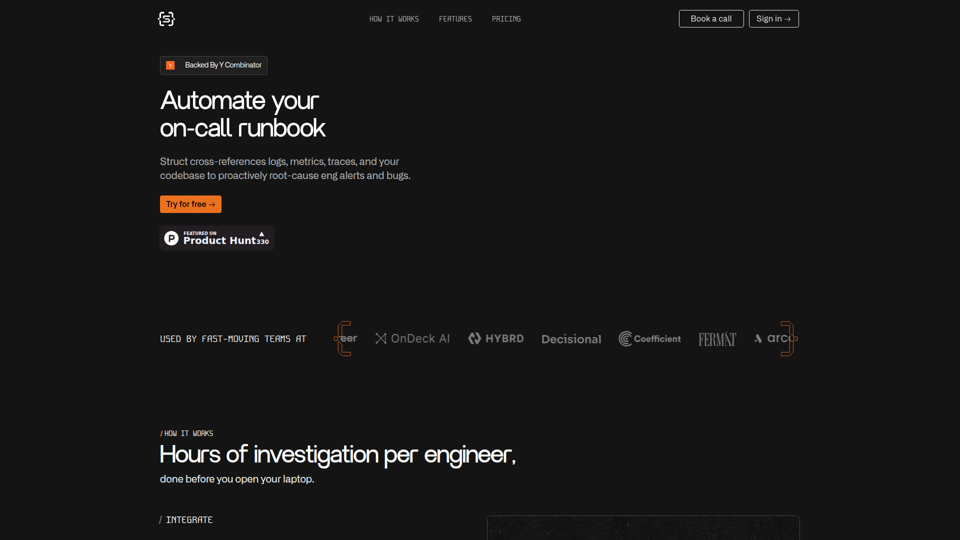
Struct | Automate your on-call runbook
Struct is an AI on-call agent that investigates engineering alerts and bugs by analyzing logs, metrics, traces, and codebases, mainly for software engineers and SRE teams. In the AI era, it helps incident responders shorten triage time by delivering root-cause findings and suggested fixes directly in workflows.
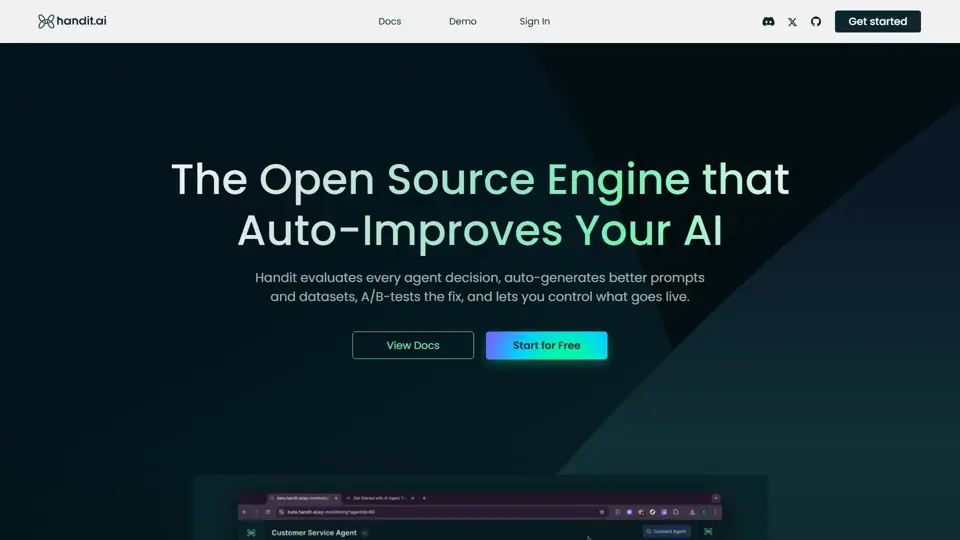
Handit.ai — The Open Source Engine that Auto-Improves Your AI Agents
Handit.ai is an open-source optimization engine that evaluates AI agent decisions, generates improved prompts and datasets, and A/B tests changes for teams building and operating AI agents. It helps AI engineers and product teams improve agent quality faster while keeping tighter control over production behavior.

Free AI Grammar Checker - LanguageTool
LanguageTool is an AI-powered grammar and writing assistant that helps users check grammar, spelling, punctuation, and style across more than 30 languages, mainly for students, professionals, and multilingual teams. It helps writing-heavy roles communicate more clearly and edit faster at scale.
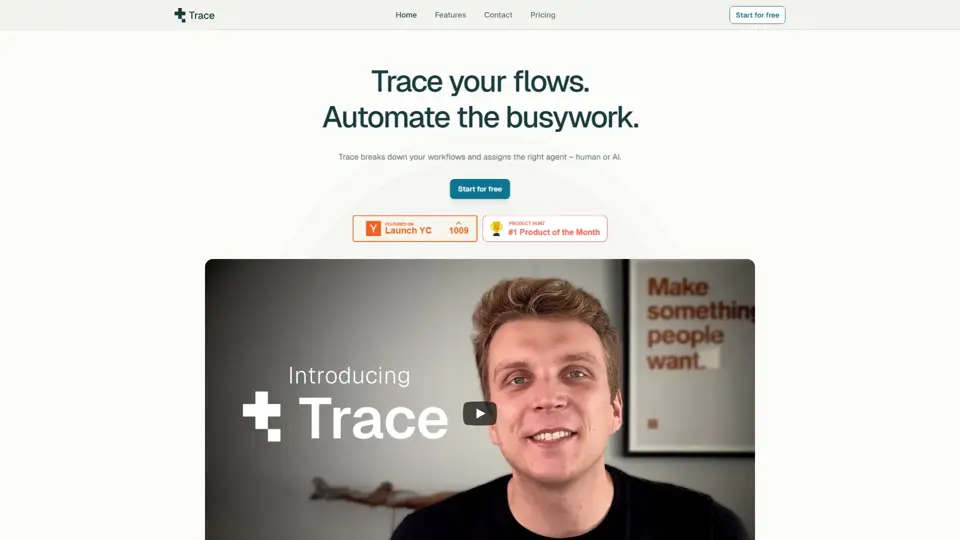
Trace
Trace is a software tool designed to support digital workflows, likely focused on helping teams organize, monitor, or analyze work more effectively. In the AI era, tools that centralize operational visibility help technical and business roles make faster decisions with less manual follow-up.
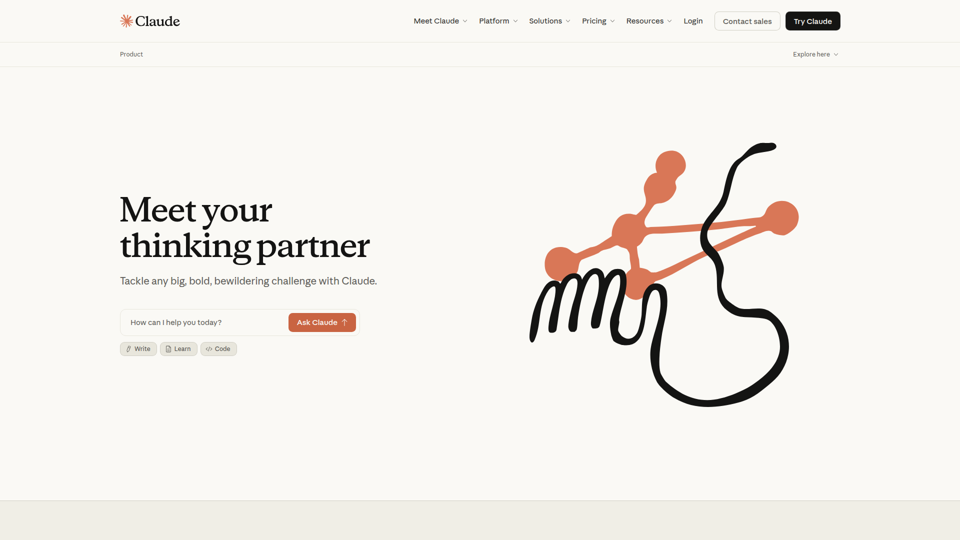
The AI for Problem Solvers | Claude by Anthropic
Claude by Anthropic is an AI assistant for problem solvers that helps users tackle complex work such as writing, coding, data analysis, research, and organizing tasks, mainly for professionals, developers, and teams handling difficult projects. In AI-enabled workflows, it can help knowledge workers and software teams move faster from analysis to execution while keeping people in control of approvals and file access.