
Glade

Rate this Tool
Average Score
Total Votes
Select your score (1-10):
Detail Information
What
Glade is an AI gaming technology company focused on tools for building AI-driven game experiences. Its product lineup includes GladeKit, an AI agent for creating playable worlds from ideas, and GladeCore, a compact on-device language model intended to support interactive game features such as NPCs and companions.
The product suite appears aimed at game developers and other makers who want to reduce implementation complexity when adding AI to games. Based on the page, Glade’s positioning is as an AI-native game development platform centered on practical creation workflows: GladeKit works inside a game engine to make changes directly, while GladeCore provides lightweight on-device model capabilities for in-game interaction.
Features
- Idea-to-playable-world workflow: GladeKit is designed to turn ideas into playable worlds, helping creators move from concept to interactive game content more directly.
- In-engine AI agent behavior: GladeKit is described as working directly inside a game engine, where it can execute actions and make real project changes rather than only offering suggestions.
- Accessible for different skill levels: The product is presented as being designed for makers at every level, which suggests a workflow intended to reduce technical friction for both newer and more experienced builders.
- On-device compact LLM: GladeCore is a sub-1 GB language model, which is useful for teams exploring lower-footprint AI features within games.
- Built-in speech capabilities: GladeCore includes text-to-speech and speech-to-text, supporting voice-based character interactions and conversational gameplay systems.
- Emotional tuning and RAG support: GladeCore includes emotional tuning and retrieval-augmented generation, which could help developers build more context-aware and expressive in-game AI characters.
Helpful Tips
- Validate engine compatibility early: The page says GladeKit works directly inside a game engine, but it does not specify which engines or supported workflows, so technical fit should be confirmed before adoption.
- Separate creation tooling from runtime needs: GladeKit appears focused on development-time world building, while GladeCore appears oriented toward runtime AI behavior; teams should map these roles clearly in their pipeline.
- Test on-device constraints in real gameplay conditions: A compact local model can be attractive for cost and scalability reasons, but practical performance, quality, and device requirements should still be evaluated in the target game environment.
- Use narrow gameplay scenarios first: For AI NPCs, companions, or dynamic story systems, initial rollout is often more manageable when focused on bounded interactions rather than fully open-ended world behavior.
- Review data and content design implications: Features like RAG and emotional tuning can improve responsiveness, but they also require careful design of knowledge sources, tone, and guardrails for consistent player experience.
OpenClaw Skills
Glade could fit well into the OpenClaw ecosystem as a foundation for game-development agents and interactive content workflows. A likely use case would be OpenClaw skills that translate high-level design briefs into structured tasks for GladeKit, such as generating quest prototypes, iterating level concepts, or modifying dialogue and world states within a supported engine workflow. If GladeKit truly performs direct project actions as described, OpenClaw agents could serve as orchestration layers for design review, task decomposition, and multi-step build pipelines.
GladeCore also suggests opportunities for OpenClaw-powered runtime and testing workflows, though native integration is not stated on the page. Likely use cases include agents that evaluate NPC dialogue quality, simulate player conversations, tune emotional response patterns, or manage retrieval sources for lore-aware characters. In game studios, that combination could shift AI from a standalone experimental feature into a more operational part of design, prototyping, and live content iteration.
Embed Code
Share this AI tool on your website or blog by copying and pasting the code below. The embedded widget will automatically update with the latest information.
<iframe src="https://www.aimyflow.com/ai/gladestudio-ai/embed" width="100%" height="400" frameborder="0"></iframe>
Explore Similar Tools

Free AI Photo Editor: Edit & Generate Image Online | Pokecut
Pokecut is an AI photo editor that helps users remove backgrounds, enhance images, and generate visuals online, mainly for ecommerce sellers, marketers, and creators who need quick design-ready assets. It speeds up routine image production so visual teams can create polished content with less manual editing.
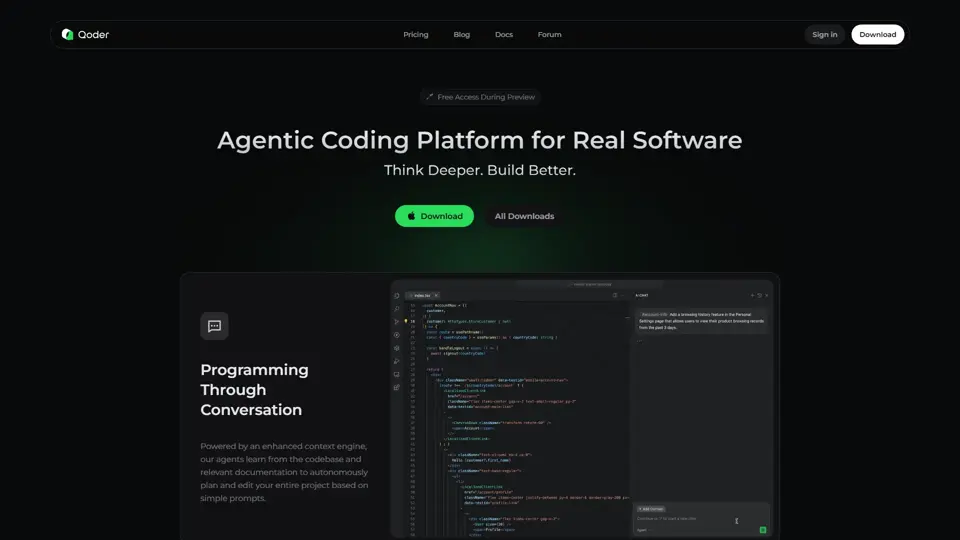
Qoder - The Agentic Coding Platform
Qoder is an agentic coding platform that helps developers understand codebases and execute software tasks with AI agents, mainly for professional software engineers and development teams. It improves engineering throughput by combining strong code context with advanced models for more reliable task completion.

Seedance 2.0
Seedance 2.0 is ByteDance's AI video generation model designed to create high-quality videos from prompts and multimodal inputs, mainly for creators, developers, and media teams. In the AI era, it helps visual content roles turn ideas into production-ready motion assets with far less manual editing effort.

Struct | Automate your on-call runbook
Struct is an AI on-call agent that investigates engineering alerts and bugs by analyzing logs, metrics, traces, and codebases, mainly for software engineers and SRE teams. In the AI era, it helps incident responders shorten triage time by delivering root-cause findings and suggested fixes directly in workflows.
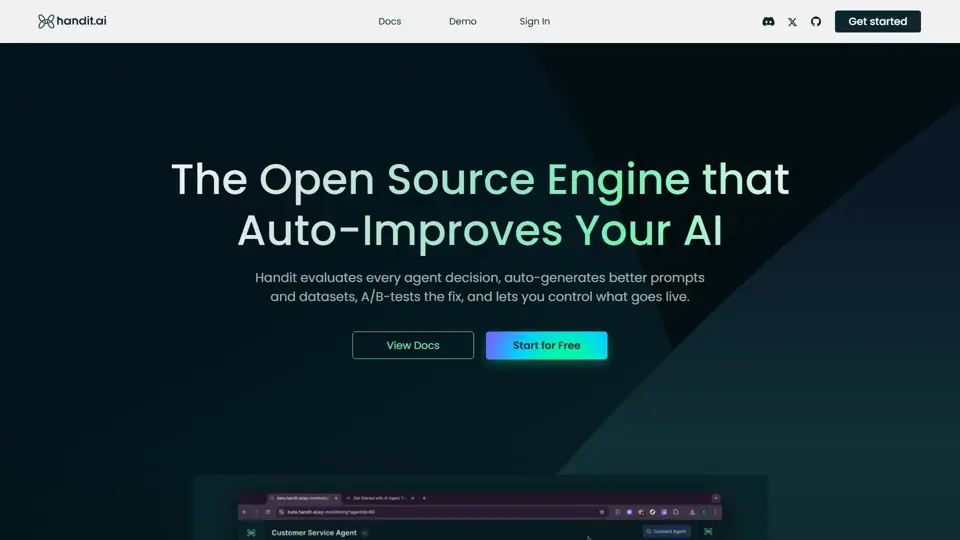
Handit.ai — The Open Source Engine that Auto-Improves Your AI Agents
Handit.ai is an open-source optimization engine that evaluates AI agent decisions, generates improved prompts and datasets, and A/B tests changes for teams building and operating AI agents. It helps AI engineers and product teams improve agent quality faster while keeping tighter control over production behavior.

Free AI Grammar Checker - LanguageTool
LanguageTool is an AI-powered grammar and writing assistant that helps users check grammar, spelling, punctuation, and style across more than 30 languages, mainly for students, professionals, and multilingual teams. It helps writing-heavy roles communicate more clearly and edit faster at scale.
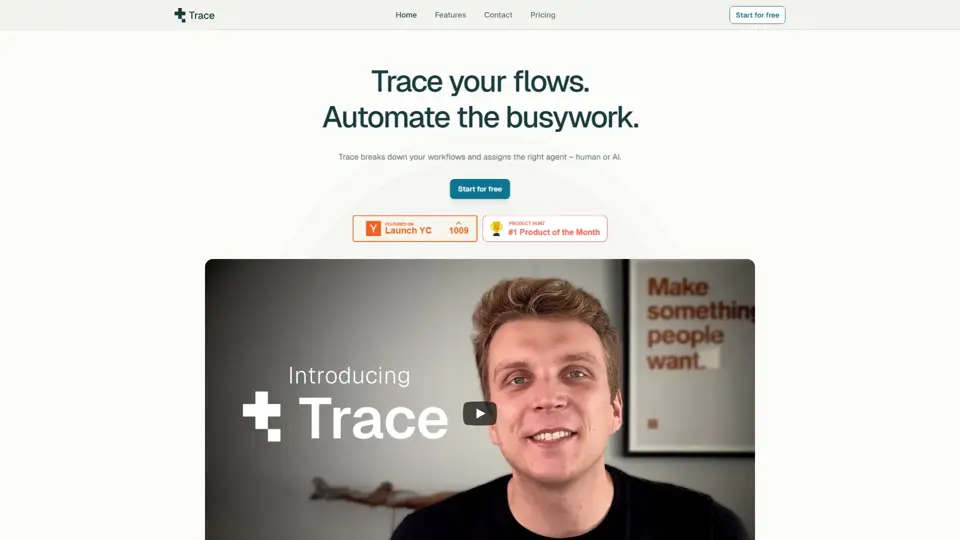
Trace
Trace is a software tool designed to support digital workflows, likely focused on helping teams organize, monitor, or analyze work more effectively. In the AI era, tools that centralize operational visibility help technical and business roles make faster decisions with less manual follow-up.
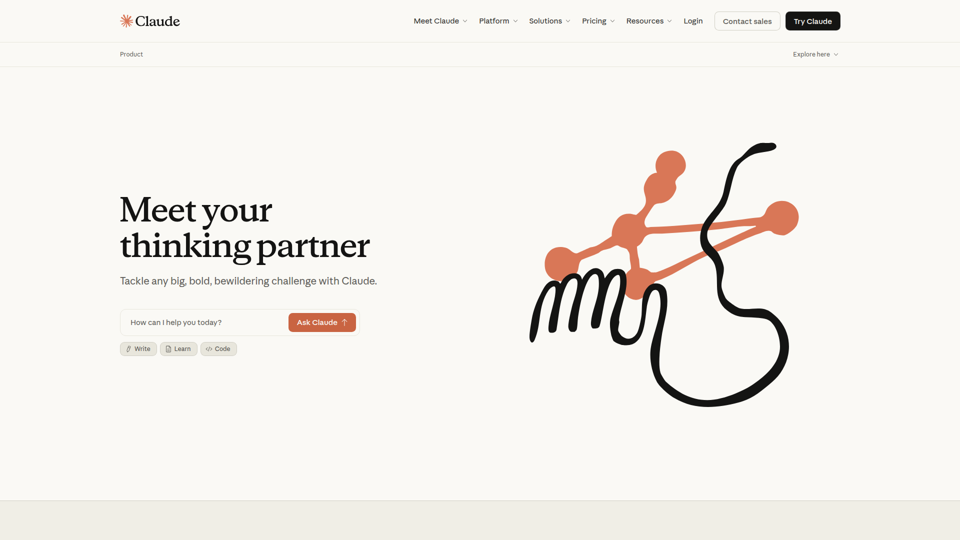
The AI for Problem Solvers | Claude by Anthropic
Claude by Anthropic is an AI assistant for problem solvers that helps users tackle complex work such as writing, coding, data analysis, research, and organizing tasks, mainly for professionals, developers, and teams handling difficult projects. In AI-enabled workflows, it can help knowledge workers and software teams move faster from analysis to execution while keeping people in control of approvals and file access.