
Gleam
Rate this Tool
Average Score
Total Votes
Select your score (1-10):
Detail Information
What
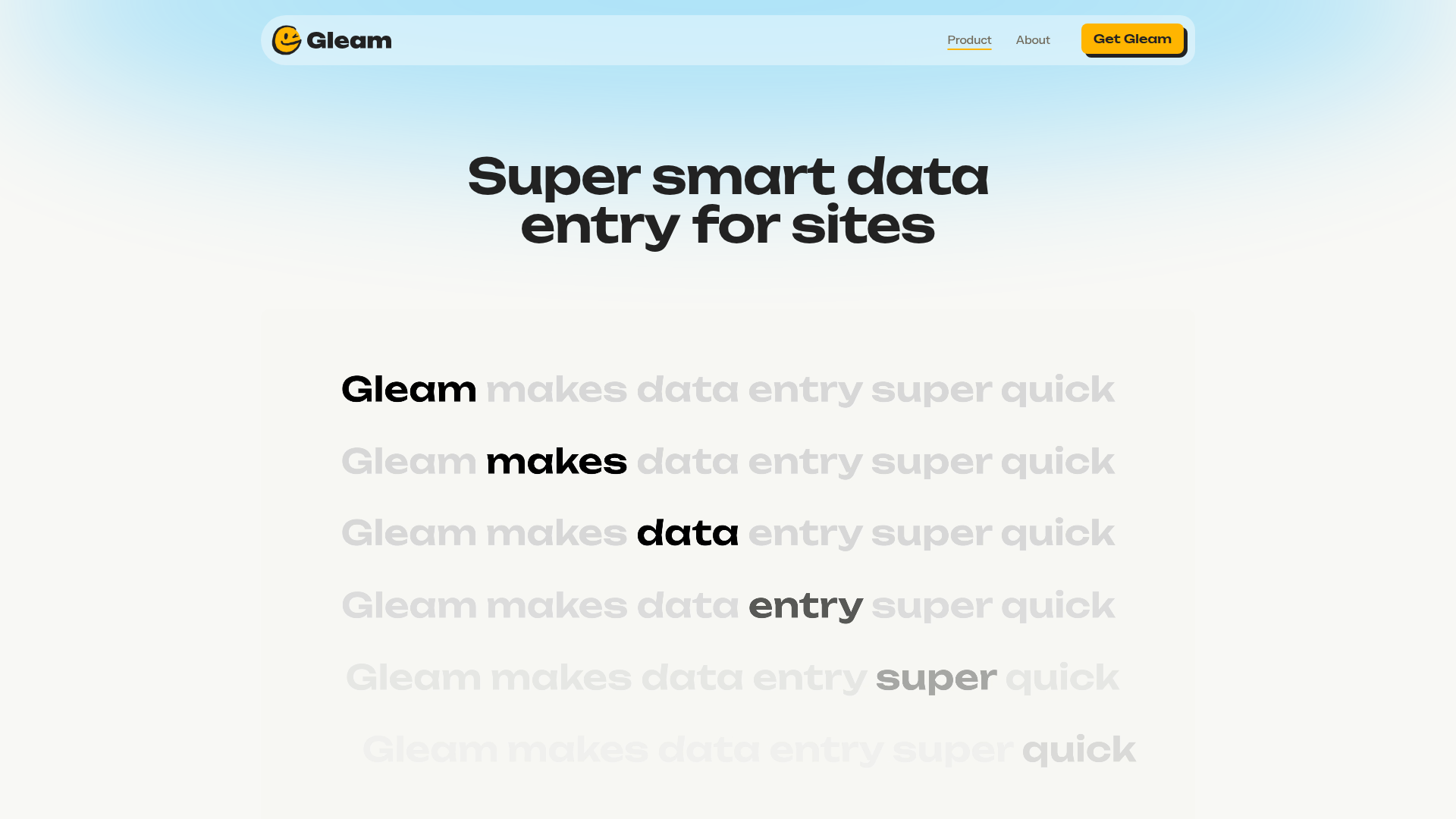
Gleam is a browser-based data entry tool for clinical research sites that helps staff move data from source systems into EDC case report forms more quickly. The page positions it as a way to reduce manual copy-pasting and repetitive entry work so site teams can spend more time on patient-facing, operational, and quality-related tasks.
Its core workflow is simple: open the source, use Gleam to fetch source data, validate what was captured, then open the EDC and auto-fill the form. Based on the page content, Gleam appears to be positioned as a lightweight productivity layer for sites that need faster source-to-EDC transcription without complex installation or custom integrations.
Features
- Source-to-EDC data transfer — Gleam is designed to move data from eSource into EDC CRFs, reducing manual transcription work.
- Browser extension workflow — Because it runs as an extension in the internet browser, it works alongside both the source system and the EDC in the same working environment.
- Captured data validation — Users can validate fetched source data before filling the EDC, which supports more confident review before submission.
- Auto-fill for EDC forms — After data is captured and checked, Gleam can auto-fill the target EDC form to avoid repeated copy-paste actions.
- No complex installation — The product is presented as easy to deploy compared with heavier software rollouts, which may lower implementation friction.
- Zero integrations needed — The page states that no integrations are required, suggesting a workflow that does not depend on system-to-system setup.
Helpful Tips
- Assess fit around transcription-heavy studies — This kind of tool is most useful where site staff spend significant time re-entering source data into EDCs.
- Review validation steps carefully — Even with auto-fill, teams should define when and how captured data is checked before final entry into CRFs.
- Test against your actual source and EDC mix — The page claims broad source-to-EDC movement, but buyers should confirm performance with their specific systems and study workflows.
- Include coordinators in evaluation — Adoption will depend on whether the browser-based process is faster and simpler for the staff doing daily entry work.
- Map impact beyond speed — Evaluate whether reducing manual entry also improves audit readiness, quality control, and staff time allocation, since those are implied operational goals on the page.
OpenClaw Skills
Within the OpenClaw ecosystem, Gleam would likely fit as a workflow component for clinical operations support, especially around source review, CRF preparation, and data entry task orchestration. A likely use case would be an OpenClaw skill that detects pending site data-entry workloads, guides staff through source validation steps, and then triggers Gleam-assisted completion in the browser; this is an inferred workflow, not a confirmed native integration.
OpenClaw agents could also be built around adjacent site operations that Gleam’s positioning highlights, such as adverse event documentation queues, protocol training reminders, pre-screening workflows, or audit-readiness checklists. In practice, that combination could shift clinical site staff away from repetitive transcription and toward exception handling, patient coordination, and quality oversight, with Gleam serving as the execution layer for entry and OpenClaw serving as the orchestration and decision-support layer.
Embed Code
Share this AI tool on your website or blog by copying and pasting the code below. The embedded widget will automatically update with the latest information.
<iframe src="https://www.aimyflow.com/ai/joingleam-com/embed" width="100%" height="400" frameborder="0"></iframe>
Explore Similar Tools
Valerie Health
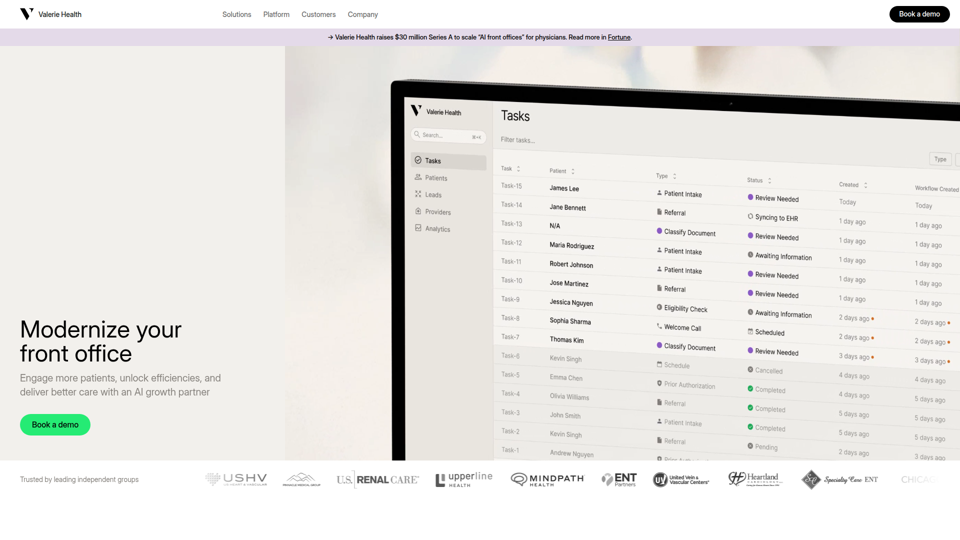
Valerie Health is an AI healthcare operations platform that helps independent provider groups modernize front-office workflows such as referral management, scheduling, fax and document handling, and patient engagement. For clinical operations leaders and healthcare executives, it can use AI to reduce administrative burden, improve workflow consistency, and give teams clearer visibility into patient access and growth operations.
Healthcare | Claude by Anthropic
Claude is a HIPAA-ready AI tool for healthcare organizations that helps health systems and startups handle prior authorizations, claims appeals, patient message triage, and clinical documentation with more accuracy, safety, and compliance. For clinicians, operations teams, and healthcare developers, it can reduce administrative workload and speed review, scribing, and routing tasks so more time goes to patient care and higher-value decisions.
Amazon Connect Health - AWS
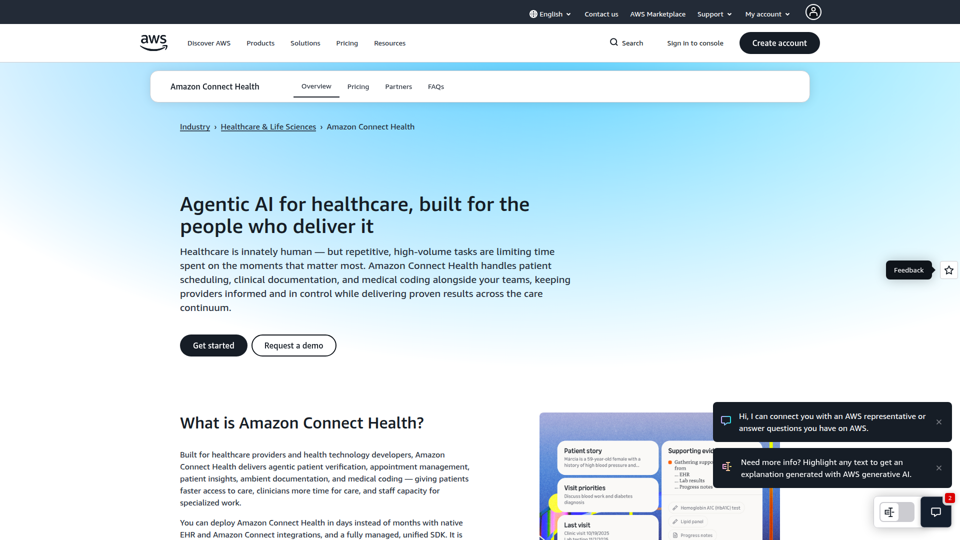
Amazon Connect Health is an AWS healthcare AI platform for providers and health technology developers that helps with patient verification, appointment management, patient insights, ambient clinical documentation, and medical coding within existing care workflows. In AI-enabled healthcare operations, it can help clinicians, contact center teams, and coders spend less time on documentation and scheduling while keeping human review and source traceability in place.
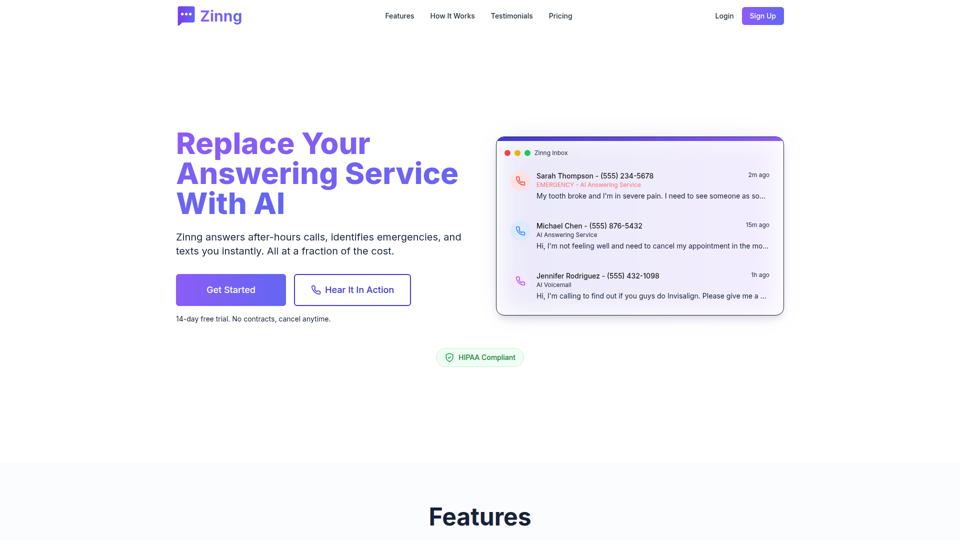
Zinng
Zinng is an AI answering service that handles 24/7 and after-hours calls, identifies emergencies, sends SMS alerts, and can support appointment scheduling for practices and other businesses, especially dental and healthcare offices. For front-desk teams, practice managers, and office owners, it can reduce missed urgent calls and streamline follow-up with transcripts and scheduling workflows.
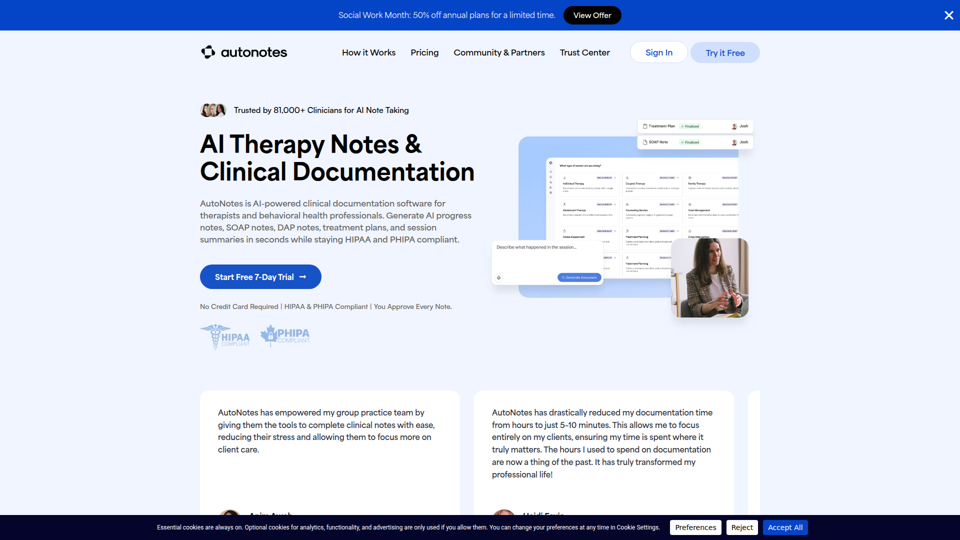
AI Clinical Documentation for Therapists | AutoNotes
AutoNotes is AI-powered clinical documentation software that helps therapists and behavioral health professionals generate compliant progress notes, SOAP and DAP notes, treatment plans, and session summaries from written, dictated, uploaded, or recorded sessions. For therapists, social workers, and practice teams, it can reduce administrative documentation work while preserving editable, structured records and continuity across sessions.
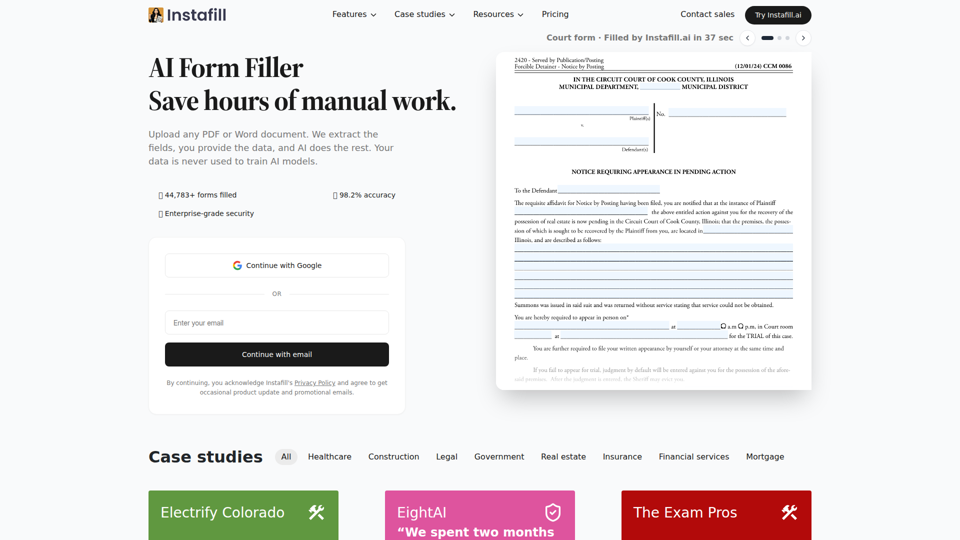
AI Form Filler - Fill out PDF forms with Instafill.ai
Instafill.ai is an AI form-filling tool that extracts fields from PDF and Word documents, autofills them from multiple data sources, and helps teams in document-heavy sectors like healthcare, legal, insurance, government, real estate, and finance complete paperwork faster. In AI-driven operations, it can reduce manual re-entry and review time for administrative, compliance, and case-processing roles while preserving visibility into how each field was filled.
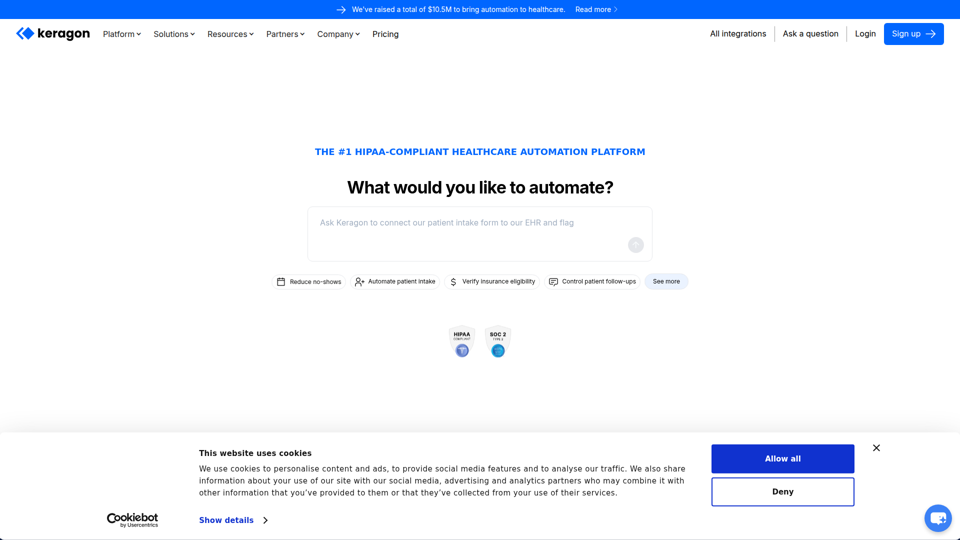
#1 Healthcare Automation Platform - Keragon
Keragon is a HIPAA-compliant healthcare automation platform that helps healthcare companies connect 300+ integrations and automate workflows without code. For healthcare operations and IT teams, this can reduce manual process work and support faster, more reliable coordination across systems in AI-driven healthcare environments.
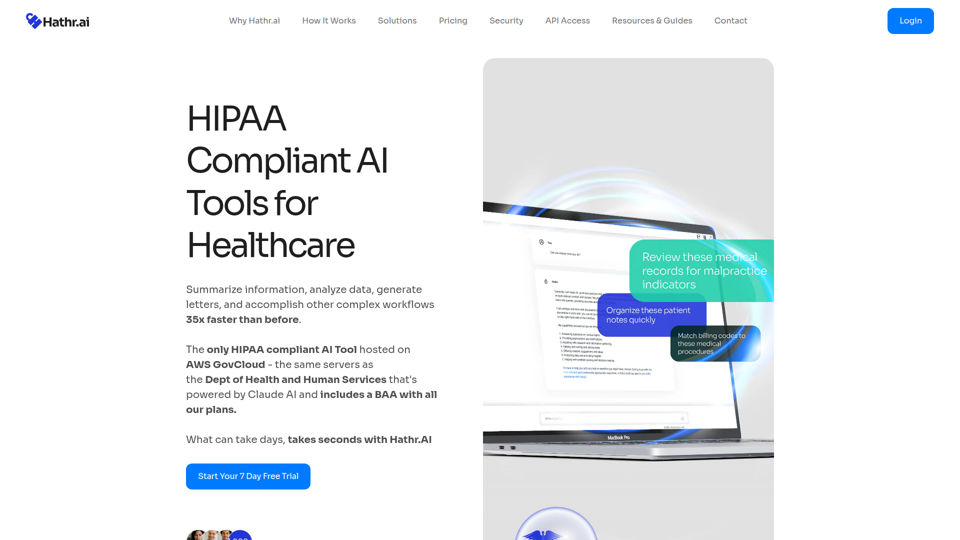
HIPAA Compliant AI Tools for Healthcare | HIPAA Compliant Claude
Hathr.ai is a HIPAA-compliant AI tool for healthcare that helps professionals summarize information, analyze large documents, generate letters, and automate clinical and administrative workflows while keeping sensitive data private in AWS GovCloud. For healthcare teams and related compliance-heavy roles, it can speed documentation, record review, and research while reducing privacy risk in AI-assisted work.