
Morph - Subagents That Improve Coding Agents
Rate this Tool
Average Score
Total Votes
Select your score (1-10):
Detail Information
What
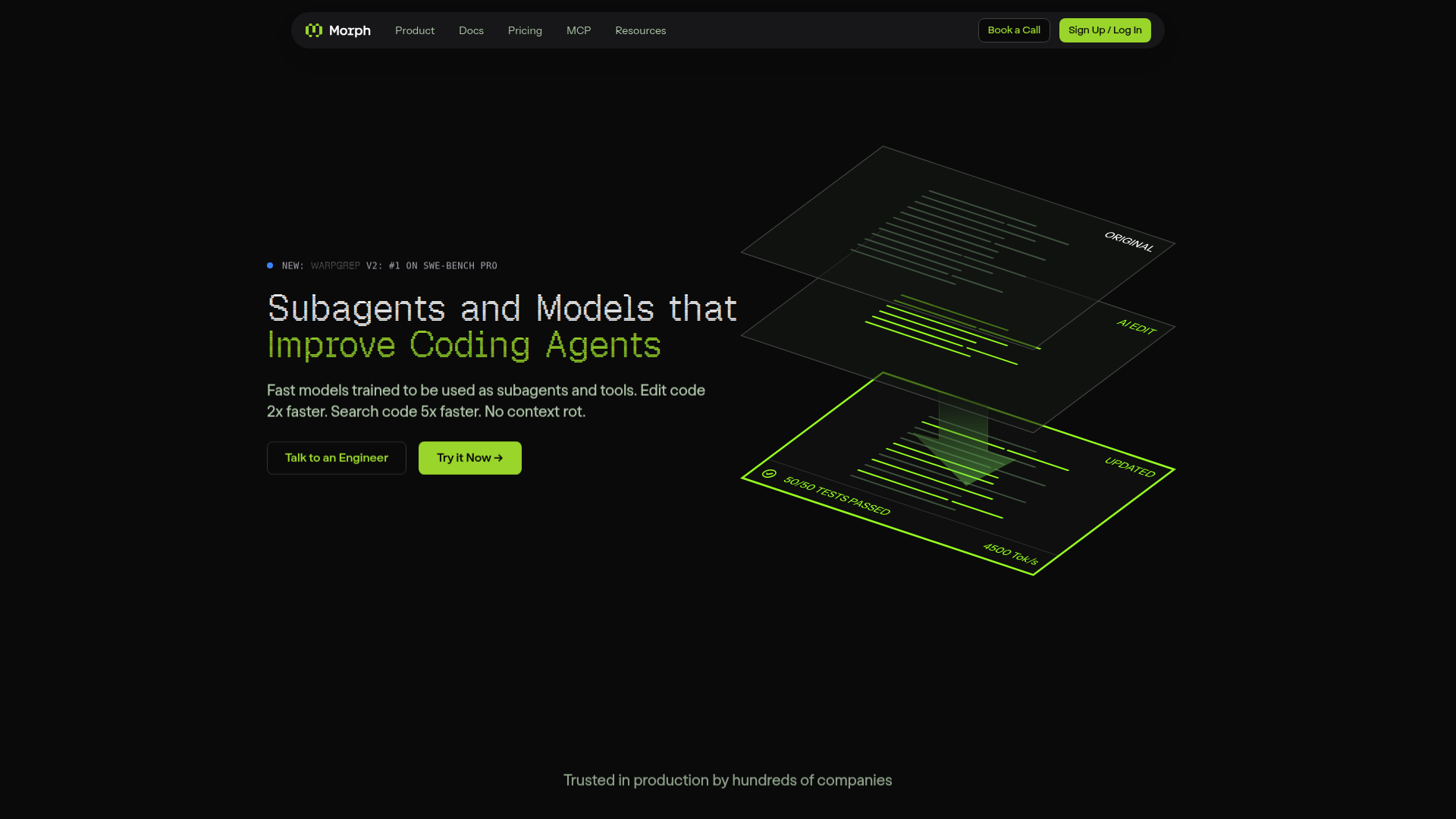
Morph is a set of subagents, models, and developer tools designed to improve AI coding agents. It focuses on key bottlenecks in agentic software development: code search, code editing, long-context handling, browser-based PR testing, and org-level monitoring of pull requests.
The product appears to serve teams building or deploying coding agents, including developers, platform teams, and enterprises that need faster and more reliable code-generation workflows. Its positioning is likely as specialized infrastructure for coding-agent stacks rather than a general-purpose coding assistant.
Features
- Fast Apply for code edits — applies AI-generated code changes directly into files at high speed, aiming to reduce failed diffs, re-reads, and editing latency.
- WarpGrep code search — provides agent-oriented codebase search in a parallel tool-calling setup, intended to help agents find relevant code faster and improve task completion.
- Compact for long-running agents — compacts context while keeping surviving lines verbatim, which helps reduce context bloat in extended coding sessions.
- Glance browser testing for PRs — runs AI-driven tests on pull requests and embeds video recordings in GitHub PRs to help surface UI issues earlier.
- MCP and SDK access — connects tools such as Claude, Cursor, and VS Code to Morph, with an OpenAI-compatible API and support for Anthropic and Vercel AI SDK patterns.
- Monitor and deployment options — offers a unified PR feed for organization visibility and supports both hosted deployment and self-hosted setups.
Helpful Tips
- Evaluate the bottleneck first — Morph is most relevant when coding-agent performance is limited by search, patch application, or long-context degradation rather than base model quality alone.
- Test on real repositories — benchmark search quality, edit accuracy, and context handling on your actual codebase because public benchmark claims may not fully predict internal results.
- Consider infrastructure fit — teams with security, on-prem, or high-throughput needs should review self-hosting, rate limits, and operational requirements early in evaluation.
- Use it as part of an agent harness — the strongest fit appears to be as a subsystem inside a larger coding-agent workflow, not as a standalone replacement for IDEs or source control.
- Validate PR testing scope — browser-based testing can be useful for UI-heavy changes, but the page does not fully specify coverage depth, so teams should confirm how broadly it fits their QA process.
OpenClaw Skills
Morph could fit well inside the OpenClaw ecosystem as a likely backend capability layer for coding-agent skills. OpenClaw agents could use WarpGrep for repository investigation, Fast Apply for patch execution, Compact for long-session memory control, and Glance for automated UI verification in software delivery workflows. The page supports API, SDK, and MCP-style access, which suggests practical building blocks for agent orchestration, though any native OpenClaw integration would be an inferred use case rather than a confirmed feature.
In practice, this combination could enable OpenClaw skills such as bug triage agents, PR remediation agents, codebase onboarding assistants, release validation agents, and engineering-monitoring workflows. For software teams, that likely shifts agent behavior from simple code generation toward full-loop execution: finding code, editing safely, testing changes, and surfacing outcomes in shared review channels.
Embed Code
Share this AI tool on your website or blog by copying and pasting the code below. The embedded widget will automatically update with the latest information.
<iframe src="https://www.aimyflow.com/ai/morphllm-com/embed" width="100%" height="400" frameborder="0"></iframe>
Explore Similar Tools
Free AI Photo Editor: Edit & Generate Image Online | Pokecut
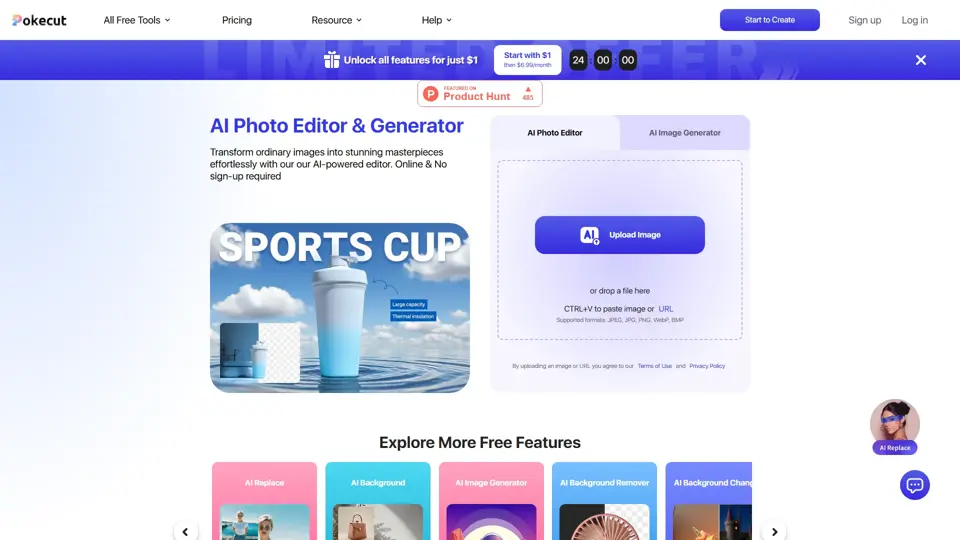
Pokecut is an AI photo editor that helps users remove backgrounds, enhance images, and generate visuals online, mainly for ecommerce sellers, marketers, and creators who need quick design-ready assets. It speeds up routine image production so visual teams can create polished content with less manual editing.
Qoder - The Agentic Coding Platform
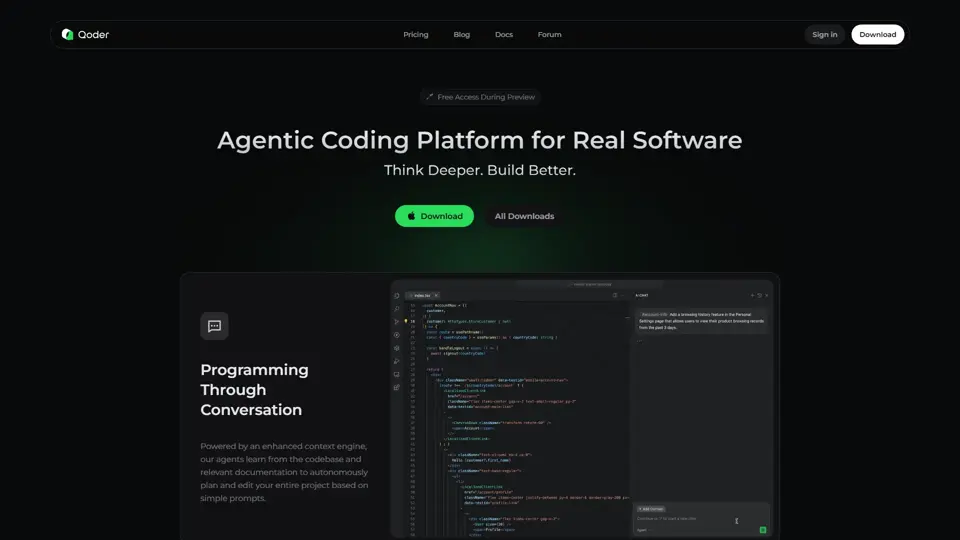
Qoder is an agentic coding platform that helps developers understand codebases and execute software tasks with AI agents, mainly for professional software engineers and development teams. It improves engineering throughput by combining strong code context with advanced models for more reliable task completion.

Seedance 2.0
Seedance 2.0 is ByteDance's AI video generation model designed to create high-quality videos from prompts and multimodal inputs, mainly for creators, developers, and media teams. In the AI era, it helps visual content roles turn ideas into production-ready motion assets with far less manual editing effort.
Struct | Automate your on-call runbook
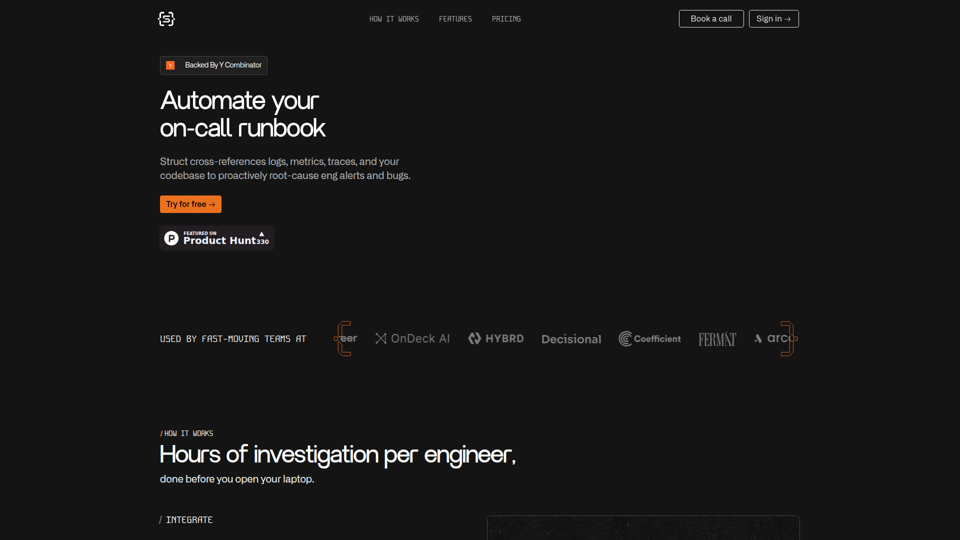
Struct is an AI on-call agent that investigates engineering alerts and bugs by analyzing logs, metrics, traces, and codebases, mainly for software engineers and SRE teams. In the AI era, it helps incident responders shorten triage time by delivering root-cause findings and suggested fixes directly in workflows.
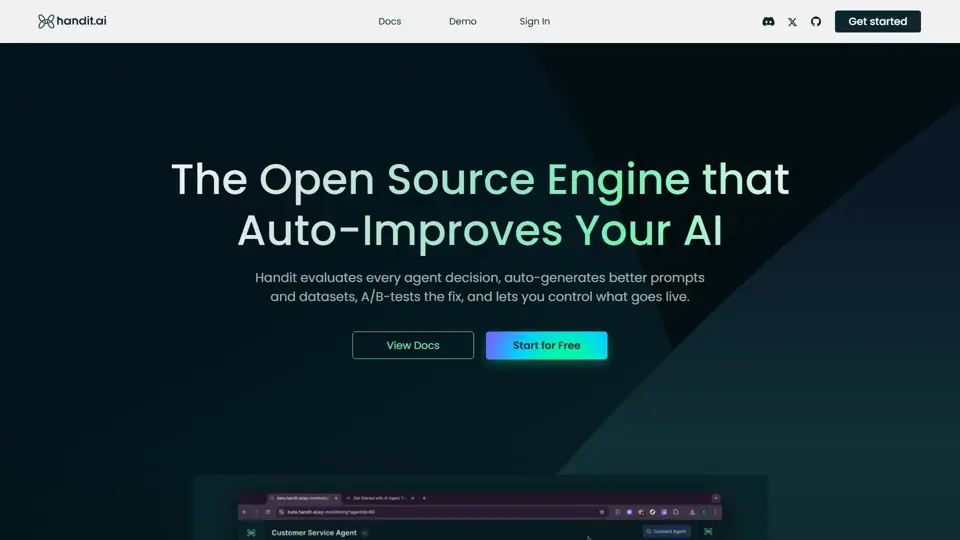
Handit.ai — The Open Source Engine that Auto-Improves Your AI Agents
Handit.ai is an open-source optimization engine that evaluates AI agent decisions, generates improved prompts and datasets, and A/B tests changes for teams building and operating AI agents. It helps AI engineers and product teams improve agent quality faster while keeping tighter control over production behavior.
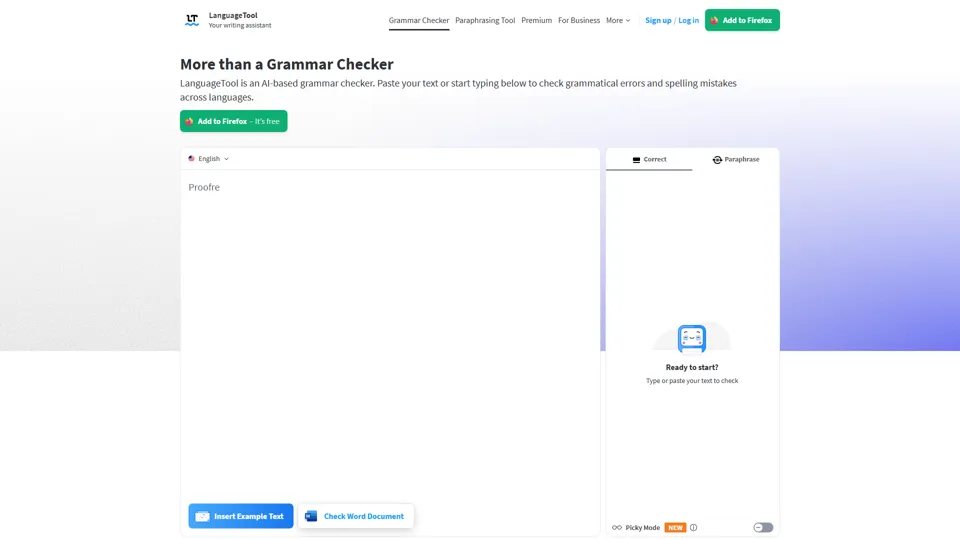
Free AI Grammar Checker - LanguageTool
LanguageTool is an AI-powered grammar and writing assistant that helps users check grammar, spelling, punctuation, and style across more than 30 languages, mainly for students, professionals, and multilingual teams. It helps writing-heavy roles communicate more clearly and edit faster at scale.
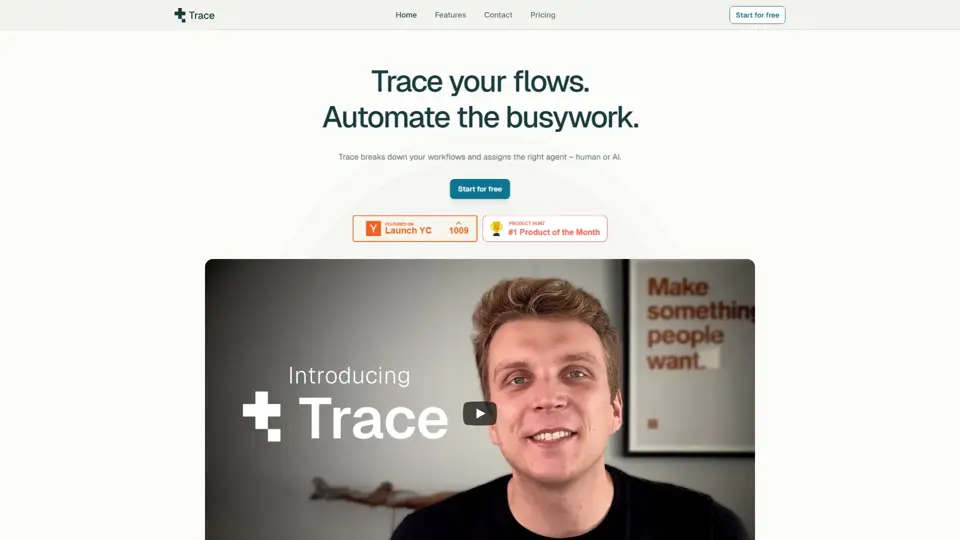
Trace
Trace is a software tool designed to support digital workflows, likely focused on helping teams organize, monitor, or analyze work more effectively. In the AI era, tools that centralize operational visibility help technical and business roles make faster decisions with less manual follow-up.
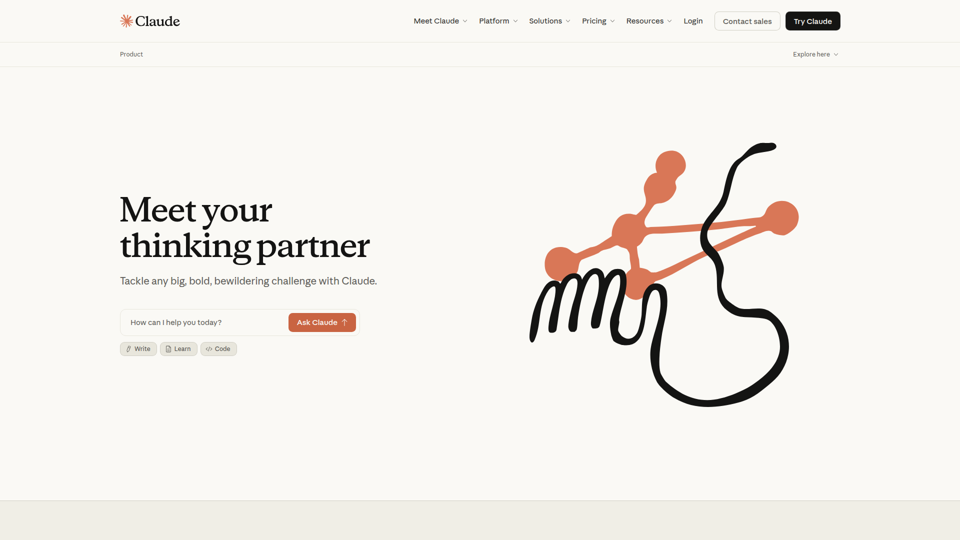
The AI for Problem Solvers | Claude by Anthropic
Claude by Anthropic is an AI assistant for problem solvers that helps users tackle complex work such as writing, coding, data analysis, research, and organizing tasks, mainly for professionals, developers, and teams handling difficult projects. In AI-enabled workflows, it can help knowledge workers and software teams move faster from analysis to execution while keeping people in control of approvals and file access.