
Nexa® | Streamline Cattle Health Monitoring
Rate this Tool
Average Score
Total Votes
Select your score (1-10):
Detail Information
What
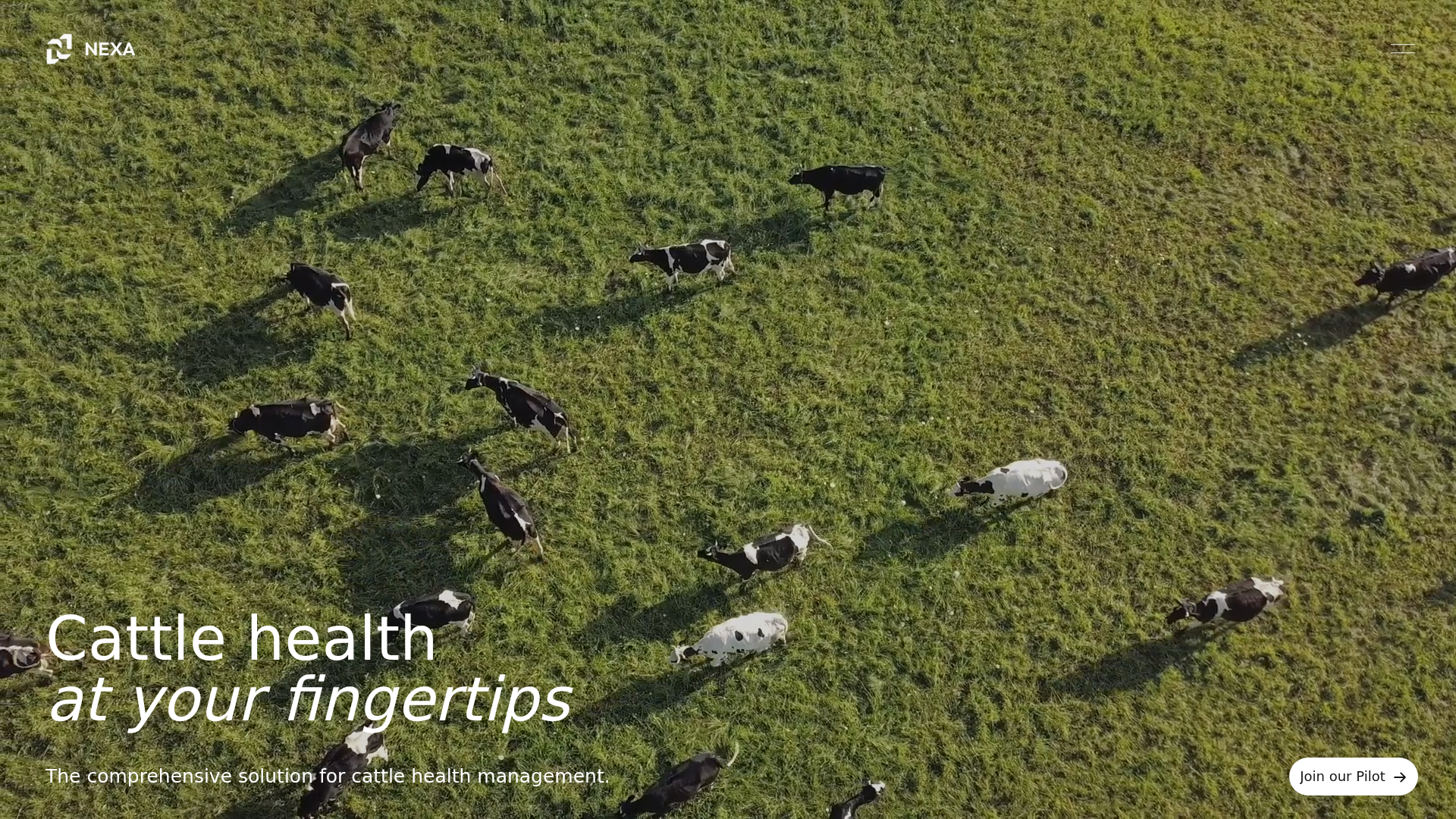
Nexa is a cattle health monitoring system built around an implantable subcutaneous microchip, a paired ear tag, a centralized beacon, and herd management software for mobile and web. It is designed for beef and dairy operations that want earlier visibility into health, breeding, behavior, and location across the herd.
The core workflow is continuous data collection from individual animals, transmission back to the farm, and conversion of multimodal health signals into alerts and herd-level insights. Based on the page, Nexa appears positioned as an end-to-end herd monitoring platform focused on early disease detection, heat detection, and operational visibility rather than a single-purpose livestock wearable.
Features
- Subcutaneous microchip with paired ear tag: The sensor-board is inserted into the cattle ear during routine handling, while the paired ear tag powers the chip and supports long-range data transmission.
- Battery-free monitoring design: The company states the microchip does not require batteries or recharging, which may reduce maintenance burden compared with devices that need regular charging.
- Centralized farm beacon: A single beacon placed centrally on the farm collects data from cattle and supports monitoring from whole-herd views down to individual cows.
- Herd management software for web and mobile: The platform presents actionable health summaries, historical trends, and alerts intended to help staff quickly identify healthy, at-risk, or unwell animals.
- Early disease and behavior analytics: Nexa says it flags signs associated with respiratory distress, udder inflammation, ketosis, lameness, rumination changes, feeding shifts, and movement anomalies before they are obvious in the barn.
- Breeding and location management: The system supports estrus detection, breeding window planning, location history, and boundary alerts when cattle leave designated areas.
Helpful Tips
- Validate installation fit with existing handling routines: Because the microchip is inserted during standard cattle handling, buyers should assess how well the process aligns with current vaccination, checkup, or implantation workflows.
- Review evidence behind performance claims: The page cites faster disease detection, greater heat-detection accuracy, and profit impact, but a formal buyer should request study design details and farm-condition comparisons before relying on those figures.
- Check system dependence on farm layout and connectivity: Nexa mentions a centralized beacon and a 5 km transmission range, so deployment planning should include terrain, herd distribution, and any offline operating requirements.
- Map software compatibility early: The site lists DairyComp, Dart, DHI, and sort-gate connections, so operations should confirm data scope, synchronization behavior, and implementation effort for their current stack.
- Prioritize alert workflow design: For products in this category, value depends on how alerts translate into treatment, breeding, and movement actions, not just on sensor collection alone.
OpenClaw Skills
Within an OpenClaw ecosystem, Nexa could likely serve as a high-value data source for livestock operations workflows. A likely use case would be an OpenClaw herd-health agent that reads Nexa alerts, prioritizes animals by disease risk, summarizes behavioral deviations, and prepares daily treatment or inspection queues for farm managers and veterinarians. If Nexa data is accessible through software exports or APIs, OpenClaw could also help unify health, breeding, and location data with broader operational records.
A second likely use case is an OpenClaw breeding-and-operations coordinator that turns estrus signals, location history, and historical health context into action plans for insemination timing, pasture rotation, outbreak tracing, and exception handling. In practice, that combination could shift cattle management from manual observation and reactive intervention toward more structured, event-driven herd operations; however, this is an inferred workflow concept, not a confirmed native OpenClaw integration stated on the page.
Embed Code
Share this AI tool on your website or blog by copying and pasting the code below. The embedded widget will automatically update with the latest information.
<iframe src="https://www.aimyflow.com/ai/nexa-farm/embed" width="100%" height="400" frameborder="0"></iframe>
Explore Similar Tools
Korso – The Intelligence Layer for Manufacturing
Korso is an AI-powered manufacturing operations platform that helps manufacturers automate quoting, purchase orders, supplier communication, and intake from email, WhatsApp, WeChat, and ERP systems. For sales, procurement, and operations teams in manufacturing, it can reduce manual document handling and speed responses by turning RFQs, POs, and messages into structured, actionable workflows.
Arzana - Office Execution System (OES) for US Manufacturers & Distributors
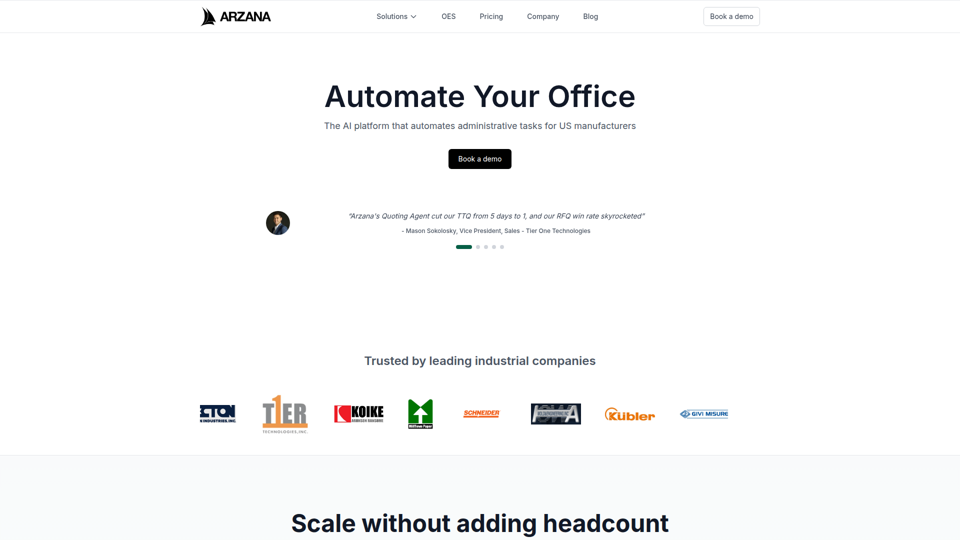
Arzana is an Office Execution System that automates front-office administrative work such as quoting, order entry, purchasing, customer service, and ERP-connected workflows for US manufacturers and distributors. For sales, operations, and customer service teams in industrial companies, this kind of AI automation can reduce repetitive office work and free staff to focus on faster response times and higher-value customer-facing tasks.
Allus AI - Vision Foundation Model for Manufacturing
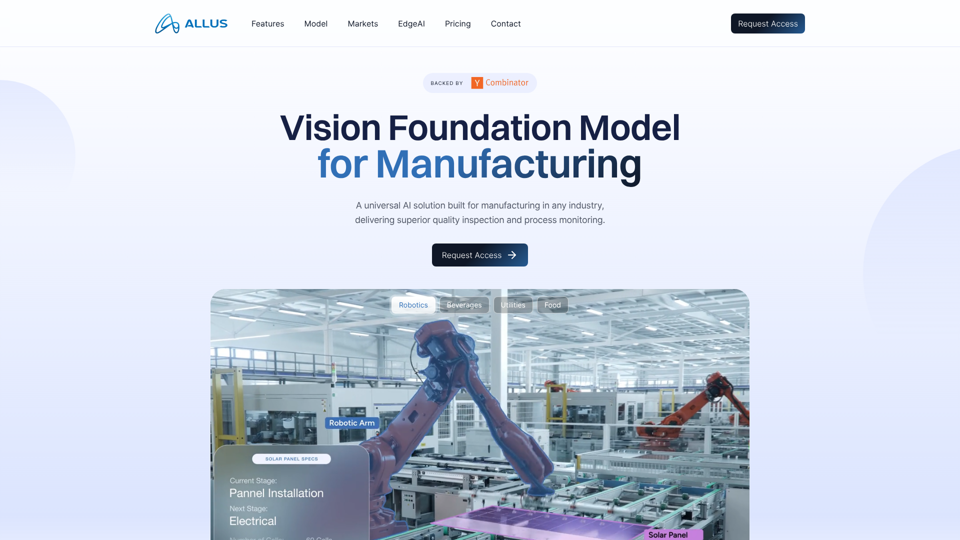
Allus AI is a vision foundation model and AI platform for manufacturing that helps teams build and deploy industrial inspection, quality assurance, anomaly detection, and process monitoring solutions, mainly for manufacturers and production operations teams. In AI-enabled factories, it can help quality engineers and manufacturing leaders reduce manual inspection work and act on real-time analytics from edge and cloud deployments.
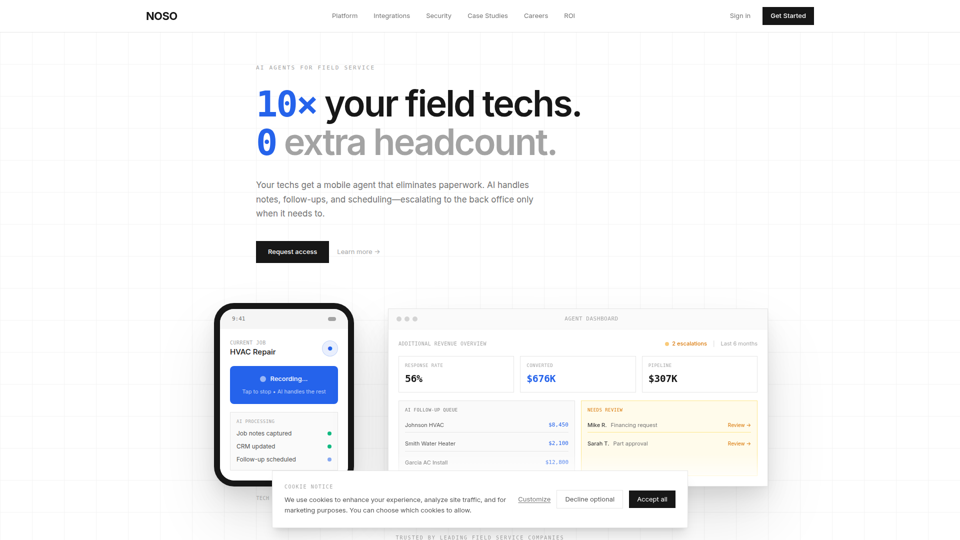
Noso - The Source of Intelligence for Field Technicians
Noso is an AI field service platform that gives field technicians a mobile agent to automate notes, follow-ups, scheduling, and CRM updates, mainly for trades and home service teams. For field service operations and back-office staff, this can reduce admin work, surface only complex exceptions, and help technicians spend more time on jobs instead of paperwork.
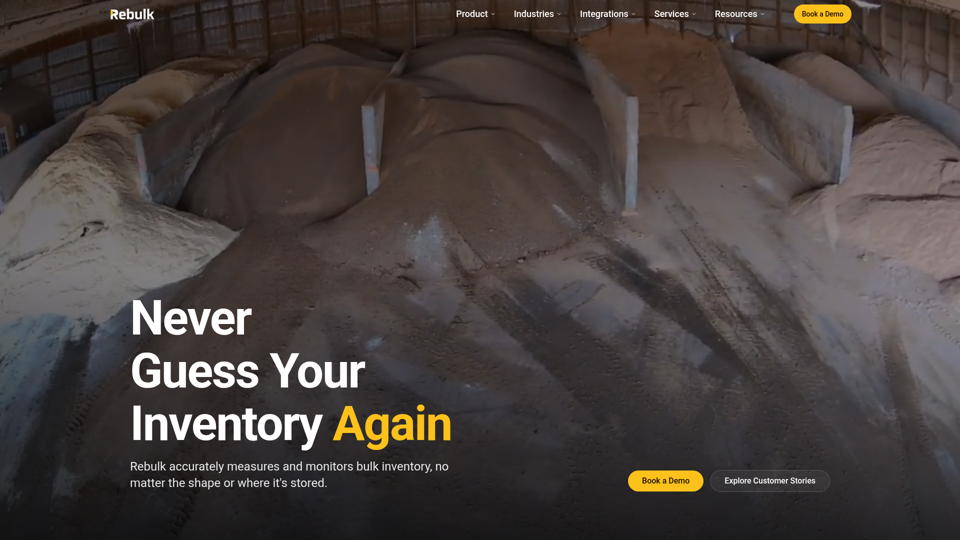
Rebulk - Automated Bulk Inventory Measurement
Rebulk is an automated bulk inventory measurement system that uses cameras, 3D sensors, software, and mobile app capture to help operations teams measure, monitor, and manage bulk materials across sites in industries like agriculture, aggregates, biomass, energy, and recycling. For operations, logistics, and field teams, AI-driven inventory visibility can reduce manual checks, improve tracking of changes over time, and help surface issues earlier for faster action.
Dartboard Energy - Ask your fleet anything
Dartboard Energy is an AI agent for solar and storage fleet teams that analyzes site data to answer operational questions, explain contract treatment, and estimate financial impact through email, Slack, or Teams without a dashboard. For operations and asset management professionals, it can speed root-cause analysis, prioritize meaningful alarms, and surface downtime or warranty exposure earlier.
Saldor
Saldor is a field training tool that helps HVAC, solar, and other trade service teams turn new hires into productive technicians faster through hands-free, in-field support. In an AI-enabled workflow, it can help trainers, operations leaders, and field managers standardize onboarding and reinforce guidance directly on the job.
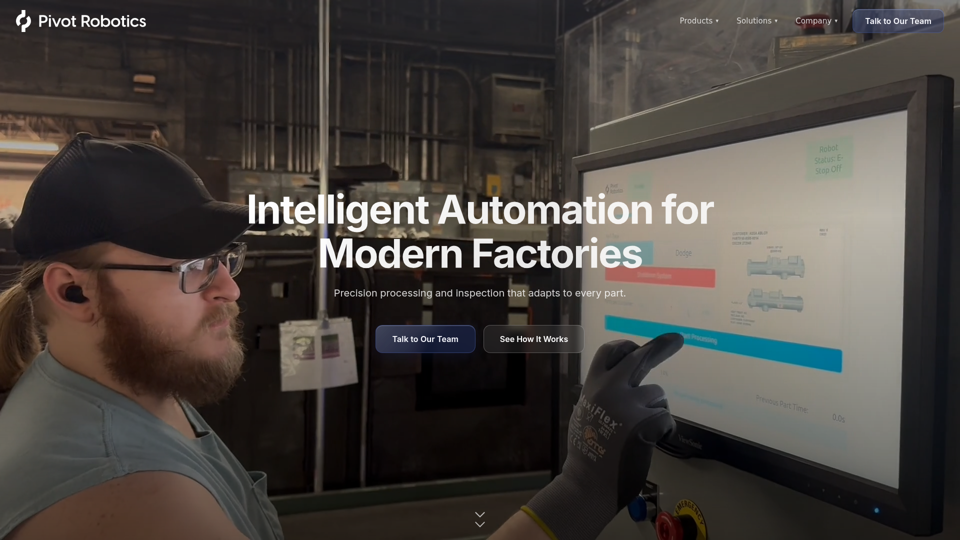
Pivot Robotics
Pivot Robotics provides autonomous factory automation for part processing and inspection, using computer vision to help manufacturers, foundries, and aerospace teams finish, measure, and inspect variable parts with consistent precision. For manufacturing engineers and operations teams, this AI-driven vision stack can reduce manual finishing dependence and speed deployment on new parts without extensive programming.