
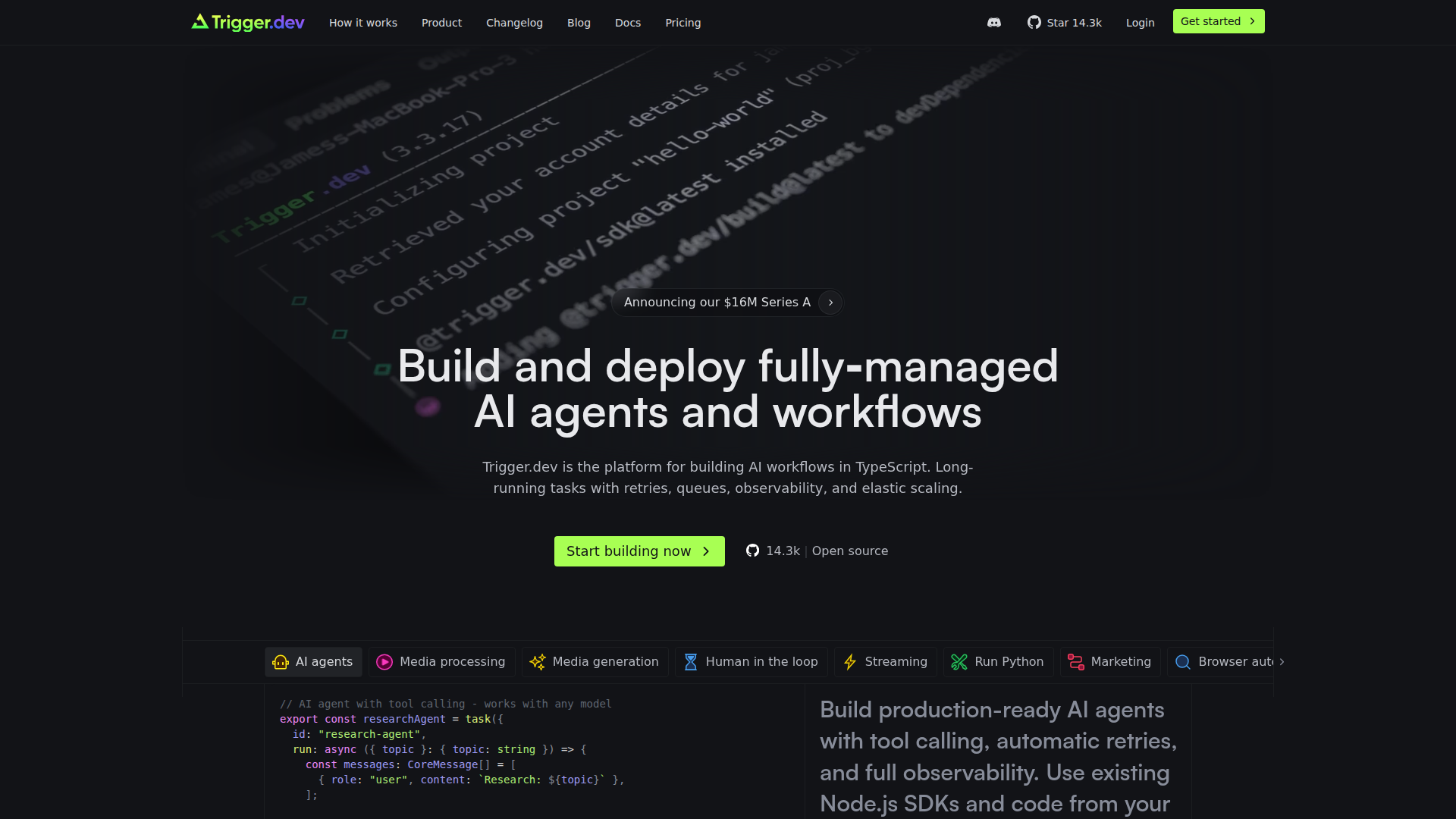
Trigger.dev | Build and deploy fully-managed AI agents and workflows.
Rate this Tool
Average Score
Total Votes
Select your score (1-10):
Detail Information
What
Trigger.dev is a platform for building and deploying fully managed AI agents and background workflows in TypeScript. It is designed for developers who need long-running, reliable task execution with retries, queues, scheduling, observability, and elastic scaling, without managing servers directly.
The product appears positioned as a developer-focused workflow and orchestration layer for AI and asynchronous application logic. Its core workflow is to define tasks in code, run them on Trigger.dev infrastructure, monitor and replay executions, and surface task progress or streamed model output back into frontend applications in real time.
Features
- AI agent orchestration in TypeScript — Supports production-oriented agent patterns such as tool calling, prompt chaining, routing, parallelization, orchestrators, and evaluator-optimizer flows.
- Long-running task execution without timeouts — Lets teams offload asynchronous jobs and AI workflows to managed infrastructure for durable execution.
- Retries, queues, and concurrency controls — Provides configurable retry behavior and queue-based execution to improve reliability and manage workload throughput.
- Scheduled tasks and background automation — Includes durable cron scheduling for recurring jobs and operational workflows.
- Observability, tracing, and replayability — Offers monitoring, logging, filtering, alerts, versioning, and replay tools to diagnose failures and manage task runs.
- Realtime frontend updates and streaming — Exposes task status, metadata, and streamed LLM responses to applications, including React hook support for UI integration.
Helpful Tips
- Validate runtime needs early — Trigger.dev supports custom build extensions, Python execution, browser automation, FFmpeg, and system packages, so teams should confirm their workflow dependencies match these runtime options.
- Use it where async reliability matters most — The platform is especially relevant for AI pipelines, media processing, scheduled jobs, and multi-step automations that are hard to run safely inside request-response lifecycles.
- Review observability depth for production use — The product emphasizes tracing, alerts, filters, dashboards, and replay, which are important when workflows become multi-stage or customer-facing.
- Check language and stack fit — The core positioning is strongly centered on TypeScript and Node.js-style development, even though Python scripts are also supported.
- Separate confirmed features from inferred fit — The page clearly supports AI workflows and durable task execution, but buyers should verify any domain-specific requirements, integrations, or governance needs not explicitly documented.
OpenClaw Skills
Trigger.dev could likely work well within the OpenClaw ecosystem as an execution backbone for agentic workflows, especially where OpenClaw skills need dependable background processing, retries, scheduled runs, and human-in-the-loop checkpoints. Likely use cases include research agents, outbound sequencing workflows, browser-driven collection tasks, media-processing pipelines, and multi-step enrichment jobs that benefit from observable, replayable execution.
In a broader OpenClaw setup, teams could build skills that trigger Trigger.dev tasks from user actions, CRM events, or webhook inputs, then return live progress and streamed outputs into operational dashboards or end-user apps. If connected this way, the combination could help operators, growth teams, product teams, and internal automation builders move from fragile scripts toward more structured, production-ready agent workflows; this is a likely architectural pattern rather than a confirmed native integration from the source page.
Embed Code
Share this AI tool on your website or blog by copying and pasting the code below. The embedded widget will automatically update with the latest information.
<iframe src="https://www.aimyflow.com/ai/trigger-dev/embed" width="100%" height="400" frameborder="0"></iframe>
Explore Similar Tools

Free AI Photo Editor: Edit & Generate Image Online | Pokecut
Pokecut is an AI photo editor that helps users remove backgrounds, enhance images, and generate visuals online, mainly for ecommerce sellers, marketers, and creators who need quick design-ready assets. It speeds up routine image production so visual teams can create polished content with less manual editing.
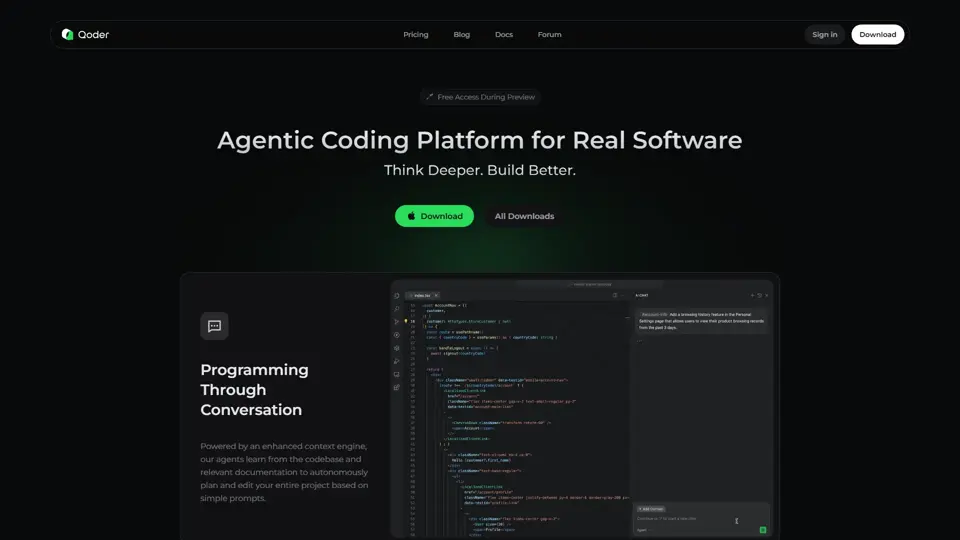
Qoder - The Agentic Coding Platform
Qoder is an agentic coding platform that helps developers understand codebases and execute software tasks with AI agents, mainly for professional software engineers and development teams. It improves engineering throughput by combining strong code context with advanced models for more reliable task completion.

Seedance 2.0
Seedance 2.0 is ByteDance's AI video generation model designed to create high-quality videos from prompts and multimodal inputs, mainly for creators, developers, and media teams. In the AI era, it helps visual content roles turn ideas into production-ready motion assets with far less manual editing effort.
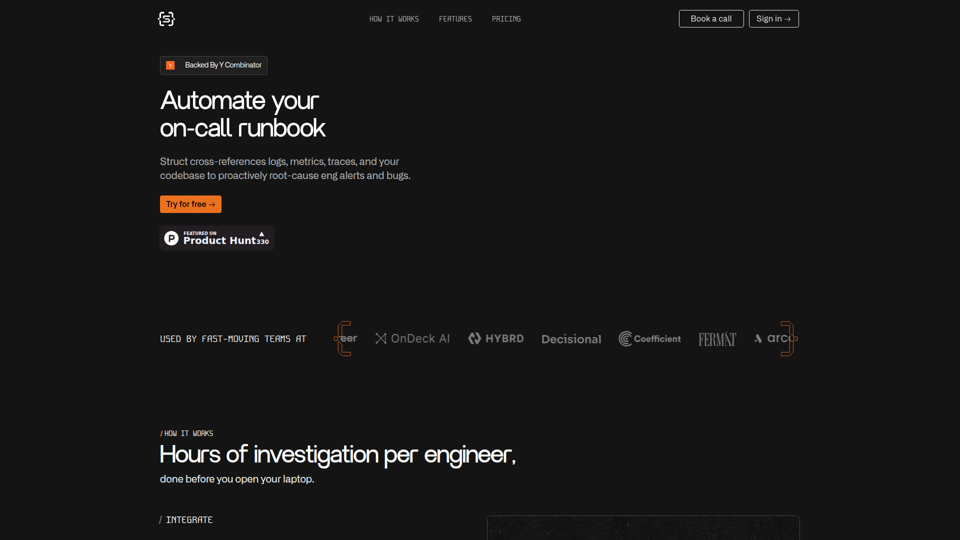
Struct | Automate your on-call runbook
Struct is an AI on-call agent that investigates engineering alerts and bugs by analyzing logs, metrics, traces, and codebases, mainly for software engineers and SRE teams. In the AI era, it helps incident responders shorten triage time by delivering root-cause findings and suggested fixes directly in workflows.
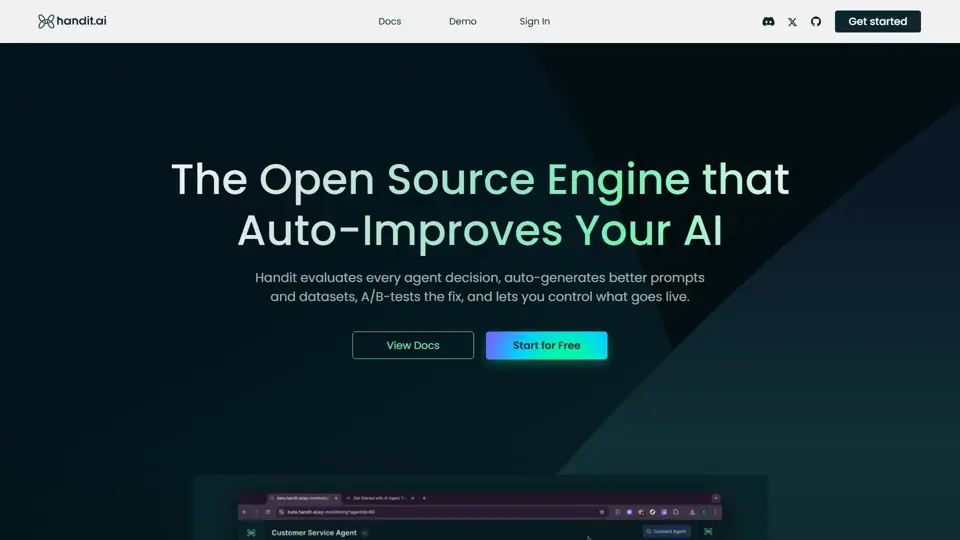
Handit.ai — The Open Source Engine that Auto-Improves Your AI Agents
Handit.ai is an open-source optimization engine that evaluates AI agent decisions, generates improved prompts and datasets, and A/B tests changes for teams building and operating AI agents. It helps AI engineers and product teams improve agent quality faster while keeping tighter control over production behavior.

Free AI Grammar Checker - LanguageTool
LanguageTool is an AI-powered grammar and writing assistant that helps users check grammar, spelling, punctuation, and style across more than 30 languages, mainly for students, professionals, and multilingual teams. It helps writing-heavy roles communicate more clearly and edit faster at scale.
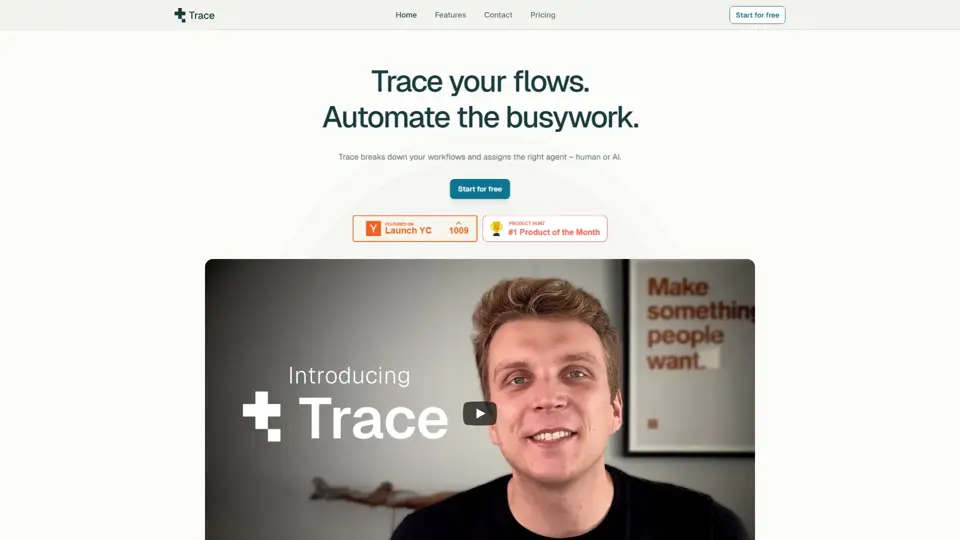
Trace
Trace is a software tool designed to support digital workflows, likely focused on helping teams organize, monitor, or analyze work more effectively. In the AI era, tools that centralize operational visibility help technical and business roles make faster decisions with less manual follow-up.

The AI for Problem Solvers | Claude by Anthropic
Claude by Anthropic is an AI assistant for problem solvers that helps users tackle complex work such as writing, coding, data analysis, research, and organizing tasks, mainly for professionals, developers, and teams handling difficult projects. In AI-enabled workflows, it can help knowledge workers and software teams move faster from analysis to execution while keeping people in control of approvals and file access.