
Eight AI Trends Reshaping Technology in 2025 | .News
Rate this Tool
Average Score
Total Votes
Select your score (1-10):
Detail Information
What
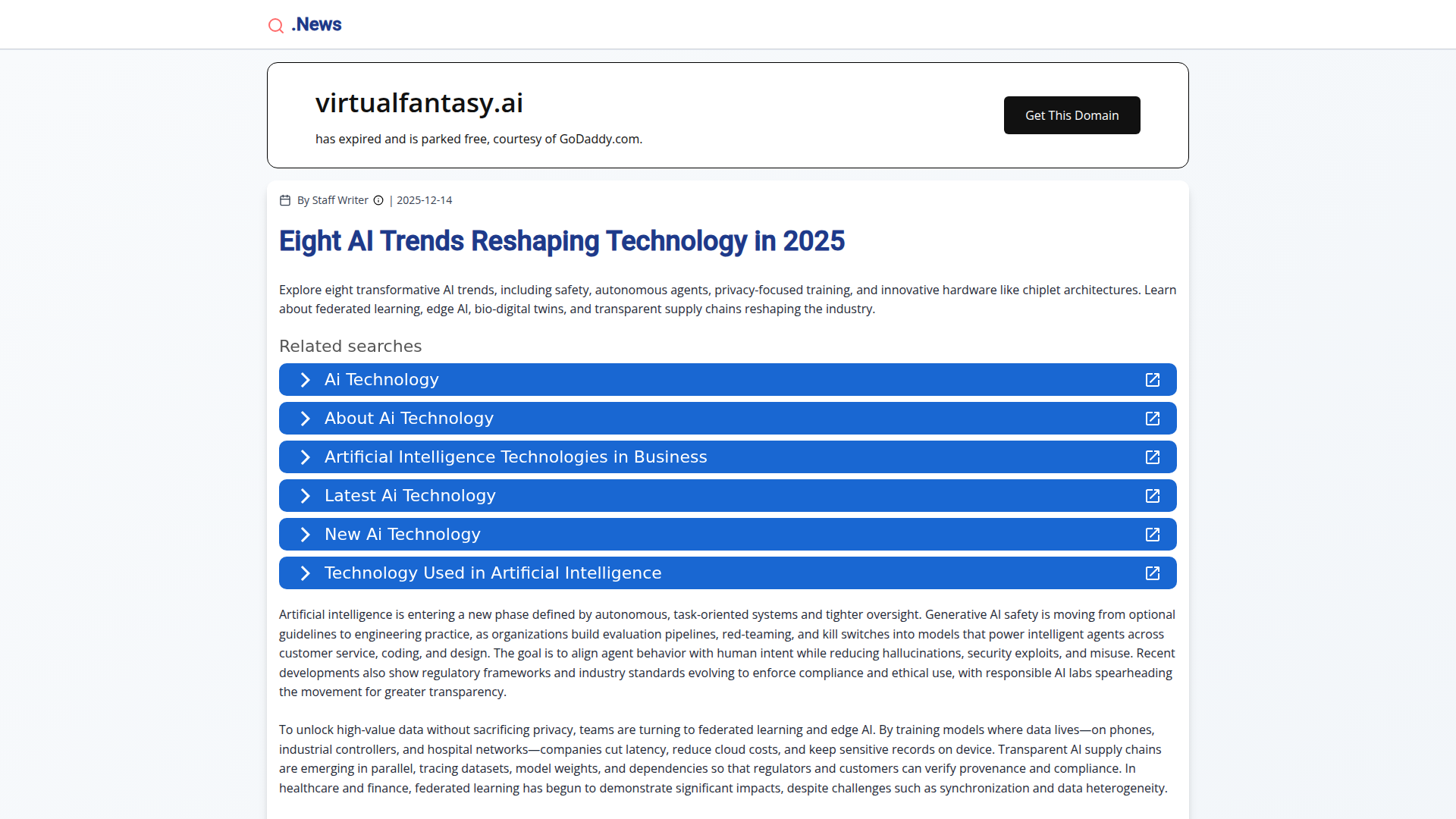
This page is not a product page. It is a short trend article on a directory-style news site summarizing eight AI developments expected to shape technology in 2025, including autonomous agents, AI safety, federated learning, edge AI, transparent supply chains, chiplet hardware, neuromorphic computing, and bio-digital twins.
The content appears aimed at general business and technology readers who want a high-level view of where AI is heading. Its core value is informational rather than operational: it outlines themes, risks, and emerging practices, but it does not describe a specific software product, service workflow, or commercial platform.
Features
- AI trend overview: Summarizes several major AI themes in one article, which helps readers quickly scan the direction of the market.
- Safety and governance framing: Highlights evaluation pipelines, red-teaming, kill switches, and oversight as important practices for autonomous systems.
- Privacy-preserving AI coverage: Explains federated learning and edge AI as approaches for training and inference closer to where data resides.
- Infrastructure perspective: Discusses chiplet architectures and neuromorphic computing to show how hardware innovation may affect AI deployment.
- Industry application examples: Points to healthcare, finance, urban planning, and medical research as areas where these trends may have practical impact.
- Supply chain transparency emphasis: Notes the growing importance of tracing datasets, model weights, and dependencies for provenance and compliance review.
Helpful Tips
- Treat this as directional research, not vendor evaluation: The page is useful for identifying themes, but it does not provide enough evidence to compare products or implementation maturity.
- Separate confirmed practice from future-looking claims: Several ideas, such as neuromorphic gains or advanced bio-digital twin impact, are presented at a high level and may require deeper validation.
- Use the trend list as a planning checklist: For enterprise AI work, the most actionable topics here are safety controls, privacy-preserving training, data provenance, and deployment architecture.
- Request technical specifics before buying or building: Any real adoption decision would still need details on model performance, governance processes, infrastructure requirements, and security design.
- Map trends to regulated workflows first: The article especially suggests relevance for healthcare and finance, where privacy, auditability, and human oversight are likely to matter most.
OpenClaw Skills
Because this page is editorial content rather than a software offering, there is no confirmed native integration path with OpenClaw. The most realistic fit is as an input source for OpenClaw research, monitoring, and knowledge-synthesis skills that track AI market developments, extract named trends, and turn broad signals into structured planning briefs for strategy, product, or innovation teams.
A likely OpenClaw use case would be an agent workflow that ingests articles like this, classifies trends by business impact, links them to internal priorities such as AI safety or edge deployment, and produces sector-specific recommendations for teams in healthcare, finance, or industrial operations. Combined with OpenClaw, this kind of content could support analyst copilots, executive brief generators, regulatory watch agents, or innovation scouting workflows, though that is an inferred workflow concept rather than a capability stated on the page.
Embed Code
Share this AI tool on your website or blog by copying and pasting the code below. The embedded widget will automatically update with the latest information.
<iframe src="https://aimyflow.com/ai/virtualfantasy-ai/embed" width="100%" height="400" frameborder="0"></iframe>
Explore Similar Tools
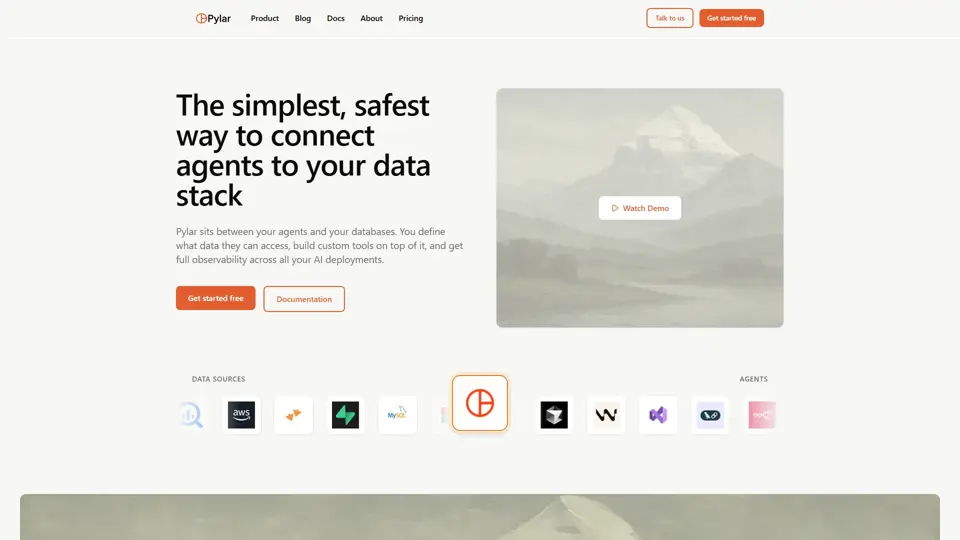
Governed Data Access for AI Agents | Secure MCP Tools
Pylar is a governed data access platform that helps users give AI agents secure access to structured data through controlled SQL views and MCP tools, mainly for data and engineering teams. It lets developers operationalize AI safely by balancing agent capability with governance and access control.
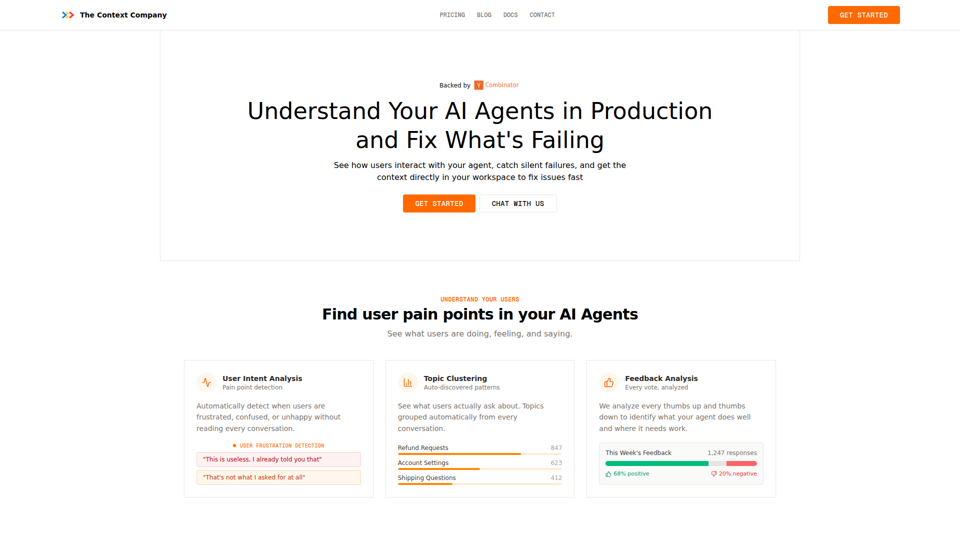
The Context Company | Understand User Behavior In Your AI Agents
The Context Company is an observability and user behavior analysis tool for AI agents that helps teams monitor production conversations, detect frustration and silent failures, cluster topics, and review feedback, mainly for developers and product teams shipping AI agents. In AI workflows, it can help engineering, support, and product functions prioritize fixes faster by surfacing hidden failure patterns and real user pain points directly from agent runs.
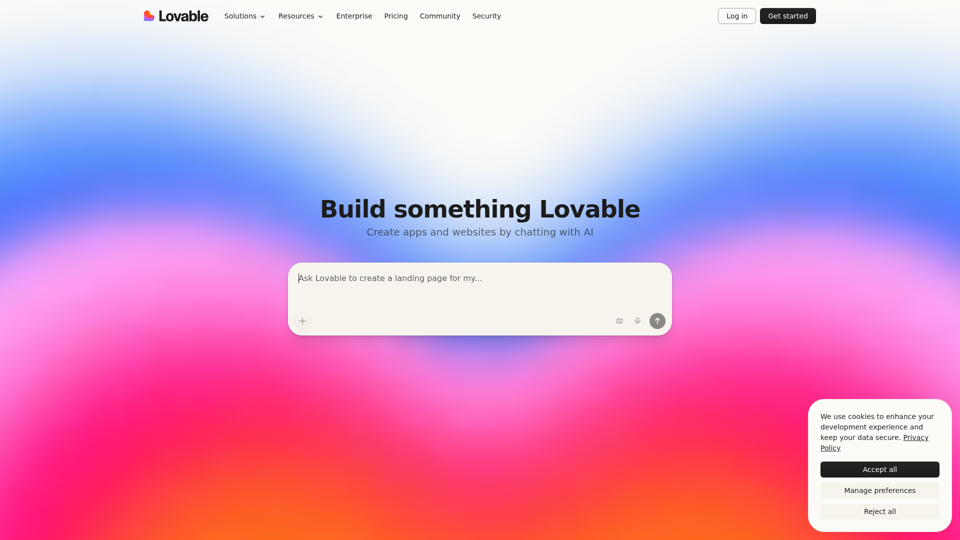
AI App Builder | Vibe Code Apps & Websites with AI, Fast
Lovable is an AI app builder that helps users create apps, websites, and digital products by describing ideas in chat, refining prototypes, and deploying them quickly, mainly for founders, product managers, designers, and marketers. In AI-driven product work, it can help these teams turn early concepts, screenshots, and feedback into working prototypes faster, reducing handoff delays between planning, design, and launch.
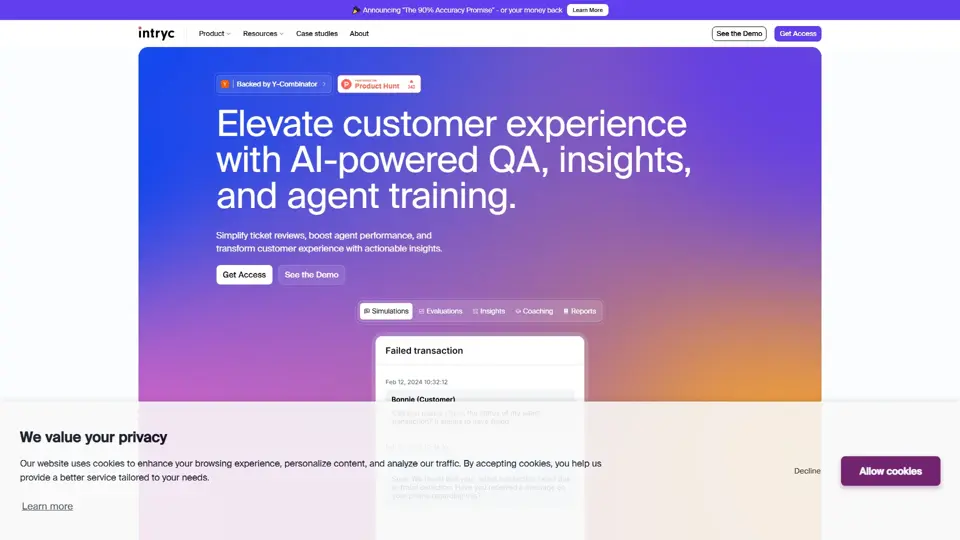
Intryc - Elevate your Customer Experience
Intryc is a customer experience platform that helps teams review support tickets, improve agent performance, and uncover actionable service insights, mainly for support and CX leaders. It gives QA and support managers a faster way to coach teams and raise service quality at scale.
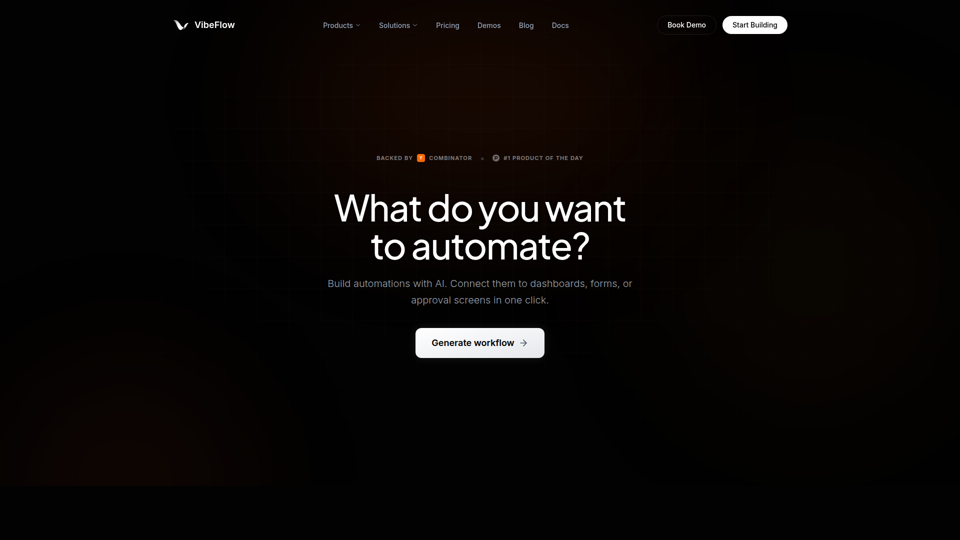
VibeFlow - AI Full-Stack App Builder with Visual Backends
VibeFlow is an AI full-stack app builder that helps users create backend automations, data pipelines, dashboards, forms, and customer-facing apps through prompts and visual workflows, mainly for developers, founders, operations teams, and non-technical teams. In AI-assisted product and operations work, its editable visual backends can help teams validate, adjust, and maintain application logic more reliably than opaque code generation alone.
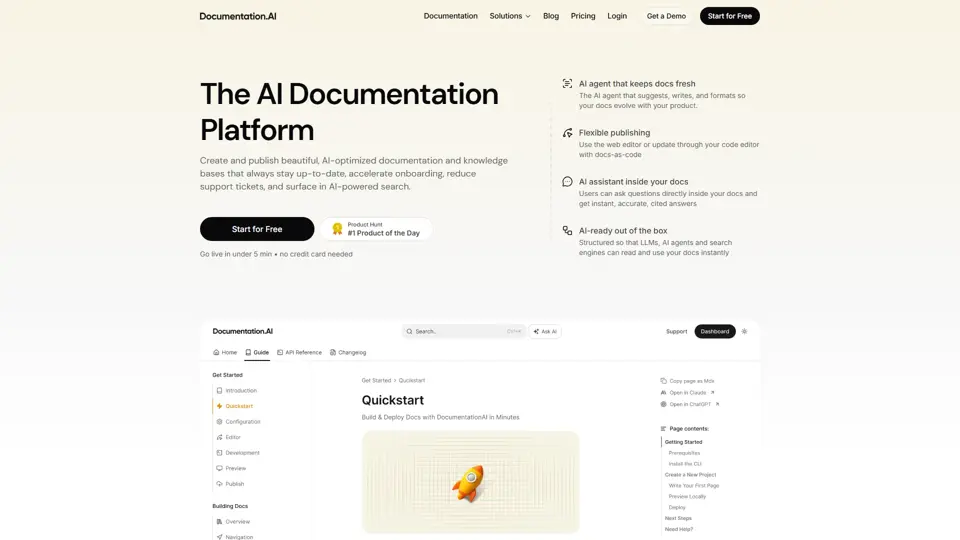
Documentation.AI – AI Documentation & Knowledge Base Software
Documentation.AI is an AI documentation and knowledge base platform that helps teams keep docs current, onboard users faster, and reduce support volume. In the AI era, it improves how support and product teams maintain institutional knowledge without constant manual rewriting.
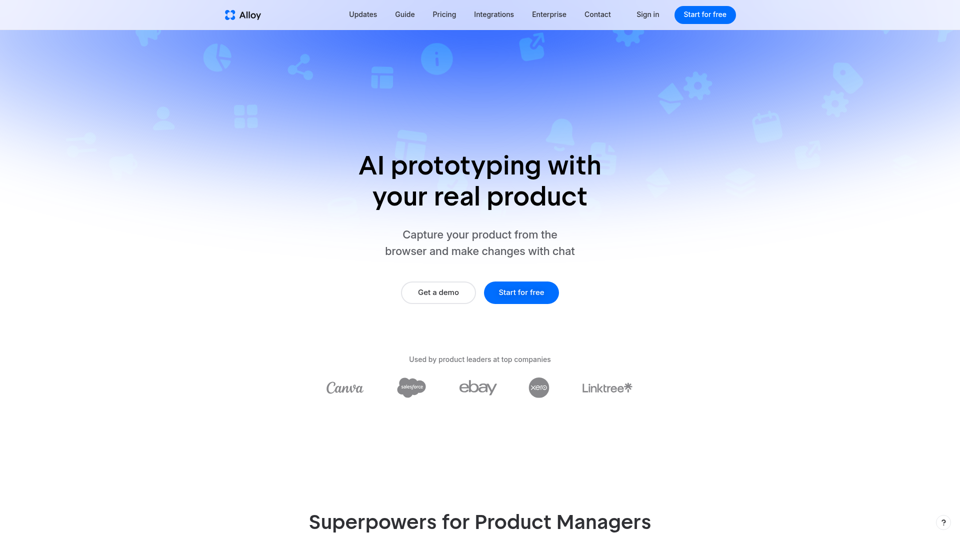
Alloy · AI prototyping with your real product
Alloy is an AI prototyping tool that captures pages from a real web app and lets product managers create interactive, on-brand prototypes with chat, mainly for professional product teams. By turning product ideas, customer requests, and team feedback into realistic prototypes quickly, it can help product managers and designers align faster and reduce time spent on manual mockups.
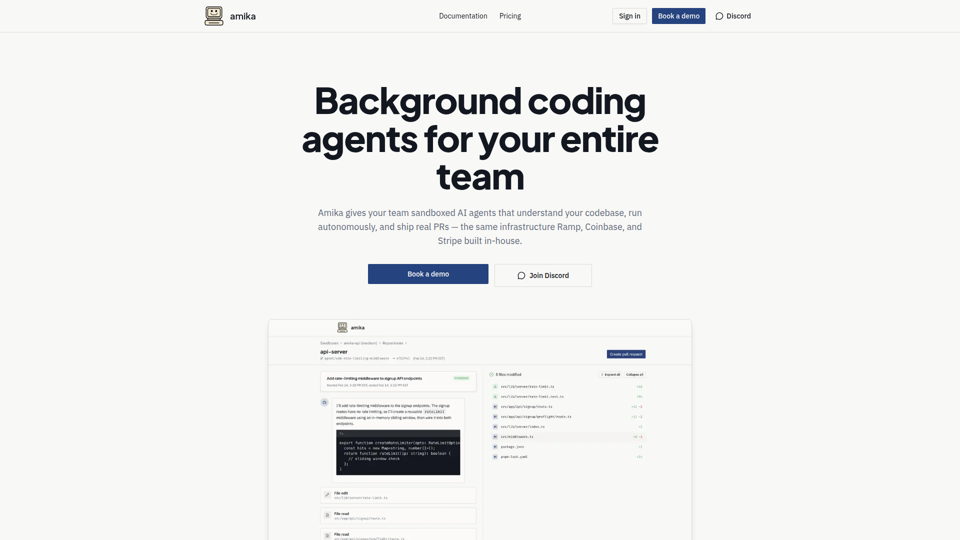
Amika — Multiplayer AI Sandboxes
Amika is a multiplayer AI sandbox platform that lets teams run autonomous coding agents in isolated environments to understand codebases, complete tasks, and produce reviewable pull requests, mainly for software teams. For engineering, product, and operations functions, it can shorten handoffs by enabling non-engineers to start scoped work while developers review live previews and merge tested changes.