
Woebot Health
Rate this Tool
Average Score
Total Votes
Select your score (1-10):
Detail Information
What
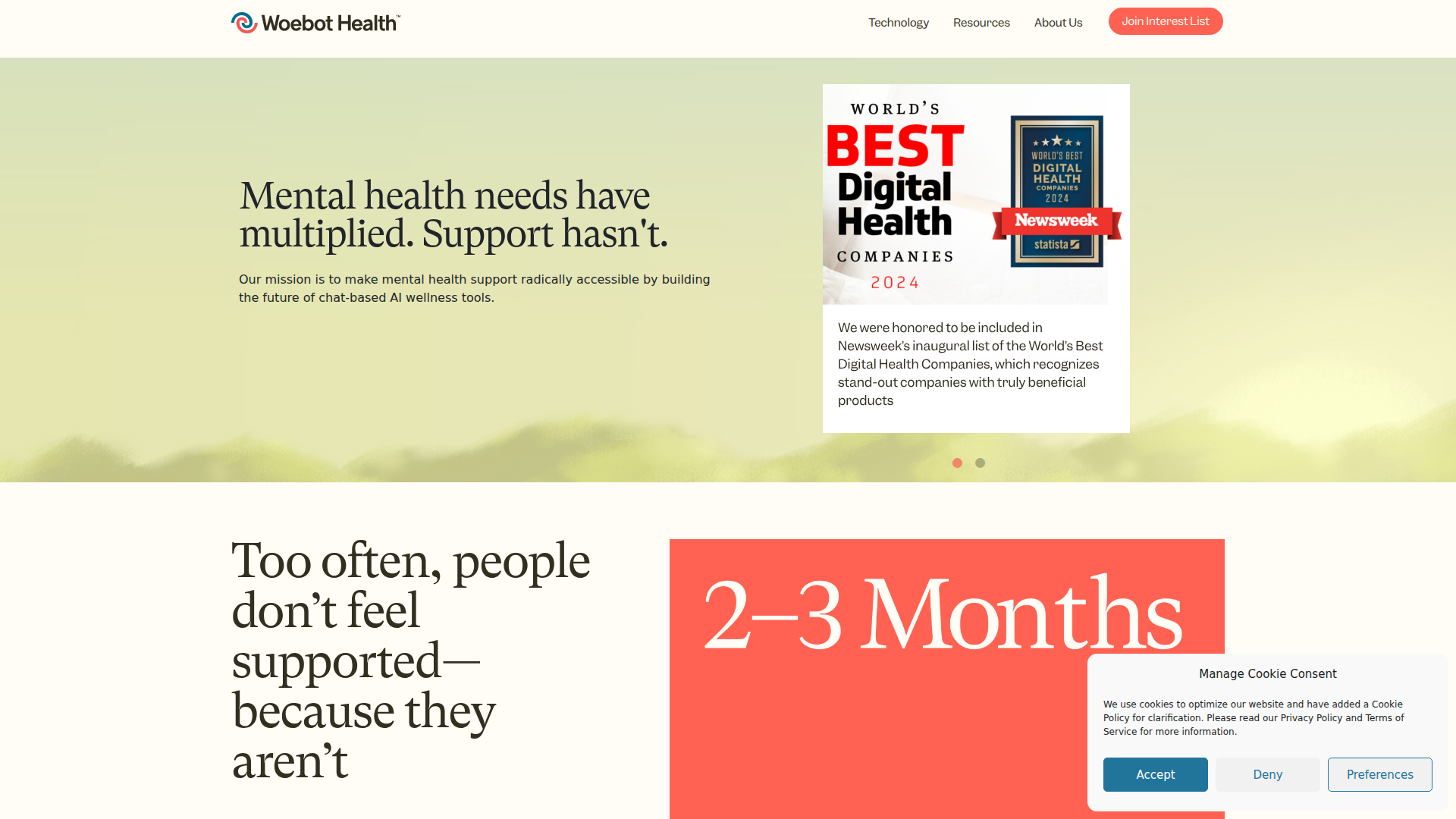
Woebot Health is a mental health technology company focused on chat-based AI wellness tools. Based on the page, its mission is to make mental health support more accessible, particularly in response to therapist shortages, insurance complexity, and scheduling barriers.
The company appears to serve both individuals and organizations, with references to offerings for providers, payers, hospitals, and adults. Its positioning is likely in the digital behavioral health category, with an emphasis on AI-enabled support, responsible AI, and a philosophy of care centered on empathy, supportive relationships, and clinical rigor.
Features
- Chat-based AI wellness tools: The product category is centered on conversational mental health support, which can provide more immediate and accessible interaction than traditional appointment-based models.
- Support for multiple customer types: The site indicates solutions for people, companies, providers, and payers, suggesting the offering is structured for both end-user and enterprise healthcare contexts.
- Adaptive approach to care needs: Woebot Health states that mental health support is not one-size-fits-all and that its offerings are designed to grow alongside the people and organizations they serve.
- Responsible AI positioning: The site highlights “Technically advanced. Responsible AI.”, which signals a focus on governance and trust, though the page does not specify the underlying controls or methods.
- Security and safety information: Dedicated pages for security overview, product security features, safety, privacy, and terms suggest that operational trust and user protection are important parts of the product environment.
- Provider-oriented materials and training: References to provider training and provider-specific pages indicate practical enablement resources for clinical or care delivery settings.
Helpful Tips
- Validate the exact deployment model: If evaluating Woebot Health, confirm whether the intended use is direct-to-consumer wellness support, provider-augmented care, payer support, or another model, since the page references several audiences without detailing each workflow.
- Review clinical and safety boundaries carefully: For mental health AI tools, it is important to understand escalation paths, crisis handling, and intended scope of use; this page signals safety resources but does not explain those mechanisms in detail.
- Assess fit with existing care pathways: Organizations should examine how a chat-based support tool complements therapists, care coordinators, and digital front doors rather than assuming it replaces clinical care.
- Look beyond brand recognition: Awards and media mentions may support credibility, but buying decisions should focus on evidence of outcomes, implementation requirements, and governance practices, which are not fully described on this page.
- Clarify privacy and security requirements early: Since the site includes multiple privacy and security documents, buyers in regulated environments should map those materials to internal legal, clinical, and IT review processes.
OpenClaw Skills
Within the OpenClaw ecosystem, Woebot Health could likely support skills for mental health navigation, patient engagement triage, provider enablement, and care-program orchestration. A likely workflow would combine OpenClaw agents that identify user intent, route individuals to appropriate educational or support resources, summarize non-urgent patterns for care teams, and coordinate follow-up steps around a Woebot Health experience. The source page does not confirm a native integration, so this should be viewed as a plausible interoperability scenario rather than a stated product capability.
For providers, payers, and health systems, this combination could reshape how lower-acuity behavioral health support is surfaced and maintained between formal care interactions. OpenClaw agents could likely help standardize intake, monitor recurring themes from user interactions, generate administrative handoff summaries, and trigger outreach workflows, while Woebot Health provides the conversational wellness layer. In practice, that could help behavioral health teams extend support capacity and reduce friction in access pathways, especially where staffing shortages and fragmented patient journeys are major constraints.
Embed Code
Share this AI tool on your website or blog by copying and pasting the code below. The embedded widget will automatically update with the latest information.
<iframe src="https://www.aimyflow.com/ai/woebothealth-com/embed" width="100%" height="400" frameborder="0"></iframe>
Explore Similar Tools
PostVisit.ai
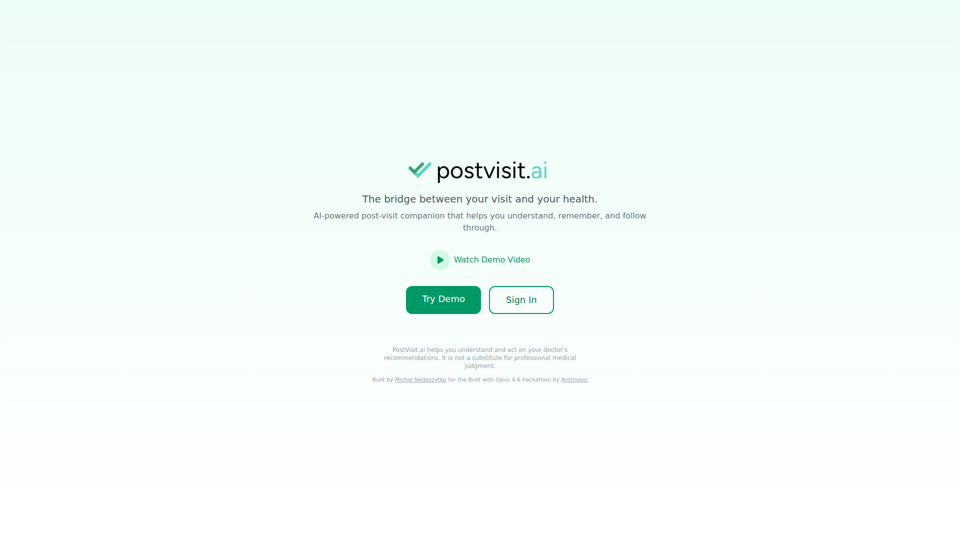
PostVisit.ai is an AI-powered post-visit companion that helps patients understand, remember, and act on their doctor’s recommendations after an appointment. In AI-supported care workflows, tools like this can help clinicians and care teams reinforce patient understanding and follow-through between visits, while not replacing professional medical judgment.
Valerie Health
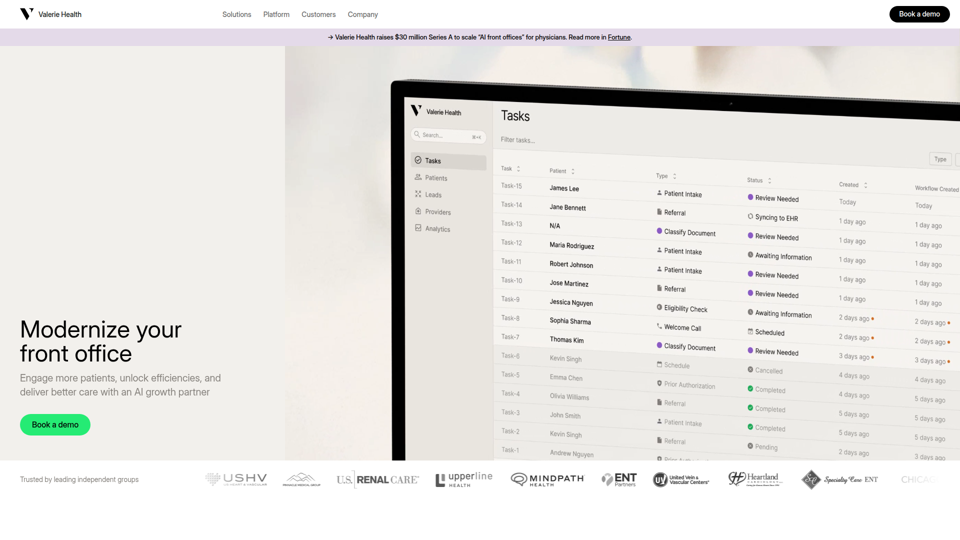
Valerie Health is an AI healthcare operations platform that helps independent provider groups modernize front-office workflows such as referral management, scheduling, fax and document handling, and patient engagement. For clinical operations leaders and healthcare executives, it can use AI to reduce administrative burden, improve workflow consistency, and give teams clearer visibility into patient access and growth operations.
Healthcare | Claude by Anthropic
Claude is a HIPAA-ready AI tool for healthcare organizations that helps health systems and startups handle prior authorizations, claims appeals, patient message triage, and clinical documentation with more accuracy, safety, and compliance. For clinicians, operations teams, and healthcare developers, it can reduce administrative workload and speed review, scribing, and routing tasks so more time goes to patient care and higher-value decisions.
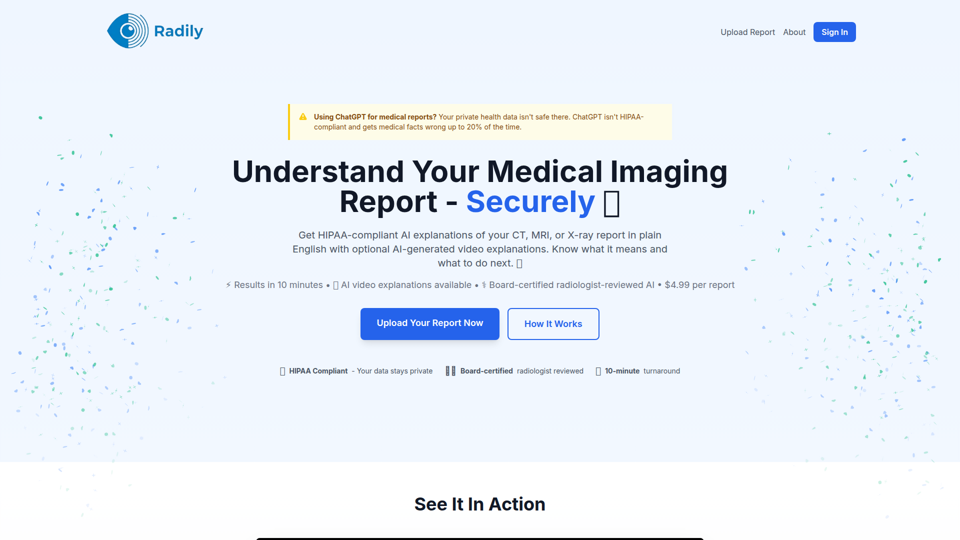
Radily
Radily is a HIPAA-compliant AI tool that explains CT, MRI, and X-ray reports in plain English, with optional video summaries and suggested follow-up questions, mainly for patients trying to understand their imaging results securely. In AI-enabled healthcare communication, it can help radiologists and referring clinicians reduce patient confusion by giving people clearer report explanations before or after clinical discussions.
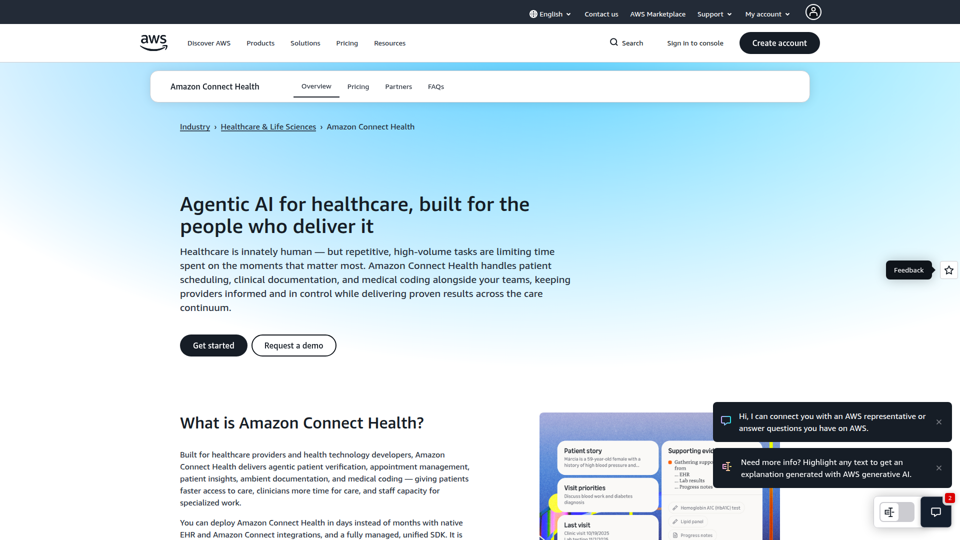
Amazon Connect Health - AWS
Amazon Connect Health is an AWS healthcare AI platform for providers and health technology developers that helps with patient verification, appointment management, patient insights, ambient clinical documentation, and medical coding within existing care workflows. In AI-enabled healthcare operations, it can help clinicians, contact center teams, and coders spend less time on documentation and scheduling while keeping human review and source traceability in place.
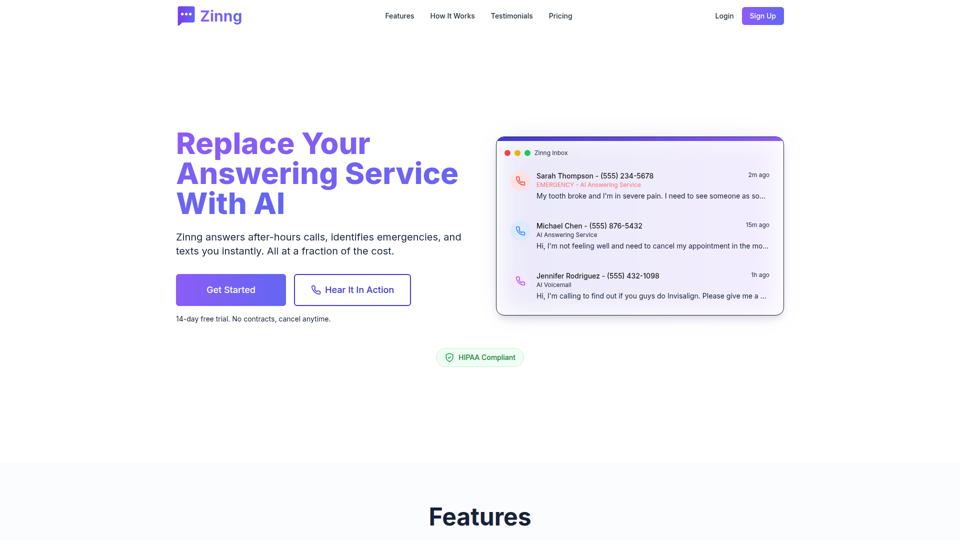
Zinng
Zinng is an AI answering service that handles 24/7 and after-hours calls, identifies emergencies, sends SMS alerts, and can support appointment scheduling for practices and other businesses, especially dental and healthcare offices. For front-desk teams, practice managers, and office owners, it can reduce missed urgent calls and streamline follow-up with transcripts and scheduling workflows.
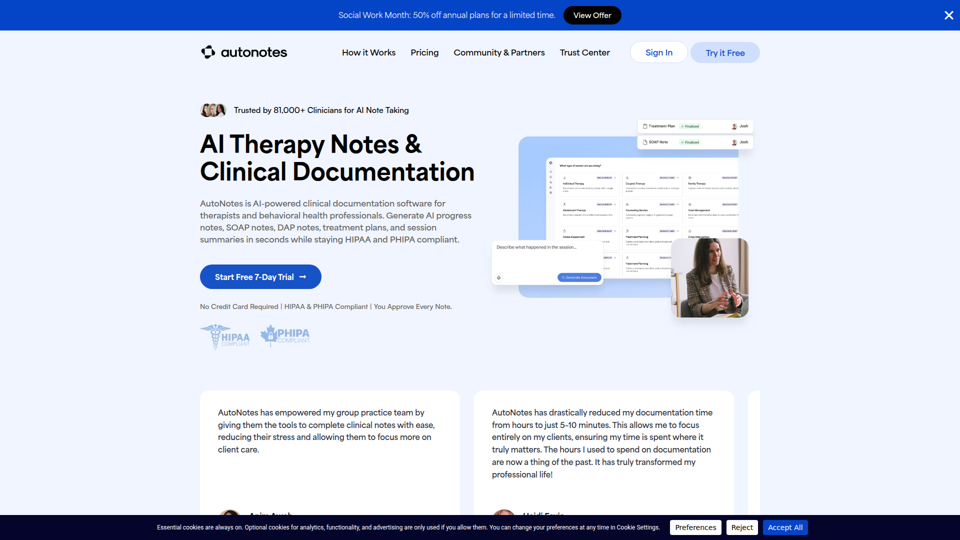
AI Clinical Documentation for Therapists | AutoNotes
AutoNotes is AI-powered clinical documentation software that helps therapists and behavioral health professionals generate compliant progress notes, SOAP and DAP notes, treatment plans, and session summaries from written, dictated, uploaded, or recorded sessions. For therapists, social workers, and practice teams, it can reduce administrative documentation work while preserving editable, structured records and continuity across sessions.
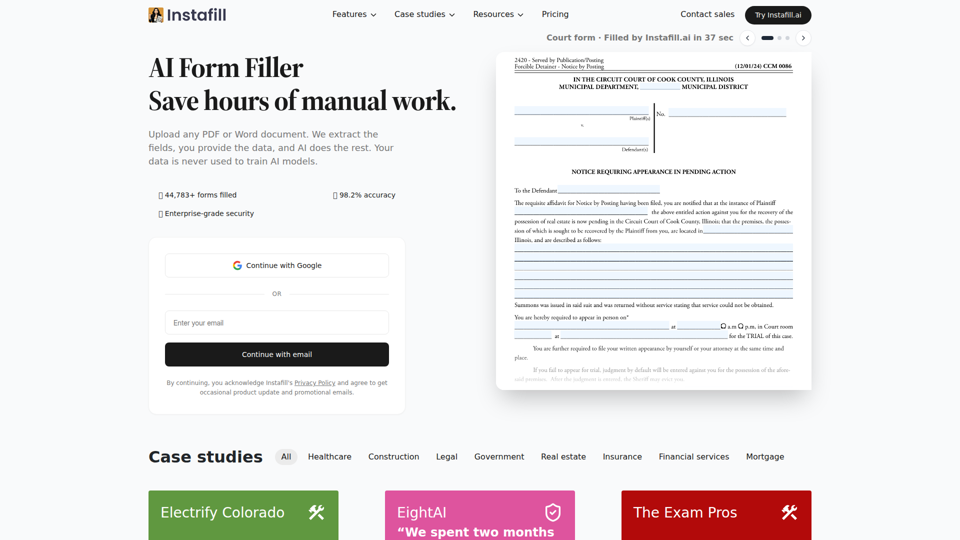
AI Form Filler - Fill out PDF forms with Instafill.ai
Instafill.ai is an AI form-filling tool that extracts fields from PDF and Word documents, autofills them from multiple data sources, and helps teams in document-heavy sectors like healthcare, legal, insurance, government, real estate, and finance complete paperwork faster. In AI-driven operations, it can reduce manual re-entry and review time for administrative, compliance, and case-processing roles while preserving visibility into how each field was filled.