How AI fits this role
Teacher in K–12 and Higher Education: How AI Is Reshaping the Role
Role Overview
Teachers design and deliver instruction, assess student understanding, manage classroom dynamics, and support the social-emotional development of learners. In K–12 public schools, this means navigating curriculum standards, IEP requirements, parent communication, and administrative reporting — often simultaneously. In higher education, the role expands to include course design, research mentorship, and academic advising.
The operational reality is demanding: a typical secondary school teacher manages 120–150 students across multiple class periods, spends 10–15 hours per week on grading and lesson planning outside of contact hours, and is expected to differentiate instruction for learners with widely varying needs — all within fixed scheduling constraints and shrinking support staff budgets.
This is the environment into which AI tools are now being introduced. The pressure is not primarily coming from administrators excited about technology. It is coming from students who already use AI to write essays, from districts looking to reduce per-pupil costs, and from a teacher workforce experiencing record attrition rates.
How AI Is Transforming This Role
The transformation is not uniform. It is happening fastest in writing-intensive subjects, in assessment design, and in administrative workflows. It is happening slowest in early childhood education, hands-on vocational training, and any context where relational trust is the primary mechanism of learning.
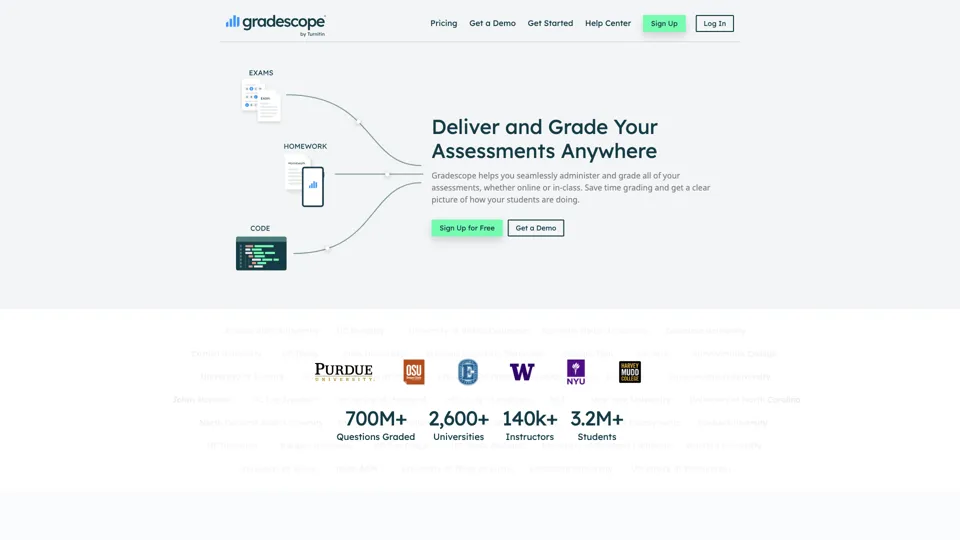
The most concrete shift is in the feedback loop. Traditionally, a teacher assigns work, collects it, grades it over several days, and returns it — by which point students have mentally moved on. AI-assisted tools like Khanmigo, Turnitin's AI feedback layer, and Gradescope now allow formative feedback to reach students within minutes of submission. This compresses the feedback cycle from days to hours and changes what teachers are expected to do with their time.
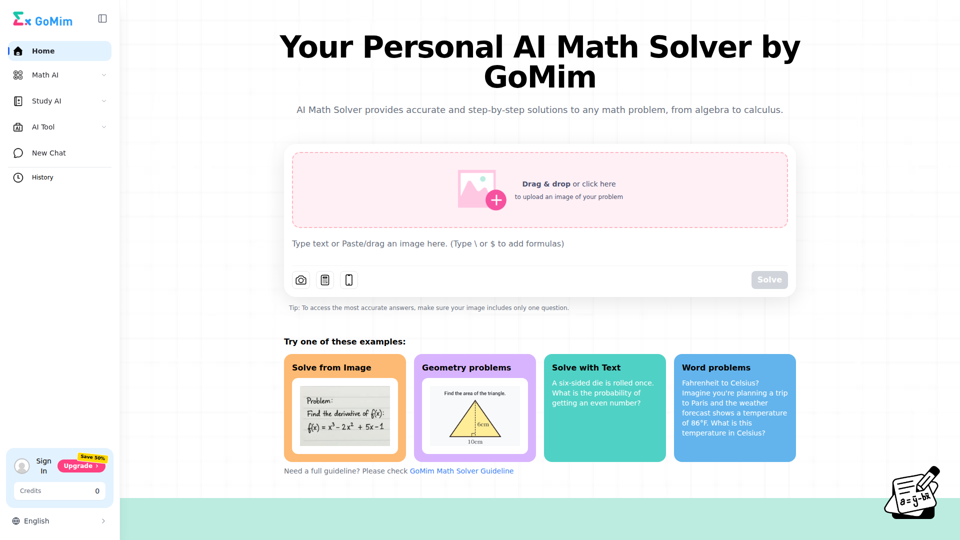
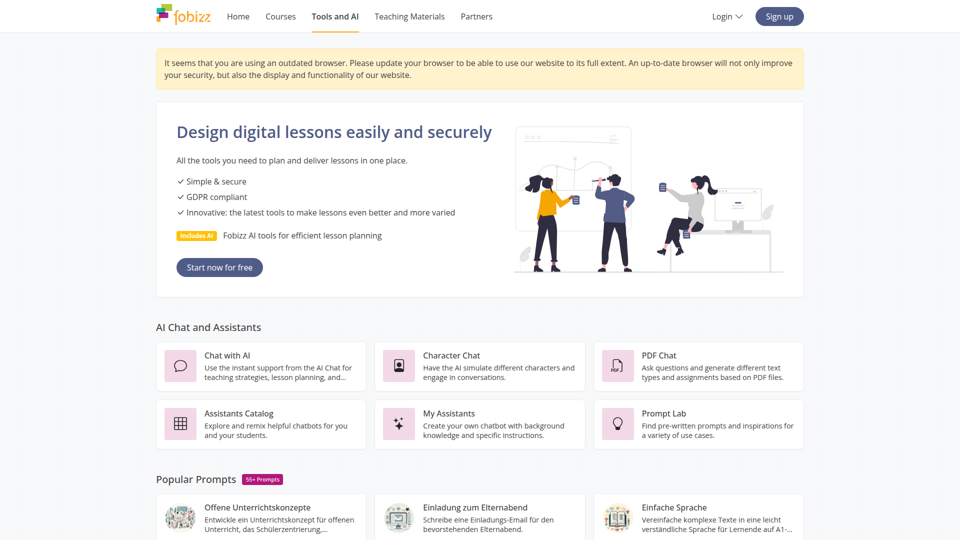
A second shift is in lesson planning. Tools like MagicSchool AI, Diffit, and Curipod can generate differentiated reading materials, discussion prompts, and exit tickets in under two minutes. Teachers who previously spent Sunday afternoons building materials from scratch are now spending that time evaluating and editing AI-generated drafts. The cognitive work shifts from generation to curation and quality control.
The third and most structurally significant shift is in data interpretation. Learning management systems now surface predictive flags — students at risk of failing, engagement drop-offs, pacing gaps — that previously required a counselor or instructional coach to identify manually. Teachers are increasingly expected to act on this data, which requires a different kind of professional judgment than traditional instruction.
Tasks AI Can Automate
- Generating first-draft lesson plans aligned to specific grade-level standards (e.g., Common Core, NGSS)
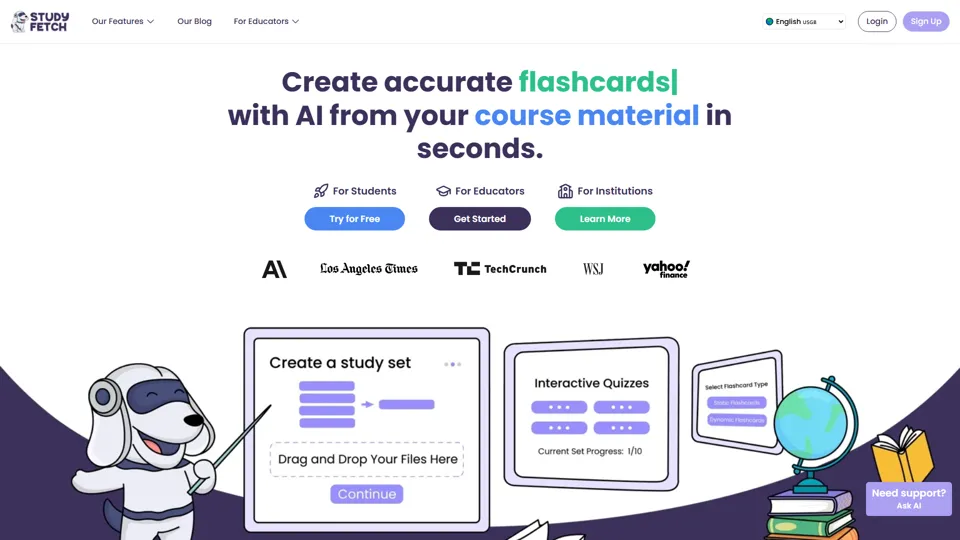
- Creating differentiated versions of reading passages at multiple Lexile levels
- Producing rubrics, quiz questions, and formative assessment items from a learning objective
- Summarizing student performance data across a class or cohort
- Drafting parent communication emails and progress report comments
- Flagging potential academic integrity violations in submitted writing
- Generating IEP accommodation suggestions based on student profile data
- Translating classroom materials into multiple languages for ELL families
- Scheduling and sequencing curriculum pacing guides across a semester
- Transcribing and summarizing recorded class discussions or lectures
Skills Becoming More Valuable
Instructional coaching and facilitation. As AI handles more content delivery and drill-based practice, the teacher's role in facilitating discussion, Socratic questioning, and collaborative problem-solving becomes the differentiating value. This requires stronger facilitation skills than traditional direct instruction demands.
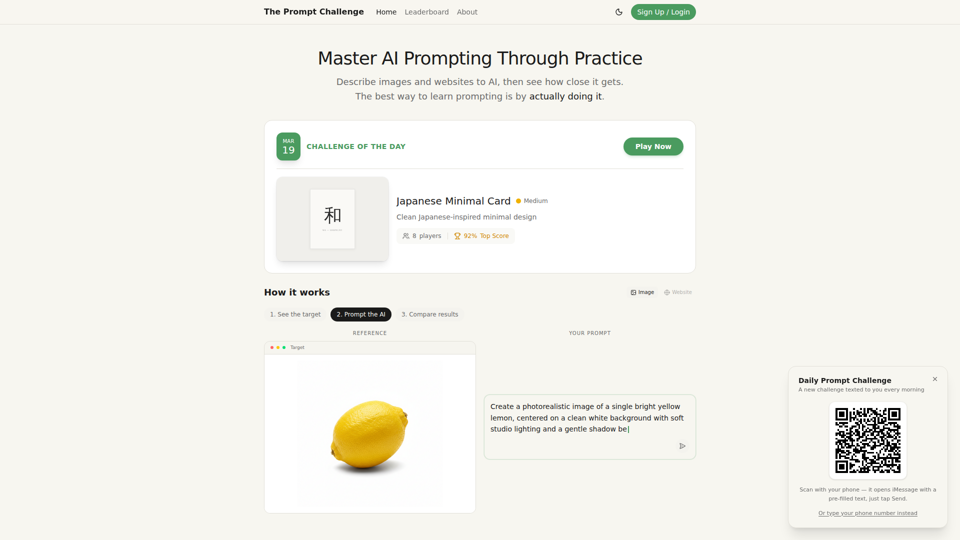
Prompt literacy and AI output evaluation. Teachers who can write precise instructional prompts and critically evaluate AI-generated materials for accuracy, bias, and pedagogical soundness are significantly more effective than those who accept outputs uncritically. This is now a core professional competency.
Data-informed intervention. Reading dashboards, interpreting learning analytics, and translating data signals into targeted instructional decisions is a skill that separates effective teachers in AI-augmented environments from those who are overwhelmed by the information.
Relationship-centered teaching. Motivation, belonging, and trust are the conditions under which learning happens. These are produced by human relationships, not algorithms. Teachers who invest in the relational dimensions of their role — mentorship, emotional attunement, community building — are providing something AI cannot replicate.
Curriculum design and sequencing judgment. AI can generate activities, but it cannot reliably sequence them into a coherent learning arc that accounts for a specific group of students' prior knowledge, misconceptions, and developmental stage. That design judgment remains a human skill.
Skills Becoming Less Important
- Manual rubric construction from scratch for routine assignments
- Formatting and layout work for worksheets, slides, and handouts
- Searching for and compiling supplementary reading materials
- Writing boilerplate administrative text (progress comments, form letters)
- Basic quiz and test item writing for factual recall
- Manual grade calculation and gradebook maintenance
- Rote vocabulary instruction and drill-based practice facilitation (increasingly handled by adaptive platforms like Duolingo for Schools or IXL)
Current AI Adoption in This Industry
Adoption is uneven and moving faster than most district policy frameworks can accommodate. A 2024 survey by the EdWeek Research Center found that roughly 40% of teachers reported using AI tools at least monthly, but fewer than 15% reported receiving formal training on how to use them. The gap between tool availability and pedagogical integration is wide.
At the district level, procurement decisions are being made by administrators who are often evaluating AI platforms on cost and compliance grounds rather than instructional effectiveness. This creates a mismatch: teachers receive tools optimized for administrative efficiency rather than tools designed around instructional workflow.
Higher education is moving faster on AI integration in research and writing-intensive courses, largely because the academic integrity crisis forced the issue. Institutions like Arizona State University and Georgia Tech have deployed AI tutoring systems at scale. Community colleges are experimenting with AI advising tools to address counselor-to-student ratios that can reach 1:1,000.
The most mature AI adoption is in adaptive learning platforms — Khan Academy, IXL, DreamBox — which have been using machine learning for personalized pacing for nearly a decade. What is new is the generative AI layer being added on top of these systems, which changes the nature of student-AI interaction from multiple-choice branching to open-ended dialogue.
Future Workflow Evolution
Within three to five years, the standard teacher workflow in a well-resourced district will likely look like this: AI handles the generation of instructional materials, the first pass of formative assessment feedback, and the aggregation of learning data. The teacher's scheduled time is weighted toward small-group instruction, one-on-one conferencing, project facilitation, and interpreting AI-surfaced insights to make instructional decisions.
This is not a reduction in teacher workload in the near term. It is a reallocation of cognitive effort. The administrative and content-generation tasks that consumed planning time will be compressed, but the expectation of personalization and data responsiveness will expand to fill that space — and then some.
In under-resourced schools, the trajectory is different. AI tools are being positioned as a partial substitute for instructional support staff — reading specialists, math interventionists, instructional coaches — that districts can no longer afford. This creates a two-tier system where AI augments skilled teachers in well-funded schools and partially replaces support infrastructure in underfunded ones.
Common AI Use Cases
Differentiated instruction at scale. A teacher uploads a grade-level text and uses Diffit or a similar tool to generate versions at three different reading levels, with accompanying comprehension questions, in under five minutes. This used to take 45 minutes of manual work or require a reading specialist.
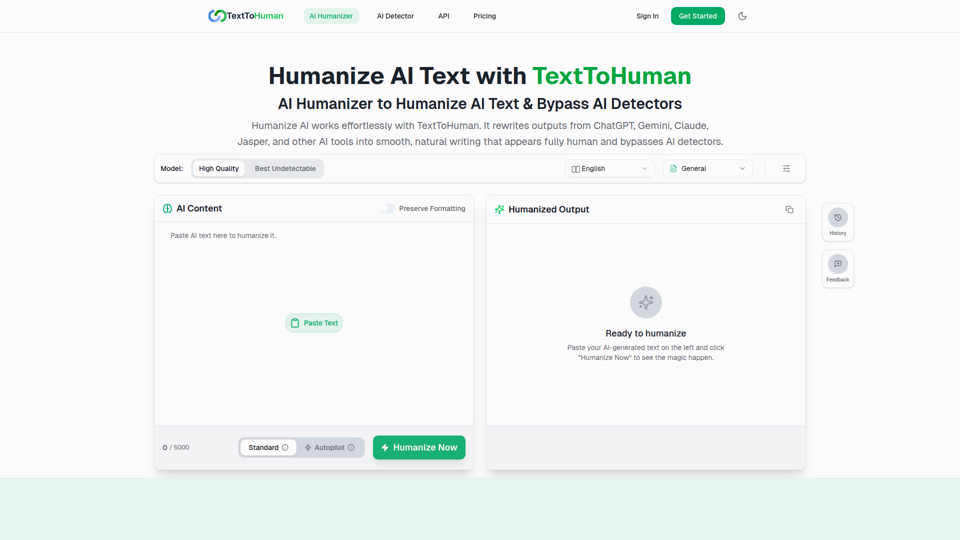
AI-assisted writing feedback. Students submit drafts to a platform with an embedded AI feedback layer. The AI flags structural issues, unclear arguments, and citation gaps before the teacher reads the paper. The teacher's feedback focuses on higher-order thinking rather than surface corrections.
Adaptive practice assignment. A teacher assigns a math topic in IXL or Khan Academy. The platform adjusts problem difficulty in real time based on student responses and surfaces a class-level report showing which students are struggling with which specific sub-skills.
Lesson plan generation and editing. A teacher inputs a learning objective, grade level, and available time into MagicSchool AI. The tool generates a structured lesson plan with a warm-up, direct instruction segment, guided practice, and exit ticket. The teacher edits for context and student-specific needs.
Parent communication drafting. A teacher uses an AI writing assistant to draft a progress update for a student with attendance and engagement concerns. The draft is edited for tone and specificity before sending.
Recommended AI Stack
For lesson planning and material generation:
- MagicSchool AI — purpose-built for educators, with tools for lesson plans, rubrics, differentiation, and IEP support
- Diffit — generates differentiated reading materials from any source text or topic
- Curipod — creates interactive lesson slides with polls, word clouds, and discussion prompts
For writing feedback and academic integrity:
- Turnitin with AI detection and feedback features
- Writable — AI-assisted writing feedback integrated into the assignment workflow
For adaptive practice and learning analytics:
- Khan Academy / Khanmigo — AI tutoring with teacher-facing dashboards
- IXL — adaptive practice with detailed skill-level reporting
- Gradescope — AI-assisted grading for STEM assignments and exams
For administrative and communication tasks:
- Brisk Teaching (Chrome extension) — AI tools embedded directly in Google Classroom workflow
- Canva Magic Write — for visual materials and presentation drafts
For higher education specifically:
- Packback — AI-facilitated discussion boards with quality scoring
- Copilot in Microsoft 365 — for course documentation, syllabus drafting, and email
Risks & Challenges
Academic integrity erosion. The most immediate operational challenge is that students are using generative AI to complete assignments, and detection tools are unreliable. This is forcing a fundamental rethink of what assessable work looks like — shifting toward in-class performance tasks, oral defenses, and process documentation rather than take-home writing.
Deskilling in foundational competencies. There is legitimate concern that students who rely on AI for writing, calculation, and research are not developing the underlying cognitive skills those tasks were designed to build. Teachers are caught between meeting students where they are and maintaining standards that require productive struggle.
Bias in AI-generated content. AI tools trained on general web data reproduce cultural biases, Eurocentric historical framings, and ableist assumptions. Teachers who use AI-generated materials without critical review risk embedding these biases into instruction.
Data privacy and FERPA compliance. Many AI tools used in schools are not FERPA-compliant or have data use policies that conflict with district obligations. Teachers using consumer AI tools with student data are often doing so without realizing the compliance exposure.
Equity of access. AI-augmented instruction requires reliable device access, bandwidth, and teacher training. These are not uniformly available. The risk is that AI accelerates existing achievement gaps rather than closing them.
Teacher displacement framing. Even where AI is genuinely augmenting rather than replacing teachers, the public and political framing of AI as a cost-reduction tool creates labor relations tension and erodes teacher trust in institutional AI initiatives.
Future Outlook (3–5 Years)
The teacher role will not be automated. It will be restructured. The restructuring will be most visible in three areas.
First, the content delivery function of teaching — explaining concepts, providing examples, answering factual questions — will be increasingly handled by AI tutoring systems for independent practice. This will free teacher time but also raise the bar for what live instruction is expected to accomplish. If a student can get a clear explanation of photosynthesis from an AI at any time, the classroom lesson needs to do something the AI cannot: connect the concept to local environmental issues, facilitate a debate, or build the collaborative skills that come from working through a problem with peers.
Second, assessment will shift from summative to continuous. AI systems that track learning in real time will make the traditional end-of-unit test less necessary as a diagnostic tool. Teachers will be expected to use ongoing data to adjust instruction week by week rather than waiting for test results.
Third, the teacher's role as a human anchor in students' lives will become more explicitly valued — and more explicitly part of the job description. As more of the cognitive scaffolding of education is handled by AI, the relational, motivational, and developmental dimensions of teaching will be recognized as the irreplaceable core of the profession. Whether that recognition translates into better compensation and working conditions is a policy question, not a technology question.
Final Insight
The teachers who will thrive in an AI-augmented classroom are not the ones who resist the tools or the ones who adopt them uncritically. They are the ones who understand what learning actually requires — struggle, relationship, feedback, meaning-making — and who use AI to protect and expand the time they spend on those things.
The risk is not that AI replaces teachers. The risk is that AI gets deployed in ways that reduce teaching to a monitoring and compliance function while the genuinely human work of education gets squeezed out by administrative pressure and cost-cutting logic. That outcome is a policy and leadership failure, not a technological inevitability.
The profession's leverage point is clarity about what teachers do that AI cannot: hold a student accountable with compassion, recognize when a child is struggling for reasons that have nothing to do with the curriculum, build the kind of trust that makes a teenager willing to try again after failing. Those capabilities are not features that will be added in the next model release.