
Antiverse: Designing Antibodies For Challenging Targets
Rate this Tool
Average Score
Total Votes
Select your score (1-10):
Detail Information
What
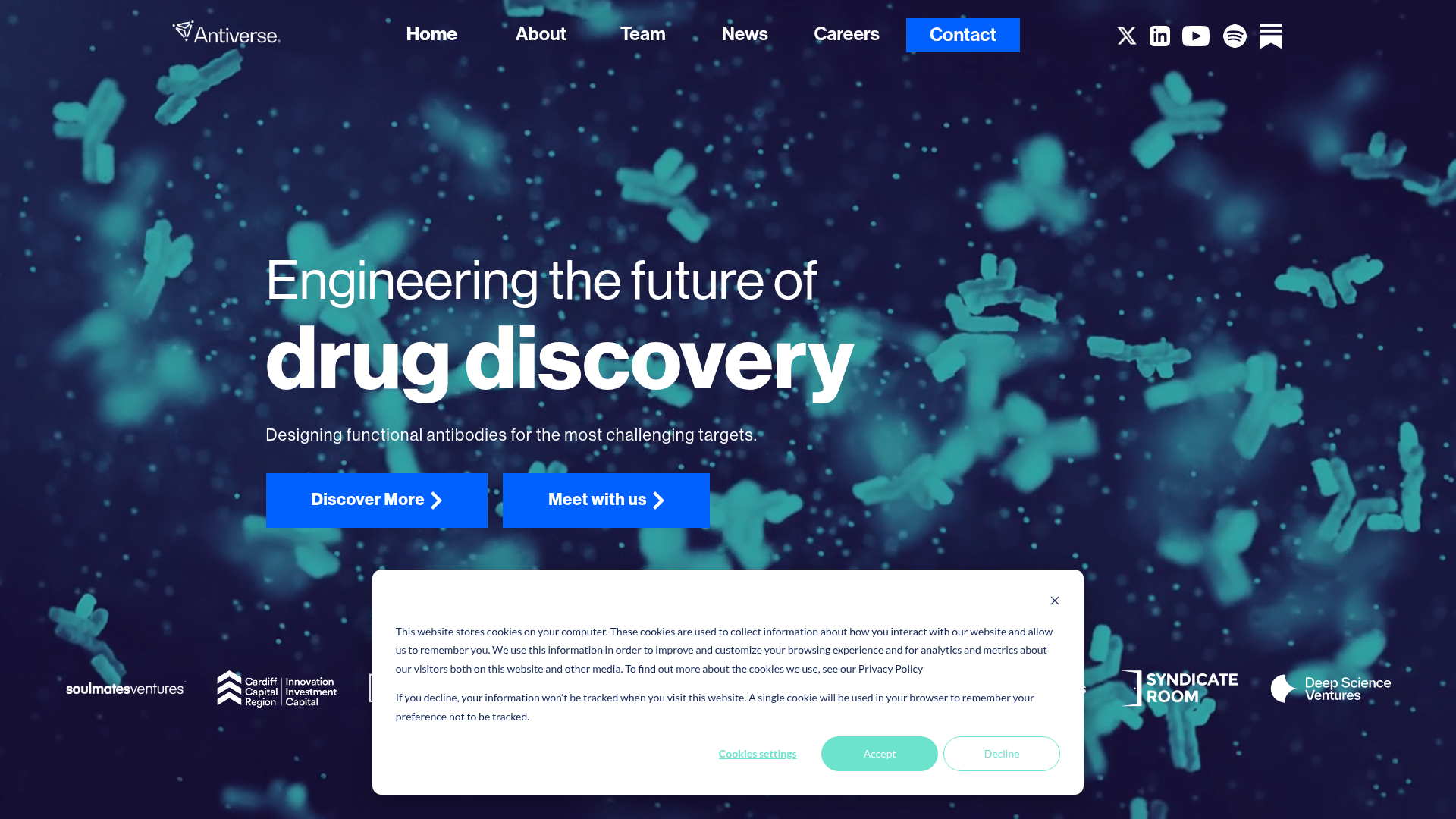
Antiverse appears to be a biotechnology company focused on designing antibodies for difficult or “challenging” targets. Based on the page title, its core offering is likely antibody discovery or design support for targets that are hard to address using conventional approaches.
The provided website content is a privacy policy rather than a product page, so details about the underlying platform, scientific workflow, delivery model, and target customer segments are not explicitly stated. It is reasonable to position Antiverse as a specialist antibody design provider for biotech and pharmaceutical teams, but that should be treated as an inference from the page title rather than a confirmed product description.
Features
- Antibody design focus for challenging targets — The page title indicates a specific emphasis on antibody design where standard target discovery methods may be less effective.
- Website account functionality — The privacy policy references user accounts, suggesting some parts of the website or service may be accessible to registered users.
- Inquiry and request handling — Form submissions are collected and stored so the company can respond to contact requests and service-related inquiries.
- CRM-backed data management — Submitted form data is stored in a customer relationship management system to manage interactions and support follow-up communication.
- Usage monitoring and analytics — The website collects usage data and cookie-based analytics to improve site performance and user experience.
- Preference and session management — Essential, notice-acceptance, and functionality cookies are used to support website operation and remember user choices.
Helpful Tips
- Validate the scientific workflow directly — Because the supplied page does not describe the discovery engine, ask for evidence on how targets are selected, antibodies are designed, and candidates are evaluated.
- Separate website functionality from product capability — Account access, forms, and CRM storage indicate operational maturity for web interactions, but they do not confirm lab, AI, or screening capabilities.
- Clarify engagement model early — For an antibody design provider, confirm whether the company offers software, services, partnered discovery, or end-to-end candidate generation.
- Request target-class examples — In this category, usefulness often depends on performance with membrane proteins, complex epitopes, or other hard biology; the current source does not provide that detail.
- Review data handling for collaboration readiness — The privacy policy describes collection and storage of submitted information, which is relevant if project discussions may involve sensitive research context.
OpenClaw Skills
A likely OpenClaw fit would be as a research-orchestration layer around Antiverse’s antibody design work. For example, OpenClaw agents could help biopharma teams intake target dossiers, summarize literature, structure target risk assessments, and prepare discovery briefs before engagement with a specialist antibody design provider. This would be a likely workflow use case rather than a confirmed native integration, since the source page does not mention APIs or platform connectivity.
OpenClaw could also support downstream decision-making by building skills for program tracking, competitor landscape mapping, assay-readiness planning, and cross-functional reporting for antibody discovery teams. In practice, that combination could help translational research, platform biology, and early therapeutic development teams move from fragmented manual analysis toward a more structured target-to-candidate workflow, even if Antiverse itself is delivered primarily as a scientific service rather than an integrated software platform.
Embed Code
Share this AI tool on your website or blog by copying and pasting the code below. The embedded widget will automatically update with the latest information.
<iframe src="https://www.aimyflow.com/ai/antiverse-io/embed" width="100%" height="400" frameborder="0"></iframe>
Explore Similar Tools
Profluent
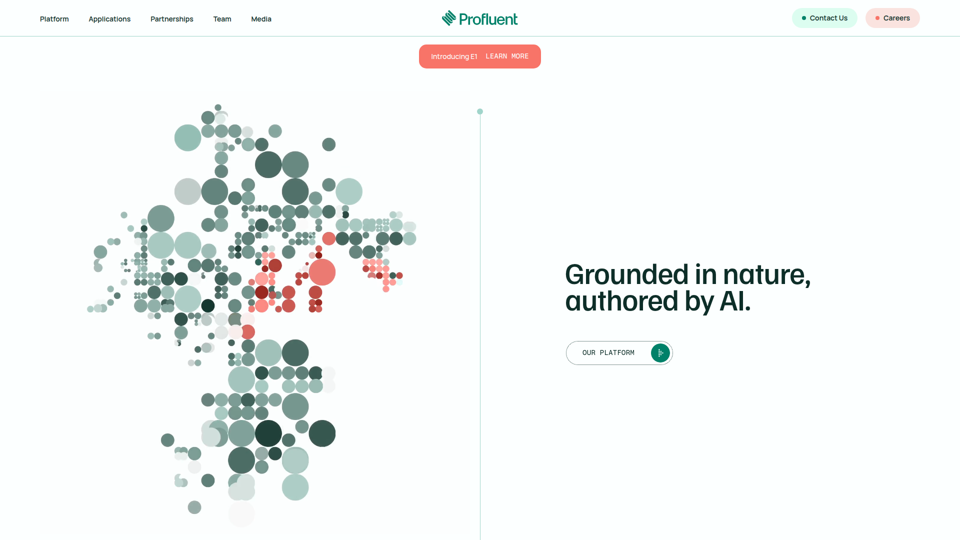
Profluent is an AI protein design platform that helps biology teams author new proteins and gene editors for applications in medicine, agriculture, and industrial enzymes. For molecular biologists, bioengineers, and drug discovery teams, AI-designed proteins can speed exploration of novel therapeutic and gene editing candidates beyond natural scaffolds.
HELIOPOLIS BIOTECH - Protein Design, Antibody Design
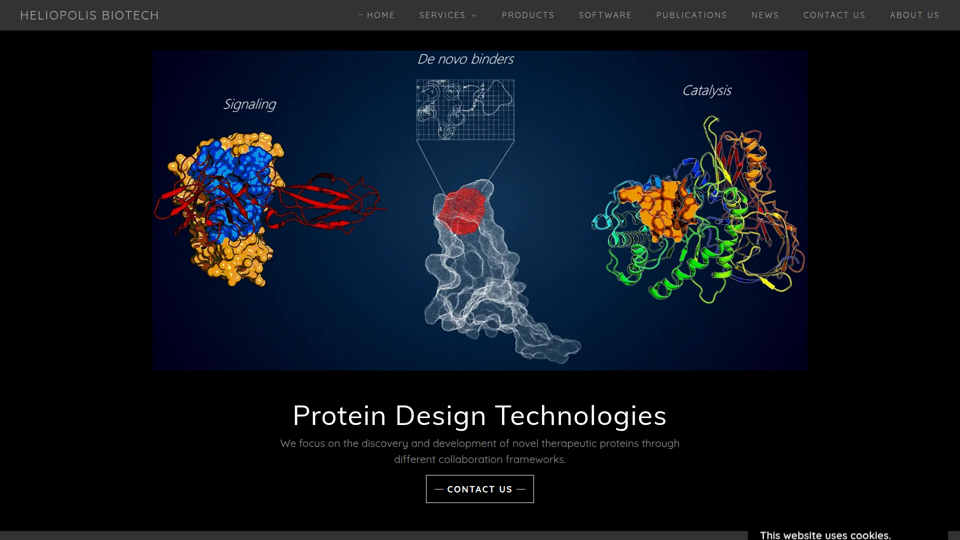
Heliopolis Biotech is a protein and antibody design company that uses computational algorithms and experimental characterization to help biotechnology and drug discovery teams develop novel therapeutic proteins, binders, and redesigned proteins. In AI-driven therapeutic R&D, this kind of platform can help protein engineers and discovery scientists move faster from molecular design to preclinical candidate evaluation.

ProteinQure
ProteinQure is a clinical-stage biotech company that designs novel peptide-based therapeutics and tissue-specific delivery systems using its AI-driven ProteinStudio platform, mainly for drug discovery teams and biopharma partners developing precision medicines. For oncology and translational research professionals, its computational peptide design approach can help accelerate development of targeted therapies with more precise payload delivery.
Menten AI
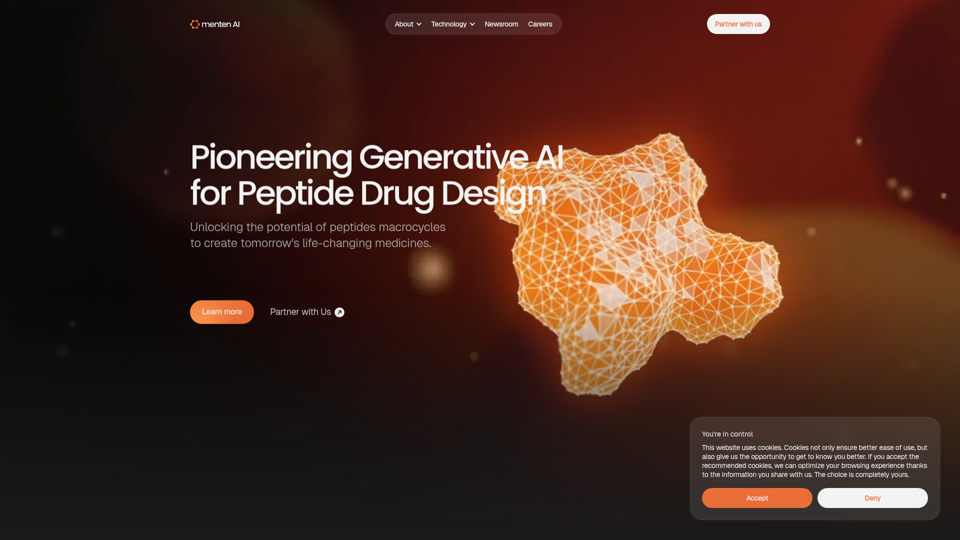
Menten AI is a generative AI platform for peptide macrocycle drug design that helps teams design and optimize peptides for complex targets, mainly for pharmaceutical and drug discovery researchers. For medicinal chemists and computational biology teams, it can speed preclinical candidate discovery by combining generative models with physics-based and quantum simulations.
Cradle
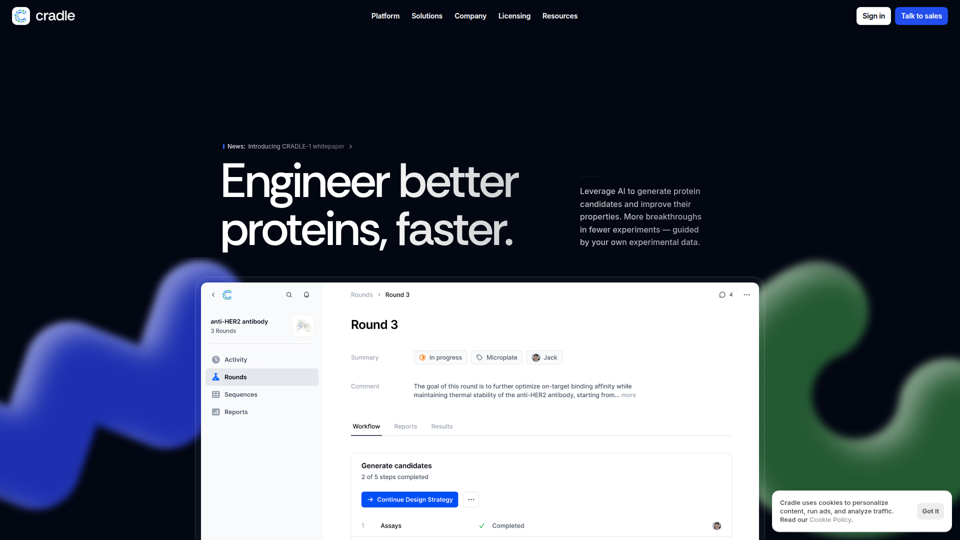
Cradle is an AI platform for protein engineering that helps biopharma and industrial bio R&D teams generate and optimize protein candidates using their own experimental data. For protein engineers and R&D scientists, it can shorten design-build-test cycles by learning from each assay round to support faster multi-property optimization with fewer experiments.
JURA Bio, Inc.
JURA Bio is a biotechnology company that builds foundation models for therapeutic design, helping teams discover and develop candidates by running AI-guided wet-lab cycles that generate proprietary functional data, mainly for drug discovery and therapeutic R&D organizations. For researchers in biologics and early-stage development, this AI-driven lab data loop can improve candidate design on hard targets and novel modalities where public datasets and generic models are limited.
Generate:Biomedicines | Home
Generate:Biomedicines is a therapeutics company that uses machine learning, biological engineering, and medicine through its Generate Platform to design and develop novel protein-based medicines, mainly for drug discovery and biopharma teams. For researchers and therapeutic developers, this AI-driven generative biology approach can shorten design-test cycles and support more targeted protein engineering in medicine development.
10x Science: AI-Native Software for Scientists
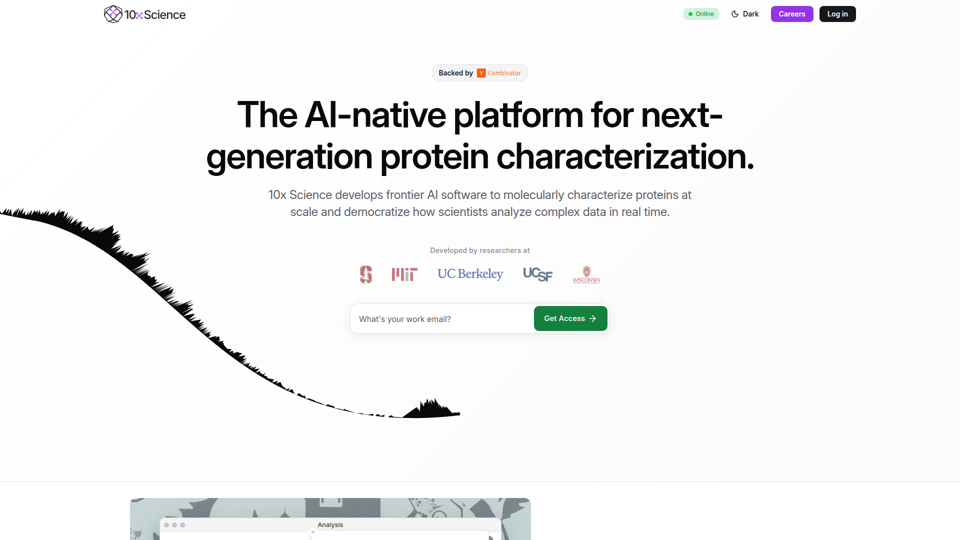
10x Science is AI-native software for scientists that helps characterize proteins and analyze omics data at scale, with features for peptide mapping, de novo sequencing, PTM detection, and proteoform analysis, especially for protein therapeutics workflows. For protein scientists and analytical teams, this can speed interpretation of complex mass spectrometry data and help reveal sequence variants or modifications that conventional tools may miss.