
Profluent
Rate this Tool
Average Score
Total Votes
Select your score (1-10):
Detail Information
What
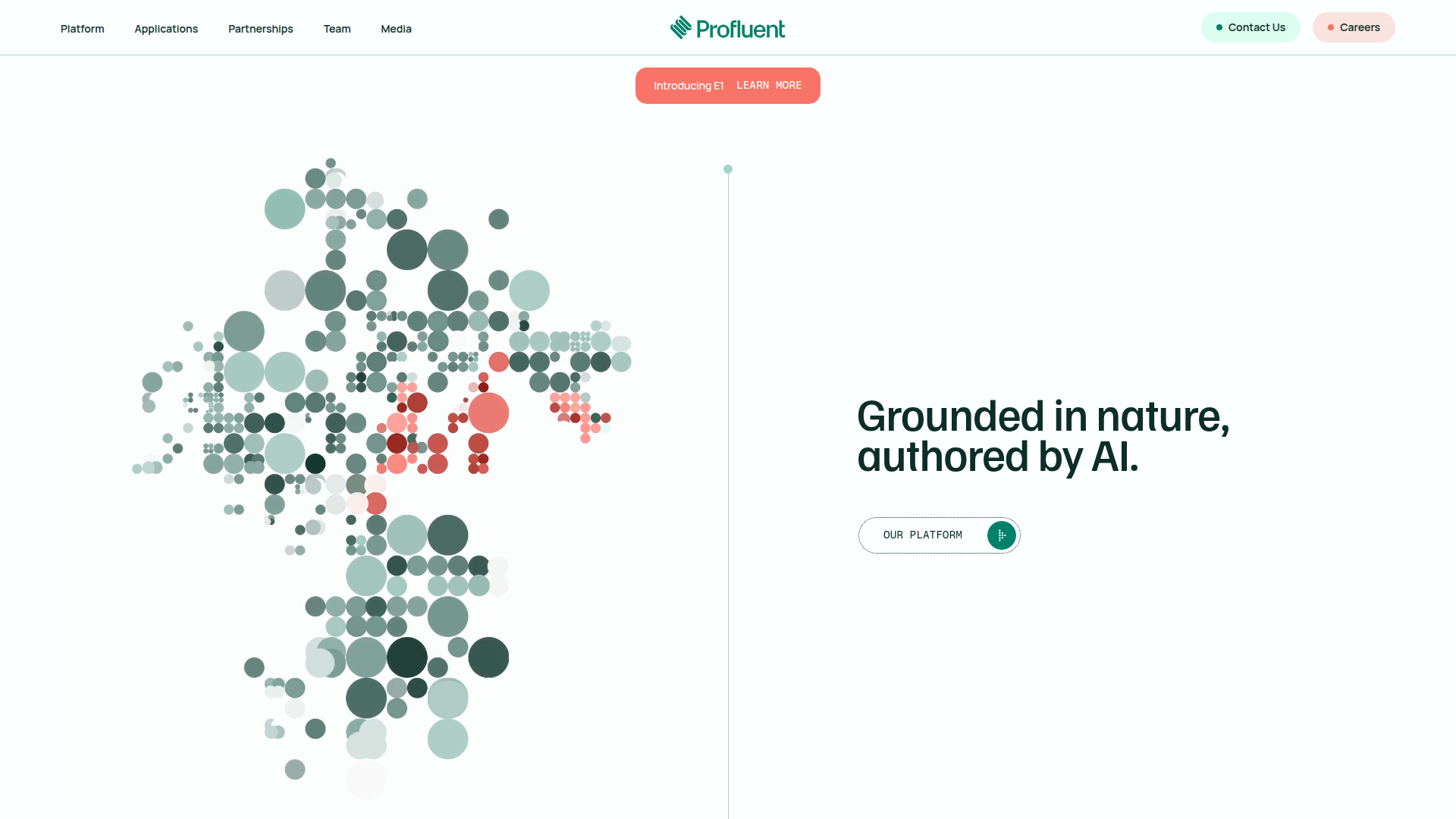
Profluent is an AI-driven protein design company focused on creating new proteins for use in medicine, agriculture, and other biological applications. Its platform is positioned around “authoring” biology with AI, including proteins inspired by natural scaffolds and proteins designed from scratch.
The company appears to serve biotechnology, life sciences, and research-oriented partners that need novel biological tools or engineered proteins. Based on the page, the core workflow is using machine learning and biology expertise to design proteins for specific functions, with OpenCRISPR presented as a flagship example of an AI-designed gene editor.
Features
- AI-based protein design — Profluent uses AI to write proteins, which can help teams explore new biological designs beyond traditional discovery methods.
- Natural-scaffold and de novo design approaches — The platform supports proteins derived from existing biological patterns as well as designs created from scratch, giving flexibility in how candidates are generated.
- OpenCRISPR gene editor development — The company highlights OpenCRISPR as the first AI-designed gene editor, showing a concrete application of its design approach in gene editing.
- Cross-industry application focus — Profluent positions its protein design work for therapeutics, industrial enzymes, agriculture, and related fields, suggesting broad applicability of the underlying platform.
- Partnership-oriented model — The site emphasizes partnerships, indicating that Profluent likely works with external organizations to apply its protein design capabilities to specific innovation programs.
- Interdisciplinary team foundation — The company combines machine learning and biology expertise, which is important for translating generative models into practical protein design efforts.
Helpful Tips
- Validate where the platform ends and services begin — The page presents strong technical positioning, but it does not clearly separate self-serve software, collaborative research, and partnership delivery models.
- Ask for evidence on downstream performance — For protein design platforms, the key evaluation criteria are usually experimental validation, function, safety, and manufacturability, none of which are detailed here.
- Clarify the development stage by application area — Gene editing, therapeutics, and industrial enzymes have very different requirements, so buyers should confirm which use cases are exploratory versus mature.
- Review partnership structure early — Since partnerships are a prominent part of the site, teams should understand IP ownership, design responsibilities, and experimental validation roles before engaging.
- Assess model-to-lab workflow — The page describes AI authorship, but it does not explain screening, iteration, or wet-lab integration, which are critical for practical adoption in this category.
OpenClaw Skills
Within the OpenClaw ecosystem, Profluent would likely fit as a high-value source of structured scientific outputs and program knowledge rather than a simple transactional SaaS tool. Likely OpenClaw skills could include partnership research agents that summarize Profluent’s platform focus, application-mapping agents that match protein design use cases to industry problems, and scientific briefing workflows that organize information on OpenCRISPR, AI-designed proteins, and target markets for internal teams.
A more advanced likely use case would be combining Profluent-related data with OpenClaw agents for biotech scouting, R&D landscape analysis, and technical due diligence. For pharmaceutical, agricultural, or industrial biotech teams, this could shift work from manual review of platform claims and scientific positioning toward agent-assisted opportunity mapping, helping strategy, BD, and research teams evaluate where AI-authored proteins may create practical advantages.
Embed Code
Share this AI tool on your website or blog by copying and pasting the code below. The embedded widget will automatically update with the latest information.
<iframe src="https://www.aimyflow.com/ai/profluent-bio/embed" width="100%" height="400" frameborder="0"></iframe>
Explore Similar Tools
HELIOPOLIS BIOTECH - Protein Design, Antibody Design
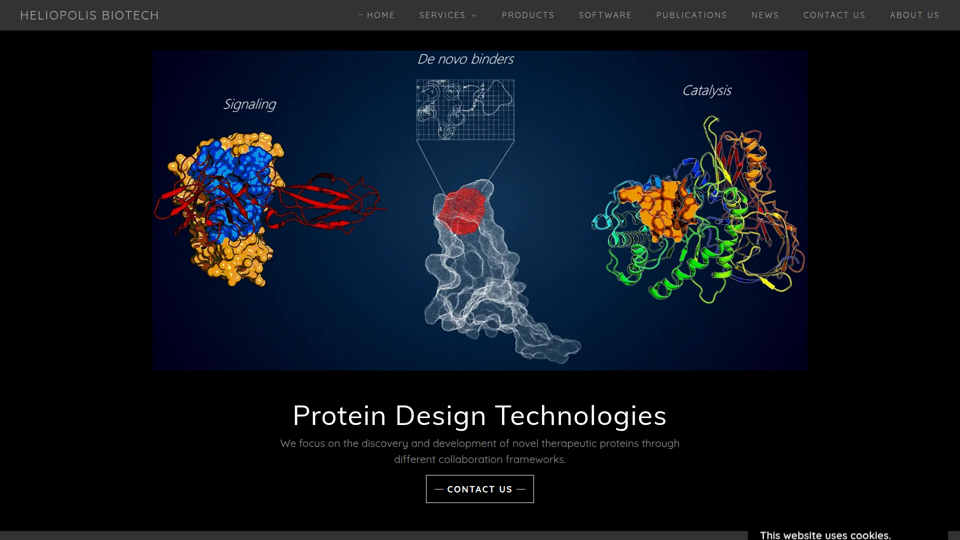
Heliopolis Biotech is a protein and antibody design company that uses computational algorithms and experimental characterization to help biotechnology and drug discovery teams develop novel therapeutic proteins, binders, and redesigned proteins. In AI-driven therapeutic R&D, this kind of platform can help protein engineers and discovery scientists move faster from molecular design to preclinical candidate evaluation.

ProteinQure
ProteinQure is a clinical-stage biotech company that designs novel peptide-based therapeutics and tissue-specific delivery systems using its AI-driven ProteinStudio platform, mainly for drug discovery teams and biopharma partners developing precision medicines. For oncology and translational research professionals, its computational peptide design approach can help accelerate development of targeted therapies with more precise payload delivery.
Menten AI
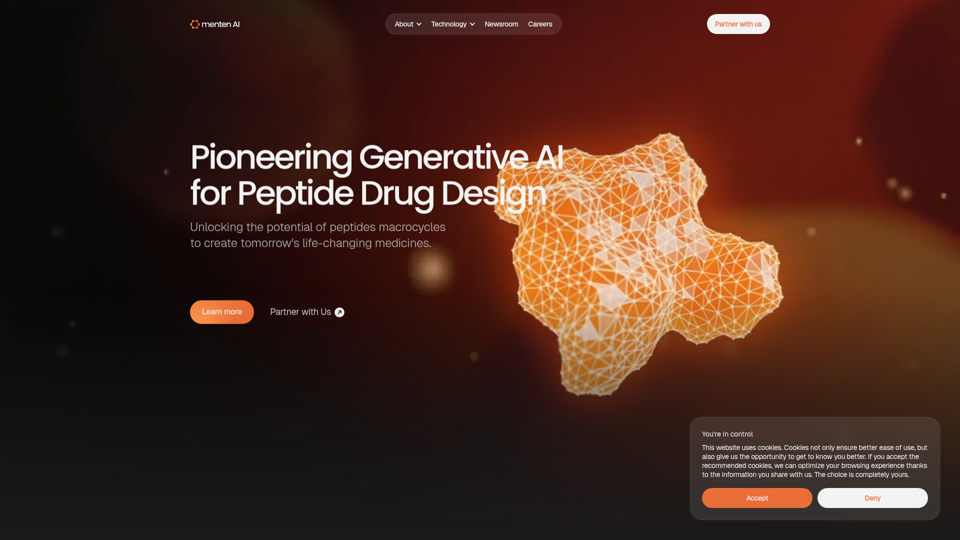
Menten AI is a generative AI platform for peptide macrocycle drug design that helps teams design and optimize peptides for complex targets, mainly for pharmaceutical and drug discovery researchers. For medicinal chemists and computational biology teams, it can speed preclinical candidate discovery by combining generative models with physics-based and quantum simulations.
Cradle
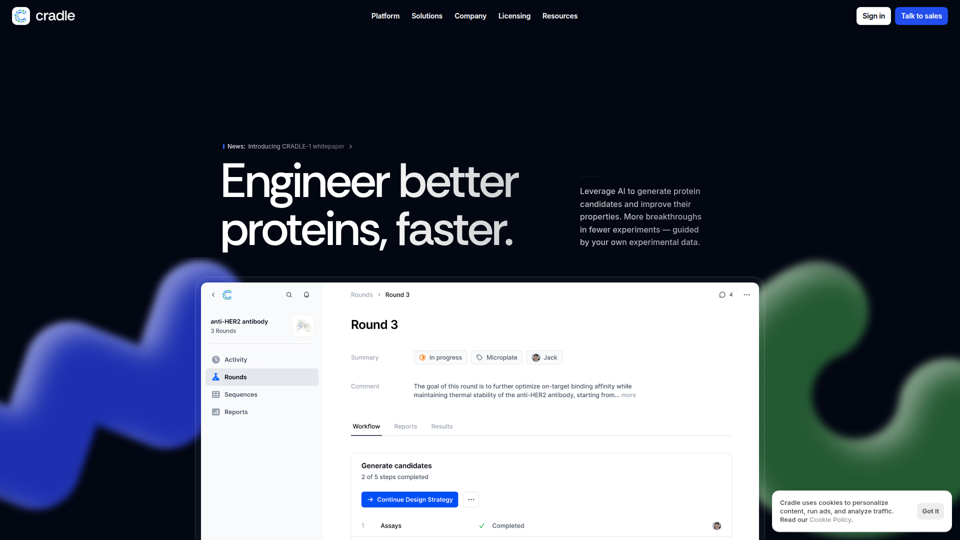
Cradle is an AI platform for protein engineering that helps biopharma and industrial bio R&D teams generate and optimize protein candidates using their own experimental data. For protein engineers and R&D scientists, it can shorten design-build-test cycles by learning from each assay round to support faster multi-property optimization with fewer experiments.
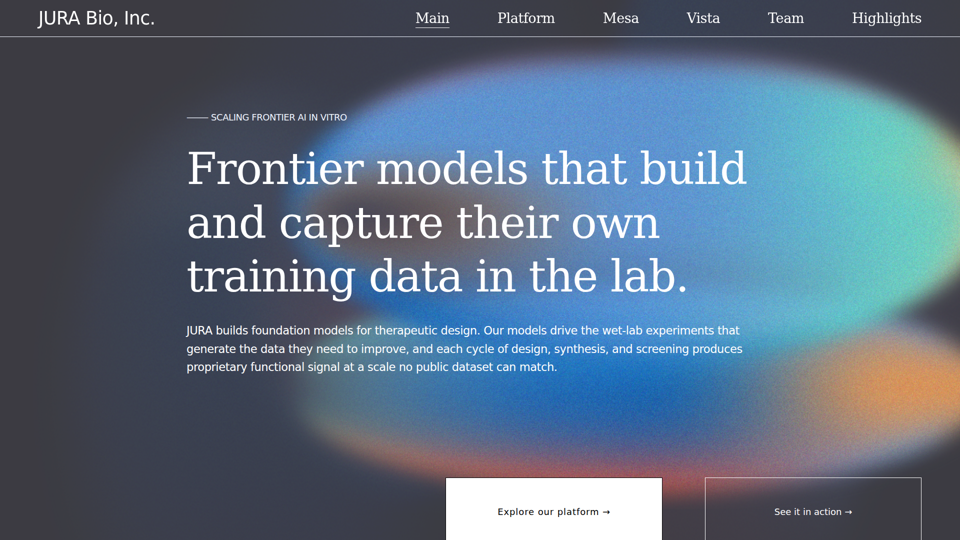
JURA Bio, Inc.
JURA Bio is a biotechnology company that builds foundation models for therapeutic design, helping teams discover and develop candidates by running AI-guided wet-lab cycles that generate proprietary functional data, mainly for drug discovery and therapeutic R&D organizations. For researchers in biologics and early-stage development, this AI-driven lab data loop can improve candidate design on hard targets and novel modalities where public datasets and generic models are limited.
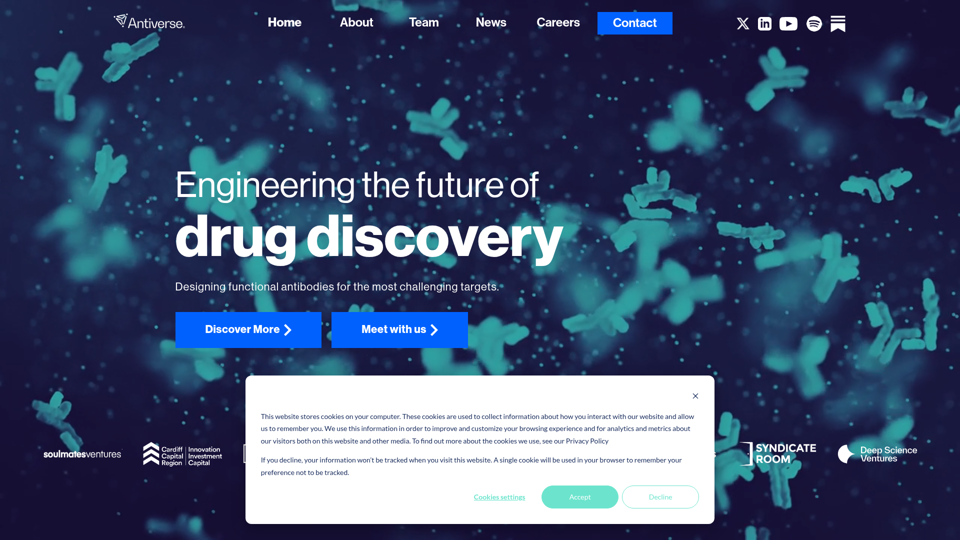
Antiverse: Designing Antibodies For Challenging Targets
Antiverse is a machine learning-driven antibody design platform focused on helping drug discovery teams design antibodies for challenging targets in therapeutic development. In AI-enabled biologics R&D, this can help antibody discovery scientists and computational biology teams prioritize candidates more efficiently when tackling hard-to-address targets.
Generate:Biomedicines | Home
Generate:Biomedicines is a therapeutics company that uses machine learning, biological engineering, and medicine through its Generate Platform to design and develop novel protein-based medicines, mainly for drug discovery and biopharma teams. For researchers and therapeutic developers, this AI-driven generative biology approach can shorten design-test cycles and support more targeted protein engineering in medicine development.
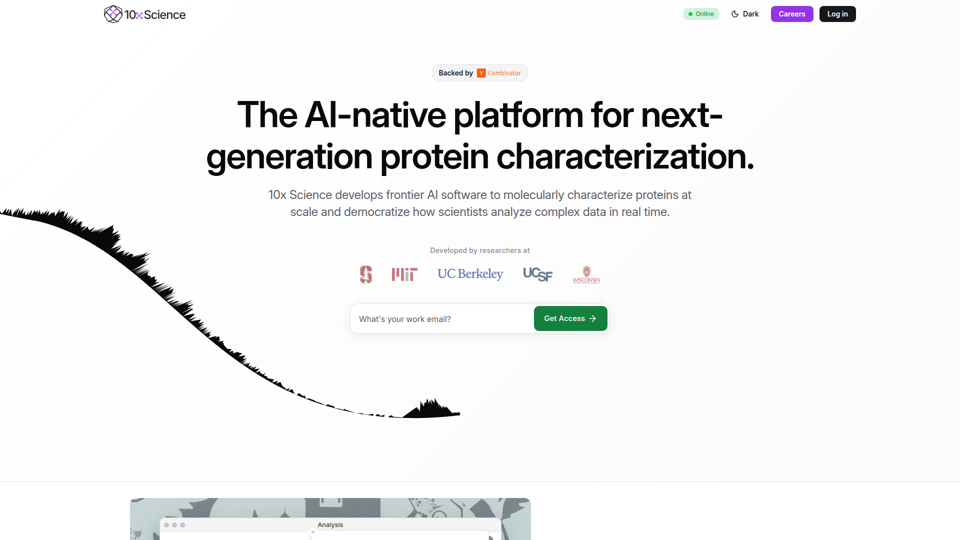
10x Science: AI-Native Software for Scientists
10x Science is AI-native software for scientists that helps characterize proteins and analyze omics data at scale, with features for peptide mapping, de novo sequencing, PTM detection, and proteoform analysis, especially for protein therapeutics workflows. For protein scientists and analytical teams, this can speed interpretation of complex mass spectrometry data and help reveal sequence variants or modifications that conventional tools may miss.