
Generate SQL Queries in Seconds for Free - SQLAI.ai
Rate this Tool
Average Score
Total Votes
Select your score (1-10):
Detail Information
What
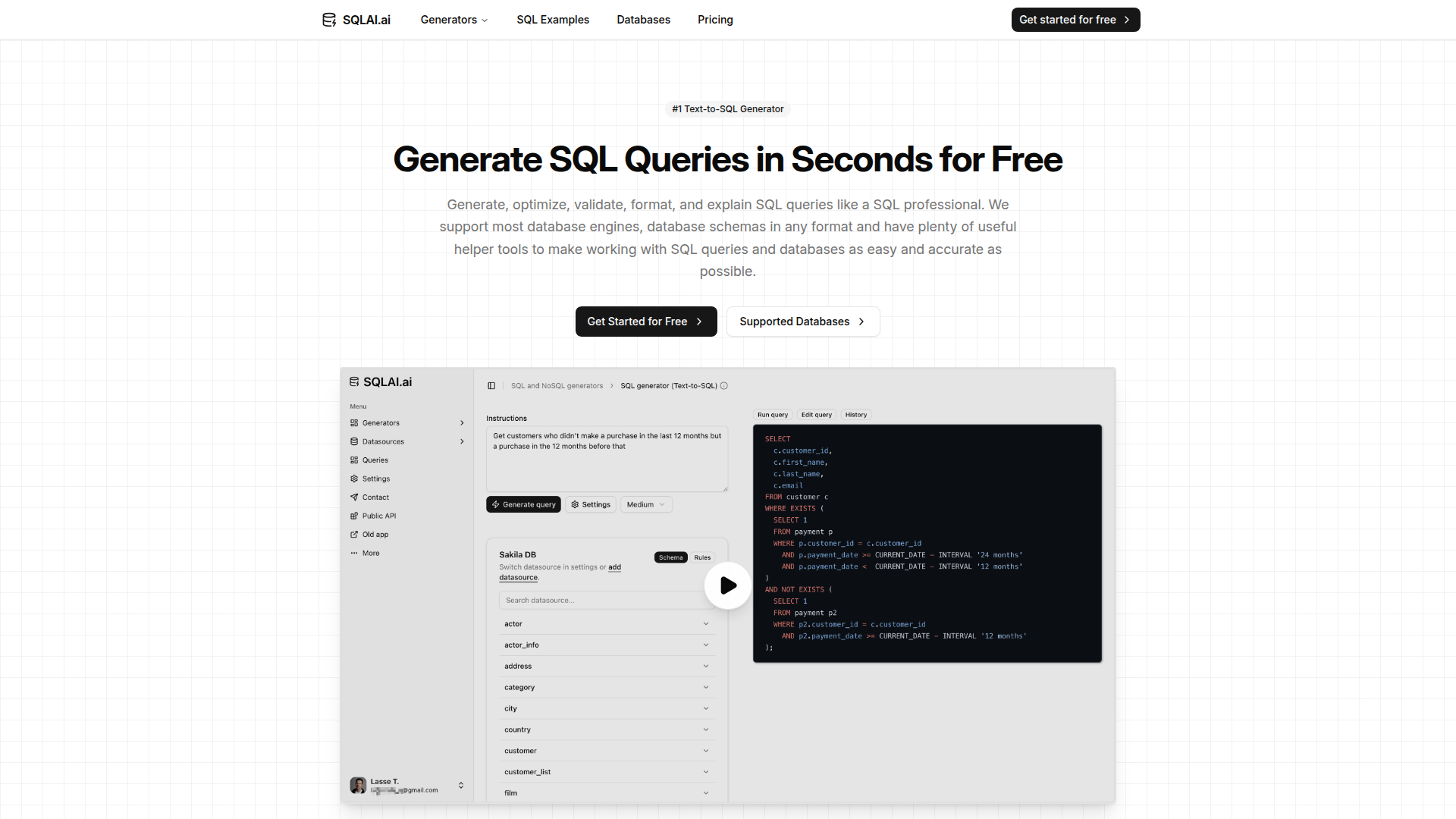
SQLAI.ai is an AI-assisted SQL workbench focused on turning natural-language requirements into SQL or NoSQL queries, then helping users optimize, validate, format, explain, and run those queries. It is aimed at analysts, engineers, DBAs, product teams, and other data professionals who need to move from business intent to production-ready query logic with fewer manual steps.
The product appears positioned as a broad SQL productivity layer rather than a single-purpose text-to-SQL tool. Its workflow combines prompt-based query generation, schema-aware assistance, source-specific rules, execution against connected data sources, and helper tools for review and refinement across 30+ database and analytics engines.
Features
- Natural-language query generation: Converts plain English or other languages into SQL and NoSQL queries, which helps users draft anything from simple selects to more complex joins and aggregations faster.
- Schema-aware data sources: Lets users import schemas or connect directly to databases so the AI can use table and column context to improve output accuracy.
- SQL optimization with reasoning: Suggests performance-focused rewrites and explains the changes, giving teams a practical way to improve slow queries while reviewing why the edits matter.
- Syntax validation and AI-assisted fixes: Detects query errors and proposes corrections with explanations, which can reduce debugging time and help users understand engine-specific issues.
- Formatting, explanation, and diff review: Formats SQL for readability, explains query logic step by step, and shows side-by-side diffs so teams can inspect AI changes before accepting them.
- Execution and editing workflow: Supports running generated queries on connected data sources and refining them in a VS Code-style editor, combining AI assistance with manual control.
Helpful Tips
- Test schema handling early: For products like this, practical value depends heavily on how accurately schemas are imported and maintained across environments, so evaluate that workflow before wider rollout.
- Define source-level rules: If your team works across multiple engines, reusable rules for quoting, row limits, and style can improve consistency and reduce prompt ambiguity.
- Use explanation and diff features for review: These tools are especially useful in teams where SQL is shared across analysts, engineers, and stakeholders with different levels of query expertise.
- Validate engine coverage for your stack: The site lists broad database support, but buyers should confirm the exact behavior they need for their specific engine, dialect, and edge cases.
- Keep human review in the loop: Even with validation and optimization support, production SQL should still be checked for business logic, access patterns, and performance on real data.
OpenClaw Skills
SQLAI.ai could fit well into the OpenClaw ecosystem as a likely query-generation and query-review component inside data workflows. An OpenClaw skill could take a business question from Slack, a ticketing system, or an analytics request form, enrich it with approved schema context, send it through a text-to-SQL flow, and return a draft query plus explanation, diff, and validation notes for human approval. If direct native integration is not stated on the page, this should be treated as a likely orchestration use case rather than a confirmed built-in connection.
A broader OpenClaw agent pattern could combine SQLAI.ai with documentation, BI, and governance workflows. For example, an analytics agent could translate stakeholder questions into SQL, compare revisions, generate plain-English logic summaries, and route final queries into dashboards or review queues. For data teams, this kind of combination could shift work away from repetitive query drafting and syntax debugging toward higher-value review, modeling, and decision support.
Embed Code
Share this AI tool on your website or blog by copying and pasting the code below. The embedded widget will automatically update with the latest information.
<iframe src="https://www.aimyflow.com/ai/aihelperbot-com/embed" width="100%" height="400" frameborder="0"></iframe>
Explore Similar Tools
Bright Data for AI – Connect Your AI to the Web
Bright Data for AI is a web data platform that helps AI teams search, crawl, extract, and collect structured real-time and training data from the web through APIs, remote browsers, datasets, and automation tools. For AI engineers, data scientists, and agent builders, it can reduce the effort of building web access and data acquisition pipelines so they can focus more on model behavior and application logic.
Autonomous AI for Data Teams | Databricks
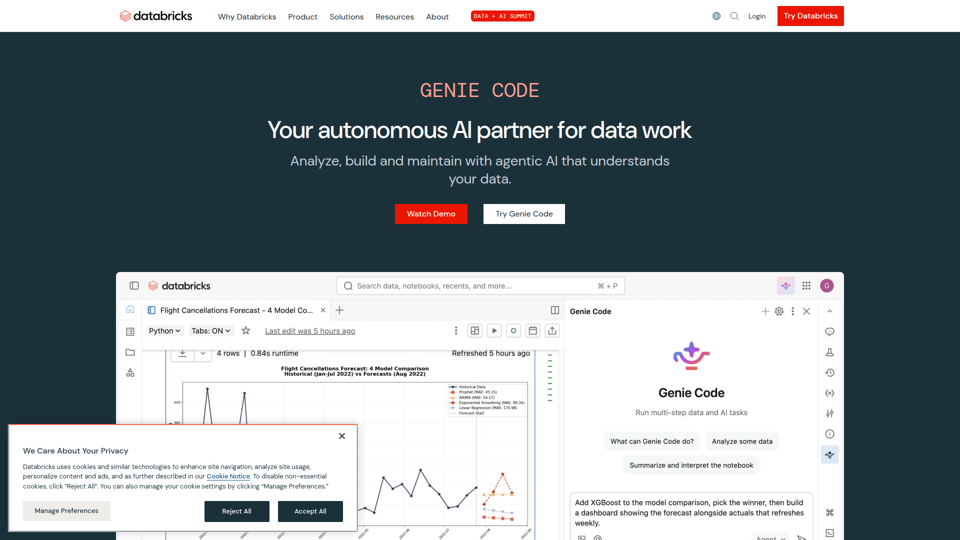
Databricks Genie Code is an autonomous AI tool in the Databricks workspace that helps data teams plan, execute, and maintain data science, machine learning, data engineering, analytics, and dashboard workflows using natural language and enterprise data context. For data engineers, data scientists, and analysts, it can reduce manual orchestration by grounding work in governed metadata and proactively supporting production pipelines, models, and BI assets.
BlazorData - Home
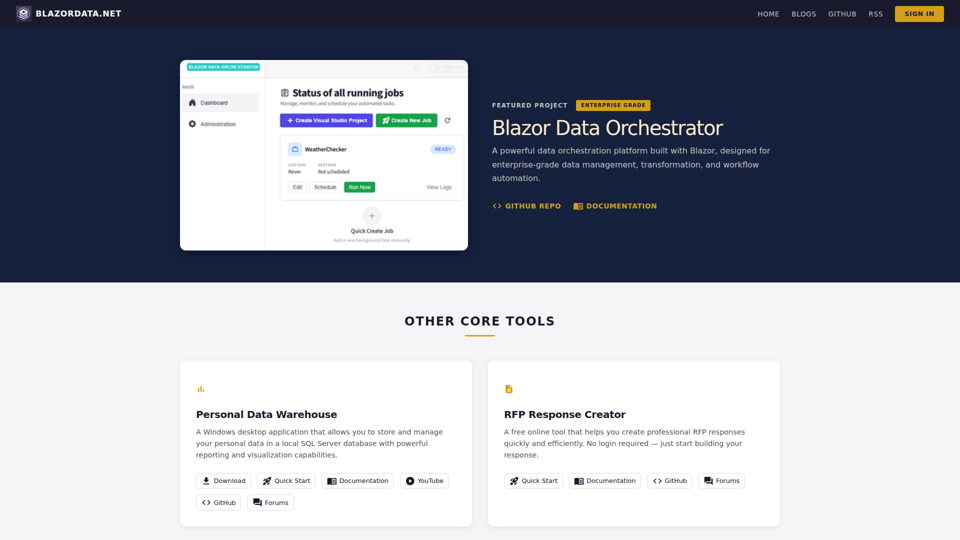
BlazorData is a Blazor-based data orchestration platform for enterprise-grade data management, transformation, and workflow automation, mainly aimed at teams handling structured data processes in business or technical environments. In AI-era workflows, it can help data and operations professionals organize cleaner, more reliable pipelines that support automation and downstream analysis.
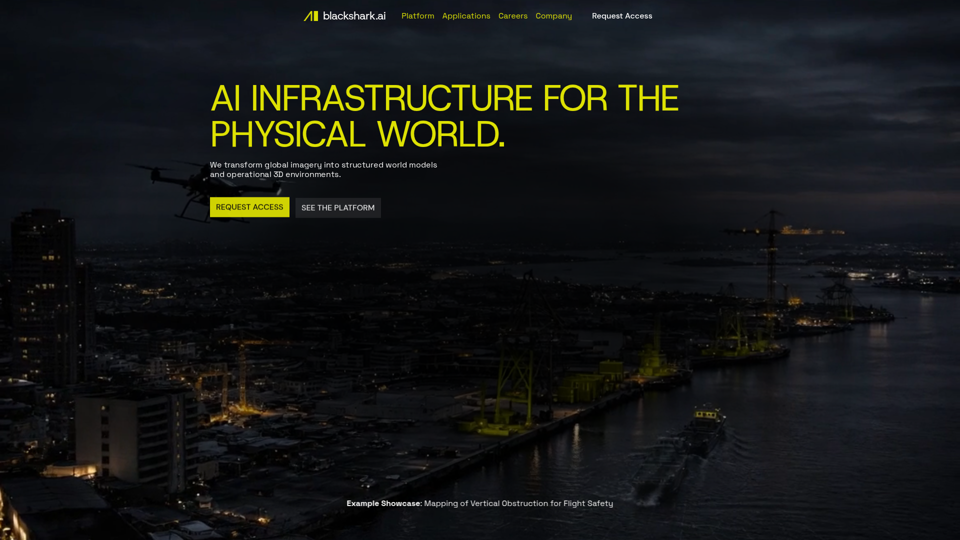
Blackshark.ai - AI Infrastructure for the Physical World
Blackshark.ai is an AI geospatial infrastructure platform that turns satellite, aerial, drone, and sensor imagery into structured world models and simulation-ready 3D environments for government and enterprise teams working with large-scale physical-world data. For geospatial analysts, disaster response planners, and simulation teams, it can speed change detection, situational awareness, and AI training by converting massive imagery streams into operational intelligence.
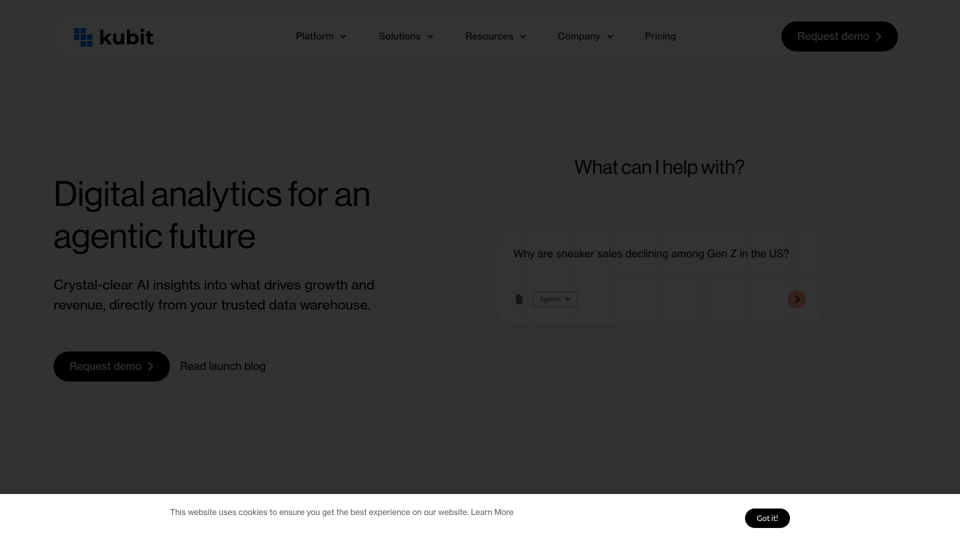
Homepage | Kubit
Warehouse-native analytics that query Snowflake, Databricks, BigQuery, and ClickHouse directly. Real-time, governed insights with explainable AI.
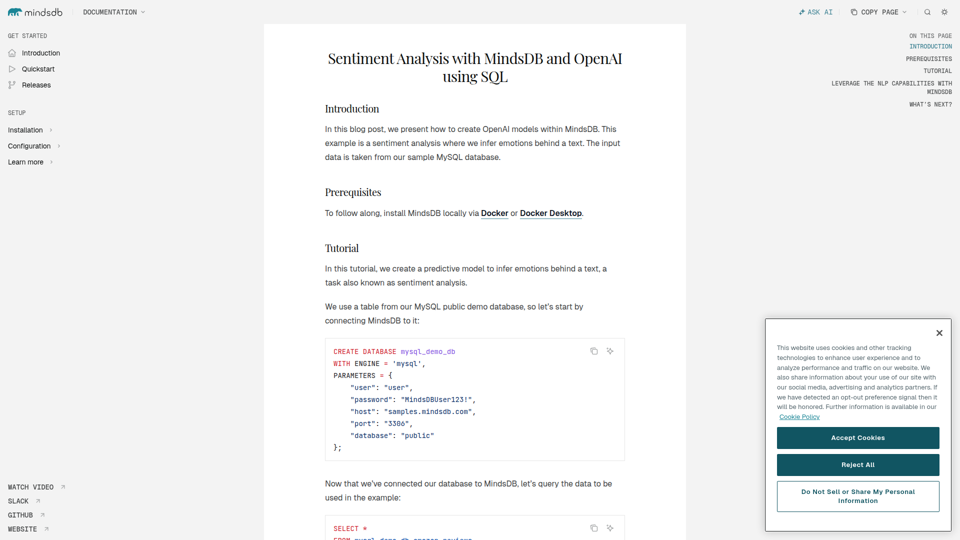
Sentiment Analysis with MindsDB and OpenAI using SQL - MindsDB
This MindsDB tutorial shows developers how to use SQL to create an OpenAI-powered sentiment analysis model inside a database and classify text reviews as positive, neutral, or negative. For data engineers and application developers, this approach can speed up adding AI text analysis to database workflows without building a separate machine learning pipeline.

OSSUS
OSSUS is a self-healing data infrastructure platform that helps organizations turn fragmented records into trusted, agent-ready systems of truth, mainly for teams responsible for data and AI foundations. As AI adoption grows, it can help data, analytics, and engineering professionals improve reliability by giving AI systems cleaner, more dependable information to work from.
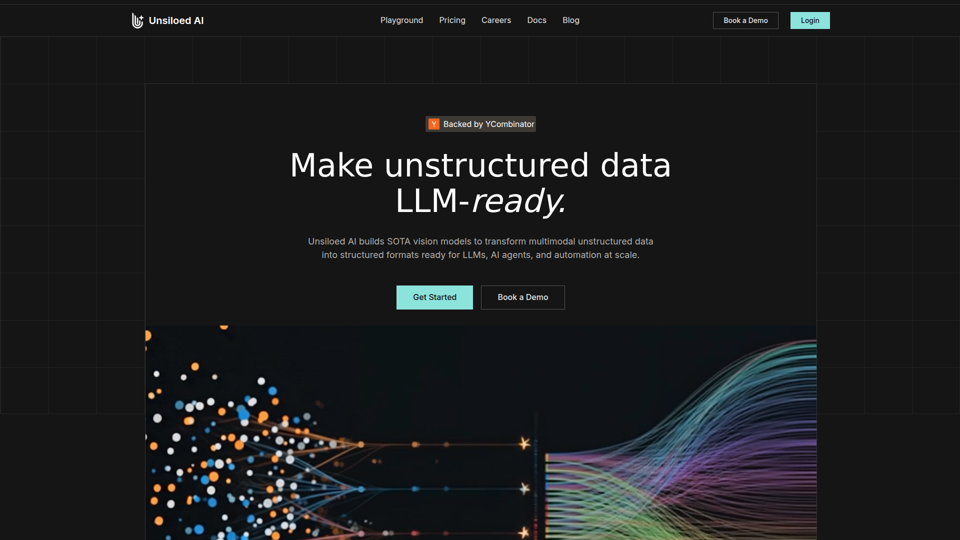
Unsiloed AI
Unsiloed AI is a document processing platform that turns multimodal unstructured data like PDFs, spreadsheets, slides, and images into structured JSON or Markdown for LLMs, AI agents, and automation, mainly for developers, AI engineers, and data teams in accuracy-critical enterprises. In AI workflows, it can help data engineering, ML, and operations teams reduce manual parsing work and improve retrieval quality by preserving document structure, hierarchy, and domain context.