
Sentiment Analysis with MindsDB and OpenAI using SQL - MindsDB
Rate this Tool
Average Score
Total Votes
Select your score (1-10):
Detail Information
What
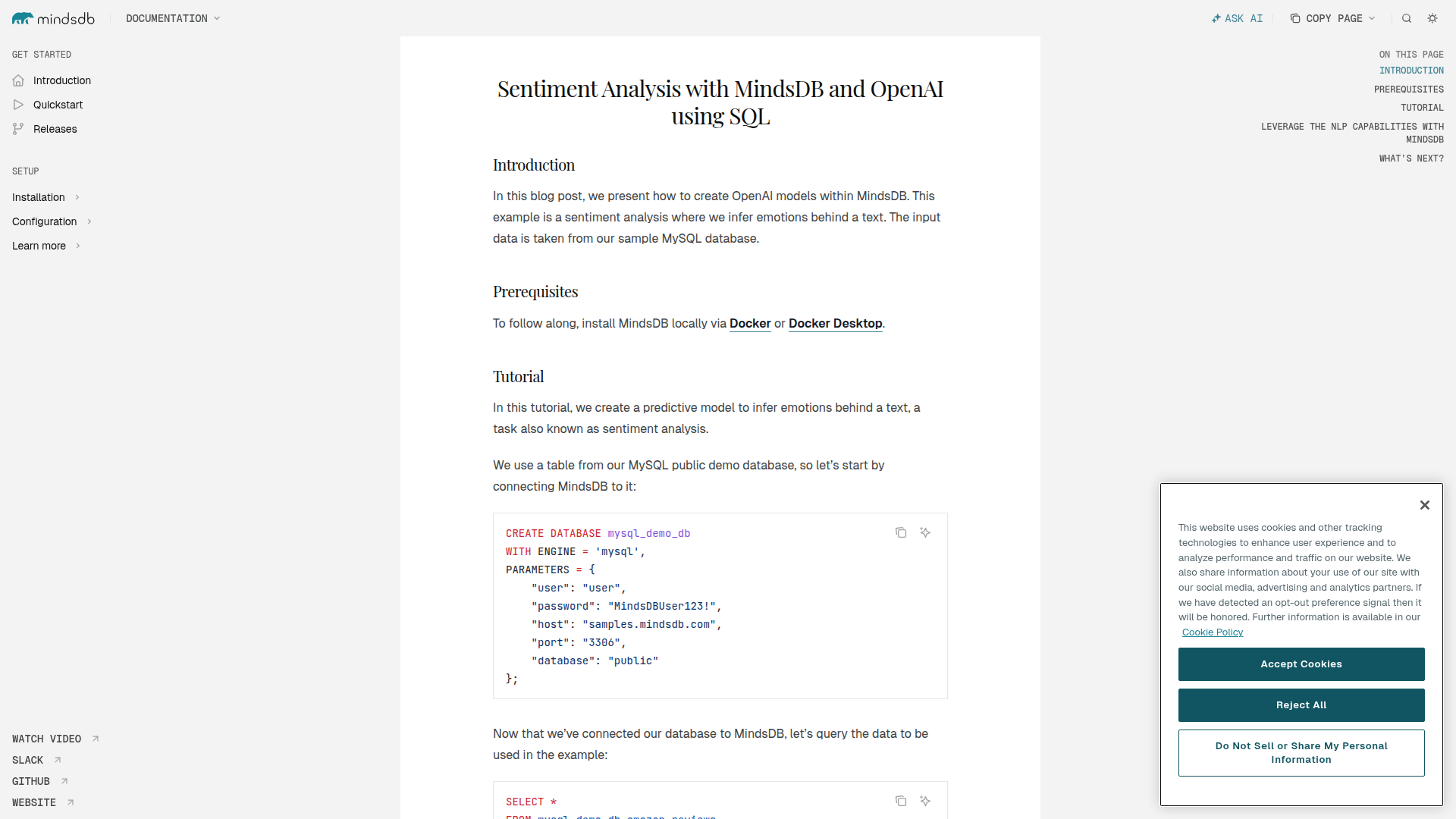
MindsDB is an applied machine learning platform that lets developers create and query AI models with SQL. In this example, it is used to build a sentiment analysis model powered by OpenAI, using review text from a MySQL database and returning labels such as positive, neutral, or negative.
The workflow shown is aimed at developers and data teams that want NLP capabilities close to their data layer instead of building a separate ML pipeline. Based on the page, MindsDB is positioned as an open-source platform for connecting data sources and ML engines, then exposing predictive models as queryable tables inside projects.
Features
- SQL-based model creation: You can create an OpenAI-backed sentiment model with
CREATE MODEL, which reduces the need for separate model-serving code. - Database connectivity: MindsDB connects to a MySQL database and uses table data directly, making it practical for teams already working in SQL environments.
- Custom prompt templates: The
prompt_templateparameter lets users define how text should be classified, including explicit label constraints such as positive, neutral, or negative. - AI tables for inference: Once created, the model behaves like an AI table that can be queried with direct input values for single predictions.
- Batch prediction through joins: The model can be joined with source tables to classify many rows of text in one SQL query.
- Project-based organization: Models live inside MindsDB projects, which helps separate artifacts by predictive task, although the page only briefly describes this structure.
Helpful Tips
- Treat this page as a tutorial, not a full product specification: It demonstrates sentiment analysis and OpenAI model creation, but it does not fully document governance, monitoring, or production deployment details.
- Design prompts carefully: The example relies on a tightly scoped prompt with explicit output labels, which is important for making SQL-based NLP workflows more predictable.
- Validate outputs on real data: Even with simple sentiment classes, review text can be mixed or ambiguous, so teams should test model behavior on representative samples before broader rollout.
- Plan for engine setup and credentials: The workflow requires creating an OpenAI engine with an API key, so operational setup and secret handling should be considered early.
- Use joins for scalable enrichment: For production-style use cases, joining the AI table to existing review or support-text tables is likely more practical than issuing one-off prediction queries.
OpenClaw Skills
This product is a strong candidate for OpenClaw skills centered on SQL-native text analysis. A likely use case would be an OpenClaw agent that monitors incoming reviews, support tickets, survey comments, or marketplace feedback, then routes text into MindsDB-powered sentiment classification and returns structured outputs to downstream workflows. The page does not mention a native OpenClaw integration, so this should be treated as an inferred workflow pattern rather than a confirmed capability.
Combined with OpenClaw, MindsDB could support multi-step agents for voice-of-customer analysis, support triage, brand monitoring, or product feedback summarization. For example, an OpenClaw workflow could trigger on new records in a database, call a MindsDB sentiment model, group negative responses by product or theme, and hand results to other agents for escalation or reporting. For data and operations teams, that kind of setup could shift sentiment analysis from an ad hoc analyst task to a repeatable operational layer embedded in everyday data processes.
Embed Code
Share this AI tool on your website or blog by copying and pasting the code below. The embedded widget will automatically update with the latest information.
<iframe src="https://www.aimyflow.com/ai/mindsdb-com-natural-language-processing-in-databases/embed" width="100%" height="400" frameborder="0"></iframe>
Explore Similar Tools
Bright Data for AI – Connect Your AI to the Web
Bright Data for AI is a web data platform that helps AI teams search, crawl, extract, and collect structured real-time and training data from the web through APIs, remote browsers, datasets, and automation tools. For AI engineers, data scientists, and agent builders, it can reduce the effort of building web access and data acquisition pipelines so they can focus more on model behavior and application logic.
Autonomous AI for Data Teams | Databricks
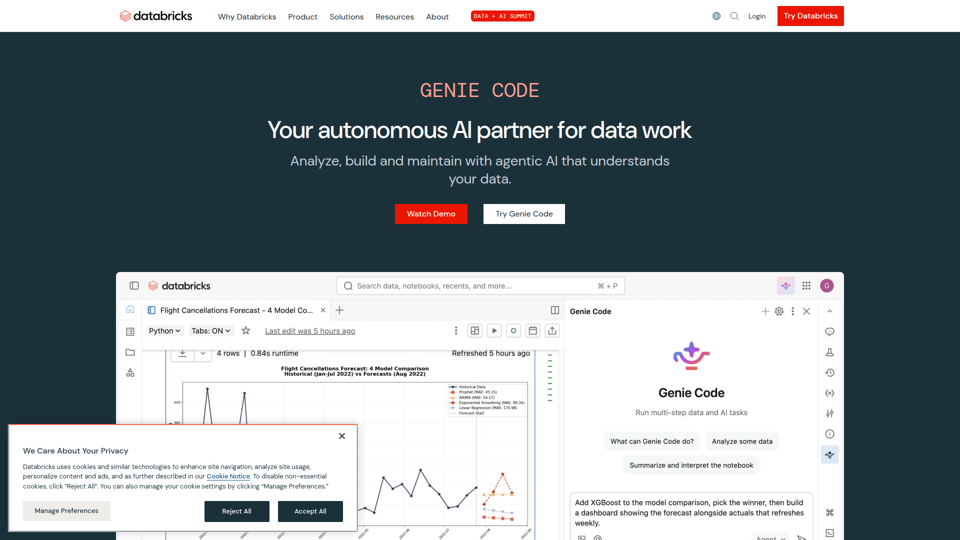
Databricks Genie Code is an autonomous AI tool in the Databricks workspace that helps data teams plan, execute, and maintain data science, machine learning, data engineering, analytics, and dashboard workflows using natural language and enterprise data context. For data engineers, data scientists, and analysts, it can reduce manual orchestration by grounding work in governed metadata and proactively supporting production pipelines, models, and BI assets.
BlazorData - Home
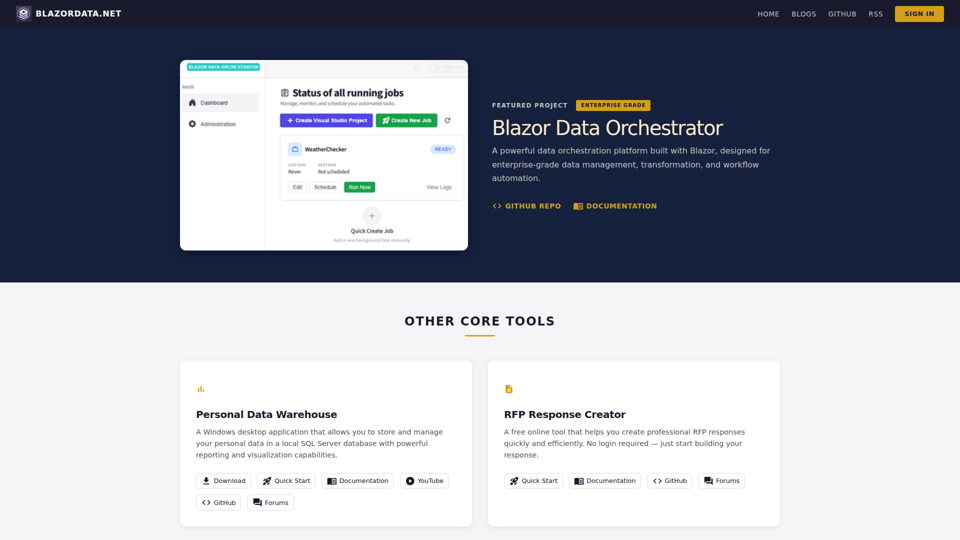
BlazorData is a Blazor-based data orchestration platform for enterprise-grade data management, transformation, and workflow automation, mainly aimed at teams handling structured data processes in business or technical environments. In AI-era workflows, it can help data and operations professionals organize cleaner, more reliable pipelines that support automation and downstream analysis.

Blackshark.ai - AI Infrastructure for the Physical World
Blackshark.ai is an AI geospatial infrastructure platform that turns satellite, aerial, drone, and sensor imagery into structured world models and simulation-ready 3D environments for government and enterprise teams working with large-scale physical-world data. For geospatial analysts, disaster response planners, and simulation teams, it can speed change detection, situational awareness, and AI training by converting massive imagery streams into operational intelligence.
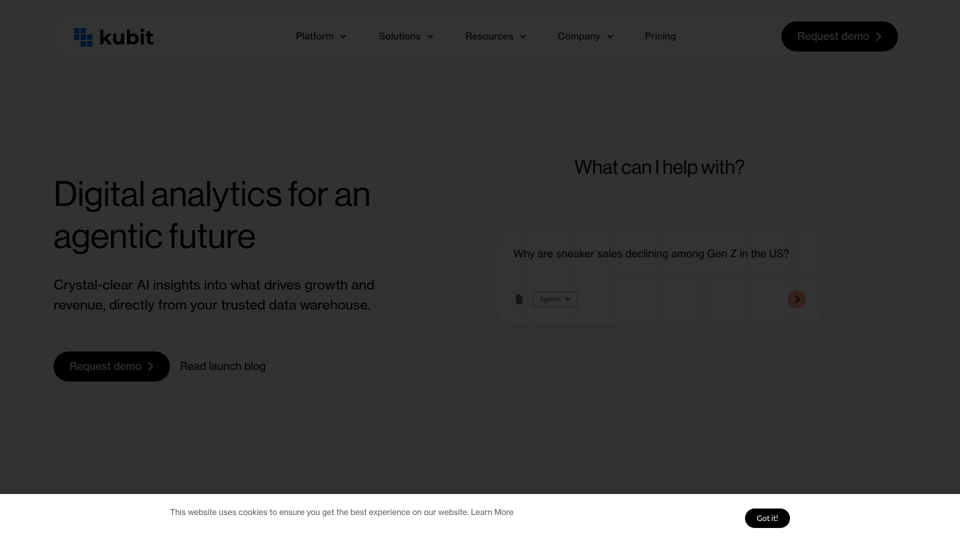
Homepage | Kubit
Warehouse-native analytics that query Snowflake, Databricks, BigQuery, and ClickHouse directly. Real-time, governed insights with explainable AI.
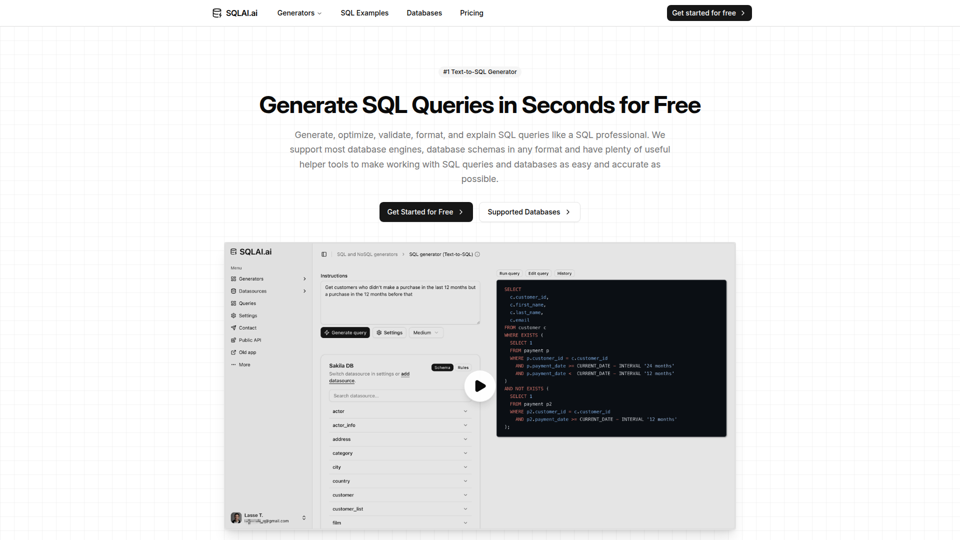
Generate SQL Queries in Seconds for Free - SQLAI.ai
SQLAI.ai is an AI SQL assistant that helps analysts, data engineers, developers, and data teams generate, optimize, validate, format, explain, and run SQL or NoSQL queries from natural language across many database engines. For analytics and engineering work, it can shorten query drafting and review cycles by combining schema-aware generation with validation and readable explanations.

OSSUS
OSSUS is a self-healing data infrastructure platform that helps organizations turn fragmented records into trusted, agent-ready systems of truth, mainly for teams responsible for data and AI foundations. As AI adoption grows, it can help data, analytics, and engineering professionals improve reliability by giving AI systems cleaner, more dependable information to work from.
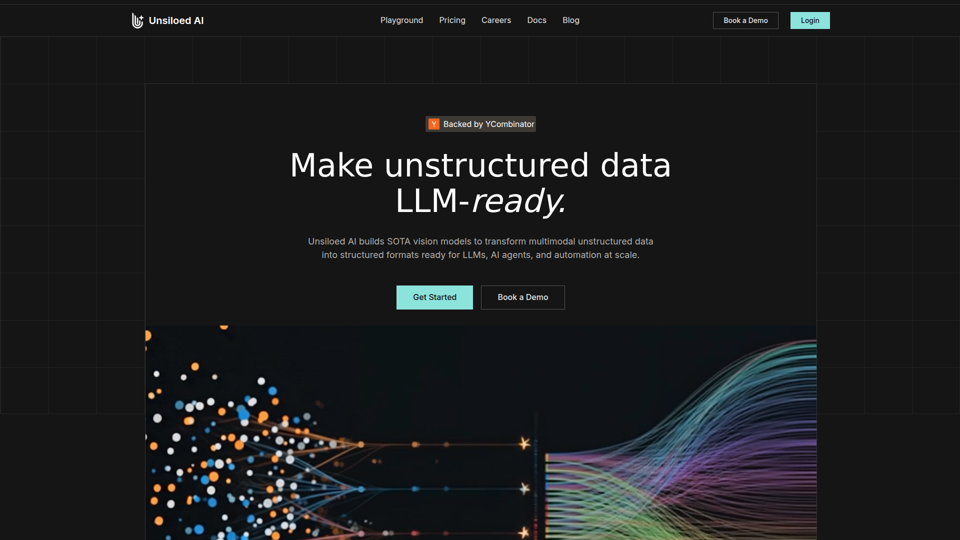
Unsiloed AI
Unsiloed AI is a document processing platform that turns multimodal unstructured data like PDFs, spreadsheets, slides, and images into structured JSON or Markdown for LLMs, AI agents, and automation, mainly for developers, AI engineers, and data teams in accuracy-critical enterprises. In AI workflows, it can help data engineering, ML, and operations teams reduce manual parsing work and improve retrieval quality by preserving document structure, hierarchy, and domain context.