
BlazorData - Home
Rate this Tool
Average Score
Total Votes
Select your score (1-10):
Detail Information
What
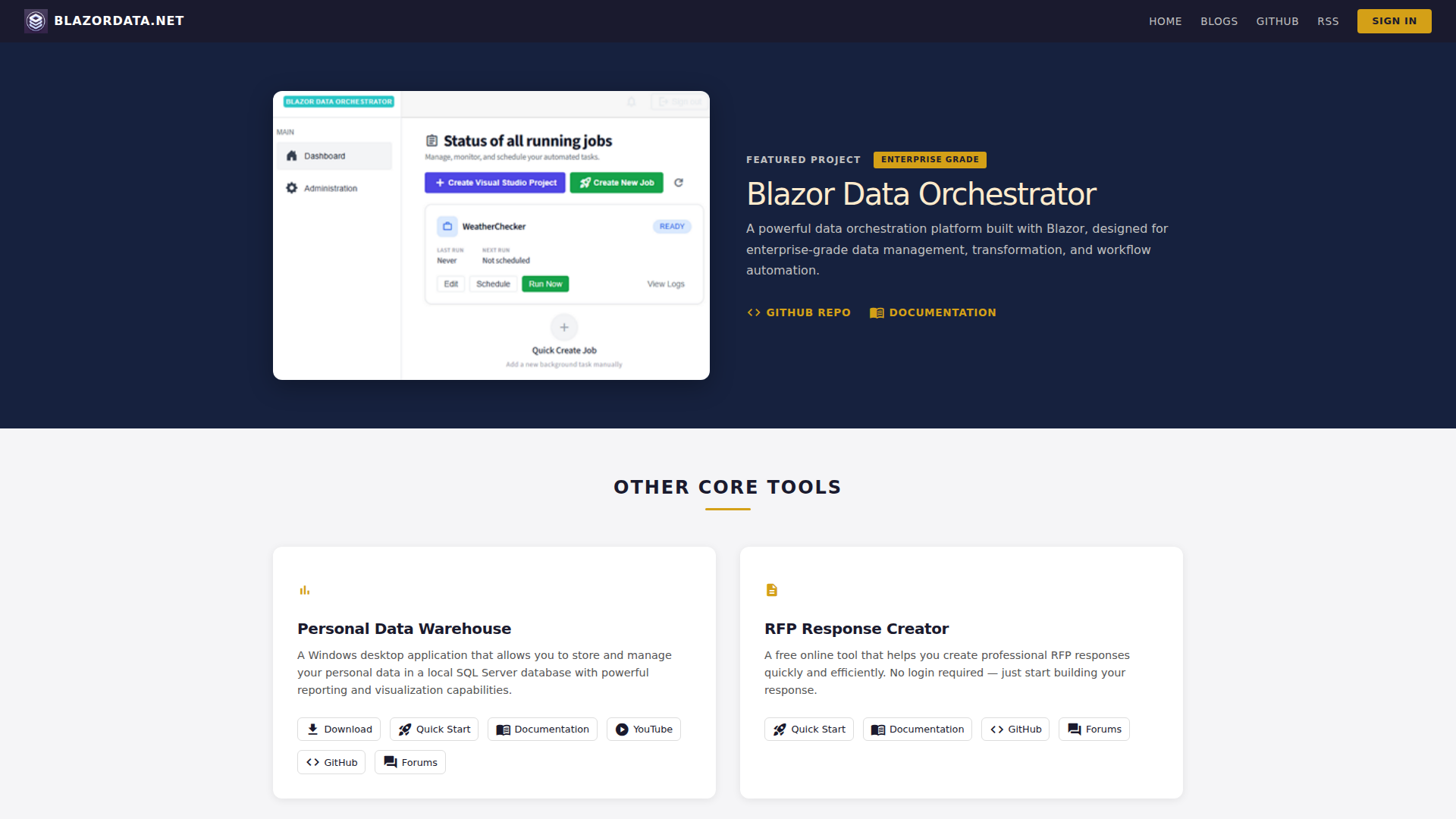
Blazor Data Orchestrator is presented as an enterprise-grade data orchestration platform built with Blazor. It is intended for data management, transformation, and workflow automation, suggesting a focus on coordinating data-related processes rather than serving as a simple single-purpose utility.
Based on the homepage, it appears aimed at teams or organizations that need structured handling of data workflows in enterprise settings. The site positions it as the featured project within the BlazorData portfolio, alongside other tools for personal data storage and RFP response creation, which suggests the orchestrator is likely the flagship platform in the product set.
Features
- Data orchestration platform — The product is designed to organize and run data-centric processes in a more coordinated way across management and transformation tasks.
- Data management support — It is positioned to help handle enterprise data operations, indicating a structured environment for working with data assets.
- Data transformation focus — The homepage explicitly mentions transformation, which implies support for preparing or reshaping data as part of operational workflows.
- Workflow automation — The platform is intended to automate workflow steps, which can reduce manual handoffs in recurring data processes.
- Blazor-based application architecture — Being built with Blazor may matter for organizations that prefer modern .NET web application approaches or want alignment with that ecosystem.
- Documentation and source visibility — The homepage links to documentation and a GitHub repository, which is useful for technical evaluation, implementation review, and product fit assessment.
Helpful Tips
- Validate the workflow scope early — The homepage states broad orchestration, management, and automation goals, so buyers should review the documentation to confirm the exact workflow types and operational boundaries supported.
- Assess fit within the .NET stack — Because the platform is built with Blazor, teams already invested in .NET technologies may find evaluation and adoption more straightforward.
- Map governance needs carefully — The site uses enterprise-grade positioning, but the homepage does not specify controls, permissions, or governance features, so those should be verified directly in the technical materials.
- Clarify deployment and operating model — Before adoption, confirm hosting, scaling, and administration details since the homepage does not describe infrastructure options.
- Review GitHub for implementation signals — The linked repository may provide practical insight into maturity, architecture, and extensibility beyond the high-level homepage description.
OpenClaw Skills
Within the OpenClaw ecosystem, Blazor Data Orchestrator could likely serve as the execution layer for data operations that need structured, repeatable workflows. Likely OpenClaw skills could include agents that classify incoming datasets, trigger transformation sequences, monitor workflow states, summarize failures, and prepare operational handoff notes for data teams. The homepage does not confirm a native integration, so this should be treated as a plausible workflow pattern rather than a stated capability.
That combination could be especially useful for data operations, analytics engineering, and internal platform teams. For example, an OpenClaw agent could likely translate business requests into workflow-ready specifications, generate transformation checklists, or monitor orchestration outcomes and produce human-readable summaries for stakeholders. In practice, this could make enterprise data work more accessible to non-specialist users while giving technical teams a more structured way to manage repeatable data processes.
Embed Code
Share this AI tool on your website or blog by copying and pasting the code below. The embedded widget will automatically update with the latest information.
<iframe src="https://www.aimyflow.com/ai/blazordata-net/embed" width="100%" height="400" frameborder="0"></iframe>
Explore Similar Tools
Bright Data for AI – Connect Your AI to the Web
Bright Data for AI is a web data platform that helps AI teams search, crawl, extract, and collect structured real-time and training data from the web through APIs, remote browsers, datasets, and automation tools. For AI engineers, data scientists, and agent builders, it can reduce the effort of building web access and data acquisition pipelines so they can focus more on model behavior and application logic.
Autonomous AI for Data Teams | Databricks
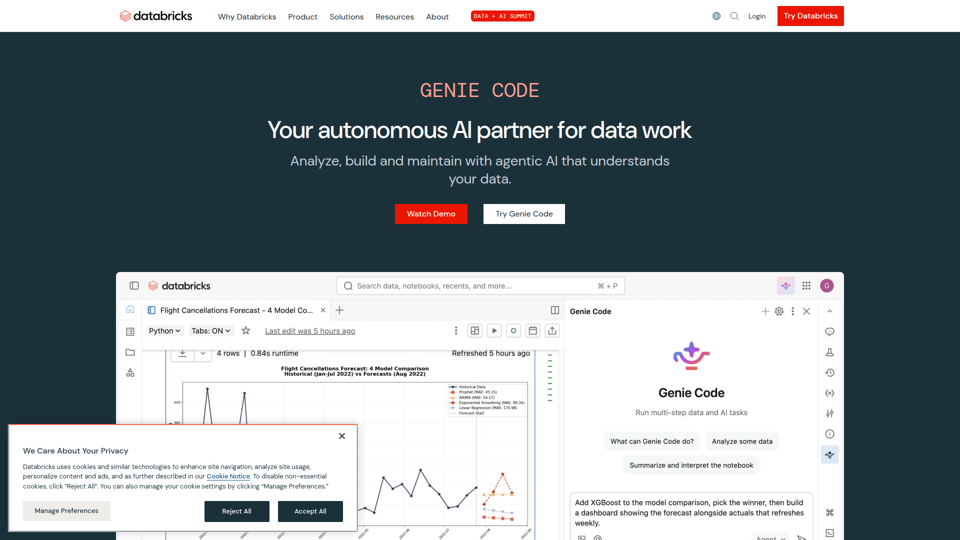
Databricks Genie Code is an autonomous AI tool in the Databricks workspace that helps data teams plan, execute, and maintain data science, machine learning, data engineering, analytics, and dashboard workflows using natural language and enterprise data context. For data engineers, data scientists, and analysts, it can reduce manual orchestration by grounding work in governed metadata and proactively supporting production pipelines, models, and BI assets.

Blackshark.ai - AI Infrastructure for the Physical World
Blackshark.ai is an AI geospatial infrastructure platform that turns satellite, aerial, drone, and sensor imagery into structured world models and simulation-ready 3D environments for government and enterprise teams working with large-scale physical-world data. For geospatial analysts, disaster response planners, and simulation teams, it can speed change detection, situational awareness, and AI training by converting massive imagery streams into operational intelligence.
Homepage | Kubit
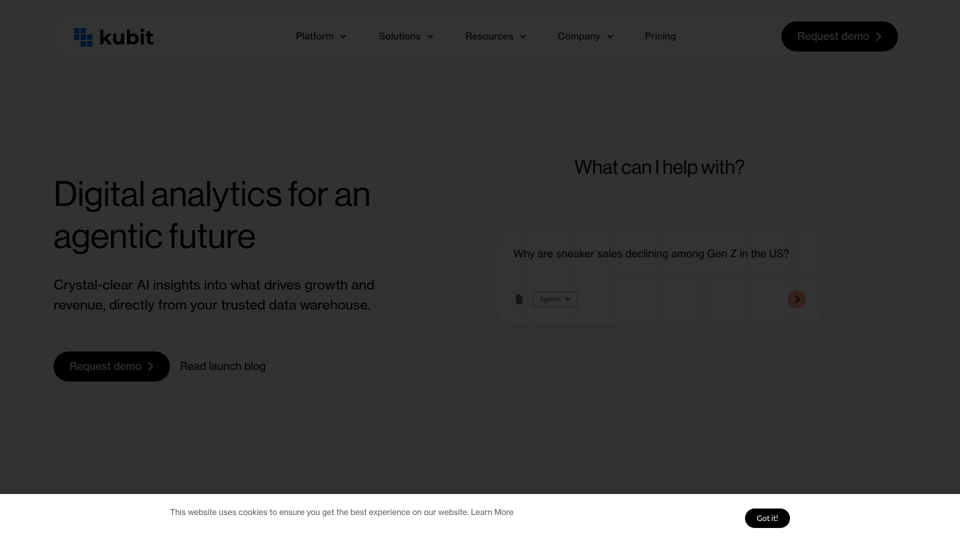
Warehouse-native analytics that query Snowflake, Databricks, BigQuery, and ClickHouse directly. Real-time, governed insights with explainable AI.
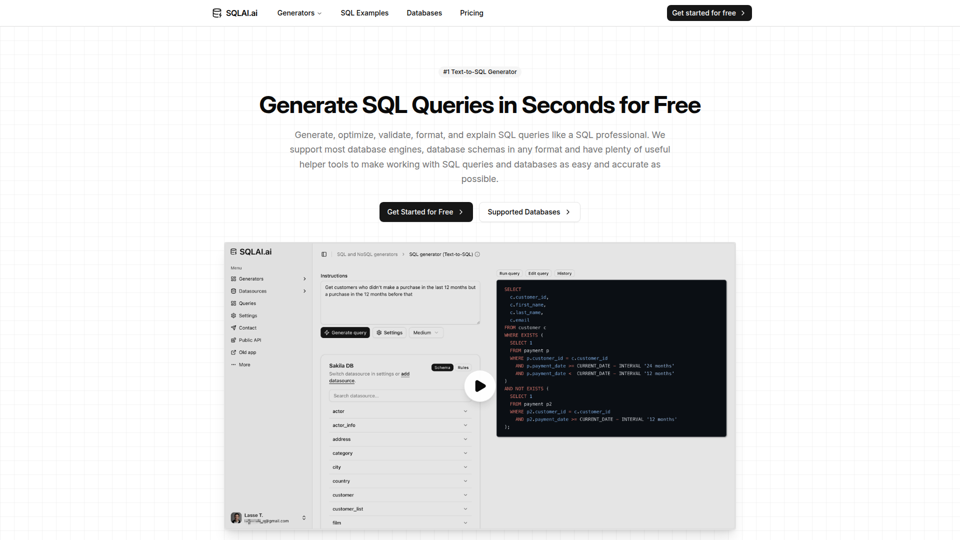
Generate SQL Queries in Seconds for Free - SQLAI.ai
SQLAI.ai is an AI SQL assistant that helps analysts, data engineers, developers, and data teams generate, optimize, validate, format, explain, and run SQL or NoSQL queries from natural language across many database engines. For analytics and engineering work, it can shorten query drafting and review cycles by combining schema-aware generation with validation and readable explanations.
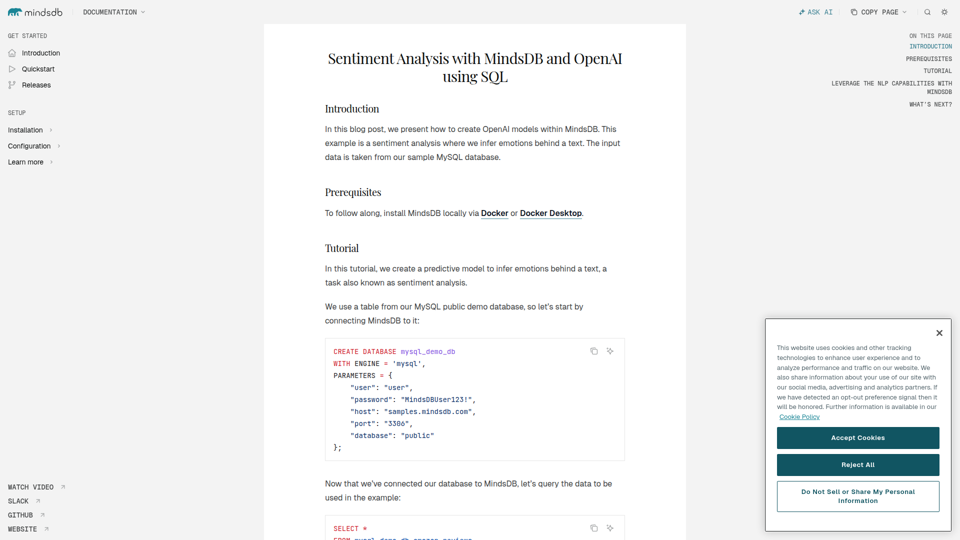
Sentiment Analysis with MindsDB and OpenAI using SQL - MindsDB
This MindsDB tutorial shows developers how to use SQL to create an OpenAI-powered sentiment analysis model inside a database and classify text reviews as positive, neutral, or negative. For data engineers and application developers, this approach can speed up adding AI text analysis to database workflows without building a separate machine learning pipeline.

OSSUS
OSSUS is a self-healing data infrastructure platform that helps organizations turn fragmented records into trusted, agent-ready systems of truth, mainly for teams responsible for data and AI foundations. As AI adoption grows, it can help data, analytics, and engineering professionals improve reliability by giving AI systems cleaner, more dependable information to work from.
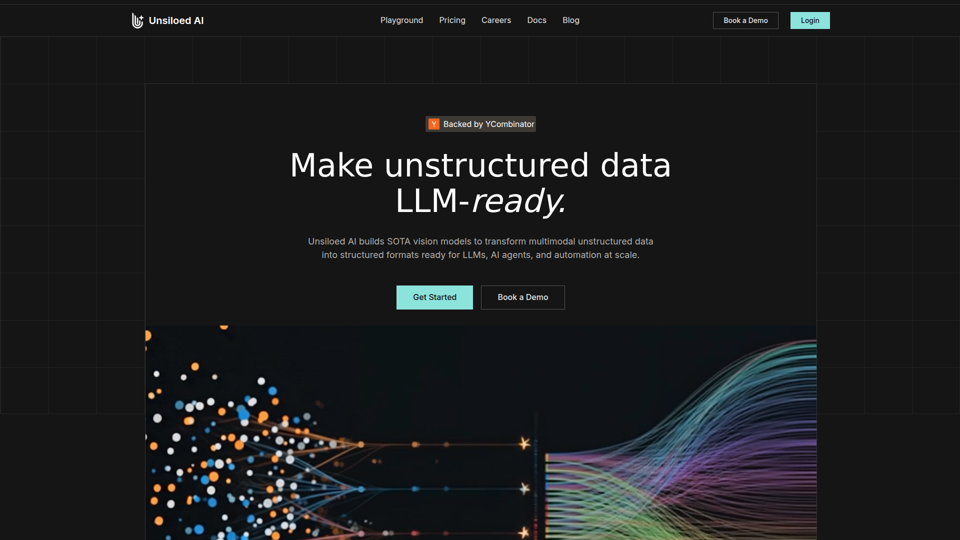
Unsiloed AI
Unsiloed AI is a document processing platform that turns multimodal unstructured data like PDFs, spreadsheets, slides, and images into structured JSON or Markdown for LLMs, AI agents, and automation, mainly for developers, AI engineers, and data teams in accuracy-critical enterprises. In AI workflows, it can help data engineering, ML, and operations teams reduce manual parsing work and improve retrieval quality by preserving document structure, hierarchy, and domain context.