
OSSUS

Rate this Tool
Average Score
Total Votes
Select your score (1-10):
Detail Information
What
OSSUS presents itself as a self-healing data infrastructure platform designed to turn fragmented records into trusted, agent-ready systems of truth. The core problem it addresses is data readiness: while AI systems may be deployable, underlying business data is often incomplete, inconsistent, or scattered across sources.
Based on the page content, the product appears aimed at organizations that need cleaner, more dependable data foundations for AI and automated systems. Its likely positioning is a data infrastructure layer focused on improving data trust, record quality, and usability for intelligent agents, though the source page does not provide detailed workflow, industry, or deployment specifics.
Features
- Self-healing data infrastructure — The platform is described as self-healing, suggesting it is built to continuously correct or stabilize fragmented data environments over time.
- Fragmented record unification — OSSUS focuses on turning fragmented records into a more coherent system, which can reduce inconsistency across business data.
- Trusted system-of-truth foundation — It is positioned around creating trusted data foundations, which is valuable for teams that need dependable inputs for operations or analytics.
- Agent-ready data preparation — The product explicitly emphasizes making data ready for agents, indicating a focus on structuring and improving data for AI-driven workflows.
- AI data-readiness positioning — The messaging centers on the gap between AI capability and data quality, which makes the product relevant for organizations preparing internal data for AI use.
Helpful Tips
- Validate what “self-healing” means in practice — Buyers should look for clear explanations of how the platform detects, repairs, and governs data issues, since the source page does not define those mechanisms.
- Assess fit around data fragmentation problems — This type of product is most valuable when records are split across systems, formats, or owners and need to be made more reliable for downstream use.
- Request workflow detail before evaluating deeply — Important details such as ingestion methods, governance controls, and operational setup are not provided on the page and would be essential for implementation planning.
- Map usage to AI and agent initiatives — If the goal is agent-ready data, teams should define which AI workflows depend on trusted records and evaluate the platform against those requirements.
- Clarify system-of-truth scope — Organizations should determine whether they need a master data layer, data quality tooling, or an orchestration layer, since the page signals the outcome but not the exact architectural model.
OpenClaw Skills
OSSUS could likely complement the OpenClaw ecosystem as a data-trust and record-preparation layer for AI agents. A likely use case would be OpenClaw skills that consume normalized, trusted records from OSSUS-backed environments to power research agents, customer intelligence workflows, operational copilots, or entity-resolution tasks. The page does not confirm a native integration, so this should be treated as a probable workflow pattern rather than a stated capability.
In practice, OpenClaw agents built around a product like OSSUS could help operations, revenue, and analytics teams work from cleaner entity data and more dependable source records. Likely examples include agents that monitor data drift, flag conflicting records, prepare structured context for downstream automation, or route exceptions to human reviewers. Combined with agent orchestration, this kind of data infrastructure could shift teams from manually reconciling records toward supervising higher-trust automated workflows.
Embed Code
Share this AI tool on your website or blog by copying and pasting the code below. The embedded widget will automatically update with the latest information.
<iframe src="https://www.aimyflow.com/ai/librarlabs-com/embed" width="100%" height="400" frameborder="0"></iframe>
Explore Similar Tools
Bright Data for AI – Connect Your AI to the Web
Bright Data for AI is a web data platform that helps AI teams search, crawl, extract, and collect structured real-time and training data from the web through APIs, remote browsers, datasets, and automation tools. For AI engineers, data scientists, and agent builders, it can reduce the effort of building web access and data acquisition pipelines so they can focus more on model behavior and application logic.
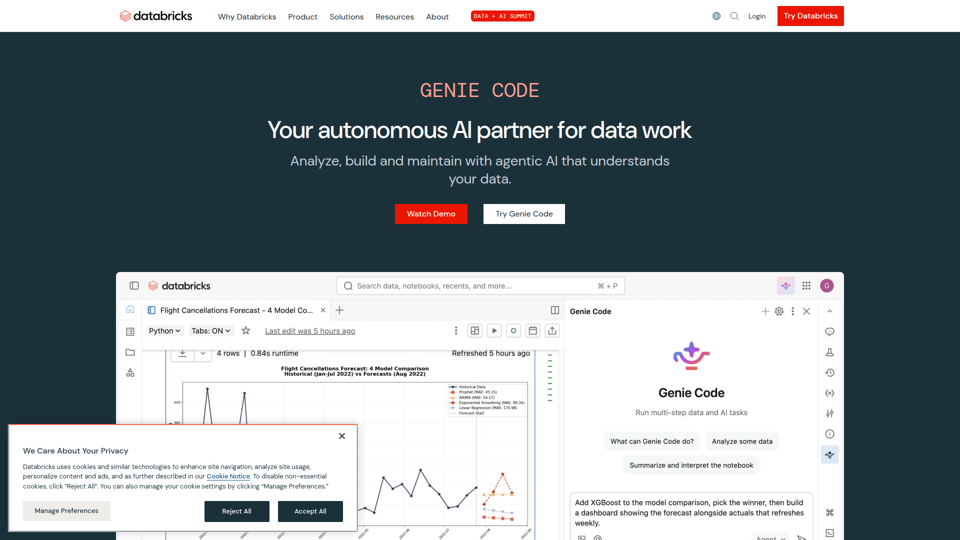
Autonomous AI for Data Teams | Databricks
Databricks Genie Code is an autonomous AI tool in the Databricks workspace that helps data teams plan, execute, and maintain data science, machine learning, data engineering, analytics, and dashboard workflows using natural language and enterprise data context. For data engineers, data scientists, and analysts, it can reduce manual orchestration by grounding work in governed metadata and proactively supporting production pipelines, models, and BI assets.
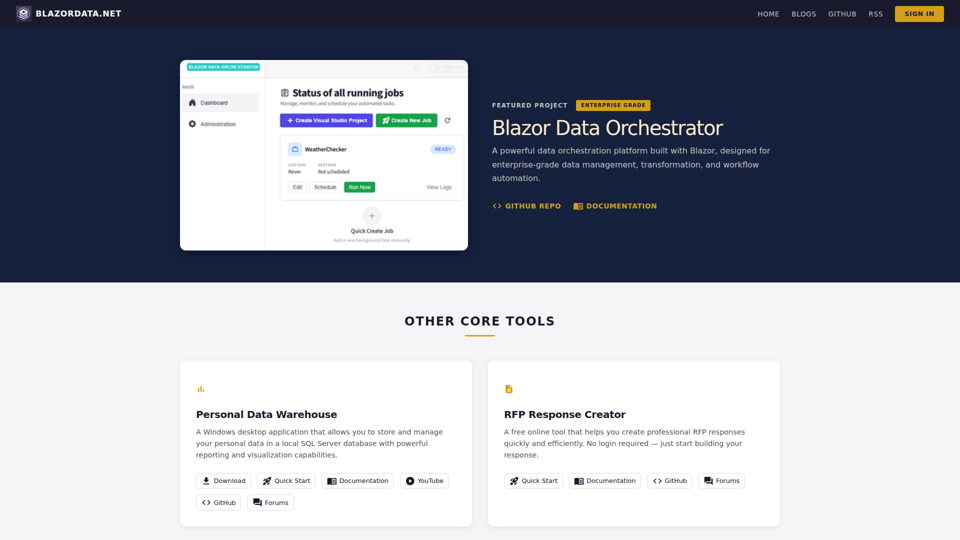
BlazorData - Home
BlazorData is a Blazor-based data orchestration platform for enterprise-grade data management, transformation, and workflow automation, mainly aimed at teams handling structured data processes in business or technical environments. In AI-era workflows, it can help data and operations professionals organize cleaner, more reliable pipelines that support automation and downstream analysis.
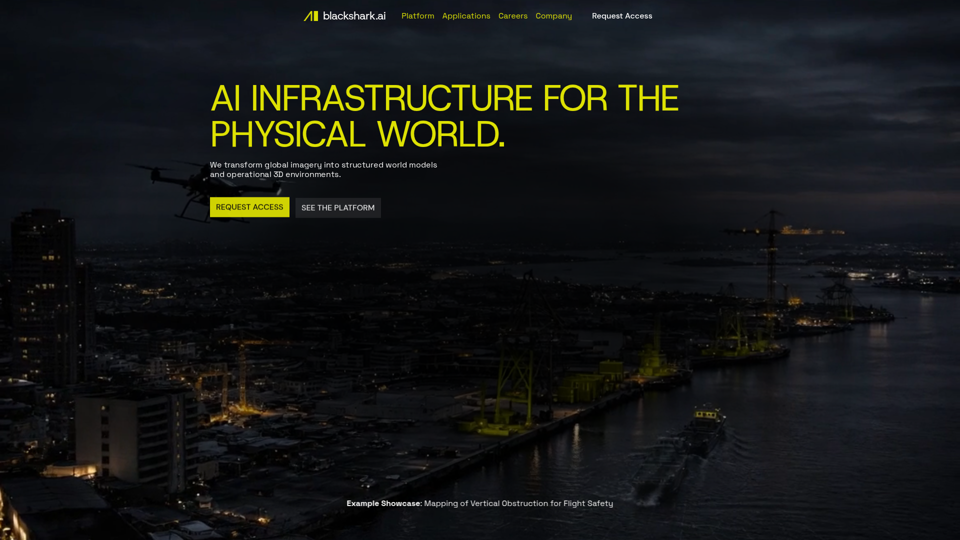
Blackshark.ai - AI Infrastructure for the Physical World
Blackshark.ai is an AI geospatial infrastructure platform that turns satellite, aerial, drone, and sensor imagery into structured world models and simulation-ready 3D environments for government and enterprise teams working with large-scale physical-world data. For geospatial analysts, disaster response planners, and simulation teams, it can speed change detection, situational awareness, and AI training by converting massive imagery streams into operational intelligence.
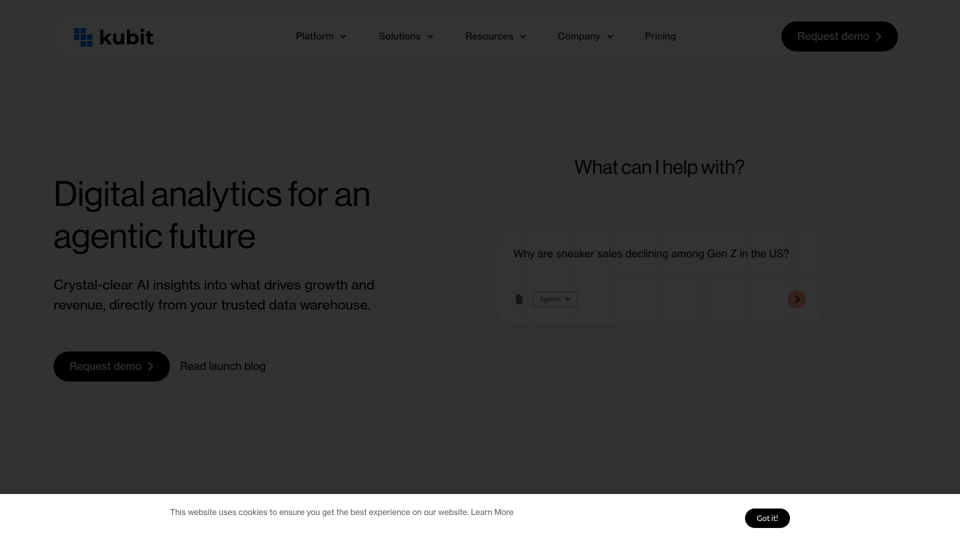
Homepage | Kubit
Warehouse-native analytics that query Snowflake, Databricks, BigQuery, and ClickHouse directly. Real-time, governed insights with explainable AI.
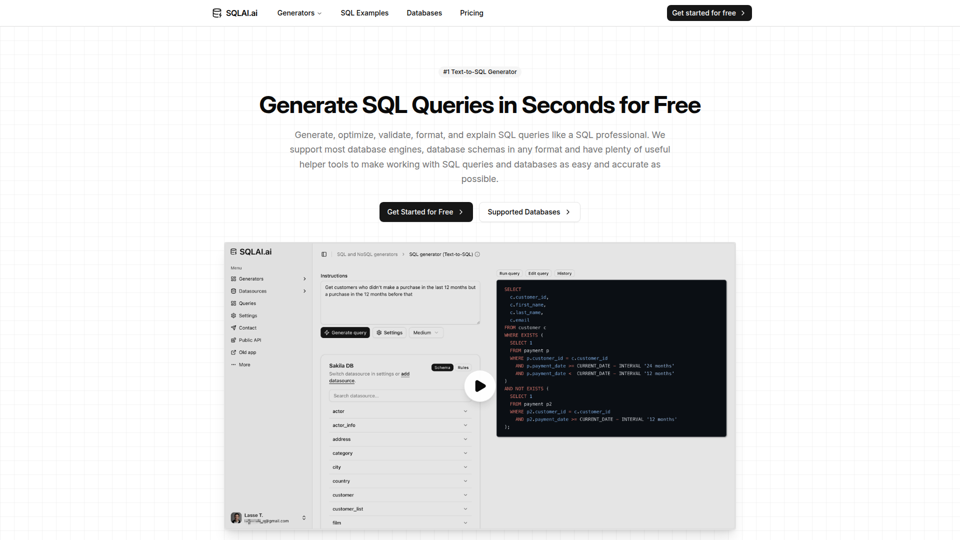
Generate SQL Queries in Seconds for Free - SQLAI.ai
SQLAI.ai is an AI SQL assistant that helps analysts, data engineers, developers, and data teams generate, optimize, validate, format, explain, and run SQL or NoSQL queries from natural language across many database engines. For analytics and engineering work, it can shorten query drafting and review cycles by combining schema-aware generation with validation and readable explanations.
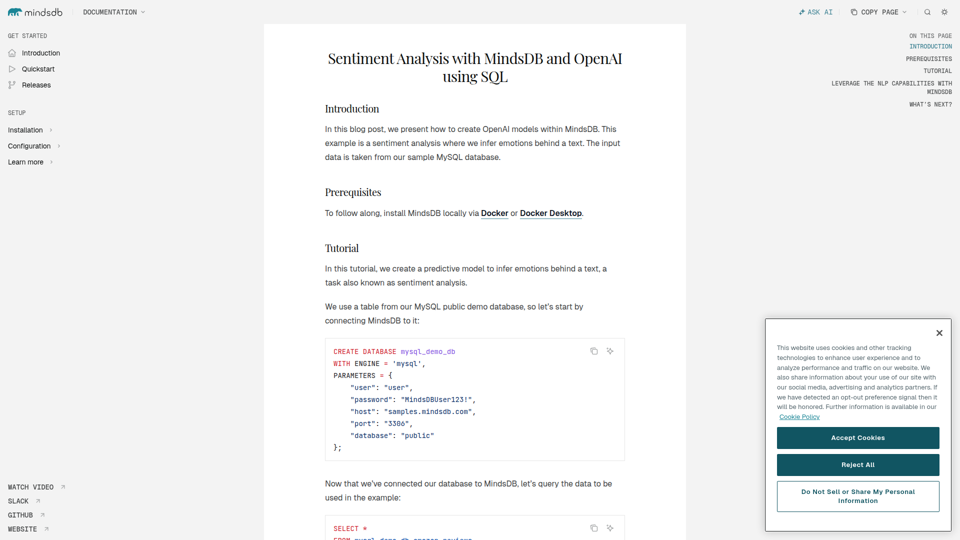
Sentiment Analysis with MindsDB and OpenAI using SQL - MindsDB
This MindsDB tutorial shows developers how to use SQL to create an OpenAI-powered sentiment analysis model inside a database and classify text reviews as positive, neutral, or negative. For data engineers and application developers, this approach can speed up adding AI text analysis to database workflows without building a separate machine learning pipeline.
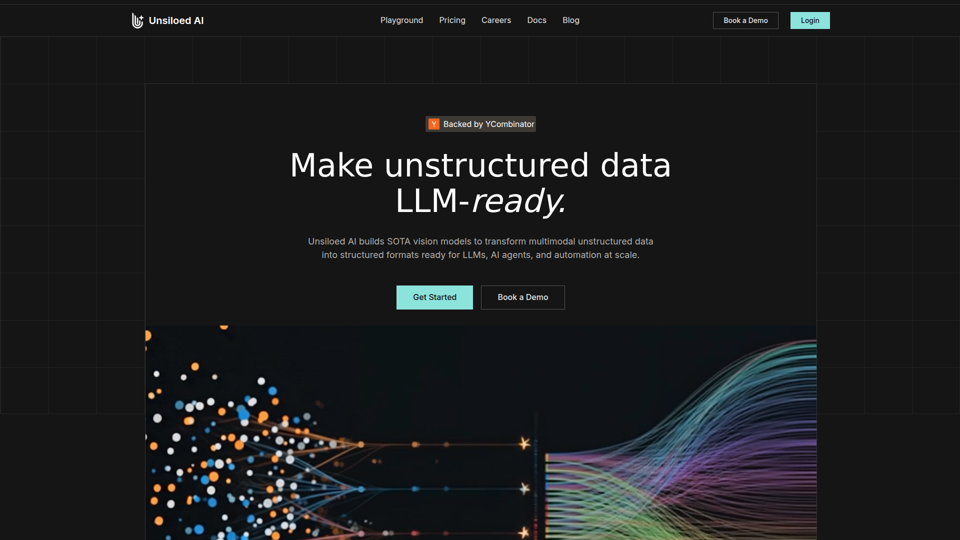
Unsiloed AI
Unsiloed AI is a document processing platform that turns multimodal unstructured data like PDFs, spreadsheets, slides, and images into structured JSON or Markdown for LLMs, AI agents, and automation, mainly for developers, AI engineers, and data teams in accuracy-critical enterprises. In AI workflows, it can help data engineering, ML, and operations teams reduce manual parsing work and improve retrieval quality by preserving document structure, hierarchy, and domain context.