
Bronco AI | AI Agents for DV
Rate this Tool
Average Score
Total Votes
Select your score (1-10):
Detail Information
What
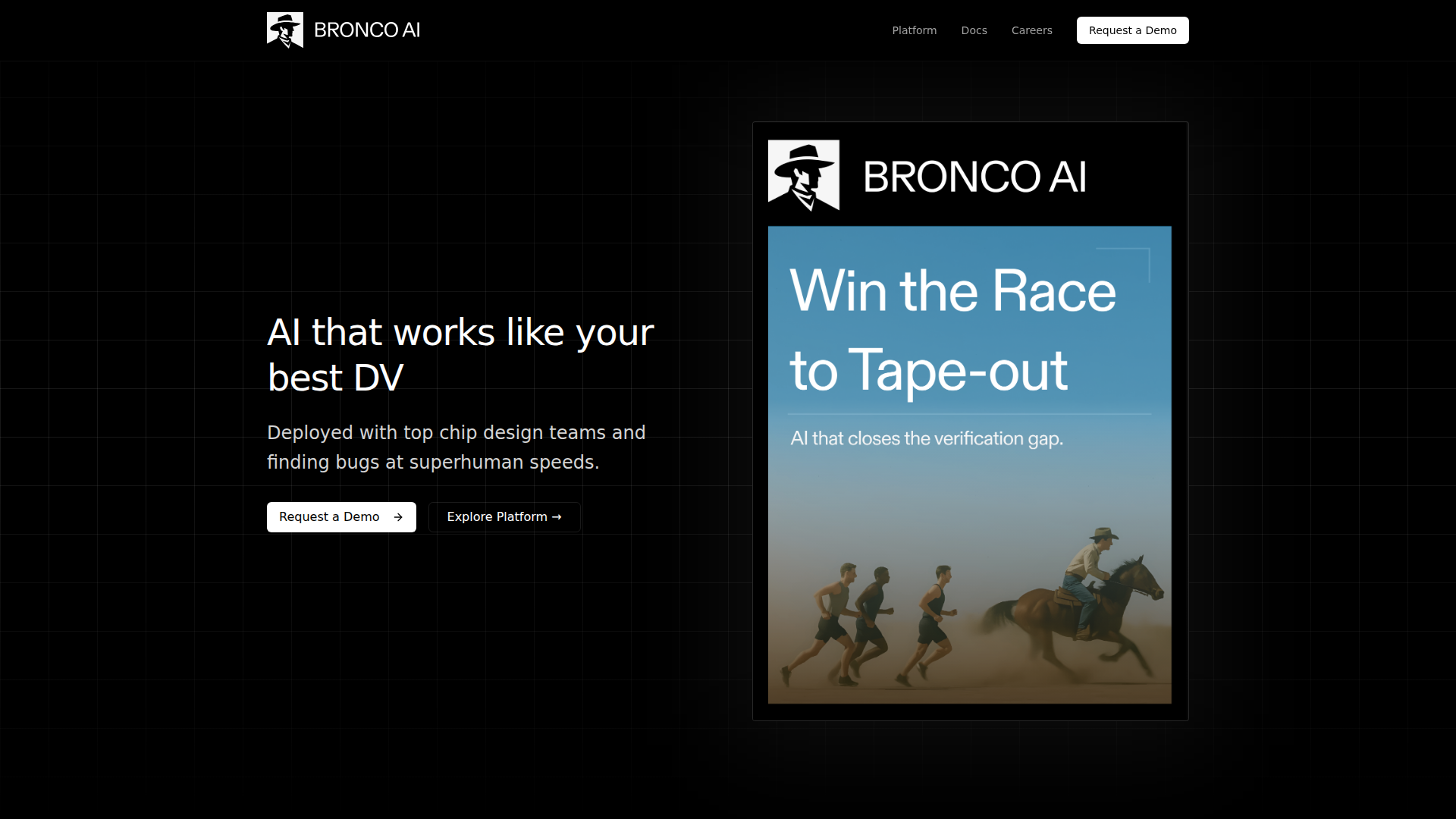
Bronco AI is an AI platform for design verification (DV) in semiconductor development. It is built for chip design teams that need to reduce verification bottlenecks across the workflow from specification review to debug and signoff.
The product appears positioned as a specialized, end-to-end DV assistant for modern silicon teams rather than a general AI coding tool. Based on the page, its core workflow centers on reviewing specs, generating verification artifacts, debugging simulation failures, and fitting into existing EDA environments with deployment options designed to protect sensitive IP.
Features
- Automatic simulation debug: Bronco analyzes large waveforms and aims to move failures to fixes before DV engineers manually investigate, which can reduce time spent on complex debug work.
- Agentic UVM code generation: The platform generates DV collateral such as new stimulus and checkers, helping teams accelerate UVM bring-up and routine verification authoring.
- Specification review and verification planning: It reviews large specifications and codebases, enriches requirements, and generates verification plans to reduce manual planning effort.
- Support for complex design scopes: The page states it works from block-level to SoC-level verification, which suggests usefulness across multiple stages of design hierarchy.
- Secure deployment options: On-premises and bring-your-own-AI deployment models are offered for teams that need tighter control over IP and model usage.
- EDA workflow integration and learning loop: Native integrations with standard EDA flows and a self-improving AI approach are presented as ways to fit the product into established engineering processes and improve performance over time.
Helpful Tips
- Validate by workflow, not just by model quality: For DV products like this, evaluate performance separately across spec review, UVM generation, and failure debug because each task has different accuracy and review requirements.
- Start with a bounded verification scope: A pilot on one block, one class of failures, or one verification backlog area usually makes adoption easier than introducing AI across the full SoC flow at once.
- Check review and signoff controls: Since generated collateral and debug suggestions can affect verification quality, teams should confirm how outputs are reviewed, versioned, and accepted into normal engineering processes.
- Assess deployment fit early: For semiconductor teams, on-prem or controlled-model options can be as important as raw capability, especially where waveform data, specs, and RTL are highly sensitive.
- Measure handoff efficiency: The strongest value often comes from reducing manual transitions between spec analysis, test creation, and debug, so assess whether the platform improves end-to-end DV throughput rather than isolated tasks only.
OpenClaw Skills
Bronco AI could likely fit well into an OpenClaw environment as a domain-specific engine inside semiconductor verification workflows. Likely OpenClaw skills could include a spec-ingestion agent that turns requirements into verification tasks, a debug triage agent that routes failures by severity or subsystem, and a verification artifact agent that prepares structured prompts or review packets for UVM collateral generation. The source page does not confirm a native OpenClaw integration, so this should be treated as a likely orchestration pattern rather than a documented feature.
Combined with OpenClaw, the broader impact could be a more automated DV operations layer for chip teams. For example, agents could watch regression outputs, trigger Bronco-driven debug on selected failures, summarize likely root causes, link them to spec sections, and prepare work items for engineers. In a mature setup, this could shift DV teams from manually stitching together evidence toward supervising higher-level verification workflows, especially in organizations managing large specs, repeated regressions, and cross-team handoffs.
Embed Code
Share this AI tool on your website or blog by copying and pasting the code below. The embedded widget will automatically update with the latest information.
<iframe src="https://www.aimyflow.com/ai/bronco-ai/embed" width="100%" height="400" frameborder="0"></iframe>
Explore Similar Tools
Noetic | Get Hardware Compliance Done in Weeks, Not Months
Noetic is an AI-powered hardware compliance platform that helps hardware teams identify applicable regulations, draft technical documentation, and find suitable testing labs faster. For compliance, regulatory, and engineering functions, it can shorten the path from standards research to lab-ready documentation by keeping requirements, documents, and status updates in one place.
Semble AI - AI-Powered Building System Design
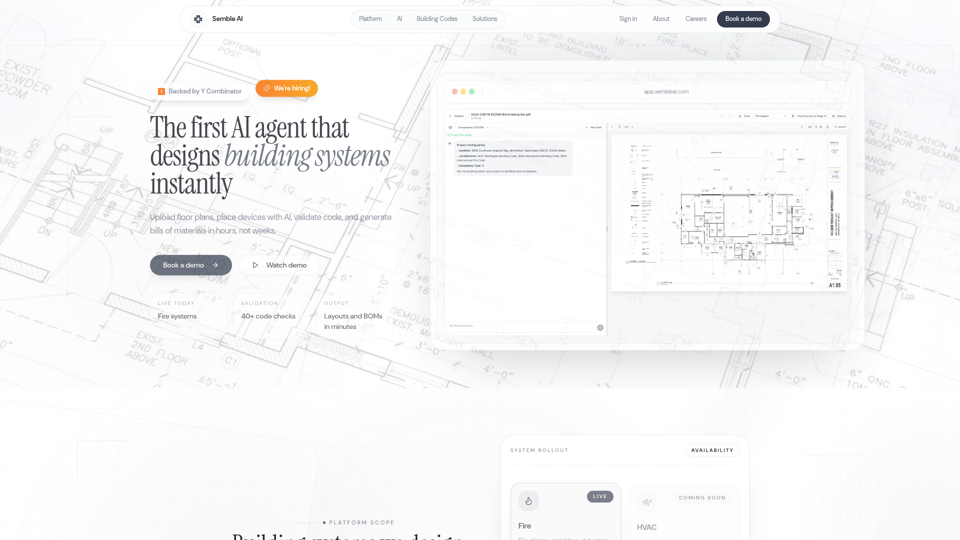
Semble AI is an AI-powered building system design platform that helps engineering and construction teams upload floor plans, place devices, check building-code compliance, and generate layouts and bills of materials, with current live support focused on fire systems. For fire protection designers, MEP engineers, and plan reviewers, it can shorten repetitive code research and drafting work by tying AI-generated layouts to cited code requirements and project documents.
Normal Factory
Normal Factory is a hardware testing and certification platform that helps companies prepare for and manage compliance for standards such as FCC, ISED, CE, and ASTM through pre-compliance software and a step-by-step process, mainly for hardware teams bringing products to market. For hardware, compliance, and operations professionals, it can reduce manual coordination and make certification work faster to review, document, and move toward market approval.
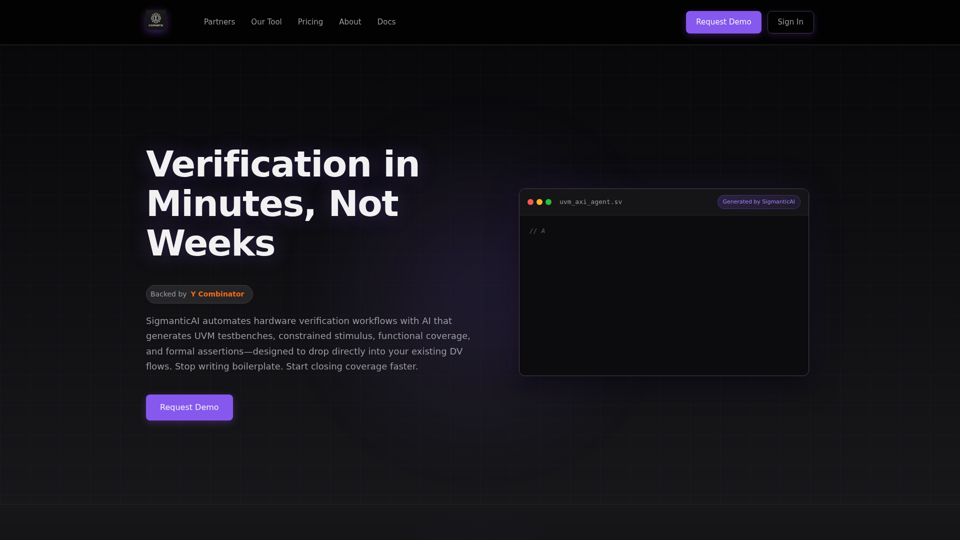
SigmanticAI - Hardware Verification Automation
SigmanticAI is an AI hardware verification automation tool that generates UVM testbenches, constrained stimulus, functional coverage, assertions, and register models for semiconductor design verification engineers working in existing DV flows. For verification and chip design teams, it can reduce manual boilerplate so engineers spend more time reviewing edge cases, improving coverage closure, and validating design intent.
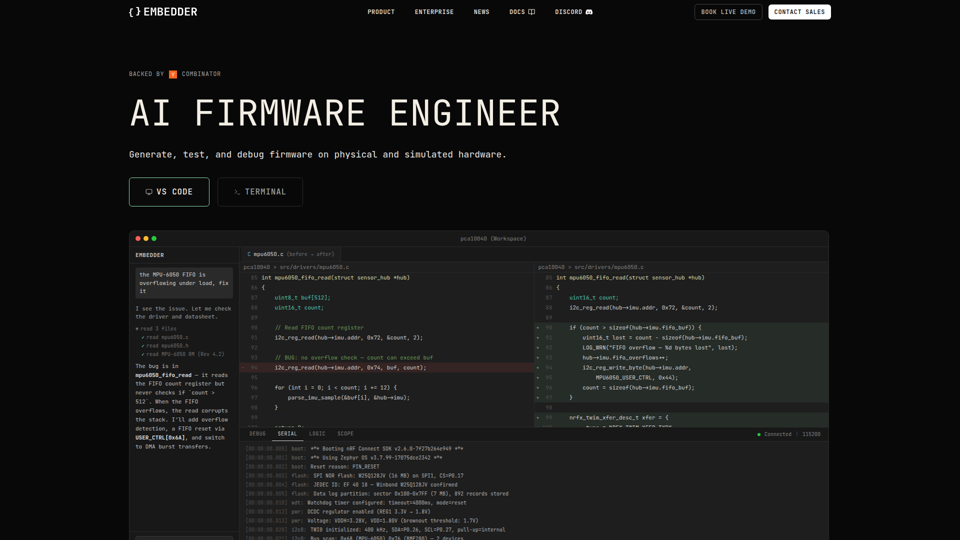
Embedder | AI Firmware Engineer
Embedder is an AI firmware engineering tool that generates, tests, and debugs verified C++ and Rust firmware from datasheets and hardware documents for embedded and firmware engineers working with MCUs and peripherals. By grounding code in source documentation and validating it on simulated and physical hardware, it can help embedded teams reduce datasheet interpretation errors and speed driver development and debugging.
Stillwind
Stillwind is an AI search tool for electrical engineering that helps users find electronic parts with natural language queries by matching detailed specifications against a large parts database, mainly for electrical engineers and embedded software developers. In AI-assisted hardware workflows, it can reduce component research time and improve how engineers and sourcing-related teams translate design needs into precise part selections.
Zettascale
Zettascale is a Silicon Valley hardware company building energy-efficient, reconfigurable XPU chips for AI training and inference, mainly for teams developing advanced AI compute infrastructure. For AI hardware, compiler, and systems engineers, model-optimized dataflow and reduced memory movement can improve throughput while lowering energy use in training and inference workloads.
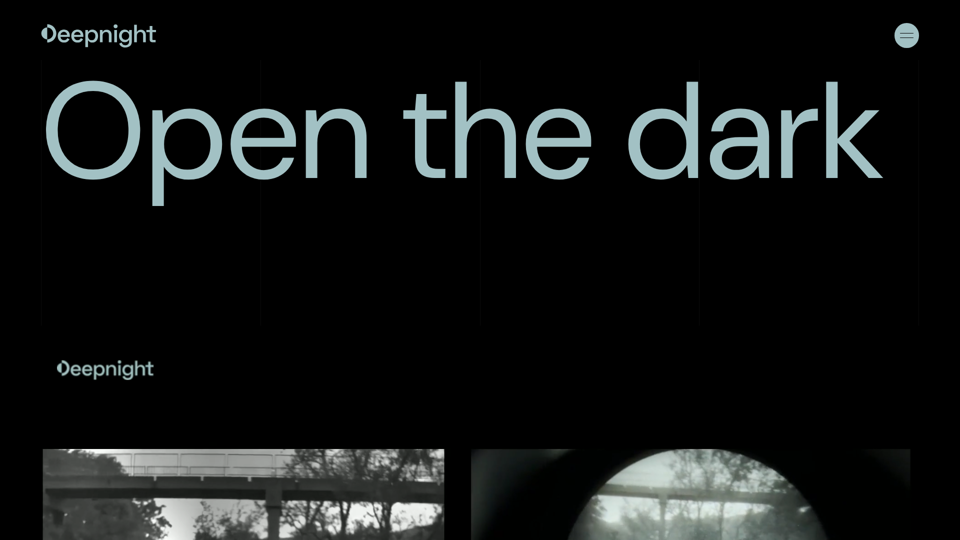
Deepnight - Nextgen Night Vision
Deepnight is an AI night-vision system that combines low-light sensors with image processing to turn very dark scenes into vivid color and a wider field of view, mainly for organizations working in nighttime navigation, monitoring, and safety. For autonomous vehicle teams, researchers, agricultural operators, and defense functions, it can improve low-light decision-making by providing steadier, real-time visibility across changing environments.