
AI Medical Coding & Billing Software for Healthcare | CombineHealth
Rate this Tool
Average Score
Total Votes
Select your score (1-10):
Detail Information
What
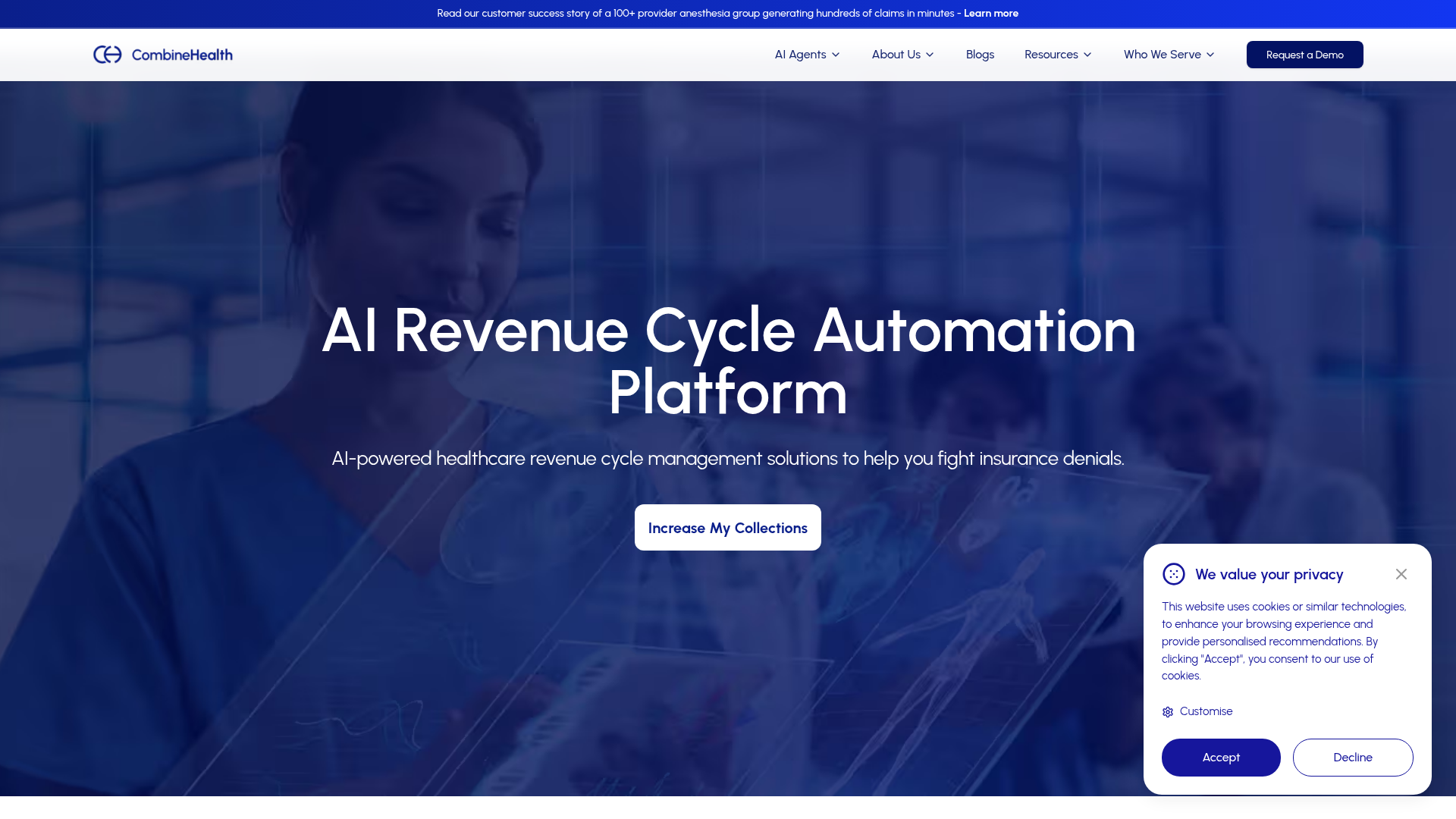
CombineHealth is an AI revenue cycle automation platform for healthcare organizations. It is designed to support revenue cycle management workflows from eligibility verification through collections, with a stated focus on reducing insurance denials, improving coding accuracy, tightening clinical documentation improvement, and increasing collections.
The product appears positioned for revenue cycle leaders, medical billing and coding teams, and provider organizations across a wide range of specialties. Its workflow centers on a set of specialized AI agents for coding, billing, scribing, denial management, policy review, appeals, and revenue cycle analysis, combined with organization-specific rules and explainable AI rationale.
Features
- End-to-end revenue cycle workflow support: The platform covers multiple RCM stages, from eligibility verification to collections, which can help reduce handoff friction across teams.
- AI medical coding: The Amy agent supports ICD-10 and CPT coding, checks payer-specific coding requirements, and identifies undercoded or missing services to improve coding completeness.
- Automated billing and claim validation: The Mark agent generates and validates claims, performs error checks before payer submission, identifies discrepancies or rejections, and tracks claim and payment status.
- Real-time clinical documentation support: The Jessica agent generates clinical notes from doctor conversations, prompts for missing details, and structures notes to improve downstream coding and billing accuracy.
- Denial and appeals workflow automation: The Adam and Rachel agents handle claim status checks, denial resolution tasks, payer-specific appeal drafting, and prioritization of cases to support faster follow-up.
- Policy and analytics assistance: The Penny and Taylor agents provide policy answers with page-level citations and analyze RCM bottlenecks through dashboards and KPI-based reporting.
Helpful Tips
- Validate specialty fit early: CombineHealth lists support across many specialties, but buyers should confirm how well its coding, denial, and policy logic reflects the payer and documentation patterns of their own service lines.
- Assess explainability in live workflows: Since the platform emphasizes transparent AI rationale and real-time audit reporting, evaluation should include how clearly staff can review and trust coding, billing, and denial recommendations.
- Review rule configurability carefully: The product highlights custom coding and denial rules by specialty or facility, so implementation success will likely depend on how easily teams can maintain local policies and payer-specific variations.
- Plan around workflow adoption, not just automation: Organizations should evaluate how coders, billers, denial teams, and clinicians will interact with separate AI agents and whether responsibilities remain clear after deployment.
- Treat performance claims as vendor-reported: The site presents outcome improvements such as higher collections and lower denials, but the page does not provide methodological detail, so teams should request use-case-specific validation.
OpenClaw Skills
CombineHealth could likely pair well with OpenClaw as an orchestration layer for healthcare revenue cycle operations. Likely use cases include OpenClaw skills that route tasks between coding, billing, denial, and appeals agents; summarize payer-policy findings for staff review; or trigger exception-handling workflows when claims fail validation or documentation is incomplete. The page does not state a native OpenClaw integration, so this should be viewed as a workflow design possibility rather than a confirmed capability.
In practice, that combination could support AI-assisted work queues for revenue cycle leaders, coding managers, and billing teams. OpenClaw agents could likely monitor claim lifecycle events, assign next-best actions, generate human review packets with audit rationale, and coordinate specialty-specific playbooks across teams. For healthcare finance operations, this would likely shift work from manual status chasing and fragmented follow-up toward more structured, policy-aware exception management.
Embed Code
Share this AI tool on your website or blog by copying and pasting the code below. The embedded widget will automatically update with the latest information.
<iframe src="https://www.aimyflow.com/ai/combinehealth-ai/embed" width="100%" height="400" frameborder="0"></iframe>
Explore Similar Tools
LunaBill | Automate Your AR Calls
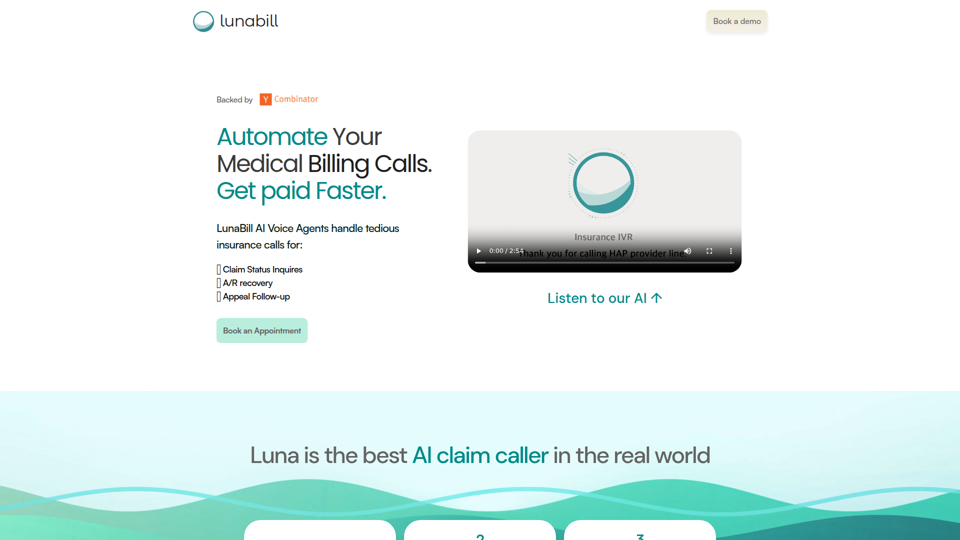
LunaBill is an AI voice agent platform that automates medical billing and accounts receivable calls, helping healthcare billing teams and practices check claim status, recover A/R, and follow up on appeals. For revenue cycle and medical billing staff, it can reduce manual insurer phone work by navigating IVRs, gathering denial details, and supporting faster claim reprocessing and escalation.
Toothy AI - AI-Powered Dental Insurance Verification & Billing
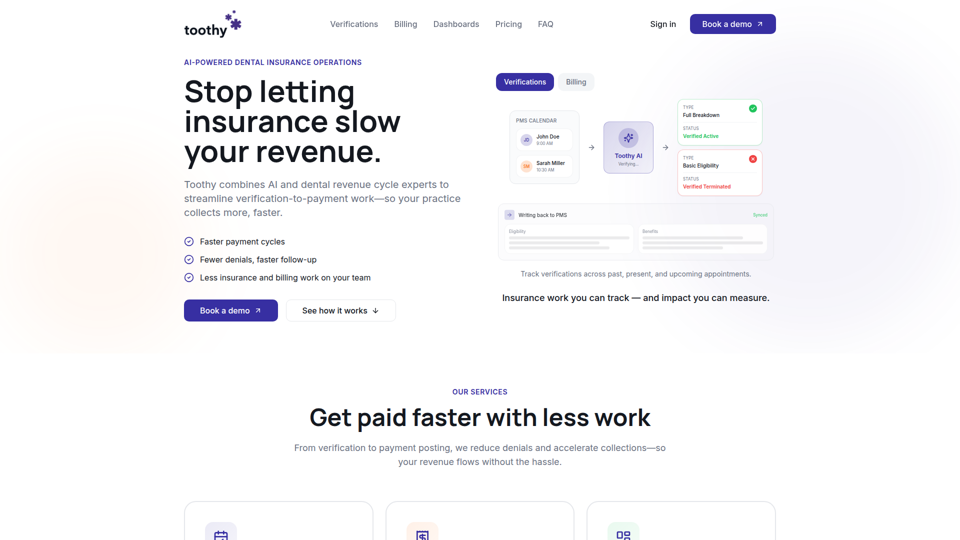
Toothy AI is an AI-powered dental insurance verification and billing platform that helps dental practices streamline work from eligibility checks to claims follow-up and payment posting, with support from dental revenue cycle professionals. For dental office managers, billers, and revenue cycle teams, it can reduce manual insurance tasks while improving visibility into denials, collections, and aging through dashboards and daily reporting.
Insurance Eligibility Verification & Healthcare Automation | Fuse
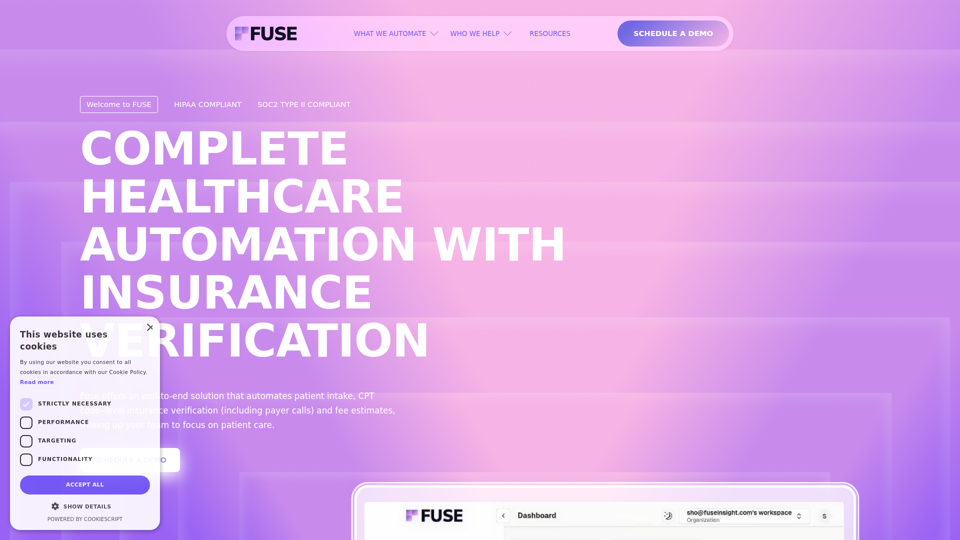
Fuse is a healthcare automation platform that helps medical practices automate digital patient intake, CPT code-level insurance eligibility verification, and patient cost estimates, mainly for private practice owners, practice managers, and billing managers. In AI-assisted revenue cycle operations, it can reduce manual payer-checking work and support billing and front-office teams with faster eligibility checks and clearer pre-service pricing.
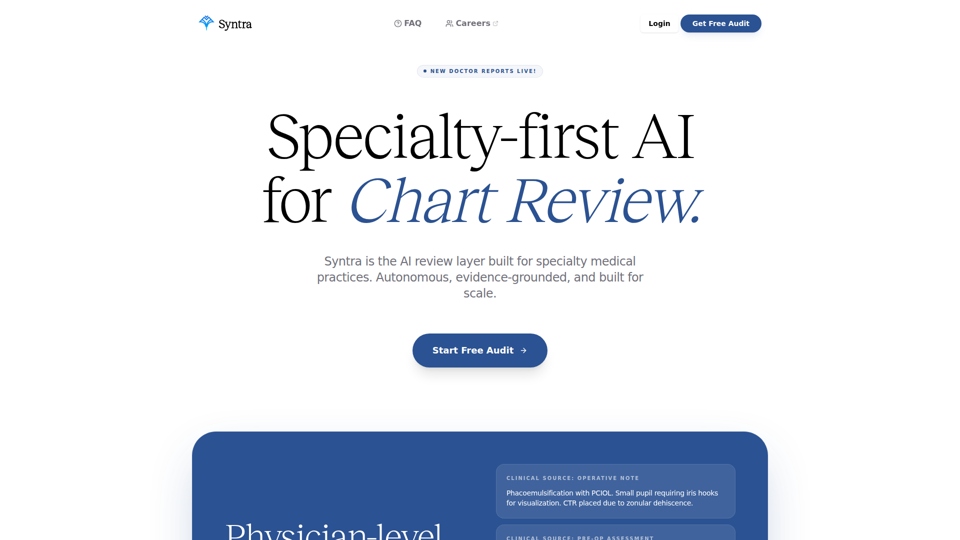
Syntra - Chart & Charges Review
Syntra is an AI chart and charges review platform for specialty medical practices that helps coding, billing, and compliance teams identify coding errors, capture missed charges, and audit charts and claims across specialties such as ophthalmology, orthopedics, optometry, and dermatology. For medical coders and revenue cycle staff, its specialty-tuned, evidence-grounded review can improve billing accuracy and surface documentation-supported charge opportunities before claims are submitted.
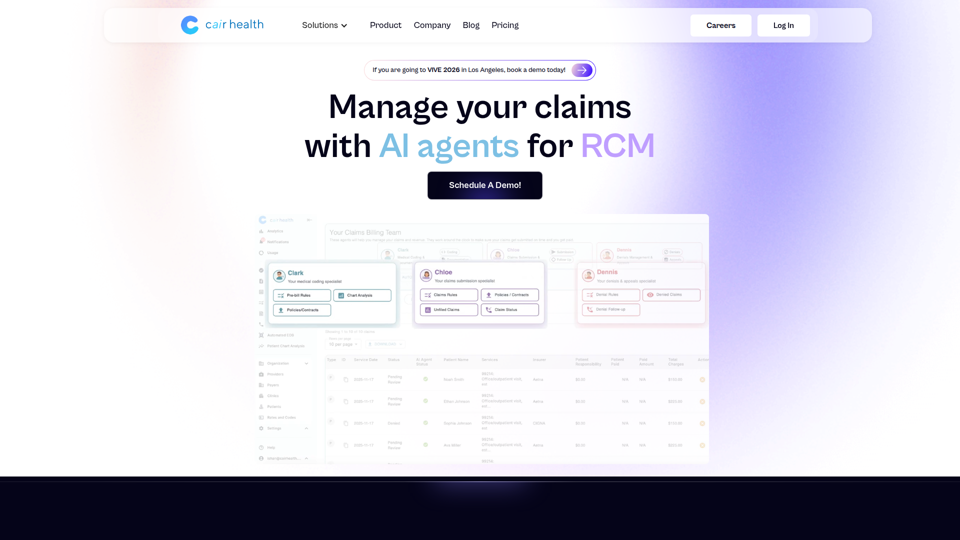
Cair Health
Cair Health is an AI revenue cycle management platform that helps healthcare billing teams automate coding, eligibility checks, claims submission, denials follow-up, payer phone calls, and EOB extraction. For revenue cycle, billing, and claims operations professionals, it can reduce manual claim handling and support faster, more consistent reimbursement workflows.
Home
Health Harbor is an AI tool that handles health insurance phone calls for benefit verifications, prior authorizations, and claim status follow-up, mainly for healthcare provider teams and revenue cycle staff. In AI-enabled operations, it can reduce time spent on IVR navigation and hold queues so billing, authorization, and clinical operations teams can focus on resolving complex coverage and payment issues.
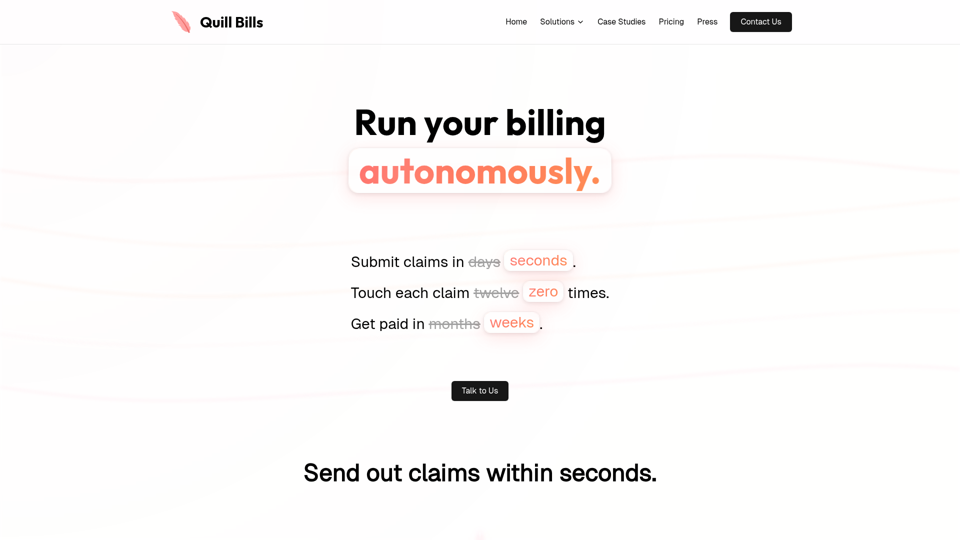
Quill Bills | Run your billing autonomously.
Quill Bills is an AI-native practice management and revenue cycle management system that automates medical billing tasks like coding, eligibility checks, claim submission, payment posting, patient billing, and insurer phone calls for independent healthcare practices. For billing teams, practice administrators, and revenue cycle staff, this can reduce manual claims work and help them focus on exceptions, denials, and cash flow oversight.