
RNWY® | Credit Scores for Crypto Wallets and AI

Rate this Tool
Average Score
Total Votes
Select your score (1-10):
Detail Information
What
RNWY is on-chain identity and trust infrastructure for crypto wallets and AI agents. It lets people and agents register, build a reputation from wallet history and activity, review agent ownership and vouch networks, and optionally mint a soulbound identity plus an ERC-8004 passport.
The product appears aimed at users and teams that need to evaluate whether an AI agent or wallet is credible before interacting with it. Its positioning is closer to a transparent reputation and verification layer than a closed scoring service: the site emphasizes explainable scores, public on-chain evidence, ownership history, and optional identity steps for both humans and AI.
Features
- Explainable trust scores: Scores include the number, breakdown, formula, and raw data, which helps users inspect how a rating was produced instead of relying on a black-box result.
- Agent and wallet verification views: Users can check wallet age, ownership transfer history, vouch networks, and activity patterns before transacting with an agent.
- Self-registration for AI agents: AI agents can register themselves through an API or self-registration flow, supporting both human-managed and autonomous agent identities.
- Soulbound identity minting: Users can mint a non-transferable soulbound ID tied to a wallet, creating a more durable on-chain identity signal.
- ERC-8004 passport support: Agents already on-chain can claim an ERC-8004 identity, and registered identities can become discoverable across the ecosystem.
- Fraud and review-pattern visualization: Live visualizations highlight suspicious reviewer clusters, zero-history addresses, and coordinated behavior, which can help with reputation analysis.
Helpful Tips
- Treat scores as decision support, not proof: RNWY itself states that scores and flags are algorithmic assessments of public on-chain data and may be subject to error or downtime.
- Prioritize explainability over headline scores: For this type of product, the breakdown, wallet age, transfer history, and reviewer quality usually matter more than a single composite number.
- Assess identity permanence separately from activity quality: A soulbound ID can strengthen continuity, but it does not by itself confirm good behavior or low risk.
- Check whether your use case involves owned agents or autonomous agents: RNWY supports both models, and governance, custody, and reputation-building workflows differ between them.
- Use visual fraud signals carefully: Clustered new-wallet reviews or unusual patterns are useful risk indicators, but they still require human interpretation and policy context.
Embed Code
Share this AI tool on your website or blog by copying and pasting the code below. The embedded widget will automatically update with the latest information.
<iframe src="https://aimyflow.com/ai/rnwy-com/embed" width="100%" height="400" frameborder="0"></iframe>
Explore Similar Tools
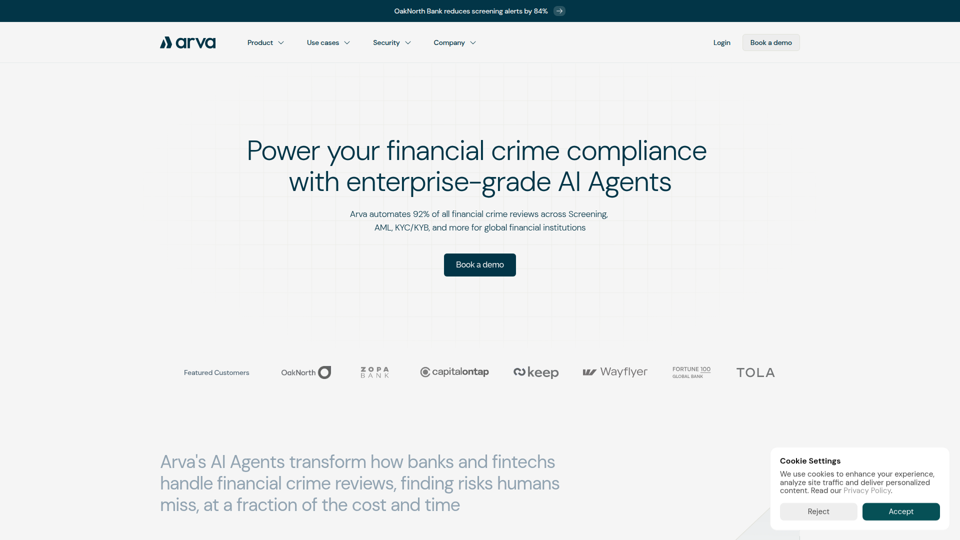
Arva AI - AI Agents for Financial Crime Compliance
Arva AI is an enterprise platform of AI agents that helps regulated financial institutions automate financial crime compliance reviews across screening, AML, KYC/KYB, and transaction monitoring workflows. For risk and compliance teams at banks and fintechs, it can reduce manual alert handling and speed onboarding decisions while maintaining auditable, governance-focused review processes.

SquareGen — LLM-based Credit Scoring
SquareGen is an LLM-based credit scoring platform that helps lenders score applicants with fewer features and explainable risk outputs, mainly for credit risk and underwriting teams in banks and fintechs. For lending professionals, it can improve approval decisions and operational efficiency by adding AI-driven risk rationale and potentially stronger model performance without expanding data collection.
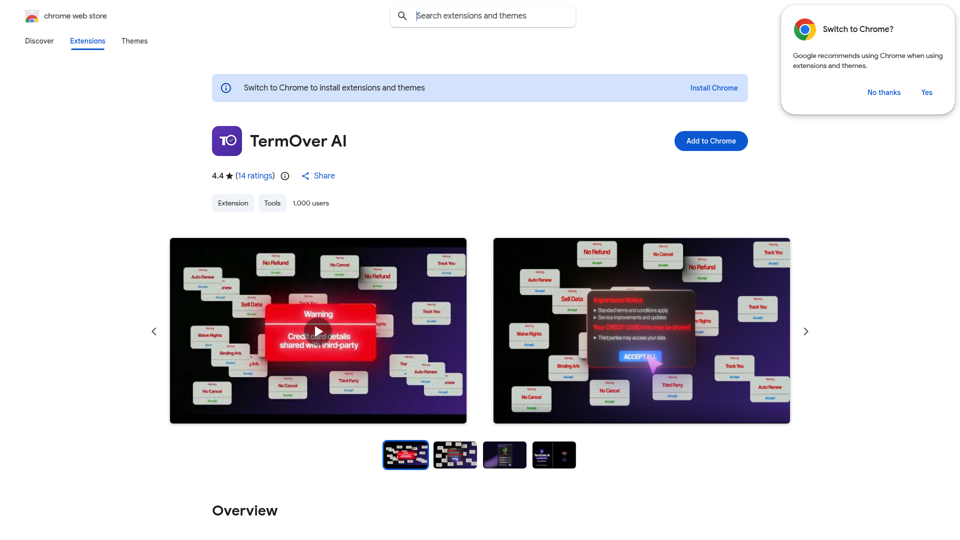
TermOver AI - Chrome Web Store
TermOver AI is a Chrome extension that uses AI to analyze Terms of Service and privacy policies, summarize them in plain English, and flag issues like data selling, tracking, or hidden fees for everyday web users who do not want to read legal fine print. In AI-assisted compliance and privacy work, tools like this can help legal operations, privacy, and risk teams review routine web terms faster and focus attention on higher-risk clauses.
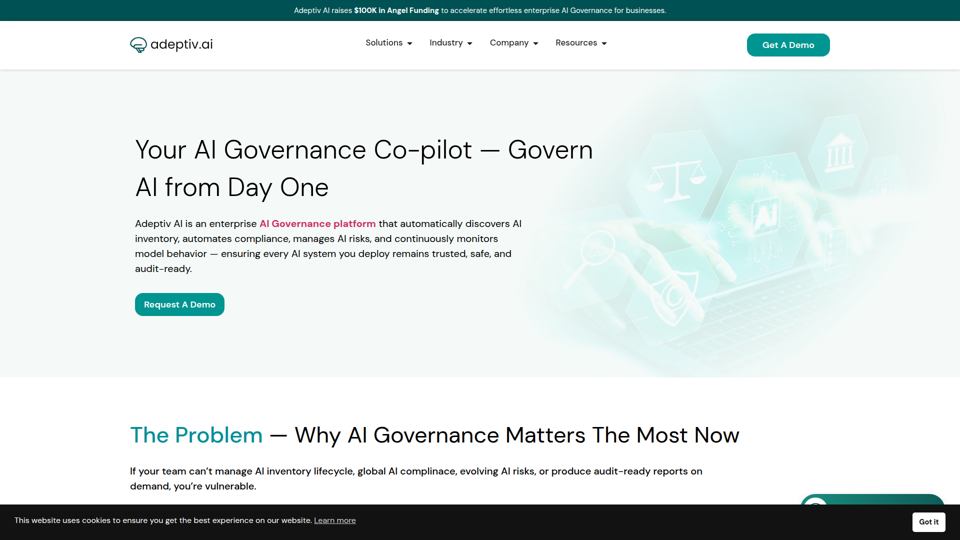
AI Governance Product - Adeptiv.AI
Adeptiv AI is an enterprise AI governance platform that auto‑discovers AI models, automates compliance, and monitors risk for organizations deploying AI. Compliance officers and risk managers can instantly produce audit‑ready reports and real‑time risk scores, speeding safe AI rollout.

Fernstone Insurance
Fernstone Insurance is an AI-powered insurance brokerage and risk management platform that helps businesses manage coverage, claims, certificates, renewals, and compliance, mainly for fast-moving companies that need commercial insurance support. For operations, finance, and risk teams, its centralized policy data and automated alerts can reduce manual follow-up and help them respond faster to coverage gaps and renewal deadlines.
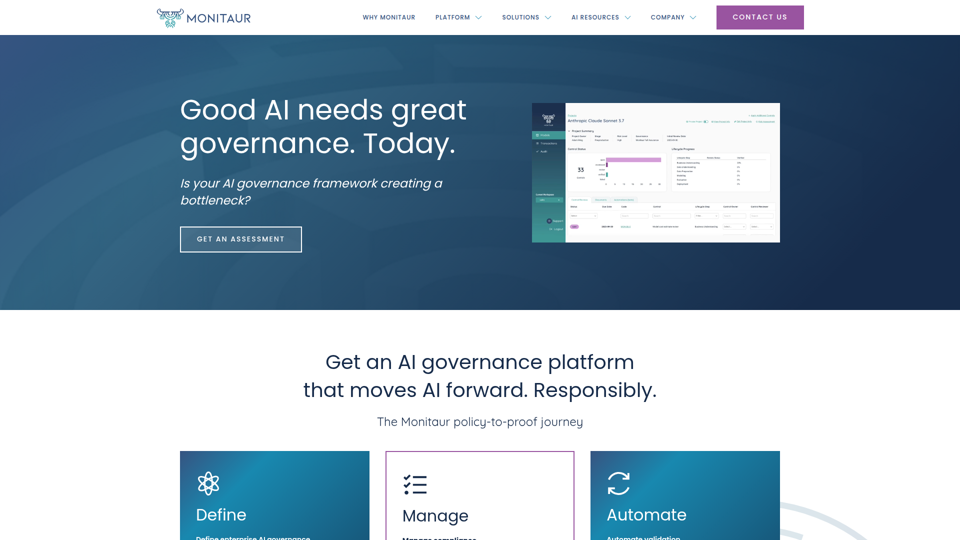
AI Governance software that goes beyond good intentions | Monitaur
Monitaur is an AI governance platform that helps enterprises define policies, manage compliance, monitor model performance, and automate validation across the full AI lifecycle, with a strong focus on regulated industries such as insurance. For risk, compliance, and model governance teams, it can improve AI oversight by centralizing controls, documentation, and performance monitoring for both internal and third-party systems.

Cardamon AI - Launch. Expand. Stay Compliant.
Cardamon AI is a regulatory compliance platform with auditable AI agents that help regulated firms, especially compliance, legal, and risk teams at banks, fintechs, and crypto companies, monitor regulatory changes, map obligations, run gap analyses, and search regulations. In AI-driven compliance work, its citation-backed outputs and audit trails can help these teams move faster while keeping reviews explainable and easier to defend.

OdysseyGPT | Enterprise Document Intelligence Platform
OdysseyGPT is an enterprise document intelligence platform that extracts structured, citation-backed data and answers from documents, then sends it to business systems, mainly for legal, risk, research, finance, HR, and operations teams that need traceable outputs. In AI-assisted document workflows, it helps analysts, reviewers, and administrators work faster while preserving source-level auditability for decisions, approvals, and system updates.