
Cogram — The AI Platform for Architects and Engineers
Rate this Tool
Average Score
Total Votes
Select your score (1-10):
Detail Information
What
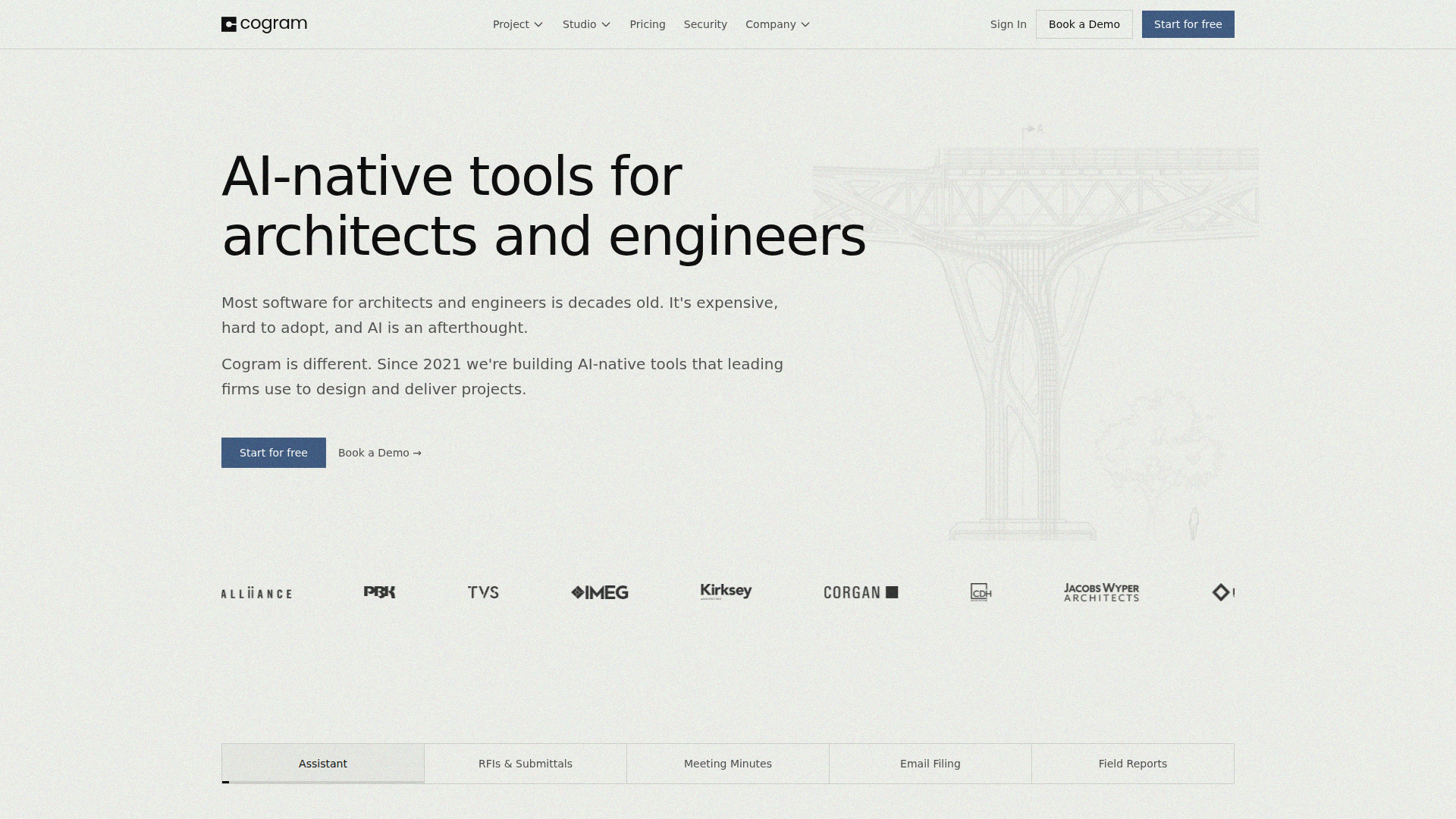
Cogram is an AI platform for the architecture, engineering, and construction (AEC) industry. It is designed for architects, designers, engineers, consultants, and contractors who need to manage project communication, documentation, and contract administration work more efficiently.
The platform appears positioned as an AI-native alternative to older AEC software, combining several project workflow tools in one environment. Based on the page, its core workflow includes answering project questions, analyzing documents, organizing email correspondence, handling RFIs and submittals, generating meeting minutes, and drafting field reports using firm-specific templates and existing systems.
Features
- AEC-specific AI assistant — Lets teams ask questions and analyze project documents in a workflow tailored to architecture and engineering work.
- Email management and search — Automatically files project emails and makes correspondence easier to retrieve across active projects.
- RFI and submittal workflows — Supports faster logging and review of RFIs and submittals, with stated integration to Procore.
- Automated meeting minutes — Captures and drafts minutes for virtual and in-person meetings using the firm’s own templates.
- Field report creation — Allows users to speak observations, attach photos, and generate field reports in standardized formats.
- Tool, template, and deployment flexibility — Connects with systems such as Microsoft Teams, Outlook, Zoom, Google Meet, Procore, Autodesk, Deltek, and Unanet, while supporting customer templates and multiple deployment options including private cloud or on-premises.
Helpful Tips
- Check workflow depth by role — Because Cogram serves multiple AEC roles, evaluate how well each module fits the day-to-day needs of project managers, contract administrators, site staff, and design teams.
- Validate template handling early — Since the product emphasizes drafting into firm templates, test representative meeting-minute and field-report formats before broader rollout.
- Review system-of-record boundaries — Clarify whether Cogram is intended to replace legacy tools in specific workflows or operate mainly as an AI layer alongside systems like Procore, Deltek, or Unanet.
- Assess governance and deployment needs — Firms with stricter IT requirements should verify the fit of SSO, MFA, access controls, and private-cloud or on-premises options during evaluation.
- Plan adoption around repetitive admin work — The strongest initial use cases appear to be high-volume documentation tasks, which are usually the easiest area to standardize and demonstrate value.
OpenClaw Skills
Cogram could likely fit well into an OpenClaw environment as a project-operations intelligence layer for AEC firms. Likely skill patterns include agents that monitor project correspondence, summarize open issues, extract action items from meetings, classify RFIs and submittals, and prepare structured updates for internal teams. Since the page confirms API support and multiple integrations, it is reasonable to infer that OpenClaw workflows could orchestrate data movement and follow-up tasks around Cogram, even though native OpenClaw integration is not stated.
In practice, this combination could support architect and engineer workflows such as weekly project health reviews, consultant coordination assistants, field-to-office reporting pipelines, and executive brief generation across portfolios. A likely outcome is less manual effort spent reconciling emails, notes, and logs across systems, allowing technical professionals to focus more on design, coordination, and delivery quality rather than administrative overhead.
Embed Code
Share this AI tool on your website or blog by copying and pasting the code below. The embedded widget will automatically update with the latest information.
<iframe src="https://www.aimyflow.com/ai/cogram-com/embed" width="100%" height="400" frameborder="0"></iframe>
Explore Similar Tools
Structured AI
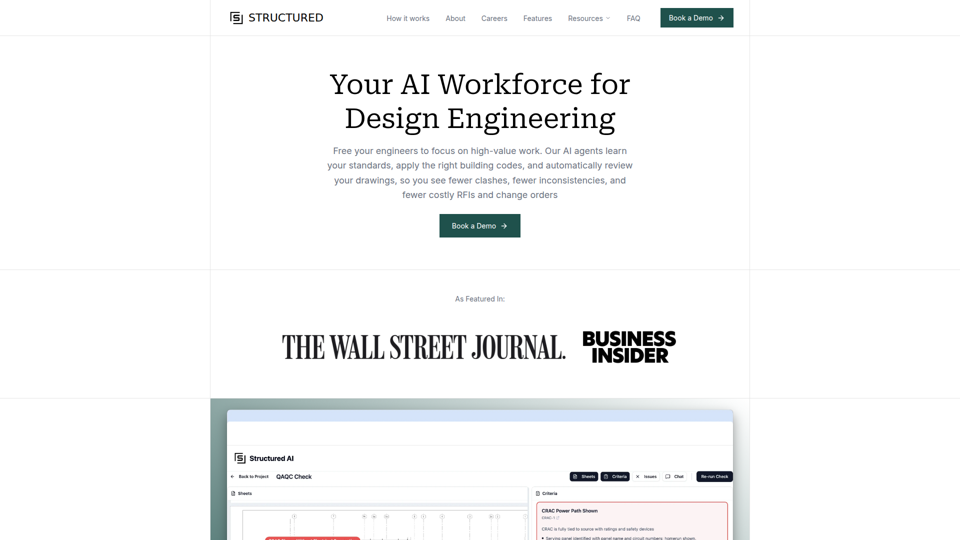
Structured AI is an AI QA/QC platform for construction and design engineering documents that helps AEC firms automatically review MEP, civil, structural, and architectural drawings for errors, inconsistencies, clashes, and code-related issues. For engineers and technical reviewers, it can reduce repetitive drawing checks and surface standards-based findings earlier, supporting faster coordination and fewer downstream rework issues.
Monarcha | AI-Powered Geospatial Platform
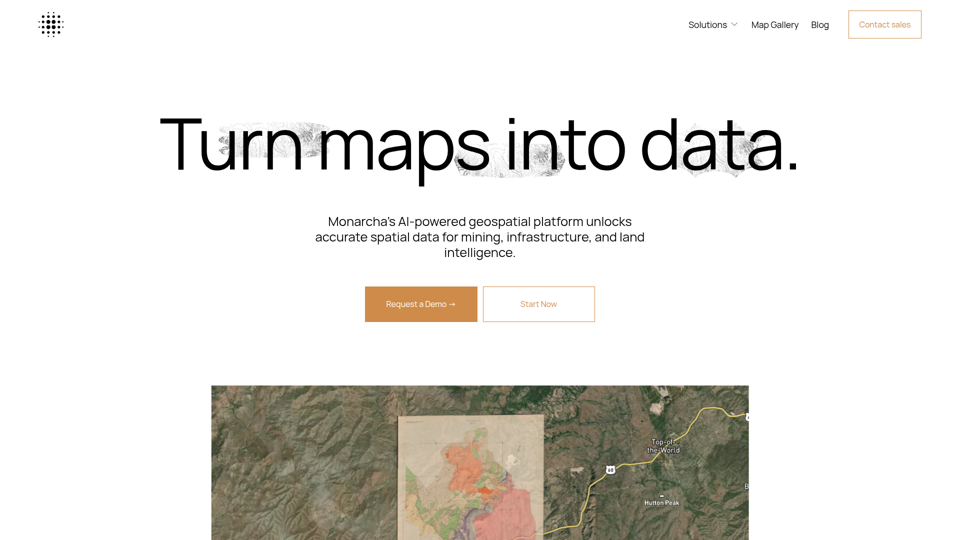
Monarcha is an AI-powered geospatial platform that turns scanned maps, plats, deeds, drawings, and other documents into accurate, queryable GIS data for mining, civil engineering, infrastructure, and land intelligence teams. By automating georeferencing and spatial data extraction, it can help geologists, engineers, and land professionals reduce manual map interpretation and work faster with structured spatial datasets.
AI Site Selection for Infrastructures | Plume Finder
Plume Finder is an AI site selection tool that helps users analyze geospatial, grid, and regulatory constraints with natural language for renewable energy and infrastructure projects, mainly for infrastructure and energy development teams. In AI-assisted planning workflows, it can help site selection, permitting, and project development professionals evaluate candidate parcels more efficiently and consistently.
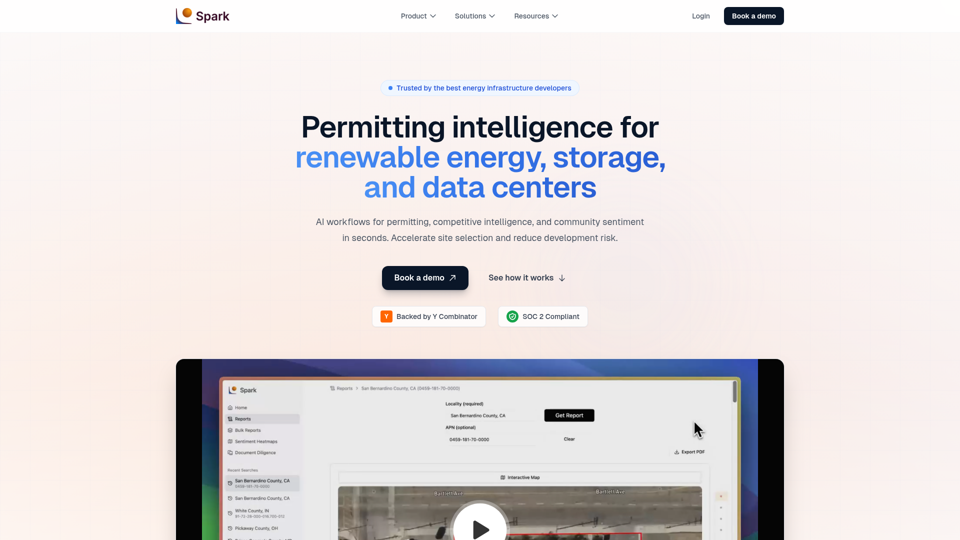
Spark | Permitting Intelligence for Solar, Storage & Data Centers
Spark is an AI permitting intelligence platform that helps solar, battery storage, and data center developers analyze site selection, zoning, permitting requirements, and community sentiment using cited public records. For development, permitting, legal, and diligence teams, it can shorten manual document review and surface buildability risks earlier in the project pipeline.
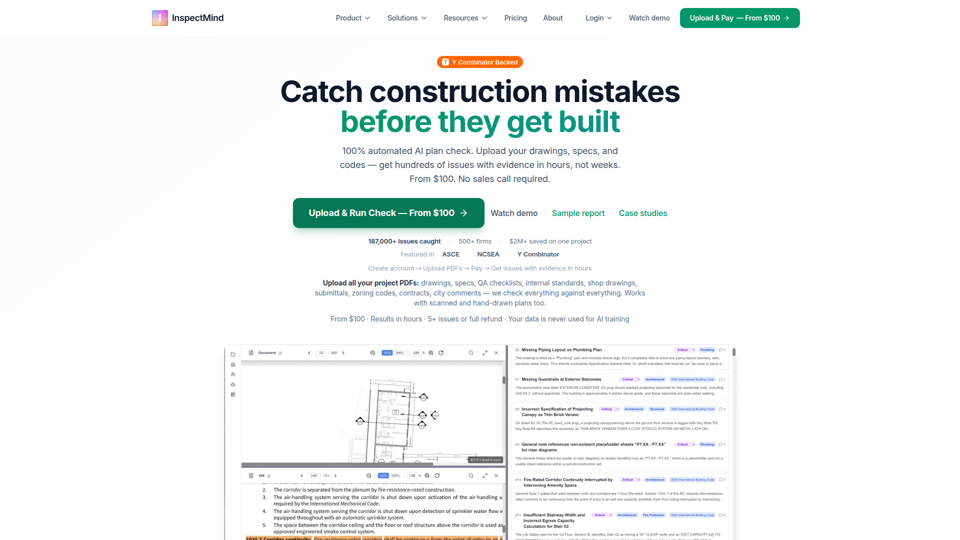
AI Construction QAQC | Plan Check & Drawing Review | From
InspectMind is an AI construction QA/QC and plan-checking platform that automatically reviews project PDFs (drawings, specs, codes, and QA standards) to find coordination conflicts, code issues, and constructability problems, mainly for AEC teams such as architects, engineers, contractors, developers, and plan checkers. In AI-enabled design and preconstruction workflows, it helps these roles surface evidence-backed issues earlier so teams can reduce RFIs, rework, and permit-review friction.
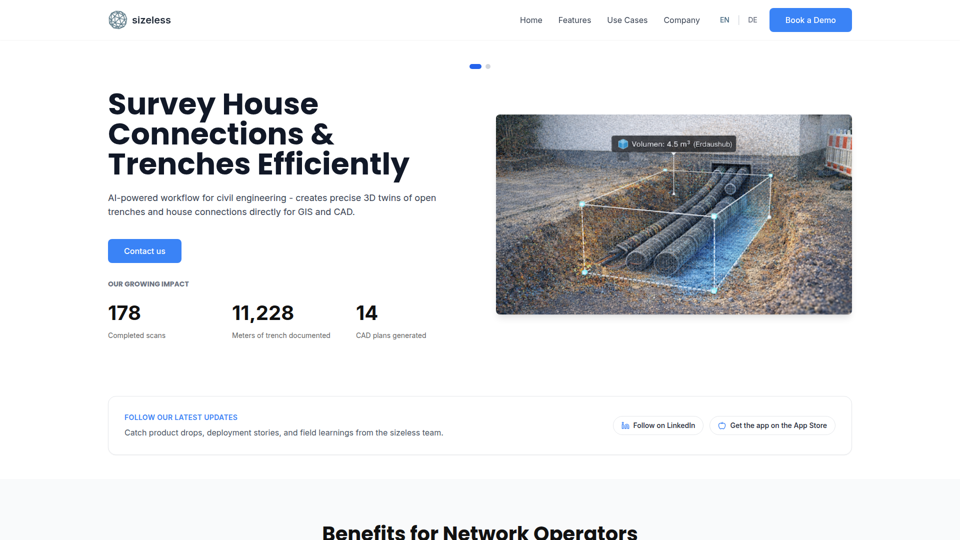
sizeless | Digital Property Twins
sizeless is an AI-powered digital twin and surveying platform that turns smartphone video of buildings, trenches, and house connections into precise 3D models, CAD plans, and GIS-ready outputs for civil engineering, AEC, and energy planning professionals. By automating capture and documentation workflows, it can help surveyors, engineers, and network operators reduce manual drafting, speed as-built delivery, and improve planning accuracy.