
Structured AI
Rate this Tool
Average Score
Total Votes
Select your score (1-10):
Detail Information
What
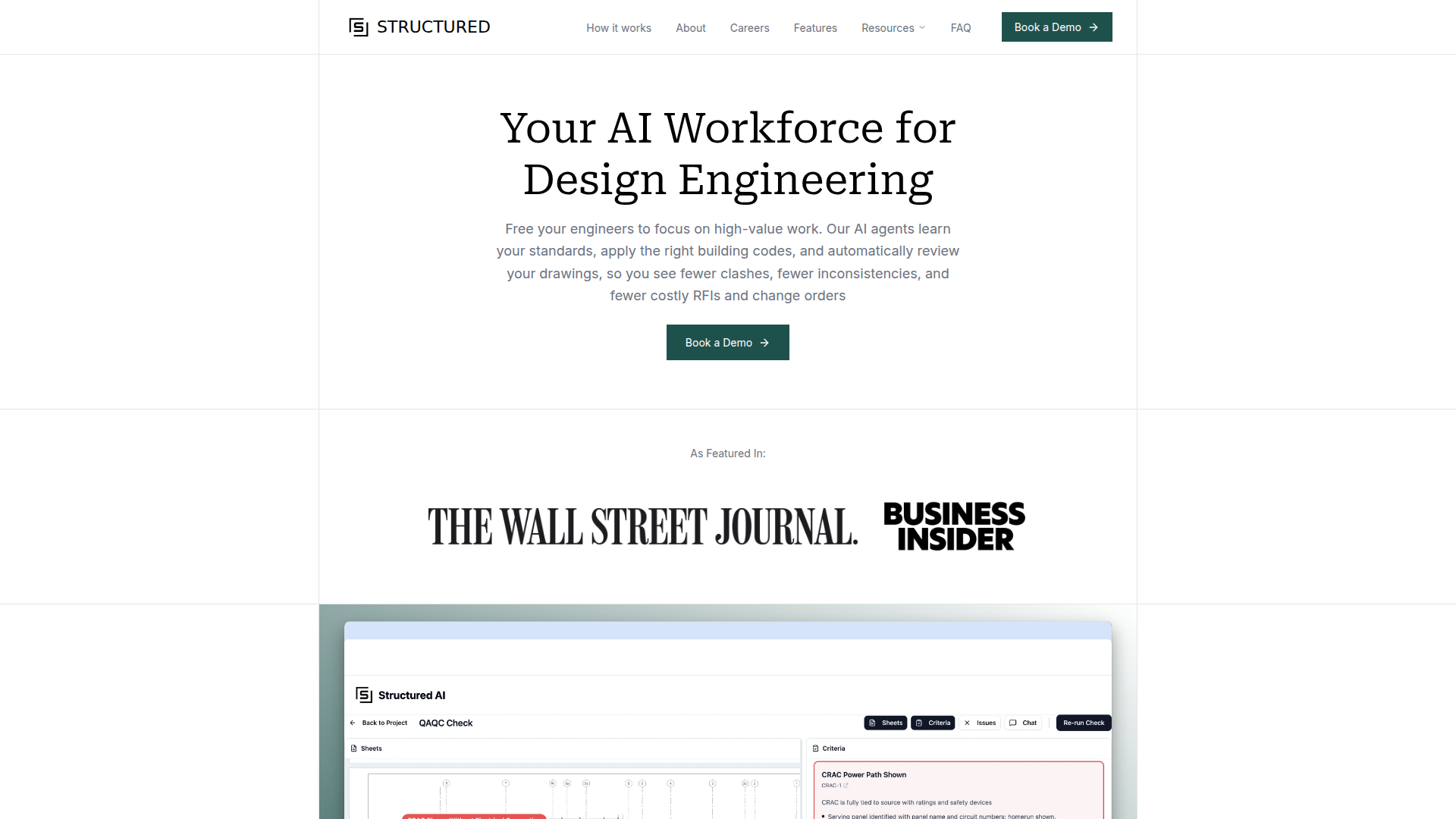
Structured AI provides AI agents for design engineering teams in the AEC sector. Based on the page, the product is designed for firms working across MEP, civil, structural, and architectural drawing sets, with a focus on automating technical QA/QC and drawing review work.
Its core workflow is automated review of drawings and models against firm standards, building code considerations, and cross-discipline consistency checks. The stated goal is to reduce clashes, inconsistencies, RFIs, change orders, and rework so engineers can spend more time on higher-value design tasks. The product appears positioned as an enterprise-focused AI review layer that fits into existing CAD, BIM, and project management environments.
Features
- Automated drawing review: Reviews MEP, civil, and structural drawings to identify errors before they reach the field, helping teams reduce downstream rework.
- Cross-discipline consistency checking: Compares mechanical, electrical, plumbing, and architectural sets to detect inconsistencies that can be missed in manual review.
- Code-aware review: Scans drawings and models for missing information, clashes, and potential code issues, and links findings to relevant criteria to speed resolution.
- Firm-standard learning: The page states that the AI agents learn a firm's standards, which suggests review outputs can be aligned to internal engineering expectations.
- Workflow integration: Connects with existing CAD, BIM, and project management tools to support adoption without requiring teams to rebuild core workflows.
- Enterprise deployment and security options: Offers SOC 2 compliance, bank-grade encryption, and on-premise deployment options for organizations that need stronger control over project data.
Helpful Tips
- Validate scope by discipline and deliverable type: Before adoption, confirm which drawing packages, model formats, and review stages are supported, since the page names several disciplines but does not detail exact file or software coverage.
- Start with a standards-heavy review use case: Products like this typically show value fastest in repetitive QA/QC workflows where firms already have defined review criteria and recurring coordination issues.
- Measure operational impact carefully: Track changes in clash detection timing, review cycle length, RFIs, and rework volume to determine whether the system is improving engineering throughput in practice.
- Review deployment constraints early: If data control is a major concern, assess whether private cloud or on-premise deployment is necessary and how that affects IT implementation.
- Check explainability in review outputs: Since findings are linked to relevant criteria, buyers should evaluate how clearly engineers can verify, accept, or reject issues during live project reviews.
OpenClaw Skills
Structured AI could likely fit well within the OpenClaw ecosystem as a design QA orchestration layer for AEC workflows. Likely OpenClaw skills could include agents that intake drawing packages, route them through Structured review, classify findings by discipline, and generate structured issue summaries for engineering managers, BIM coordinators, or project leads. If native integration is not already available, this should be treated as a likely workflow design rather than a confirmed product capability.
A broader OpenClaw workflow could combine Structured AI with agents for RFI triage, submittal preparation, coordination meeting briefs, and change-order risk monitoring. For multidisciplinary engineering firms, that combination could shift technical teams away from manual checking and issue aggregation toward exception handling and design decision-making, especially in projects where coordination quality and review speed directly affect field execution.
Embed Code
Share this AI tool on your website or blog by copying and pasting the code below. The embedded widget will automatically update with the latest information.
<iframe src="https://www.aimyflow.com/ai/getstructured-ai/embed" width="100%" height="400" frameborder="0"></iframe>
Explore Similar Tools
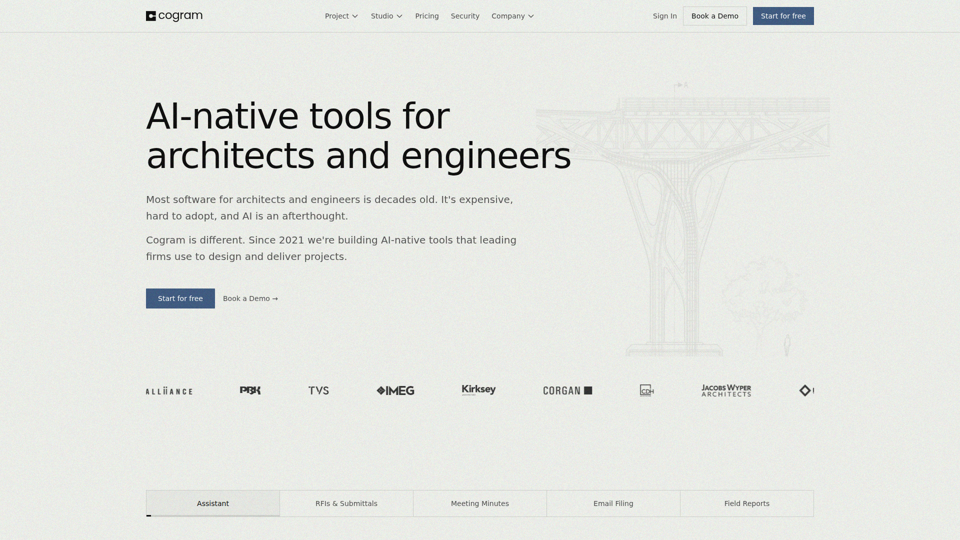
Cogram — The AI Platform for Architects and Engineers
Cogram is an AI platform for architects, engineers, and other AEC professionals that helps teams streamline project documentation, collaboration, RFIs and submittals, meeting minutes, field reports, and email management. For architecture, engineering, and project delivery roles, it can reduce repetitive admin work and make project information easier to capture, search, and reuse across active jobs.
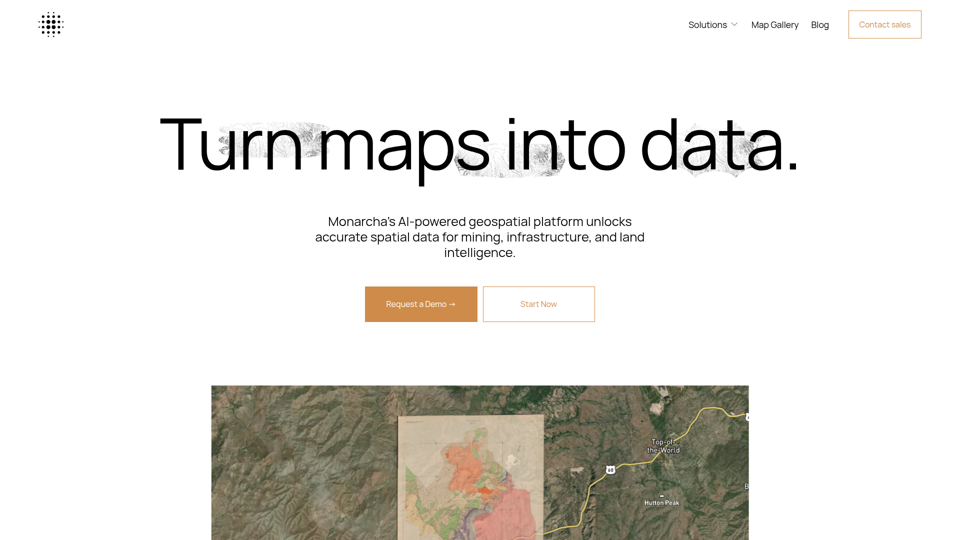
Monarcha | AI-Powered Geospatial Platform
Monarcha is an AI-powered geospatial platform that turns scanned maps, plats, deeds, drawings, and other documents into accurate, queryable GIS data for mining, civil engineering, infrastructure, and land intelligence teams. By automating georeferencing and spatial data extraction, it can help geologists, engineers, and land professionals reduce manual map interpretation and work faster with structured spatial datasets.
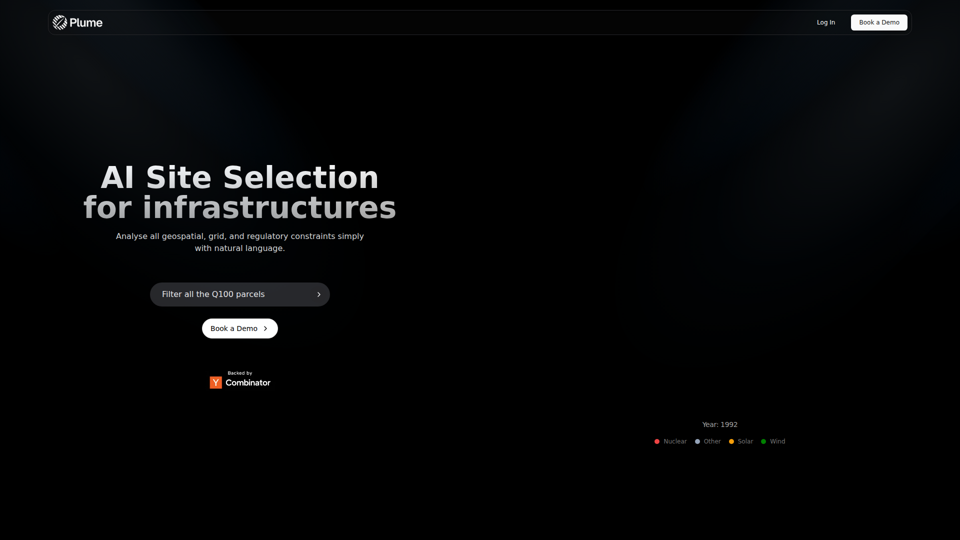
AI Site Selection for Infrastructures | Plume Finder
Plume Finder is an AI site selection tool that helps users analyze geospatial, grid, and regulatory constraints with natural language for renewable energy and infrastructure projects, mainly for infrastructure and energy development teams. In AI-assisted planning workflows, it can help site selection, permitting, and project development professionals evaluate candidate parcels more efficiently and consistently.
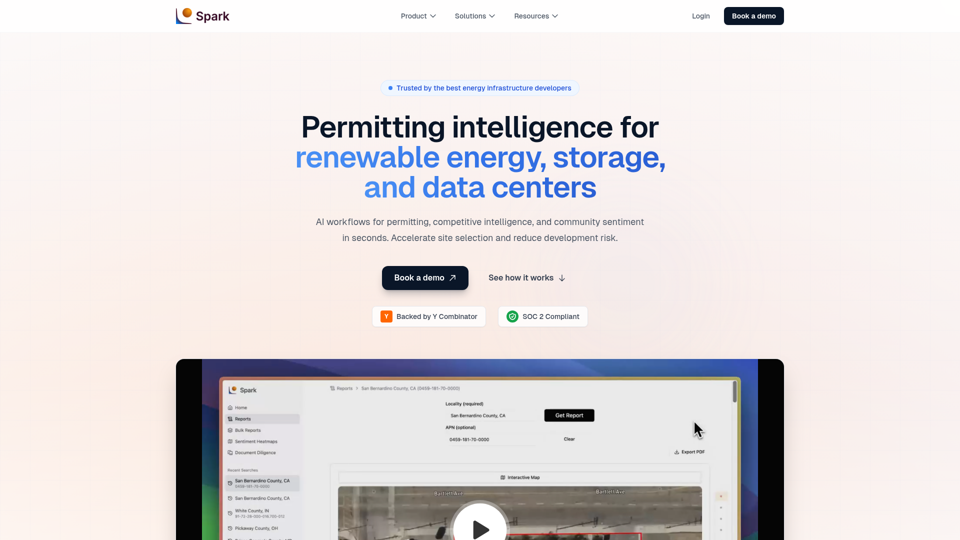
Spark | Permitting Intelligence for Solar, Storage & Data Centers
Spark is an AI permitting intelligence platform that helps solar, battery storage, and data center developers analyze site selection, zoning, permitting requirements, and community sentiment using cited public records. For development, permitting, legal, and diligence teams, it can shorten manual document review and surface buildability risks earlier in the project pipeline.
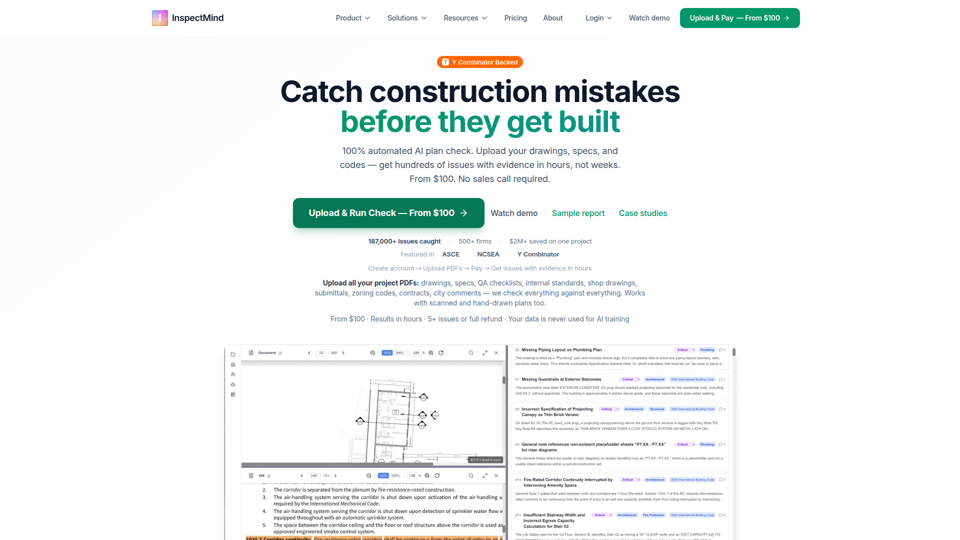
AI Construction QAQC | Plan Check & Drawing Review | From
InspectMind is an AI construction QA/QC and plan-checking platform that automatically reviews project PDFs (drawings, specs, codes, and QA standards) to find coordination conflicts, code issues, and constructability problems, mainly for AEC teams such as architects, engineers, contractors, developers, and plan checkers. In AI-enabled design and preconstruction workflows, it helps these roles surface evidence-backed issues earlier so teams can reduce RFIs, rework, and permit-review friction.
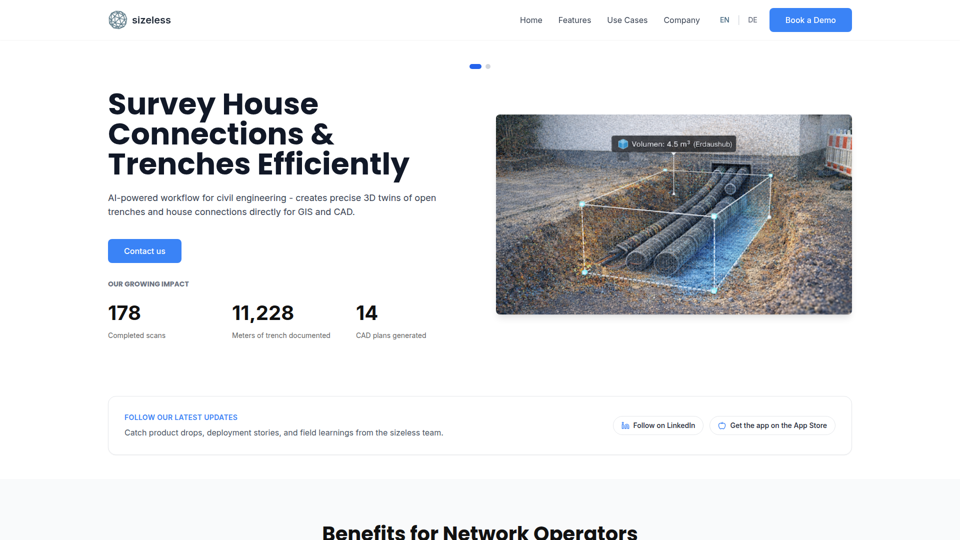
sizeless | Digital Property Twins
sizeless is an AI-powered digital twin and surveying platform that turns smartphone video of buildings, trenches, and house connections into precise 3D models, CAD plans, and GIS-ready outputs for civil engineering, AEC, and energy planning professionals. By automating capture and documentation workflows, it can help surveyors, engineers, and network operators reduce manual drafting, speed as-built delivery, and improve planning accuracy.