
camfer - the AI CAD tool
Rate this Tool
Average Score
Total Votes
Select your score (1-10):
Detail Information
What
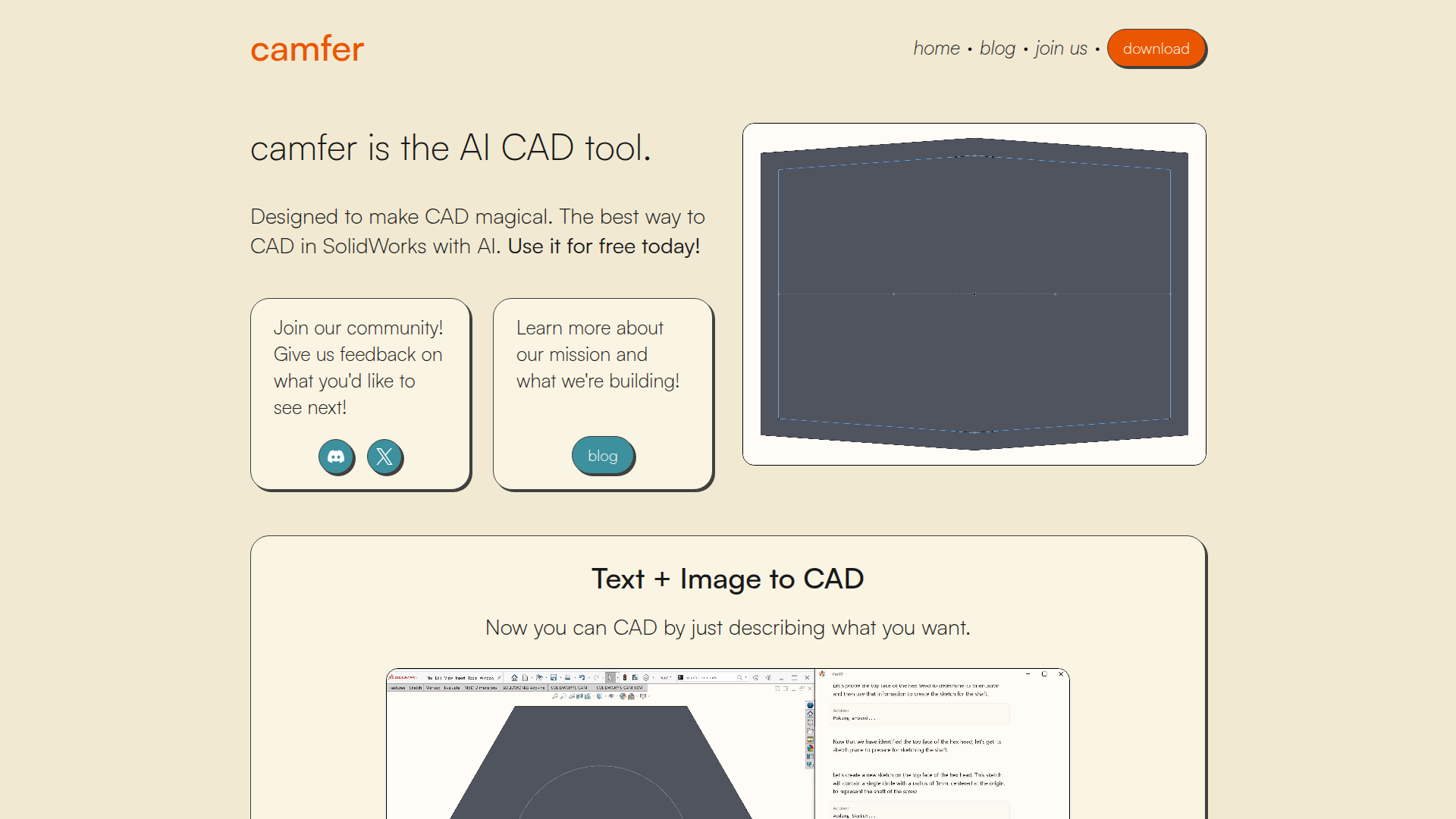
Camfer is an AI-assisted CAD tool positioned around SolidWorks workflows. Based on the page content, it is designed for people who work in CAD and want a simpler way to create or inspect models using natural language instead of relying only on manual menu navigation.
Its core workflow appears to center on two jobs: generating CAD from text and image prompts, and answering questions about an existing CAD model or feature tree. The messaging suggests a lightweight, productivity-oriented layer on top of established CAD work, with a likely focus on individual designers, engineers, and early adopters using SolidWorks.
Features
- Text-to-CAD input: Users can describe what they want in plain language, which can reduce the effort needed to start or modify a design.
- Image-to-CAD input: The product states that image-based prompting is supported, which may help translate visual references into CAD work more quickly.
- SolidWorks-oriented workflow: Camfer is specifically presented as a way to work in SolidWorks with AI, indicating a targeted rather than general-purpose CAD positioning.
- CAD knowledge access via chat-style queries: Users can ask Camfer about their CAD instead of manually clicking through the feature tree, which can speed up model understanding and navigation.
- In-context model assistance: The “stay in the zone” framing suggests the tool aims to keep users focused on design tasks instead of repetitive interface interactions.
Helpful Tips
- Validate scope in SolidWorks environments: Since the page emphasizes SolidWorks, buyers should confirm exactly which parts of the SolidWorks workflow are supported in practice.
- Test prompt reliability on real design tasks: For AI CAD tools, value depends heavily on how well text and image prompts map to usable geometry and feature intent.
- Assess model interrogation quality: If feature-tree assistance is important, evaluate how accurately the tool explains part structure, dependencies, and design history.
- Plan for human review of outputs: AI-generated CAD should be treated as draft work that still needs engineering validation, especially for production use.
- Look for roadmap clarity: The page invites community feedback, which suggests the product may still be evolving; teams should check product maturity before broad rollout.
OpenClaw Skills
Camfer could fit well into the OpenClaw ecosystem as a likely upstream design-intent interface for engineering workflows. OpenClaw skills could be built to capture a designer’s text request, organize requirement details, generate structured design briefs, and route those prompts into a Camfer-centered CAD workflow. Another likely use case would be an agent that converts meeting notes, sketches, or support requests into clear CAD tasks for faster model iteration.
A broader OpenClaw workflow could also wrap Camfer with design review and knowledge-management agents. For example, a likely workflow could ask Camfer for feature-tree context, then have OpenClaw summarize the model, compare revisions, generate handoff notes, or prepare manufacturing-facing documentation. If implemented well, that combination could reduce context switching for mechanical design teams and make CAD work more accessible to adjacent roles such as project managers, applications engineers, and technical sales staff.
Embed Code
Share this AI tool on your website or blog by copying and pasting the code below. The embedded widget will automatically update with the latest information.
<iframe src="https://www.aimyflow.com/ai/camfer-dev/embed" width="100%" height="400" frameborder="0"></iframe>
Explore Similar Tools
MOVE. | Agents for Hardware Engineering
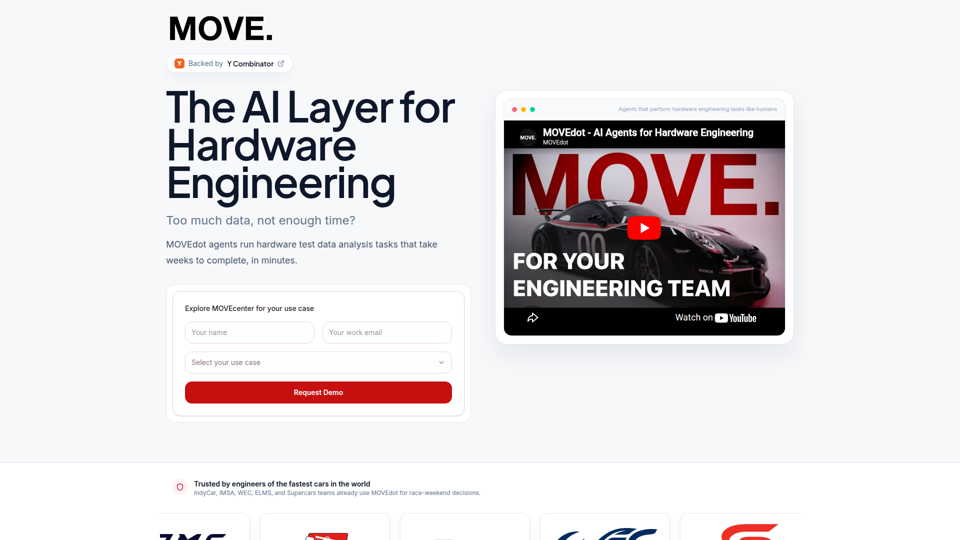
MOVE. is an AI agent platform for hardware engineering teams that analyzes hardware test data, surfaces anomalies and correlations, and turns raw telemetry, sensor logs, and related inputs into reports and answers faster. For hardware engineers, race engineers, and R&D teams, it can reduce manual data review so they can focus more on diagnosing issues, improving performance, and making engineering decisions.
Topological
Topological is a physics-based AI platform for CAD optimization that helps hardware and mechanical engineering teams generate and refine designs for complex physical problems while accounting for geometry, manufacturability, and physical constraints. For mechanical engineers and computational design teams, this can shorten design iteration cycles and support faster, more informed optimization in AI-assisted engineering workflows.
Adam - AI Powered CAD
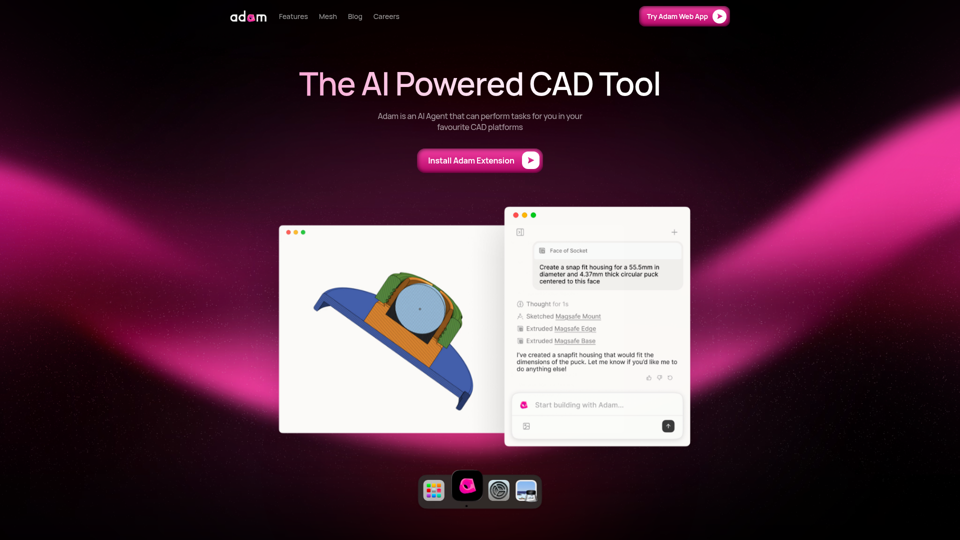
Adam is an AI-powered CAD agent that helps mechanical engineers build and edit hardware faster in their preferred CAD platforms using prompts for part editing, selection-based feature creation, feature tree optimization, and parametrization. For engineering and CAD workflows, it can reduce repetitive clicks and help turn ad hoc models into more structured, reusable designs.
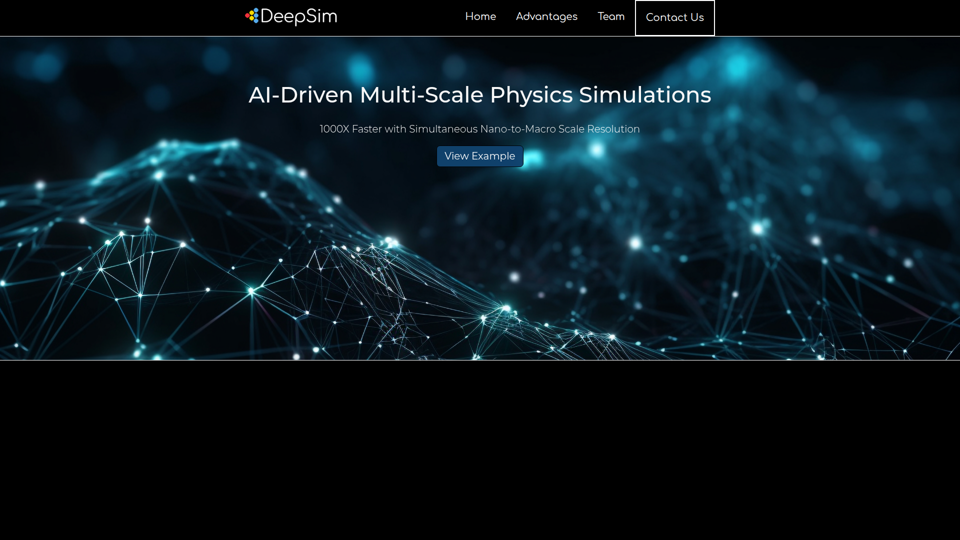
DeepSim
DeepSim is an AI-driven, GPU-accelerated physics simulation platform that helps engineers run multi-scale simulations from nano to macro levels faster and with simpler setup for design analysis. For engineering teams, this can shorten simulation bottlenecks so they can evaluate more design options and focus more on higher-value decisions.
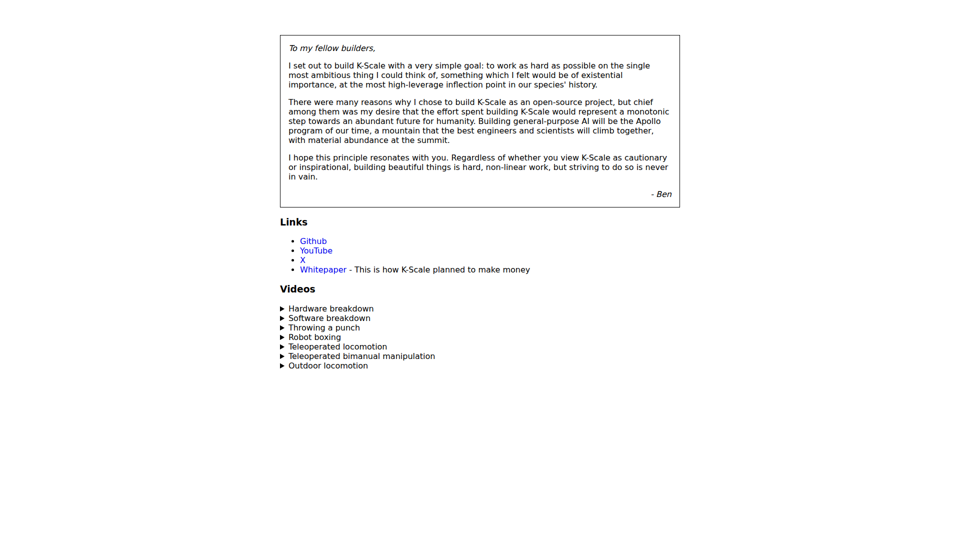
K-Scale Labs
K-Scale Labs is an open-source AI and robotics project focused on building general-purpose AI and related hardware and software, mainly for engineers, scientists, and technical builders. For AI and robotics teams, its open development model and public hardware and software breakdowns can support faster research, prototyping, and collaboration on embodied systems.
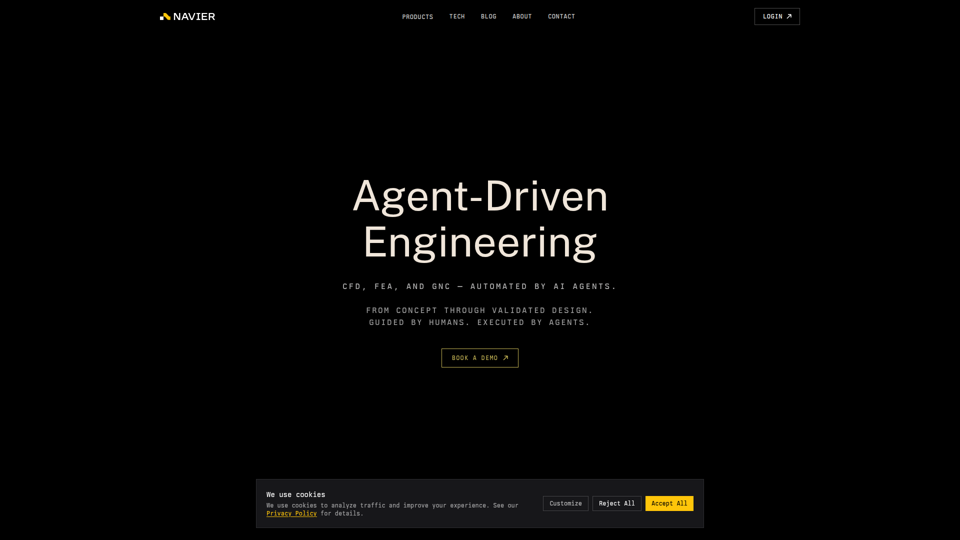
Navier AI
Navier AI is an agent-driven engineering platform that automates CAD, CFD, FEA, meshing, simulation, and GNC workflows from concept through validated design, mainly for engineers and technical teams running simulation-heavy design processes. In AI-enabled engineering work, it can help simulation, aerospace, and mechanical professionals spend less time on setup and execution loops so they can focus on evaluating results and making final design decisions.
Tuesday Lab
Tuesday Lab is an engineering studio focused on building “delightful robots,” aimed mainly at teams and organizations seeking custom robotics engineering expertise. In an AI-driven workflow, this kind of robotics engineering support can help robotics and product engineering professionals move from model and software concepts to reliable physical systems faster.