
K-Scale Labs
Rate this Tool
Average Score
Total Votes
Select your score (1-10):
Detail Information
What
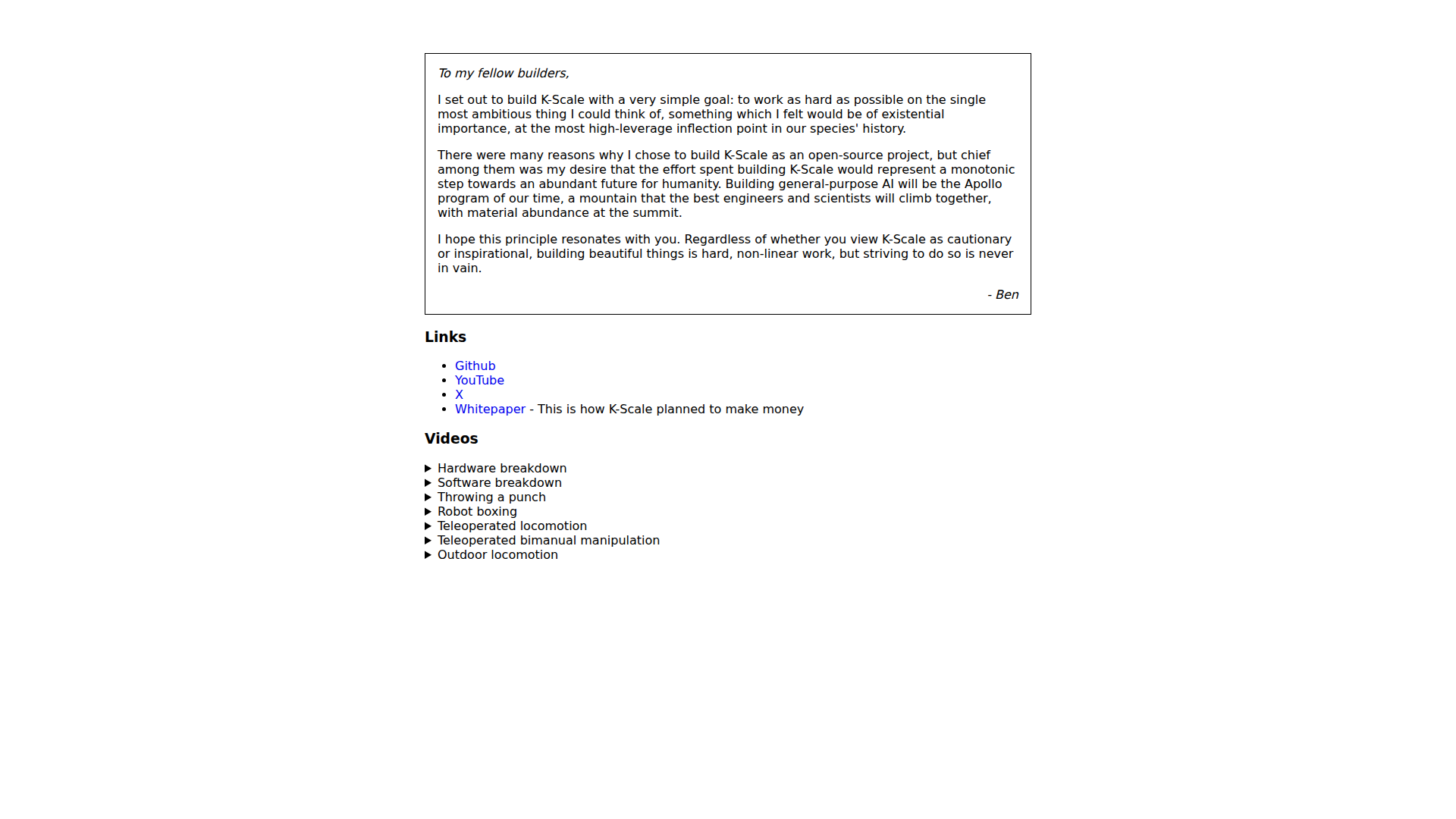
K-Scale Labs appears to be an open-source robotics and AI effort focused on building general-purpose AI systems with a strong hardware component. Based on the page content, the project is positioned as a builder-led initiative with an emphasis on ambitious long-term research, public technical work, and open development.
The visible materials suggest K-Scale serves engineers, roboticists, researchers, and technically oriented builders interested in humanoid or embodied AI systems. Its workflow appears centered on developing both hardware and software for robotic capabilities such as locomotion, manipulation, teleoperation, and physical interaction, though the page does not provide detailed product packaging, deployment model, or commercial offering.
Features
- Open-source orientation — The project is explicitly described as open-source, which can support transparency, community contribution, and technical experimentation.
- Hardware development visibility — A dedicated hardware breakdown video suggests the team documents the robot’s physical architecture and design decisions.
- Software system visibility — A software breakdown video indicates attention to the control or intelligence stack behind the robotic platform.
- Teleoperated locomotion — Demonstrated teleoperation for movement suggests a practical path for training, testing, or supervising robot mobility in real environments.
- Teleoperated bimanual manipulation — Shown two-handed manipulation capabilities point to work on more complex physical task execution beyond simple mobility.
- Dynamic physical task demonstrations — Videos such as throwing a punch, robot boxing, and outdoor locomotion indicate active development of balance, coordination, and embodied control in varied scenarios.
Helpful Tips
- Evaluate it as a research platform first — The page presents vision, videos, and technical direction, but it does not clearly define enterprise product boundaries, so buyers should verify maturity and support expectations.
- Use the public artifacts to assess depth — The GitHub repository, whitepaper, and technical videos are likely the best sources for understanding architecture, roadmap, and implementation quality.
- Separate demonstration from production readiness — Impressive robotics demos can show capability progress, but they do not by themselves confirm reliability, safety processes, or operational readiness.
- Check the commercial model directly — The page references a whitepaper about how K-Scale planned to make money, which may be important for understanding sustainability and partner fit.
- Look for developer alignment — Teams with strong in-house robotics and AI expertise are the most likely to benefit from an open-source, builder-centric platform of this kind.
OpenClaw Skills
K-Scale could likely connect well with the OpenClaw ecosystem as a foundation for robotics-focused agent workflows. Likely use cases include agents that monitor teleoperation sessions, summarize robot test runs, generate experiment logs from video and sensor data, and organize hardware/software issue triage for engineering teams. If K-Scale exposes usable code repositories, telemetry, or control interfaces through its open-source stack, OpenClaw skills could help turn raw robotics development activity into more structured operational workflows.
A broader likely use case is combining K-Scale’s embodied AI work with OpenClaw agents for robotics R&D coordination, field testing, and simulation-to-real deployment processes. For example, teams could build skills that compare locomotion trials, classify manipulation failures, draft test reports, or route anomalies to the right engineering owner. While the page does not confirm any native integration, this combination could be especially valuable for robotics labs, embodied AI startups, and advanced automation teams trying to scale experimental work into repeatable development operations.
Embed Code
Share this AI tool on your website or blog by copying and pasting the code below. The embedded widget will automatically update with the latest information.
<iframe src="https://www.aimyflow.com/ai/kscale-dev/embed" width="100%" height="400" frameborder="0"></iframe>
Explore Similar Tools
MOVE. | Agents for Hardware Engineering
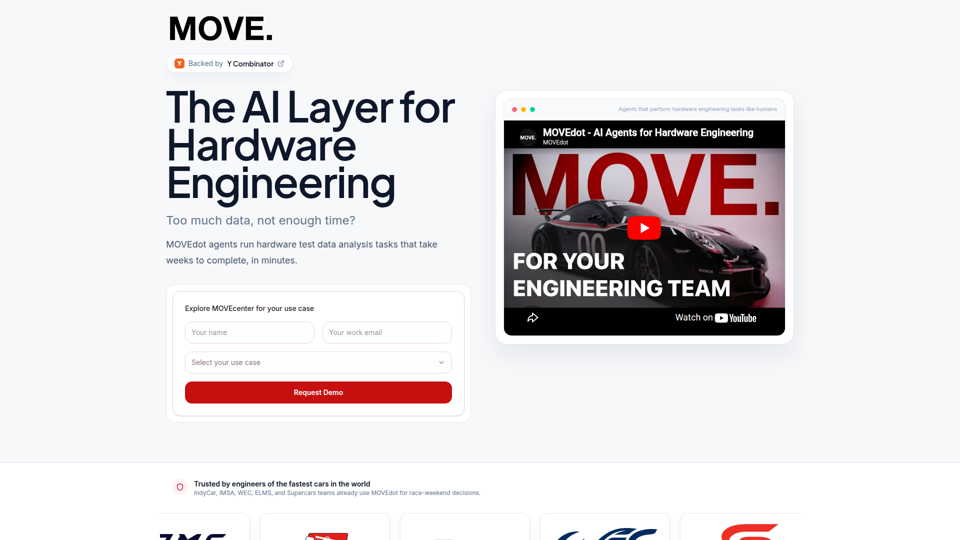
MOVE. is an AI agent platform for hardware engineering teams that analyzes hardware test data, surfaces anomalies and correlations, and turns raw telemetry, sensor logs, and related inputs into reports and answers faster. For hardware engineers, race engineers, and R&D teams, it can reduce manual data review so they can focus more on diagnosing issues, improving performance, and making engineering decisions.
Topological
Topological is a physics-based AI platform for CAD optimization that helps hardware and mechanical engineering teams generate and refine designs for complex physical problems while accounting for geometry, manufacturability, and physical constraints. For mechanical engineers and computational design teams, this can shorten design iteration cycles and support faster, more informed optimization in AI-assisted engineering workflows.
Adam - AI Powered CAD
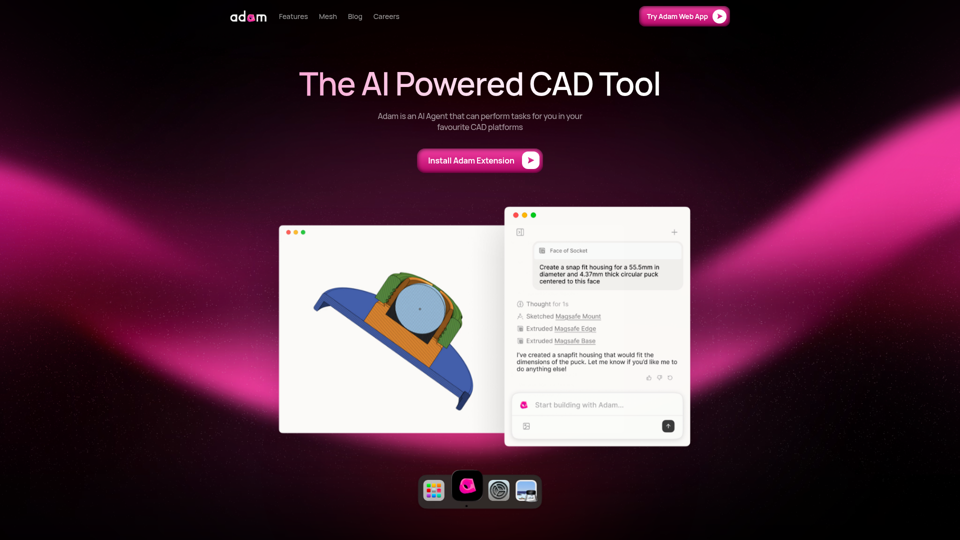
Adam is an AI-powered CAD agent that helps mechanical engineers build and edit hardware faster in their preferred CAD platforms using prompts for part editing, selection-based feature creation, feature tree optimization, and parametrization. For engineering and CAD workflows, it can reduce repetitive clicks and help turn ad hoc models into more structured, reusable designs.
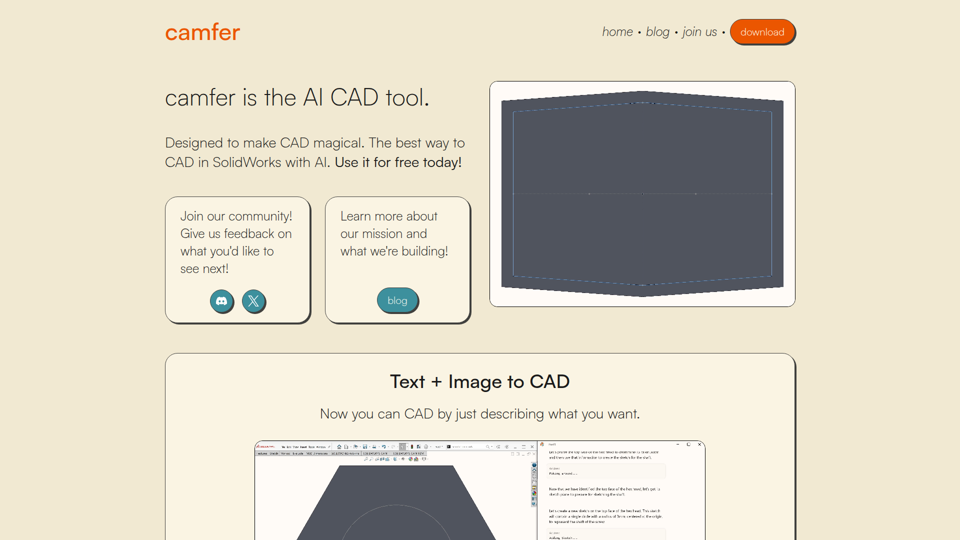
camfer - the AI CAD tool
Camfer is an AI CAD tool for SolidWorks that helps users create and understand CAD designs from text or images and retrieve feature-tree information, mainly for mechanical engineers. For engineering and CAD teams, this can reduce manual navigation in design software and speed up routine design tasks through natural-language interaction.
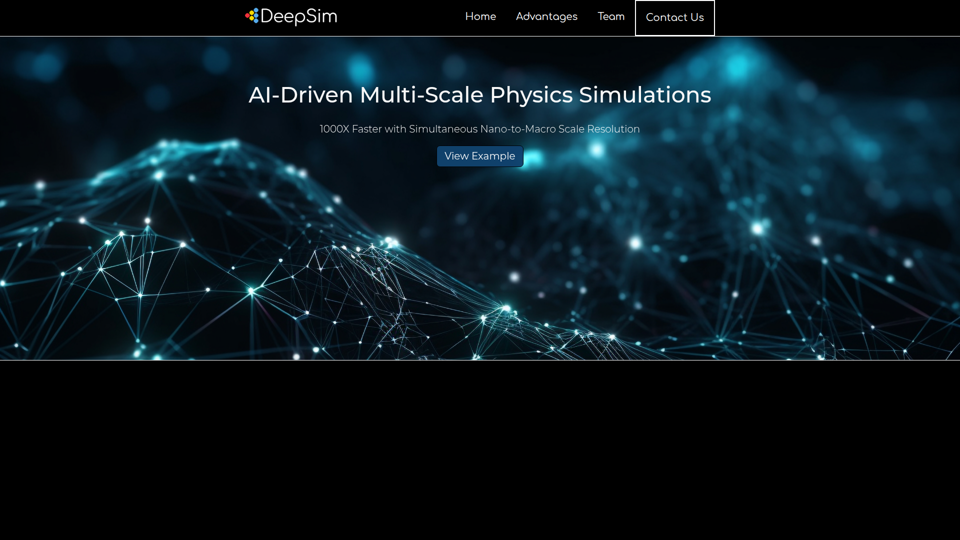
DeepSim
DeepSim is an AI-driven, GPU-accelerated physics simulation platform that helps engineers run multi-scale simulations from nano to macro levels faster and with simpler setup for design analysis. For engineering teams, this can shorten simulation bottlenecks so they can evaluate more design options and focus more on higher-value decisions.
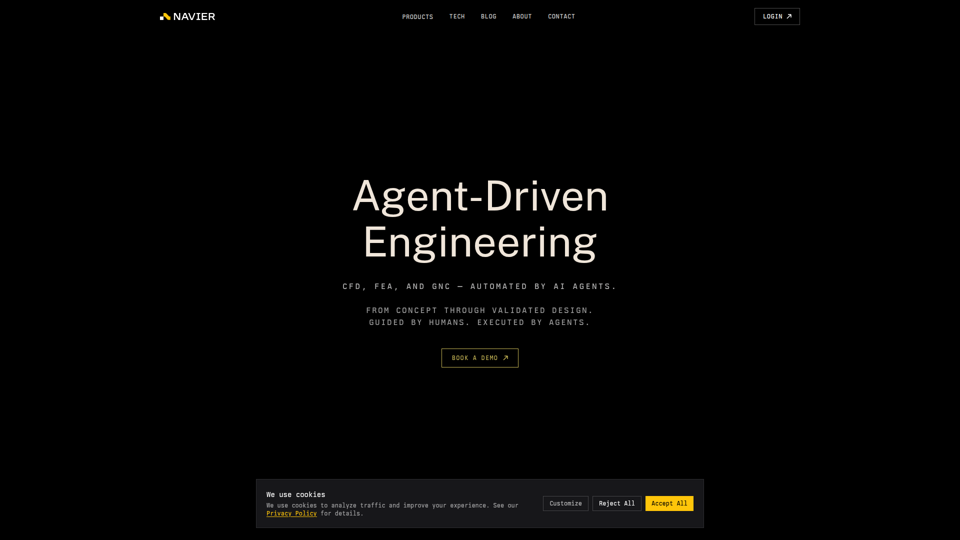
Navier AI
Navier AI is an agent-driven engineering platform that automates CAD, CFD, FEA, meshing, simulation, and GNC workflows from concept through validated design, mainly for engineers and technical teams running simulation-heavy design processes. In AI-enabled engineering work, it can help simulation, aerospace, and mechanical professionals spend less time on setup and execution loops so they can focus on evaluating results and making final design decisions.
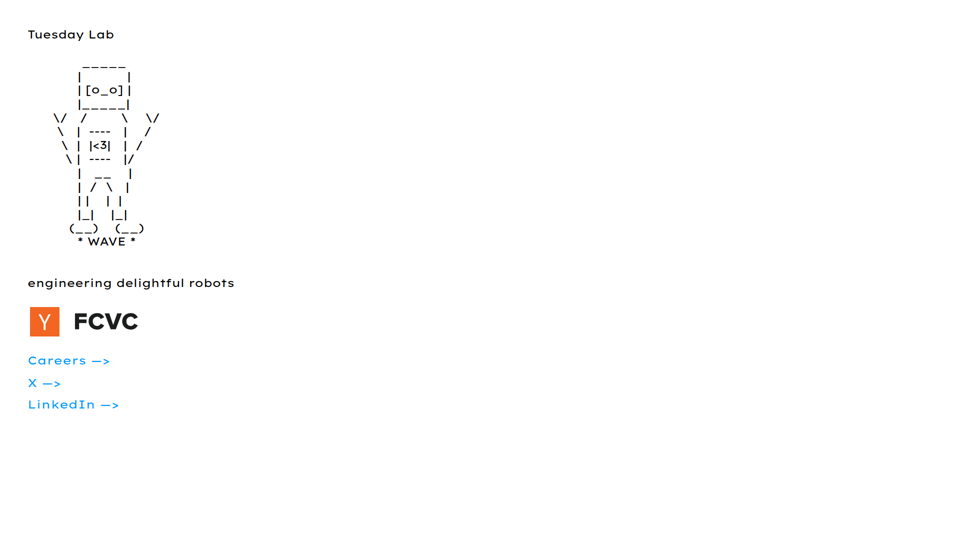
Tuesday Lab
Tuesday Lab is an engineering studio focused on building “delightful robots,” aimed mainly at teams and organizations seeking custom robotics engineering expertise. In an AI-driven workflow, this kind of robotics engineering support can help robotics and product engineering professionals move from model and software concepts to reliable physical systems faster.